Impakter
  • Environment
    • Biodiversity
    • Climate Change
    • Circular Economy
    • Energy
  • FINANCE
    • ESG News
    • Sustainable Finance
    • Business
  • TECH
    • Start-up
    • AI & Machine Learning
    • Green Tech
  • Industry News
    • Entertainment
    • Food and Agriculture
    • Health
    • Politics & Foreign Affairs
    • Philanthropy
    • Science
    • Sport
  • Editorial Series
    • SDGs Series
    • Shape Your Future
    • Sustainable Cities
      • Copenhagen
      • San Francisco
      • Seattle
      • Sydney
  • About us
    • Company
    • Team
    • Global Leaders
    • Partners
    • Write for Impakter
    • Contact Us
    • Privacy Policy
No Result
View All Result
Impakter logo
No Result
View All Result
environmental lobbying

Is Environmental Lobbying a Waste of Time?

How much does the environment really matter? Do the current risks present an existential threat to humanity or are they merely minor matters to be set aside for another day? Felix Dodds and Chris Spence examine the case for prioritizing environmental threats and assess the role the UN can play

International Institute for Sustainable Development (IISD)byInternational Institute for Sustainable Development (IISD)
April 2, 2025
in Environment
0

The headlines these days seem to be filled with global catastrophes. From horrifying regional conflicts to cyber espionage, rampant inequality to online disinformation campaigns and societal polarization, the bad news seems never ending.

In light of this, we could be forgiven for dismissing environmental issues as something to be left for the future. In fact, the latest Global Risks Report by the World Economic Forum (WEF) seems, at first sight, to agree with this assessment. In its 2025 report, experts named only one environmental issue, extreme weather, among the top five threats to global stability over the next two years.

But look further out and the analysis changes dramatically. When experts assessed global risks over the next decade, the top four global threats were all environmental: extreme weather; biodiversity loss and ecosystem collapse; critical changes to Earth’s physical systems; and natural resource shortages. These are now believed to constitute the four biggest risks to humanity in the decade ahead.

The nature of these challenges means there is no time to lose. But where to start? Whether it’s dealing with a changing climate and extreme weather or the collapse of entire ecosystems, these are not problems one actor can deal with alone. No matter how mighty, there is no country or company that can solve any of these incredibly complex, worldwide challenges by themselves. They clearly require international collaboration.

This is where the UN comes in. In spite of facing many challenges in recent years, the UN remains the one place with the convening power to bring the world together. What’s more, the UN has a legacy of leading multilateral efforts that make a material difference. The most obvious example is the campaign to protect our ozone layer. Without the UN-brokered Montreal Protocol and subsequent treaties, the world would already look very different today as increasing UV radiation peppered our planet. Skin cancers and cataracts would have multiplied. Plant life and crop production would have suffered.

There are other examples, too. Even the UN’s work on climate change, which many see as a failure, has started incrementally to change our future for the better. For instance, before the Paris Agreement on climate change was inked in 2015, experts predicted long-term average temperature rises of at least 4-6°C by the end of the century. This would be catastrophic. Now, estimates range from 2-2.8°C, assuming countries stick to their pledges. To be clear, this is still very bad for our planet and for humanity. But it is an undeniable sign of progress.

To be successful, the UN needs help. It needs people dedicated to the long-term goal of making multilateralism work, people who believe passionately in doing their part to make the world a better place.


Related Articles: End the United Nations? Bad Idea | ‘We Lost’: How COP29 Ended With a Deal That Made the Whole World Unhappy | The Nations Most (and Least) Likely to Support UN Principles

It also needs people who know how to work within the system to get things done. The UN is a complicated beast. Its procedures can seem complex, even intimidating, to outsiders. It rules — both written and unwritten — can feel labyrinthine and opaque. Those hoping to influence future negotiations on the key environmental challenges of our time will need to understand how to navigate the system if they are to turn their ideas and goals into reality. With the right training and support, however, we believe this is eminently achievable.

In her foreword to our new book, “Environmental Lobbying at the United Nations: A Guide to Protecting Our Planet,” Elizabeth Maruma Mrema points out that we have the talent to get the job done. As UN Assistant Secretary-General and the deputy head of the UN Environment Programme (UNEP), Mrema is perfectly placed to make this observation. “There have always been talented and determined individuals willing to dedicate themselves to protecting our planet,” she writes.

Mrema continues: “The world needs heroes willing to step up and advocate for the needs of humanity and the planet. There is no role so honorable, or so important, as making the world a better place.”

Inspiring the next generation of talented individuals to step forward and play their part is a major challenge. Yet if we can convince a new generation to ask not what the world can do for them, but what they can do for the world, then there is still cause for optimism.

** ** 

This article was originally published by the International Institute for Sustainable Development (IISD) and is republished here as part of an editorial collaboration with IISD. It was authored by Felix Dodds and Chris Spence, whose new book, “Environmental Lobbying at the United Nations: A Guide to Protecting Our Planet,” will be published by Routledge in June. The authors will be hosting a book launch at the UN Bookshop in New York, US, on 16 July 2025.


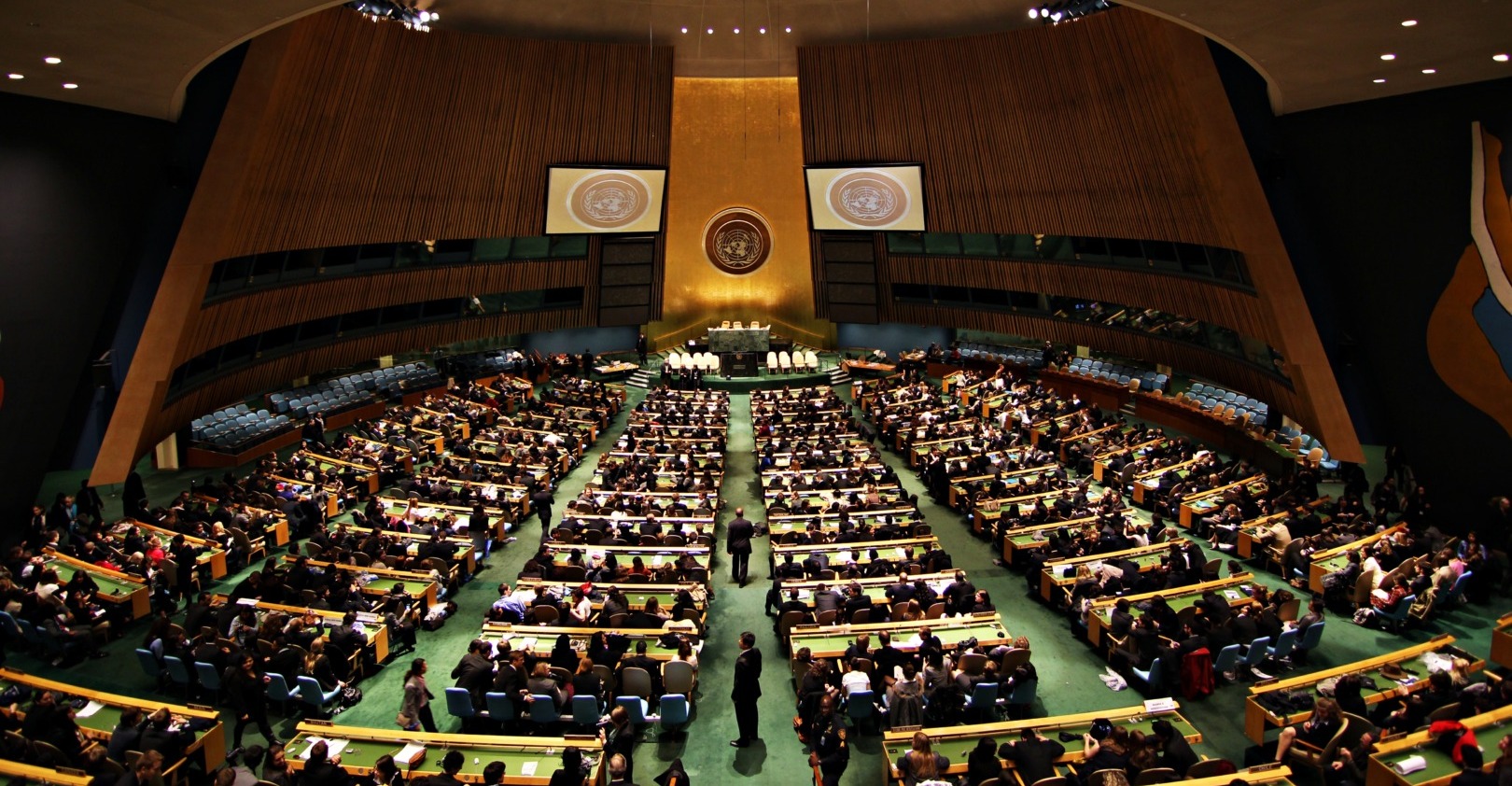
Editor’s Note: The opinions expressed here by the authors are their own, not those of Impakter.com — In the Cover Photo: United Nations General Assembly Hall in the UN Headquarters, New York, NY, April 23, 2011. Cover Photo Credit: Basil D Soufi.

Tags: Climate ChangeEnvironmentEnvironmental LobbyingGlobal Risks ReportIISDInternational Institute for Sustainable DevelopmentUNUnited NationsWEF
Previous Post

L’Oreal Announces Reaching 100% Renewable Energy in Europe

Next Post

DWS Fined a Record €25 Million in ‘Greenwashing’ Scandal

Related Posts

ESG News regarding China restricting industrial renewable exports, UN warning that US climate treaty exit harms economy, UK firms lowering wage forecasts despite inflation, Meta partnering with TerraPower for new nuclear reactors.
Business

To Save the Grid, China Forces Industries to Go Off-Network

Today’s ESG Updates China Limits Grid Exports for New Industrial Solar & Wind: China is encouraging companies to store green...

byEge Can Alparslan
January 9, 2026
ESG News regarding Trump backing sanctions on Russian oil buyers, Norway’s oil and gas output declining, dog food linked to UK emissions, Trump climate treaty exit facing legal scrutiny
Business

U.S. Targets Russian Oil Buyers with New Sanctions Bill

Today’s ESG Updates Trump Backs Sanctions on Russian Oil Buyers: A bipartisan U.S. bill would impose tariffs of up to...

byAnastasiia Barmotina
January 9, 2026
Impakter’s Most-Read Stories of 2025
Society

Impakter’s Most-Read Stories of 2025

In 2025, as in previous years, Impakter readers turned in large numbers to stories examining climate change and pollution, environmental...

byImpakter Editorial Board
December 31, 2025
Year in Review: Trump 2.0 and the Environment
Environment

Year in Review: Trump 2.0 and the Environment

So much has happened this year. It seems that every day there is a new headline that is just as...

bySarah Perras
December 30, 2025
Is It Time to Recognize Climate Refugees?
Climate Change

Is It Time to Recognize Climate Refugees?

Climate displacement has become a defining feature of our present. Climate shocks now shape human (im)mobility, humanitarian crises, and political...

byDr. Shepherd Mutsvara - Research Fellow at the University of Münster, Germany
December 30, 2025
5 Trends That Have Shaped Global Subsidies Over Decades
Business

5 Trends That Have Shaped Global Subsidies Over Decades

Subsidies have long been debated: criticized for distorting markets and harming the environment, yet embraced to build green industries, protect...

byInternational Institute for Sustainable Development (IISD)
December 29, 2025
coal mine
Business

Can the War on Coal Still Be Won?

Ten years ago, I embedded in the war on coal. I spent a month inside the Sierra Club’s Beyond Coal campaign, watching an organization...

byCanary Media
December 25, 2025
What’s Next for Sustainable Development in 2026
Climate Change

What’s Next for Sustainable Development in 2026

As governments confront rising misinformation, constrained budgets, and intensifying climate risks, the need for evidence-based policy has never been greater....

byInternational Institute for Sustainable Development (IISD)
December 23, 2025
Next Post
ESG news regarding DWS fined €25 million for greenwashing, EU seeks public input on budget, China restricts US investments, Homes England launches Greener Homes Phase 2

DWS Fined a Record €25 Million in ‘Greenwashing’ Scandal

Recent News

ESG News regarding U.S. lifting more sanctions on Venezuela, Egypt securing $1.8 billion renewable energy deals, U.S. pushing G7 allies to reduce reliance on China for critical minerals, richest 1% exceeding annual carbon share in just 10 days.

U.S. Considers Lifting More Venezuela Sanctions

January 12, 2026
Full-Cycle Engineer at work

Why Full-Cycle Engineering Is Becoming Critical for Sustainable Innovation

January 11, 2026
Trump’s Foreign Policy - Credit: Gemini prompt

Trump’s Foreign Policy: The Art Of The Coup

January 11, 2026
  • ESG News
  • Sustainable Finance
  • Business

© 2025 Impakter.com owned by Klimado GmbH

No Result
View All Result
  • Environment
    • Biodiversity
    • Climate Change
    • Circular Economy
    • Energy
  • FINANCE
    • ESG News
    • Sustainable Finance
    • Business
  • TECH
    • Start-up
    • AI & Machine Learning
    • Green Tech
  • Industry News
    • Entertainment
    • Food and Agriculture
    • Health
    • Politics & Foreign Affairs
    • Philanthropy
    • Science
    • Sport
  • Editorial Series
    • SDGs Series
    • Shape Your Future
    • Sustainable Cities
      • Copenhagen
      • San Francisco
      • Seattle
      • Sydney
  • About us
    • Company
    • Team
    • Global Leaders
    • Partners
    • Write for Impakter
    • Contact Us
    • Privacy Policy

© 2025 Impakter.com owned by Klimado GmbH