Indonesia’s food supply stays strong despite global pressures
Indonesia says its food position is secure and even in surplus: Bapanas chief Andi Amran Sulaiman said the national food balance remains “relatively stable” through May 2026, with big projected surpluses like a 16.39 million tonne rice surplus, a 4.3 million tonne corn surplus, a 632,000 tonne surplus of consumer sugar, an 837,000 tonne surplus of chicken meat, and 423,000 tonnes of surplus chicken eggs. In addition, the government reserves hold 4.6 million tonnes of rice and more than 177,000 tonnes of feed corn, among other staples.
Mr Amran also declared that Indonesia has achieved self-sufficiency in key protein and carbohydrate staples with no imports in 2025, as rice production hit 34.69 million tonnes versus consumption of 31.16 million tonnes, poultry at 4.29 million tonnes versus 4.12 million tonnes of consumption, eggs at 6.54 million tonnes versus 6.47 million tonnes of consumption, and feed corn at 16.16 million tonnes versus 15.23 million tonnes of consumption, helping keep food inflation on a downward trend from 2.5% to 1.58% despite global turmoil, geopolitical risks, and El Niño-driven drought worries.
***
Further reading: Indonesia achieves protein, carbohydrate self-sufficiency: Bapanas; National food balance secure amid global turmoil, El Niño: Bapanas
Klimado – Navigate climate complexity with a user-friendly platform that tracks global and local environmental changes for ESG-conscious decision-making. Perfect for investors, companies, and policymakers seeking actionable insights on sustainability trends.
Singapore’s Government facilities told to adopt measures to save energy
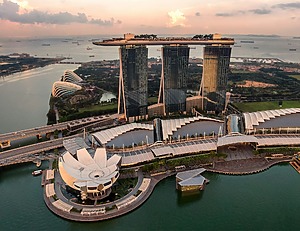
Singapore’s government has ordered all public facilities to cut electricity use amid the ongoing Middle East conflict, directing ministries and statutory boards to set air‑conditioners at 25 °C or higher, unplug non‑essential equipment, actively manage AC, lighting and lift schedules, and speed up the rollout of LED lighting, smart sensors and high‑tick‑rating appliances, while urging public officers and the wider public to adopt habits like switching off lights and choosing energy‑efficient appliances and public transport.
The Ministry of Sustainability and the Environment and the National Environment Agency stated, “The Government is taking the lead in doing its part to save energy and will continue to provide support to help save energy.” And Deputy Prime Minister Gan Kim Yong warned that the conflict could further drive up electricity and food prices.
***
Further reading: Government facilities told to adopt measures to save energy amid Middle East conflict
Related Articles
Here is a list of articles selected by our Editorial Board that have gained significant interest from the public:
Brazil weighs fast-tracking biodiesel tests as diesel prices spike

Brazil’s government is weighing ways to fast‑track testing and implementation of higher biodiesel blends in diesel from the current 15% to up to 20% to ease fuel‑price spikes driven by the Iran war, with Abiove head Andre Nassar saying a decision could come this week and that adding two more laboratories could shrink the test period from 14 months to just 4 months, a move backed by the newly formed AliancaBiodiesel alliance which aims to secure approval for B20 in one step to strengthen energy security using Brazil’s abundant soybean feedstock.
***
Further reading: Brazil weighs fast-tracking biodiesel tests as diesel prices spike

EDF is deploying €240 million to concretely accelerate electrification in France

EDF is allocating €240 million to boost electrification in France on its 80th anniversary, offering €1,000 grants to 80,000 low‑income households for heat‑pump installations, a total of €30 million to help transport operators convert diesel trucks to electric heavy‑goods vehicles, €50 million for 180 long‑distance truck charging stations, and €80 million to provide turnkey sites with grid connections for new electricity‑consuming industries
EDF Chairman Bernard Fontana noted that for 80 years, the EDF Group has supplied the French people with competitive, sovereign, and low‑carbon electricity. Today, more than ever, we want to accelerate the electrification of uses in order to help the country reduce its dependence on fossil fuels with this €240 million financial commitment, EDF is taking concrete action to support households, transport operators and industrial players in electrifying their uses, and to encourage the establishment of new activities in France, in the service of purchasing power and France’s energy and industrial sovereignty.”
***
Further reading: For its 80th anniversary, EDF is deploying €240 million to concretely accelerate electrification in France
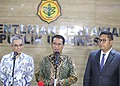
Editor’s Note: The opinions expressed here by the authors are their own, not those of impakter.com — In the Cover Photo: Indonesia’s Minister of Agriculture and Bapanas chief Andi Amran Sulaiman (Middle). Cover Photo Credit: Wikimedia Commons