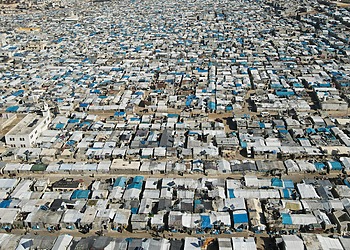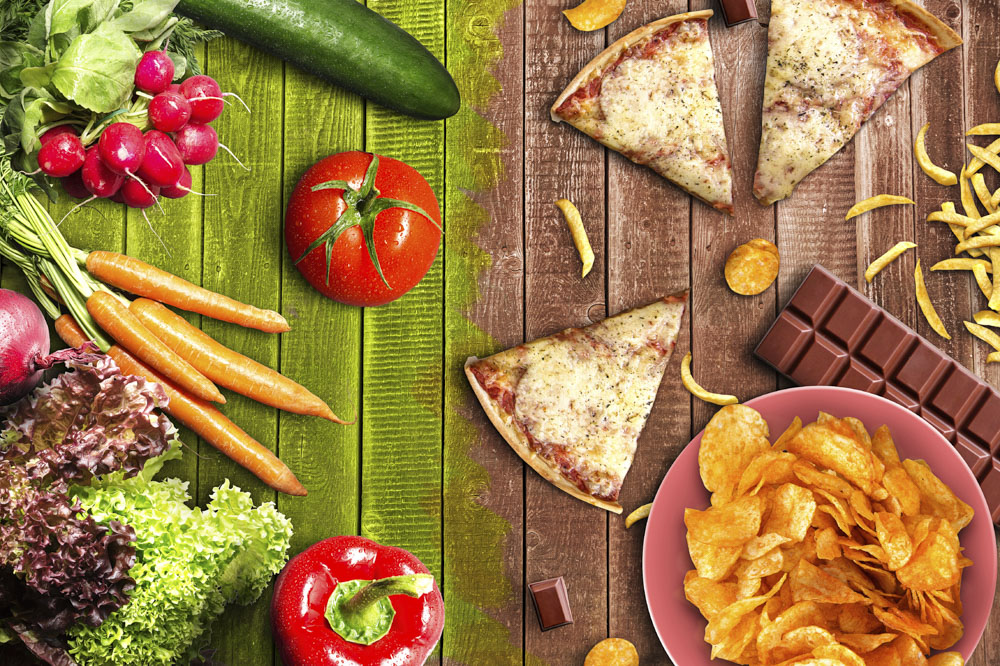
Some of you may wonder why there are so many fast food restaurants in lower income, predominantly African-American neighborhoods. Everyone needs to eat healthy food, and everyone should eat fruits and vegetables, but not everyone has access to fresh produce and food. Fast food restaurants that provide notoriously unhealthy food are not the solution, they are part of the problem. This lack of access is sometimes called food deserts.
A food desert is a geographic area where residents’ access to food, especially healthy food such as fresh fruits and vegetables, is incredibly limited due to the dearth of grocery stores within traveling distance. Food deserts are most commonly found in communities of color and in low-income areas where people do not have access to cars. Poor communities notoriously have fewer or no grocery stores compared to wealthy white neighborhoods—in fact white neighborhoods contain an average of four times as many supermarkets as predominantly black ones! Sometimes the only source of food in these food desert neighborhoods is low cost, high in salt and high in sugar and mainly only processed food is available.
Related article: “WHAT QUALITIES DO YOU WANT IN A DOCTOR: COMPASSION OR COMPETENCE?“
There are some daunting facts that reinforce this profound lack of fresh food to individuals in these food deserts. Here are some disturbing statistics compiled by Teaching Tolerance, a Project of the Southern Poverty Law Center to have a deeper understanding of what is occurring in such neighborhoods:
- Of all U.S households, 2.3 million live more than a mile away from a supermarket and do not have access to a car;
- 5 million people live in low-income areas more than one mile from a supermarket;
- Low-income census tracts have half as many supermarkets as wealthy tracts;
- 8 percent of African Americans live in a census tract with a supermarket, compared to 31 percent of whites;
- Low-income zip codes have 30 percent more convenience stores (since access to grocery stores is limited).
Long term lack of fresh food and produce will have health consequences that could lead to the manifestation of chronic illnesses. Individuals living in a food desert have a higher impact on health—not having enough food to eat, or not having enough fresh fruits and vegetables especially, can cause obesity, diabetes, high blood pressure, and heart disease. Yep, it’s not just over-consumption and too many choices that cause these major health issues, it’s caused by lack of choice and a desperate search for high-calorie, satisfying foods on a budget.
The lack of choices and resources force individuals to make poor food selections.
Lack of access is one of the biggest causes to the obesity epidemic in the United States. Due to food scarcity, many people in this country have to make a choice: consume the cheaper chips and soda from the convenience store, or walk a mile or more to a supermarket for expensive and often unaffordable fruits and vegetables. Some families’ schedules are so over stretched that the idea of taking extra time to get affordable fresh food and produce is too overwhelming. Some individuals may have several jobs and child care to juggle, and the choice to what to eat is obvious: get the chips and soda from the convenience store.
So what do we do?
Well, Arkansas thinks it might have the answer. A paternalistic bill, introduced last week by Republican Rep. Mary Bentley would allow food stamps to be used only to purchase “food products and beverages that have sufficient nutritional value.” The goal of the program? To reduce Medicaid costs associated with covering obesity-related conditions. This bill will do nothing but make things worse in food deserts and make options even slimmer. It does not chip away at the bigger problem.

PHOTO CREDIT: A. Spratt / UnSplash
But there is some good news out of forward-thinking Temple University!
About 30 percent of residents around Temple University Hospital in Philadelphia, PA, live below the federal poverty level—and live in a food desert. It’s a serious problem. To help connect more people with more food options, the hospital and Temple’s Center for Bioethics, Urban Health, and Policy at the Lewis Katz School of Medicine are working with St. Christopher’s Foundation for Children to expand the Farm to Families programs that already are in operation in the city. The program, called FreshRx, actually allows physicians to use FreshRx prescription pads and write scripts . . . wait for it folks. . . for food! Yes, not for medication but food: The doctors write scripts for organic fruits, veggies, and other foods provided by the Lancaster Farm Fresh Cooperative. Not only is Temple University providing such essential foods to patients, but they are collaborating with local agricultural resources.
The simplicity of distributing these scripts is what makes this program so successful. A physician has a FreshRx pad with her/him when seeing patients. During this visit, the physician can talk with the patient about food insecurity and any other issues, and if getting food is a problem, the physician can write a script right then and there for the patient. The patient can then use the script to pick up food the following week. With the script, a family can purchase 12 pounds of fruits and veggies for $12 and 18 pounds for $14! Each week, Farm to Families sets up shop outside of the hospital and people can turn in their scripts to receive their food. It’s that immediate. Incredible.
According to Dr. Nora Jones, Associate Professor of Bioethics, and Associate Director of Temple University’s Center for Bioethics, Urban Health, and Policy, “Physicians often don’t have the tools to help their patients outside the clinic. They can prescribe medications and perform surgeries, but they don’t have similar solutions for their patients who don’t have enough food. Fresh Rx is a tangible intervention that will be incredibly empowering for physicians. The medical students I teach are frustrated with the negative social determinants of health impacting their patients. This will enable them to help do something about it.”
Let’s get more programs like this one. Temple University truly is leading the way on solving the food scarcity epidemic that is facing our nation.
Recommended reading: “THE BATTLE FOR FOOD“