How to Re-engineer Education to tackle Global Challenges of the 21st Century
In recent years, humanitarian crises seem to be occurring at an ever-increasing rate: in 2005, Hurricane Katrina struck the Gulf Coast of the US, which became the costliest natural disaster and one of the five deadliest hurricanes in the history of the United States; in 2010, the earthquake that hit Haiti’s capital city, affected more than three million people; in 2015, war in Syria prompted the world’s biggest refugee crisis; by 2018 Cape Town, a city of four million, became the first major city to face the scenario of running out of water. The increasing number of humanitarian crises urges us to rethink our approach to these problems.
The increasing number of humanitarian crises urge us to rethink Education: there is a need to introduce the global dimension in Education, because professionals are required to tackle rapidly evolving acute social challenges. The need for impactful graduates in the myriad of organizations involved in Global and International Development engaged in humanitarian endeavours is paramount.
In response to these needs, the MSc in Humanitarian Engineering is an innovative education programme which incorporates various social sciences as well as rigorous engineering basics. Humanitarian Engineering is by its nature an interdisciplinary topic and students who attend go on to study Humanitarian Law; Global Health; Ethics; Humanitarianism; Humanitarian Supply Chains as well as more traditionally Engineering subjects of Water Management; Sustainable Energy; Resilience; Sustainable Cities and Infrastructures.
The 21st century humanitarian challenges are complex phenomena manifested at variable temporal and spatial scales; affecting society through disruption in economic, political, cultural and institutional systems – these can not be treated in isolation. Therefore, input from a variety of disciplines and stakeholders to promote proactive communication, diversity and considerable organisational and cultural changes is essential.
A shift towards Humanitarian Engineering Education
How do we educate the Humanitarian Engineer of the 21st Century?
In the last decade, education and research in the humanitarian field has often been limited to a disciplinary approach. Engineering programmes focus on Infrastructures in emergencies or building safe and resilient processes and structures against natural and man-made disasters. However, as the Humanitarian contexts that unfold are more complex than ever, an interdisciplinary perspective can bring new insights. A better understanding of the interplay of engineering, political, economic, social, and medical factors in tackling global challenges can therefore be developed.
Traditional Engineering education programmes are sometimes considered to be uncreative, boring, male-dominated and have minimum relevance to humanitarian challenges. Inclusive, interdisciplinary education programmes, which contribute to the students’ global awareness via a programme of real life-focused activities and problem-based learning, are needed.
While there may be courses in Sustainable Engineering, or courses in International Development, of different types, this course in Humanitarian Engineering is fundamentally different; it integrates relevant social sciences and engineering topics in a meaningful, novel and structured fashion. It brings together a large diversity of disciplines including:
- Engineering (Chemical; Civil; Electrical/Electronic; Mechanical; Systems; Manufacturing);
- Natural sciences (Chemistry; Physics; Computer and Information Science; Materials);
- Health and Medical Sciences;
- Social Sciences (Economics; Law; Sociology; Politics and International Studies);
- Business (Management)
One of the biggest challenges to bring such a course together is connecting and integrating several academic disciplines in the pursuit of a common goal. Thus, teaching in this emerging field requires inclusive education models, and continuous research on the possibilities of how to transfer skills, competencies and knowledge into humanitarian development and crisis. Novel education techniques, such as students as producers of knowledge, teaching by using scenarios, role play assessments, practical activities and field courses are indispensable elements of this education programme.
Graduates of broad disciplines with undergraduate or postgraduate degrees will collaborate on the course. The teaching philosophy in this course is that the learning is taken out of the realm of academic theory and put in the context of real-world applications. Students and professionals with diverse backgrounds will tackle actual societal challenges in the same manner as the global teams assembled by today’s leading workgroups. The emphasis will be upon investigating complex humanitarian issues from a wide range of disciplinary perspectives in order to develop balanced, intelligent and synergistic solutions. It will be a hands-on approach that will enable experiential learning of what it’s like to work within social, economic, legal, ethical and other constraints, and how innovative thinking is required to solve acute real-world problems.
Humanitarian engineering brings enhanced well-being, welfare, and comfort to any individual or community in disadvantaged circumstances. This new concept will enhance public perception of the worth of engineering activities and will change the perception of engineers through a broader engagement. Humanitarian Engineering is an initiative for change based on shared values in the engineering profession. Industry partners, practitioners, policy makers and communities will work together to advance the level of contextual understanding, business and communication effectiveness centred on engineering. The success of humanitarian engineering rests on building a lasting change in culture.
The programme will engage students in interdisciplinary, analytical and critical thinking, creativity, and global awareness, as well as social and ethical perspectives for science. The education model in this field will engage different stakeholders, beneficiaries and users (e.g. policy-makers, actors within humanitarian and development organisations, local communities) so that knowledge and understanding are directed towards real world problems and challenges and create impact.

In the Photo: Chiang Mai, Pa Daet, Thailand . Photo Credit: University of Warwick.
Looking ahead
Humanitarian Engineering offers the opportunity for a greater part of the engineering profession to influence social outcomes, and action taken by individuals and organisations. Failing to do so will result in diverting our valuable human resources from the real imposing problems of our society.
Engineering innovation is often narrowly perceived as a new product or advancement of a new technique. Humanitarian challenges require people trained with a broad perspective who can communicate with different parties with different backgrounds. Finding solutions to challenging problems is what Humanitarian Engineers do with pride; however, the implementation of these engineering solutions still requires effective communication with all stakeholders. The course covers topics that promote inclusiveness, internationalisation, equality and diversity. Our Humanitarian Engineering course is an opportunity to emphasize the help that the graduates can provide to the people who are most in need.
Students who are less tied to the bounded nature of a specific discipline will be more able to develop and seek learning between, beyond and across disciplines. The development of this free and intellectual discourse, bringing together scholars, students and other stakeholders, will provide a valuable learning experience for the students on their academic adventure. Thinking in a problem- and solution-oriented way between engineering, business, culture, and politics, and not just being entrenched within academic disciplines will broaden the students’ perspective on socially relevant solutions. This is the orientation of the educational model: interdisciplinary, in an inspiring community, with a lot of room for personal development, and a great pioneering spirit.
In the presence of pressing Humanitarian challenges, it is difficult to deny that graduates with new skill sets will be increasingly in demand over the next ten years. This educational programme has been designed to meet these demands. A Humanitarian Engineering context likely entails that these challenges will be more efficiently addressed with solutions closely integrated into society. The course aims to train a new generation of highly trained, dedicated professionals with a broad perspective and skills to tackle all aspects of real-world humanitarian problems.
At the University of Warwick are introducing our new Postgraduate Programmes in Humanitarian Engineering, which we believe will pave the way towards an innovative, interdisciplinary, interprofessional teaching and learning approach, enabling our students to not only think differently, but also do differently.
 Dr Volkan Degirmenci is an Associate Professor in School of Engineering in the University of Warwick, UK. Dr. Degirmenci obtained his PhD in Chemical Engineering from Middle East Technical University, Ankara, Turkey, in 2007. The topics of his recent research are directed towards the development of sustainable processes for renewables, biomass conversion, in-situ spectroscopy for the understanding of the reaction mechanisms and structure-activity relations in heterogeneous catalysis. Volkan is also one of the Directors of the Humanitarian Engineering MSc programmes offered at the University of Warwick.
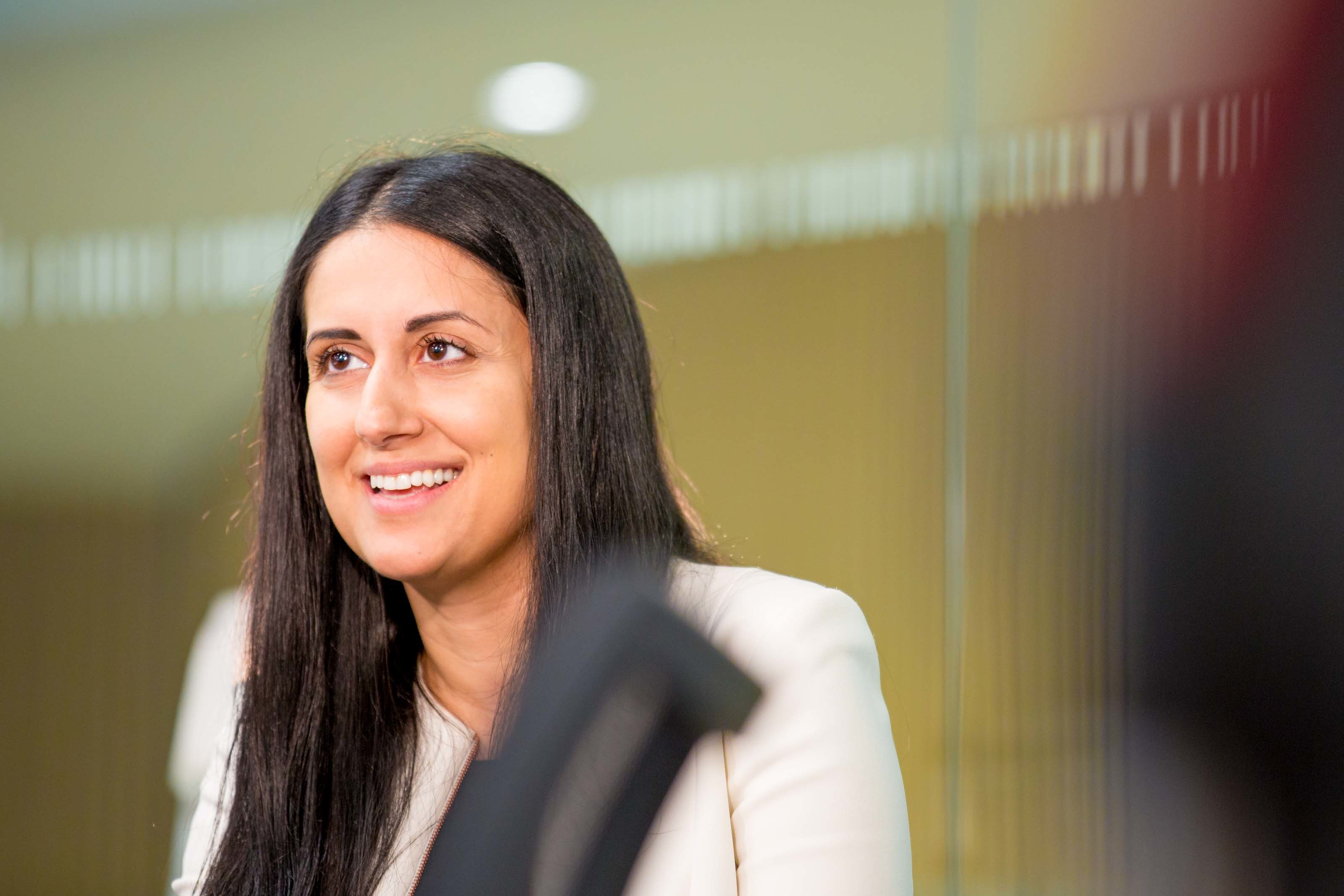 Dr Georgia Kremmyda was born in Sparta, Greece, in 1979. She completed her undergraduate, postgraduate and PhD studies at the National Technical University of Athens (NTUA), Greece. In 2015, Georgia joined the University of Warwick leading Civil Engineering Degrees. Georgia is one of the two creators and Director of the Humanitarian Engineering programmes offered at the University of Warwick and she is also leading the theme Environmental Sustainability at the Warwick Global Research Priority.