Impakter
  • Environment
    • Biodiversity
    • Climate Change
    • Circular Economy
    • Energy
  • FINANCE
    • ESG News
    • Sustainable Finance
    • Business
  • TECH
    • Start-up
    • AI & Machine Learning
    • Green Tech
  • Industry News
    • Entertainment
    • Food and Agriculture
    • Health
    • Politics & Foreign Affairs
    • Philanthropy
    • Science
    • Sport
  • Editorial Series
    • SDGs Series
    • Shape Your Future
    • Sustainable Cities
      • Copenhagen
      • San Francisco
      • Seattle
      • Sydney
  • About us
    • Company
    • Team
    • Global Leaders
    • Partners
    • Write for Impakter
    • Contact Us
    • Privacy Policy
No Result
View All Result
Impakter logo
No Result
View All Result
How Vietnamese Farmers Increase Their Profits From Cultivating Peanuts

How Vietnamese Farmers Increase Their Profits From Cultivating Peanuts

CGIARbyCGIAR
April 19, 2021
in Environment, Food and Agriculture, Foodscape, Impact
0

Vietnamese peanuts have showcased organic farming’s potential. If the peanut industry goes organic, profits may increase whilst lowering the industry’s carbon footprint.

Research suggests that farmers in My Loi Climate-Smart Village in Vietnam can generate more profits from peanut cultivation by going organic.

In My Loi Climate-Smart Village (CSV) inorganic fertilizers are being applied in conventional peanut production to improve crop yields, often at the expense of the environment. Besides their environmental impact, these fertilizers are also contributing to greenhouse gas emissions, and thus to climate change. Agricultural stakeholders, including the CGIAR Research Program on Climate Change, Agriculture and Food Security (CCAFS), have been pushing for more practices that boost crop yields while protecting the environment. One such approach is organic farming.

Early results from a 2019 CCAFS-funded experiment conducted in My Loi CSV on organic farming suggest a rewarding outcome for peanut farmers. The experiment involves growing peanuts in three different plots: organic (with no inorganic fertilizer), partly inorganic (with limited inorganic fertilizer), and conventional (with inorganic fertilizer). The peanut yields from these plots were compared using peanut pod yield, seed quality, and food safety.

Organic plots generated the highest profits although all three of them showed minor differences in terms of the other variables. Seeds from organic plots have also grown greener leaves and seemingly stronger plants than those with conventional treatments. No pesticide residue was found in organic plots, although the case was the same for the other two plots.

STABLE MARKET, SUPPORTIVE POLICIES

The benefits of organic peanut farming may be promising, but this is not an assurance that farmers will no longer return to their conventional methods. Overall, the participating farmers were positive about the outcome of this experiment. They showed a willingness to halt the use of inorganic fertilizers, pesticides, and herbicides if it meant less exposure to toxic chemicals, safer products, and fewer pollutants in the environment.

However, organic farming is significantly more expensive than conventional practice. The additional cost is mainly due to the labor that the farmers need to spend on manual weed control. The higher cost of going organic may lead to reluctance and even some resistance among farmers. What they need are stable market links and other forms of incentives to have their full buy-in.


Related Articles: Social Farming for Sustainable Development | Sustainable Agriculture in an Age of Commercial Farming | Bringing Climate Action to Farming Communities

On the policy side, the Prime Minister has signed several decrees that support organic farming in Vietnam. For example, Decision No. 885 / QD-TTg mandates the government to increase the agricultural land dedicated for organic farming by 1.5% to 2% by 2025 and 2.5% to 3% by 2030. Meanwhile, Decree 109/2018/NĐ-CP lays out the regulatory support required for organic farming. Creating these organic-only areas surrounded by buffer zones can help the government source organic raw materials and monitor organic standards easily.

OUTLOOK FOR ORGANIC FARMING

The results of this experiment may be limited due to its scope, but nevertheless offer several benefits to the farmers and their environment. To scale organic farming in the Vietnamese agricultural sector, the government needs to enforce related policies effectively. Farmers may be tempted to return to their conventional ways if they are not incentivized to adopt organic farming. Incentives may include higher farmgate prices and more demand from consumers, which will increase their economic returns per hectare.

Download the publication: From conventional to organic peanut cultivation: Preliminary on-farm field experiments in My Loi Climate-Smart Village, Ha Tinh province, Vietnam.


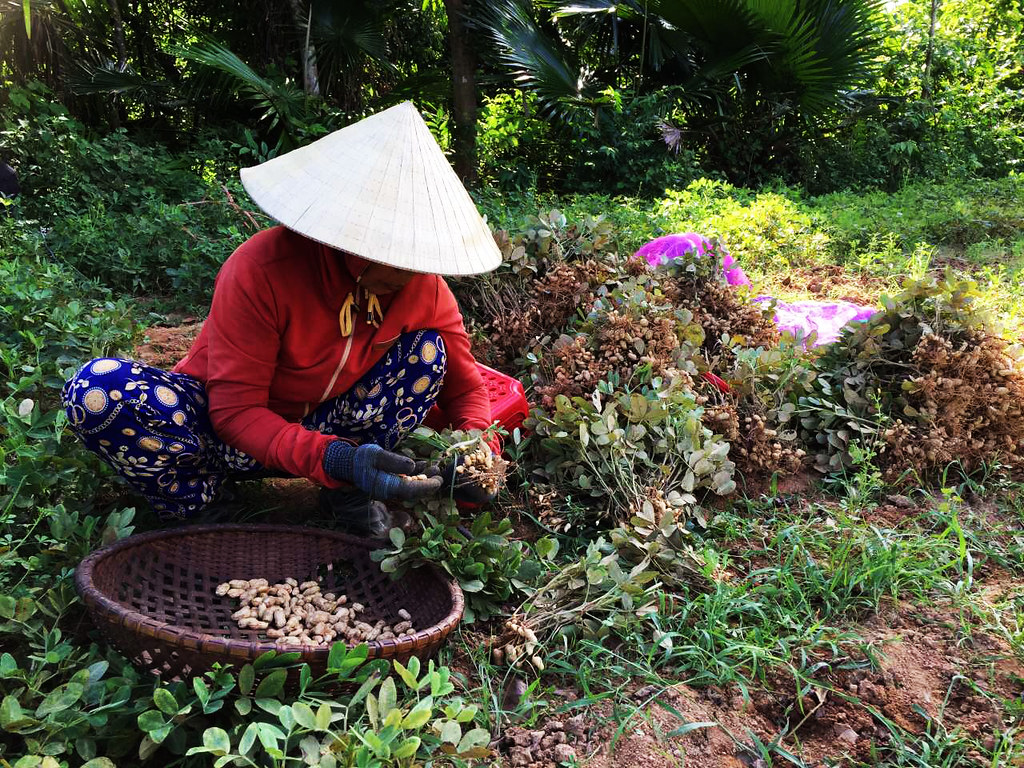
Editor’s Note: The opinions expressed here by Impakter.com columnists are their own, not those of Impakter.com. — In the Featured Photo: Farmer harvesting peanuts in My Loi Climate-Smart Village, Vietnam. Profits from peanuts can be increased by producing them organically. Featured Photo Credit: ICRAF-Vietnam.

Tags: EnvironmentOrganic farmingSustainability
Previous Post

Local Communities Bear the Burden of Ecological Threats

Next Post

5 Reasons the US Should Cut its GHG Emissions in Half by 2030

Related Posts

ESG news regarding Deforestation Mandate Being Pushed; EUs Acceleration on Hydrogen and Net Zero Revolution; AT&T Will End All DEI; UK Watchdog Blocks Nike and Lacoste Ads Over Green Claims.
Business

U-Turn in Europe: Deforestation Mandate Pushed Back Again

Today’s ESG Updates EU Lawmakers Agree to Delay Deforestation Rules: The EU has delayed and simplified its Deforestation Regulation until...

byEge Can Alparslan
December 5, 2025
ESG News regarding Flooding in Indonesia; Glencore promises copper production boost; Trump proposes slashing fuel efficiency standards, and Vulcan Energy receives $2.57bn of funding for lithium project
Business

Indonesians Blame Deforestation for Recent Floodings

Today’s ESG Updates: More than 700 Lives Lost in Recent Indonesian Floods: A combination of mass deforestation and heavy rainfall...

byAriq Haidar
December 4, 2025
ESG News regarding the UK’s Updated Environmental Improvement Plan, modernizing Mauritania’s railway system, the EU carbon border tax, and the EU’s cross-border energy projects
Business

UK Unveils Updated Environmental Improvement Plan

Today’s ESG Updates UK Accelerates Nature Recovery: The government commits £500m to Landscape Recovery and targets 250,000 hectares of restored...

bySarah Perras
December 1, 2025
ESG news covering the EU’s delay of deforestation rules, rising U.S. housing risks from climate impacts, IFC’s $100M clean-energy investment in emerging markets, and ABN AMRO’s appointment of a new Chief Sustainability Officer.
Business

EU Delays Deforestation Regulation Again

Today’s ESG Updates EU Delays Deforestation Law: Europe postpones the EUDR by one year and loosens compliance rules, raising concerns...

byEge Can Alparslan
November 21, 2025
COP30: Countries’ Climate Agrifood Ambitions Undermined by Funding Gaps, Report Finds
Biodiversity

COP30: Countries’ Climate Agrifood Ambitions Undermined by Funding Gaps, Report Finds

Developing countries recognize the urgent need to adapt agrifood systems to climate change, but most National Adaptation Plans (NAPs) are...

byThe Food and Agriculture Organization of the United Nations (FAO)
November 19, 2025
ESG News regarding: only 16% of companies on track to hit net zero targets by 2050 per Accenture report, Orsted completes green transformation, EU and UK to begin carbon market link negotiations, China to expand renewable energy sector
Business

Only 16% of Large Companies on Track for Net Zero

Today’s ESG Updates Accenture Report Highlights Net Zero: While 89% of the world’s largest companies link decarbonization to business value,...

bySarah Perras
November 12, 2025
Native American Sovereignty
Society

Native American Sovereignty and Environmental Sustainability

Sustainability is defined as harvesting or using a resource so that it is not depleted or permanently damaged. Environmental sustainability...

byDr. Annis Pratt
November 11, 2025
From Caves to COP30: Comparing the Neanderthals and Modern Humans
COP30

From Caves to COP30: Comparing the Neanderthals and Modern Humans

There is much positive to be said about life in this twenty-first century; we live longer and have multiple technologies...

byRichard Seifman - Former World Bank Senior Health Advisor and U.S. Senior Foreign Service Officer
November 9, 2025
Next Post
5 Reasons the US Should Cut its GHG Emissions in Half by 2030

5 Reasons the US Should Cut its GHG Emissions in Half by 2030

Recent News

Buying a Ferrari F12 Berlinetta in Rosso Ferrari

Buying a Ferrari? Here Are Some Factors That Affect Pricing

December 10, 2025
ESG News regarding U.S. court overturning Trump wind freeze, EU approving a 90% emissions cut target, OECD warning about SME artificial intelligence gaps, and the EU Commission supporting Poland’s first nuclear plant.

Court Blocks Trump Wind Energy Ban, Reopening U.S. Clean Energy Development

December 10, 2025
First-time Investor Mistakes on screen

First-time Investor Mistakes Millennials Make (And How to Avoid Them)

December 10, 2025
  • ESG News
  • Sustainable Finance
  • Business

© 2025 Impakter.com owned by Klimado GmbH

No Result
View All Result
  • Environment
    • Biodiversity
    • Climate Change
    • Circular Economy
    • Energy
  • FINANCE
    • ESG News
    • Sustainable Finance
    • Business
  • TECH
    • Start-up
    • AI & Machine Learning
    • Green Tech
  • Industry News
    • Entertainment
    • Food and Agriculture
    • Health
    • Politics & Foreign Affairs
    • Philanthropy
    • Science
    • Sport
  • Editorial Series
    • SDGs Series
    • Shape Your Future
    • Sustainable Cities
      • Copenhagen
      • San Francisco
      • Seattle
      • Sydney
  • About us
    • Company
    • Team
    • Global Leaders
    • Partners
    • Write for Impakter
    • Contact Us
    • Privacy Policy

© 2025 Impakter.com owned by Klimado GmbH