Impakter
  • Environment
    • Biodiversity
    • Climate Change
    • Circular Economy
    • Energy
  • FINANCE
    • ESG News
    • Sustainable Finance
    • Business
  • TECH
    • Start-up
    • AI & Machine Learning
    • Green Tech
  • Industry News
    • Entertainment
    • Food and Agriculture
    • Health
    • Politics & Foreign Affairs
    • Philanthropy
    • Science
    • Sport
  • Editorial Series
    • SDGs Series
    • Shape Your Future
    • Sustainable Cities
      • Copenhagen
      • San Francisco
      • Seattle
      • Sydney
  • About us
    • Company
    • Team
    • Partners
    • Write for Impakter
    • Contact Us
    • Privacy Policy
No Result
View All Result
  • Environment
    • Biodiversity
    • Climate Change
    • Circular Economy
    • Energy
  • FINANCE
    • ESG News
    • Sustainable Finance
    • Business
  • TECH
    • Start-up
    • AI & Machine Learning
    • Green Tech
  • Industry News
    • Entertainment
    • Food and Agriculture
    • Health
    • Politics & Foreign Affairs
    • Philanthropy
    • Science
    • Sport
  • Editorial Series
    • SDGs Series
    • Shape Your Future
    • Sustainable Cities
      • Copenhagen
      • San Francisco
      • Seattle
      • Sydney
  • About us
    • Company
    • Team
    • Partners
    • Write for Impakter
    • Contact Us
    • Privacy Policy
No Result
View All Result
Impakter
No Result
View All Result

How Vietnamese Farmers Increase Their Profits From Cultivating Peanuts

byCGIAR
April 19, 2021
in Environment, Food and Agriculture, Foodscape, Impact

Vietnamese peanuts have showcased organic farming’s potential. If the peanut industry goes organic, profits may increase whilst lowering the industry’s carbon footprint.

Research suggests that farmers in My Loi Climate-Smart Village in Vietnam can generate more profits from peanut cultivation by going organic.

In My Loi Climate-Smart Village (CSV) inorganic fertilizers are being applied in conventional peanut production to improve crop yields, often at the expense of the environment. Besides their environmental impact, these fertilizers are also contributing to greenhouse gas emissions, and thus to climate change. Agricultural stakeholders, including the CGIAR Research Program on Climate Change, Agriculture and Food Security (CCAFS), have been pushing for more practices that boost crop yields while protecting the environment. One such approach is organic farming.

Early results from a 2019 CCAFS-funded experiment conducted in My Loi CSV on organic farming suggest a rewarding outcome for peanut farmers. The experiment involves growing peanuts in three different plots: organic (with no inorganic fertilizer), partly inorganic (with limited inorganic fertilizer), and conventional (with inorganic fertilizer). The peanut yields from these plots were compared using peanut pod yield, seed quality, and food safety.

Organic plots generated the highest profits although all three of them showed minor differences in terms of the other variables. Seeds from organic plots have also grown greener leaves and seemingly stronger plants than those with conventional treatments. No pesticide residue was found in organic plots, although the case was the same for the other two plots.

STABLE MARKET, SUPPORTIVE POLICIES

The benefits of organic peanut farming may be promising, but this is not an assurance that farmers will no longer return to their conventional methods. Overall, the participating farmers were positive about the outcome of this experiment. They showed a willingness to halt the use of inorganic fertilizers, pesticides, and herbicides if it meant less exposure to toxic chemicals, safer products, and fewer pollutants in the environment.

However, organic farming is significantly more expensive than conventional practice. The additional cost is mainly due to the labor that the farmers need to spend on manual weed control. The higher cost of going organic may lead to reluctance and even some resistance among farmers. What they need are stable market links and other forms of incentives to have their full buy-in.


Related Articles: Social Farming for Sustainable Development | Sustainable Agriculture in an Age of Commercial Farming | Bringing Climate Action to Farming Communities

On the policy side, the Prime Minister has signed several decrees that support organic farming in Vietnam. For example, Decision No. 885 / QD-TTg mandates the government to increase the agricultural land dedicated for organic farming by 1.5% to 2% by 2025 and 2.5% to 3% by 2030. Meanwhile, Decree 109/2018/NĐ-CP lays out the regulatory support required for organic farming. Creating these organic-only areas surrounded by buffer zones can help the government source organic raw materials and monitor organic standards easily.

OUTLOOK FOR ORGANIC FARMING

The results of this experiment may be limited due to its scope, but nevertheless offer several benefits to the farmers and their environment. To scale organic farming in the Vietnamese agricultural sector, the government needs to enforce related policies effectively. Farmers may be tempted to return to their conventional ways if they are not incentivized to adopt organic farming. Incentives may include higher farmgate prices and more demand from consumers, which will increase their economic returns per hectare.

Download the publication: From conventional to organic peanut cultivation: Preliminary on-farm field experiments in My Loi Climate-Smart Village, Ha Tinh province, Vietnam.


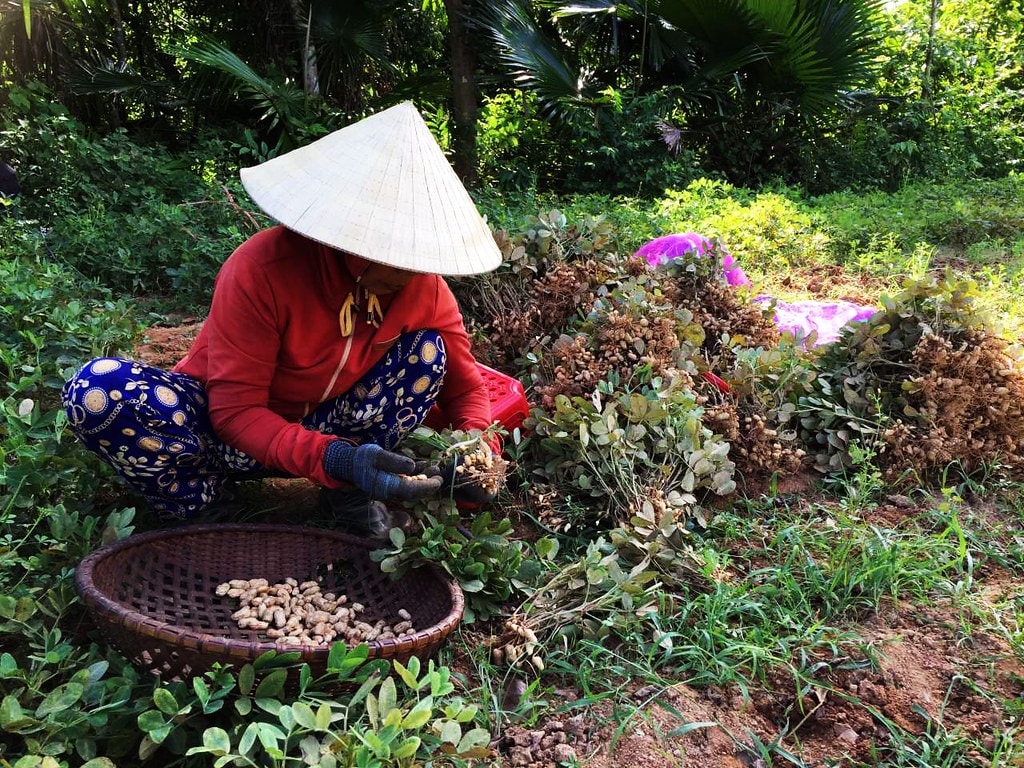
Editor’s Note: The opinions expressed here by Impakter.com columnists are their own, not those of Impakter.com. — In the Featured Photo: Farmer harvesting peanuts in My Loi Climate-Smart Village, Vietnam. Profits from peanuts can be increased by producing them organically. Featured Photo Credit: ICRAF-Vietnam.


Tags: EnvironmentOrganic farmingSustainability
Previous Post

Local Communities Bear the Burden of Ecological Threats

Next Post

5 Reasons the US Should Cut its GHG Emissions in Half by 2030

Related Posts

Space‑Based Solar Power test
Energy

Solar Power From Space: How Close Is It to Reality?

March 11, 2026
Oil Shocks and Crashes: Where Are We Headed With the 2026 Crisis?
Energy

Oil Shocks and Crashes: Where Are We Headed With the 2026 Crisis?

March 11, 2026
Fuel or Fiction? How Formula 1 Could Make or Break Sustainable Fuels
Business

Fuel or Fiction? How Formula 1 Could Make or Break Sustainable Fuels

March 11, 2026
Next Post
5 Reasons the US Should Cut its GHG Emissions in Half by 2030

5 Reasons the US Should Cut its GHG Emissions in Half by 2030

Recent News

ESG news regarding Trump’s planning first new U.S. oil refinery in 50 years backed by Reliance Industries, UK’s net-zero 2050 goal costing far less than critics claim, IEA proposing record oil release to ease global prices, and Elon Musk’s xAI being approved to run methane turbines despite opposition.

Trump Unveils 168,000 Bpd Refinery Backed by India’s Reliance

March 11, 2026
Space‑Based Solar Power test

Solar Power From Space: How Close Is It to Reality?

March 11, 2026

Impakter informs you through the ESG news site and empowers your business CSRD compliance and ESG compliance with its Klimado SaaS ESG assessment tool marketplace that can be found on: www.klimado.com

Registered Office Address

Klimado GmbH
Niddastrasse 63,

60329, Frankfurt am Main, Germany


IMPAKTER is a Klimado GmbH website

Impakter is a publication that is identified by the following International Standard Serial Number (ISSN) is the following 2515-9569 (Printed) and 2515-9577 (online – Website).


Office Hours - Monday to Friday

9.30am - 5.00pm CEST


Email

stories [at] impakter.com

By Audience

  • TECH
    • Start-up
    • AI & MACHINE LEARNING
    • Green Tech
  • ENVIRONMENT
    • Biodiversity
    • Energy
    • Circular Economy
    • Climate Change
  • INDUSTRY NEWS
    • Entertainment
    • Food and Agriculture
    • Health
    • Politics & Foreign Affairs
    • Philanthropy
    • Science
    • Sport
    • Editorial Series

ESG/Finance Daily

  • ESG News
  • Sustainable Finance
  • Business

About Us

  • Team
  • Partners
  • Write for Impakter
  • Contact Us
  • Privacy Policy

© 2026 IMPAKTER. All rights reserved.

No Result
View All Result
  • Environment
    • Biodiversity
    • Climate Change
    • Circular Economy
    • Energy
  • FINANCE
    • ESG News
    • Sustainable Finance
    • Business
  • TECH
    • Start-up
    • AI & Machine Learning
    • Green Tech
  • Industry News
    • Entertainment
    • Food and Agriculture
    • Health
    • Politics & Foreign Affairs
    • Philanthropy
    • Science
    • Sport
  • Editorial Series
    • SDGs Series
    • Shape Your Future
    • Sustainable Cities
      • Copenhagen
      • San Francisco
      • Seattle
      • Sydney
  • About us
    • Company
    • Team
    • Partners
    • Write for Impakter
    • Contact Us
    • Privacy Policy

© 2026 IMPAKTER. All rights reserved.