Impakter
  • Environment
    • Biodiversity
    • Climate Change
    • Circular Economy
    • Energy
  • FINANCE
    • ESG News
    • Sustainable Finance
    • Business
  • TECH
    • Start-up
    • AI & Machine Learning
    • Green Tech
  • Industry News
    • Entertainment
    • Food and Agriculture
    • Health
    • Politics & Foreign Affairs
    • Philanthropy
    • Science
    • Sport
  • Editorial Series
    • SDGs Series
    • Shape Your Future
    • Sustainable Cities
      • Copenhagen
      • San Francisco
      • Seattle
      • Sydney
  • About us
    • Company
    • Team
    • Partners
    • Write for Impakter
    • Contact Us
    • Privacy Policy
No Result
View All Result
Impakter logo
No Result
View All Result
How the EU’s Historic New Law Targets Climate Change and Biodiversity Loss

How the EU’s Historic New Law Targets Climate Change and Biodiversity Loss

New regulations aim to restore degraded habitats amidst farmer protests and political tensions

Alessandro CamillobyAlessandro Camillo
June 19, 2024
in Biodiversity, Climate Change, Editors' Picks, Environment, ESG News
0

The European Union (EU) passed a historic law on Monday to protect the continent’s natural habitats. The landmark law was passed following a vote at the Council of the European Union meeting in Luxembourg that was won by a narrow margin. 

For a law to be passed, 55% of member states, representing at least 65% of the EU population, must vote in favour of it. After Slovakia and Austria’s last-minute change of heart, the votes in favour cleared this threshold by a mere 1.07 percentage points. This comes after months of impasses between the EU and the continent’s farmers concerning growing climate-focused regulations that some farmers feel are “drowning [them].”

“Today’s decision is a victory for nature,” wrote Leonore Gewessler on X, Austria’s Minister for Climate Action, after the vote on Monday. “My conscience tells me unmistakably [that] when the healthy and happy life of future generations is at stake, courageous decisions are needed.” Gewessler’s vote was credited with saving the proposal.

An environmental group coalition, led by WWF Europe, said: “Today’s vote is a massive victory for Europe’s nature and citizens who have been long calling for immediate action to tackle nature’s alarming decline.”

The goal of the new law is to implement measures to restore a minimum of 20% of the EU’s land and sea habitats by 2030. Additionally, by 2050, all the ecosystems in need of restoration should have protections in place.

The European Commission first proposed this law in June 2022, as part of the EU biodiversity strategy for 2030, which makes up part of the larger European Green Deal. It was initially proposed to help the EU reach the international commitments it made at the 2022 UN Biodiversity Conference (COP 15), particularly in adherence to the Kunming-Montréal Global Biodiversity Framework which was agreed upon at the conference.

The overarching goal of the regulation is to combat climate change and the effects of natural disasters within the EU territory. Legally binding obligations are put in place for nature restorations in the affected areas outlined by the council. These areas include terrestrial, coastal and freshwater, forest, agricultural and urban ecosystems, including wetlands, grasslands, forests, rivers and lakes, as well as marine ecosystems, such as seagrass and sponge and coral beds.

Regarding habitats the council found to be in “poor condition,” member states agreed to achieve 30% restoration outright by 2030, at least 60% by 2040 and at least 90% by 2050.

Over 80% of EU habitats are in poor shape, according to the European Commission. “No other part of the world has this little nature left, needed this law more and got so close to not having it,” says Pieter de Pous, an analyst at the climate think tank E3G. 
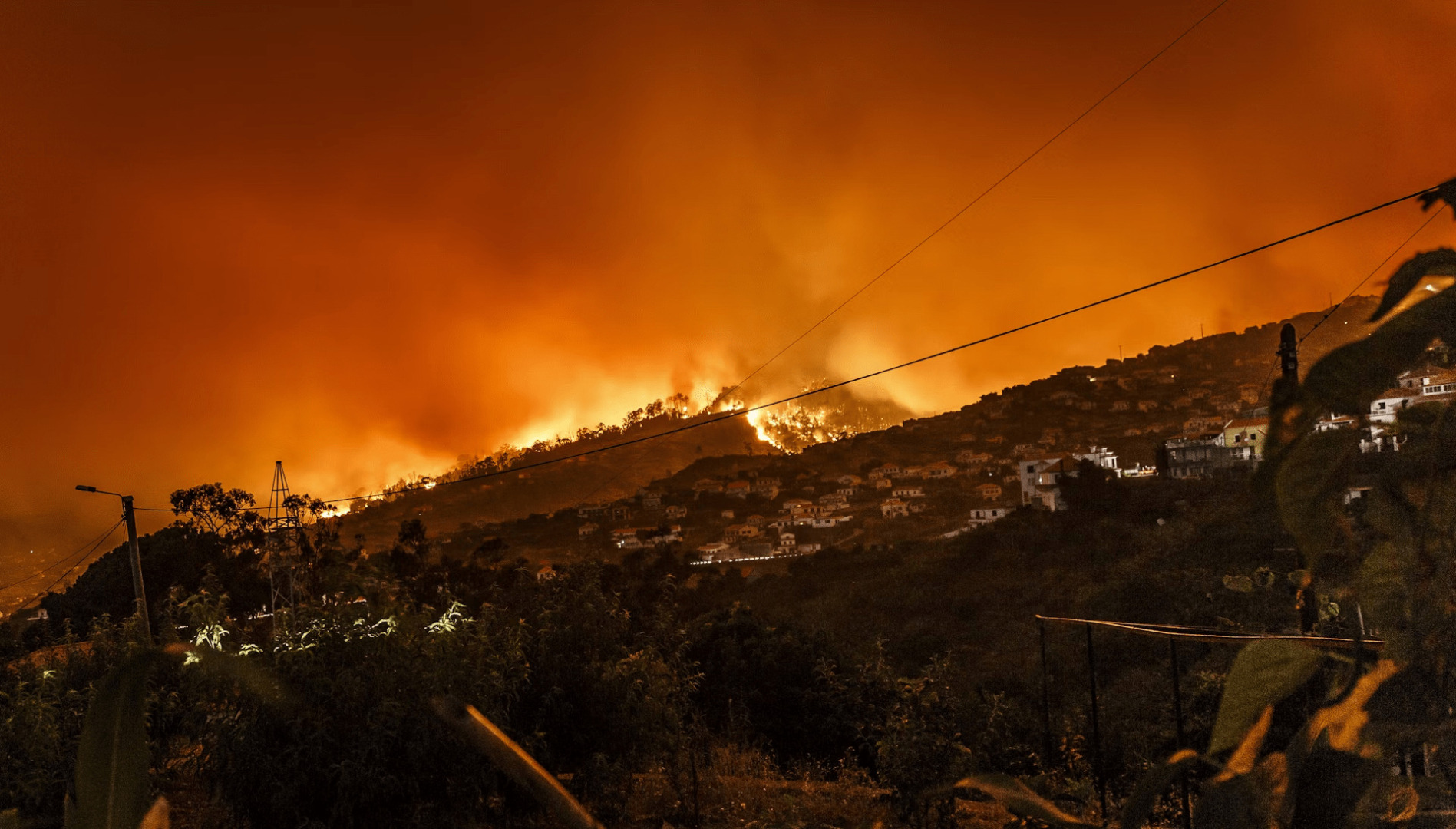
In the photo: Wildfire in Estreito da Calheta, Portugal, September 7th, 2016. Photo Credit: Michael Held.

Moreover, the law sets out to prevent any “significant deterioration” of areas that have reached good condition due to restoration efforts as well as reverse the declining pollinator populations  — such as bees and other wild insects  — by 2030 at the latest.

Member states are also expected to support efforts such as the planting of over three billion trees by 2030, turning at least 25,000 kilometres of rivers into free-flowing rivers by the same target date, and making sure there is no net loss on urban green spaces and tree canopy cover, again, until 2030.


Related Articles: Europe’s Efforts to ‘Restore Nature’ Hit a Snag | EU Nature Restoration Law: A Turning Point for Biodiversity | The EU’s Tango With Sustainability: New ESG Reporting Standards Adopted | EU Fit for 55: Parliament Approves Crucial Parts of the Climate Package

In 2033, the European Commission will meet to review the effects of the regulation on the continent’s agricultural, fishing, and forestry sectors, in addition to the wider socio-economic impact.

Overall, 20 countries voted in favour of the law. Belgium abstained, while Finland, Hungary, Italy, the Netherlands, Poland and Sweden voted against the law. The main criticism lobbied against the regulation was simply the cost of the proposal and the strict administrative burdens placed on member states.

Copa and Cogeca, the EU’s biggest farming lobby group, criticised the ministers who voted in favour of the law, labelling it a “flawed proposal” that would lead to legislative battles across European courts.

Still, the reaction by many climate activists and green party ministers across Europe was overwhelmingly positive. “Despite the weakening of the law, this deal offers a ray of hope for Europe’s nature, future generations and the livelihoods of rural communities,” says Špela Bandelj Ruiz, a Greenpeace biodiversity campaigner.

Alain Maron, Minister for Climate Transition, Environment, Energy and Participatory Democracy of the Government of the Brussels-Capital Region, said: 

“There is no time for a break in protecting our environment. Today, the Council of the EU is choosing to restore nature in Europe, thereby protecting its biodiversity and the living environment of European citizens. It is our duty to respond to the urgency of the collapse of biodiversity in Europe, but also to enable the European Union to meet its international commitments. The European delegation will be able to go to the next COP with its head held high.”

It remains to be seen how well this law will be implemented and if the concerns regarding cost and administrative obstacles are fair, but the passing of this regulation is undoubtedly a monumental moment in the EU’s united front against climate change.


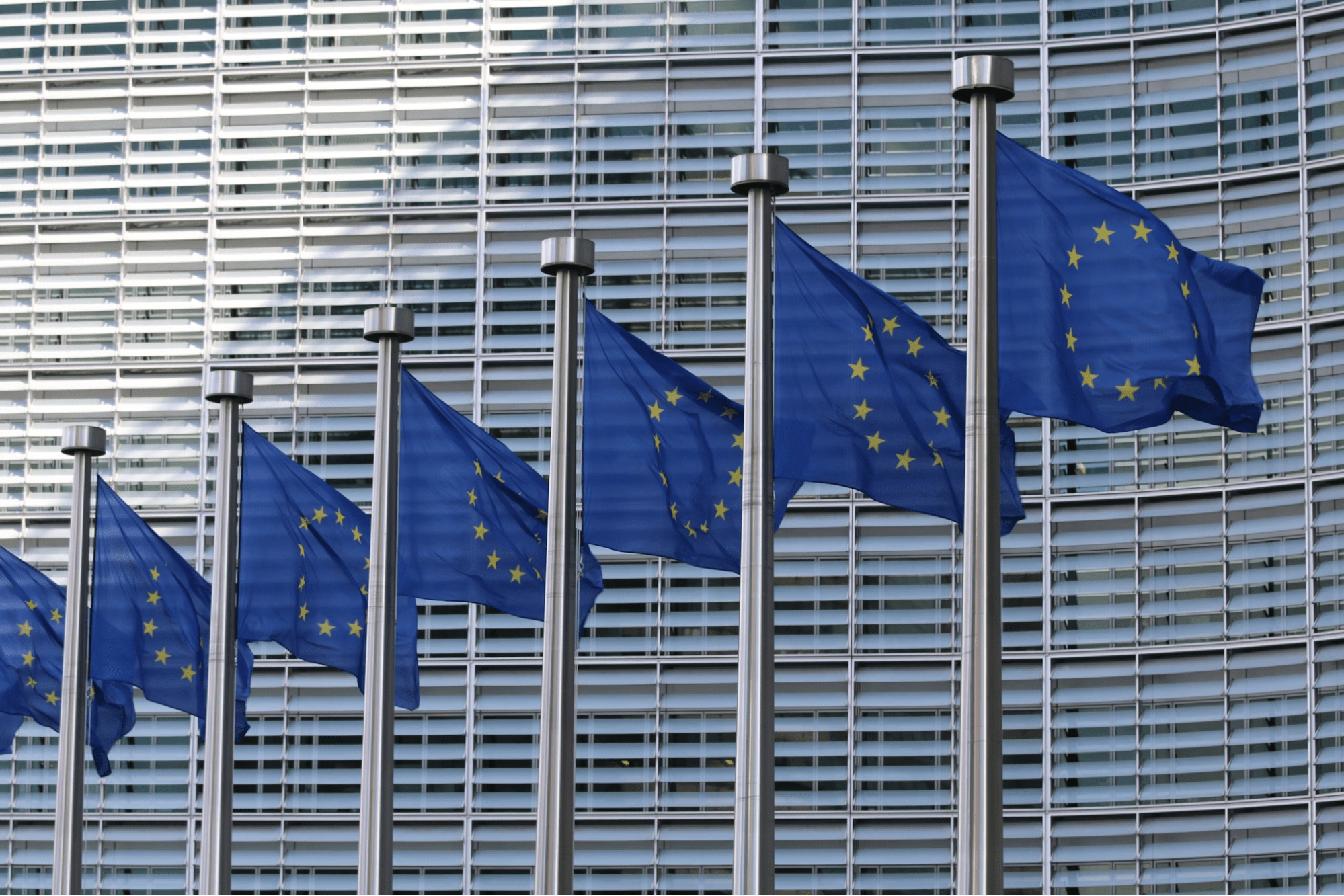
Editor’s Note: The opinions expressed here by the authors are their own, not those of Impakter.com — In the Cover Photo: EU flags at the European Commission Berlaymont building, Brussels, Belgium, July 15th, 2020. Cover Photo Credit: Guillaume Périgois.
Tags: biodiversityBiodiversity LossClimate ChangeEUEuropean Union
Previous Post

Could Perovskites Reshape the Solar Industry?

Next Post

Small Town, Big Impact: Overstrand Local Municipality’s Sustainability Initiatives

Related Posts

Coal plants get reprieve on mercury limits, Striking unions fail to halt Milei's sweeping labor bill, Sweden's regulator reviews Swedbank's compliance controls, France backs INEOS decarbonization with €300M
Business

Trump Admin Weakens Coal Plant Mercury Regulations

Today’s ESG Updates: Coal Plants Get Reprieve on Mercury Limits: Trump's EPA is rolling back mercury emission limits to cut...

byEge Can Alparslan
February 20, 2026
Migration Policy in Europe: Greece and Spain Take Divergent Paths
Politics & Foreign Affairs

Migration Policy in Europe: Greece and Spain Take Divergent Paths

In the summer of 2025, I traveled to Greece for a research trip and, during a break from the “migration...

byDr. Shepherd Mutsvara - Research Fellow at the University of Münster, Germany
February 20, 2026
How Climate Change Is Reshaping Arctic Geopolitics
Climate Change

How Climate Change Is Reshaping Arctic Geopolitics

Once a remote and largely inaccessible region, the Arctic has become the focus of far-reaching international developments. In recent years, competition among...

byPier Paolo Raimondi - Senior Researcher at the Energy, Climate and Resources (ECR) Program of the Istituto Affari Internazionali (IAI)
February 20, 2026
How an Intersectional Approach Can Help Us Address Vulnerability to Climate Change
Climate Change

How an Intersectional Approach Can Help Us Address Vulnerability to Climate Change

Different forms of discrimination and marginalization — such as racism, ableism, and discrimination on the basis of gender identity —...

byInternational Institute for Sustainable Development (IISD)
February 20, 2026
biodiversity loss
Biodiversity

The Economics of Biodiversity Loss

In the 1990s, India’s vulture population collapsed due to the unintended knock-on effect of a veterinary drug for cattle, with...

byStefano Giglio - Professor at Yale Universityand2 others
February 18, 2026
ESG news on TotalEnergies climate trial, Heathrow SAF incentives, Shein EU probe, EU climate resilience gap
Business

TotalEnergies Climate Trial Shock

Today’s ESG Updates TotalEnergies Climate Trial: French prosecutors intervene to defend TotalEnergies in a landmark climate lawsuit, challenging environmental groups’...

byEve Rogers
February 18, 2026
Underwater Wall to Protect the ‘Doomsday Glacier’: Necessary Intervention or Costly Distraction?
Climate Change

Underwater Wall to Protect the ‘Doomsday Glacier’: Necessary Intervention or Costly Distraction?

Thwaites Glacier in Antarctica earned its dramatic nickname, the “Doomsday Glacier,” because its collapse could trigger a catastrophic rise in...

byBenjamin Clabault
February 17, 2026
ESG News regarding Trump criticizing Newsom over UK green energy agreement, new analysis questioning the climate benefits of AI, EU greenlighting €1.04 billion Danish programme to reduce farm emissions and restore wetlands, and Santos winning court case over alleged misleading net-zero claims.
Business

Trump Slams Newsom Over UK Green Energy Deal

Today’s ESG Updates: Trump Slams Newsom’s UK Green Deal: Criticizes California governor for signing a clean energy agreement with the...

byAnastasiia Barmotina
February 17, 2026
Next Post
Overstrand Local Municipality

Small Town, Big Impact: Overstrand Local Municipality’s Sustainability Initiatives

Recent News

A woman going through the checking account guide

How Checking Accounts Work: Simple Steps to Get Started Fast

February 20, 2026
Coal plants get reprieve on mercury limits, Striking unions fail to halt Milei's sweeping labor bill, Sweden's regulator reviews Swedbank's compliance controls, France backs INEOS decarbonization with €300M

Trump Admin Weakens Coal Plant Mercury Regulations

February 20, 2026
Crowds and filmmakers on the red carpet at the 76th Berlin International Film Festival in 2026

At Berlinale 2026, Artists Refuse the Comfort of Neutrality

February 20, 2026
  • ESG News
  • Sustainable Finance
  • Business

© 2025 Impakter.com owned by Klimado GmbH

No Result
View All Result
  • Environment
    • Biodiversity
    • Climate Change
    • Circular Economy
    • Energy
  • FINANCE
    • ESG News
    • Sustainable Finance
    • Business
  • TECH
    • Start-up
    • AI & Machine Learning
    • Green Tech
  • Industry News
    • Entertainment
    • Food and Agriculture
    • Health
    • Politics & Foreign Affairs
    • Philanthropy
    • Science
    • Sport
  • Editorial Series
    • SDGs Series
    • Shape Your Future
    • Sustainable Cities
      • Copenhagen
      • San Francisco
      • Seattle
      • Sydney
  • About us
    • Company
    • Team
    • Partners
    • Write for Impakter
    • Contact Us
    • Privacy Policy

© 2025 Impakter.com owned by Klimado GmbH