

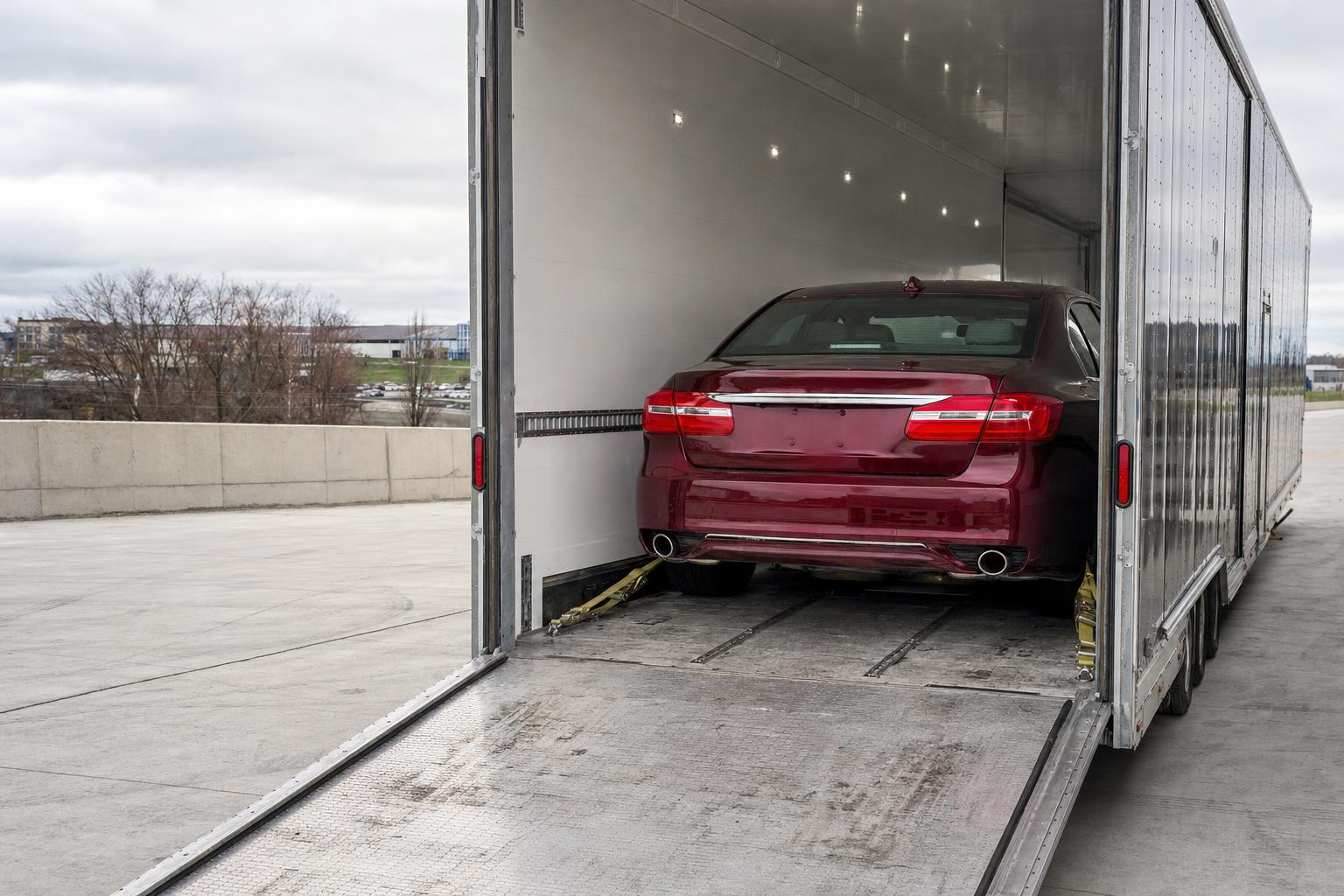
Shipping a car is a common part of a long-distance move, an online car purchase, or a seasonal relocation. The price you pay depends mostly on distance, but vehicle size, transport type, timing, and the company you book with can move the final number by hundreds of dollars. This guide pulls together the latest published price benchmarks, shows how they compare, and explains how to get a quote you can actually rely on.
Quick Facts About Car Shipping Costs
- Average cost: Kelley Blue Book’s quote research puts the average at about USD 1,020 to ship a standard car 1,000 miles on an open carrier, or roughly USD 1.02 per mile.
- Short vs long trips: Per-mile prices fall as distance grows, from about USD 1.50 per mile at 500 miles to about USD 0.56 per mile at 2,500 miles.
- Enclosed transport: Kelley Blue Book puts the premium at 50% or more, and Cars.com’s averages show enclosed costing about 38% to 72% more than open, depending on distance.
- Shipping time: HomeGuide estimates that shipping a car takes 2 to 9 days on average, depending on distance.
- Driving instead: For trips of around 1,000 miles, driving is usually cheaper in cash, but the gap narrows once you count vehicle wear and depreciation.
Typical Car Shipping Costs by Distance
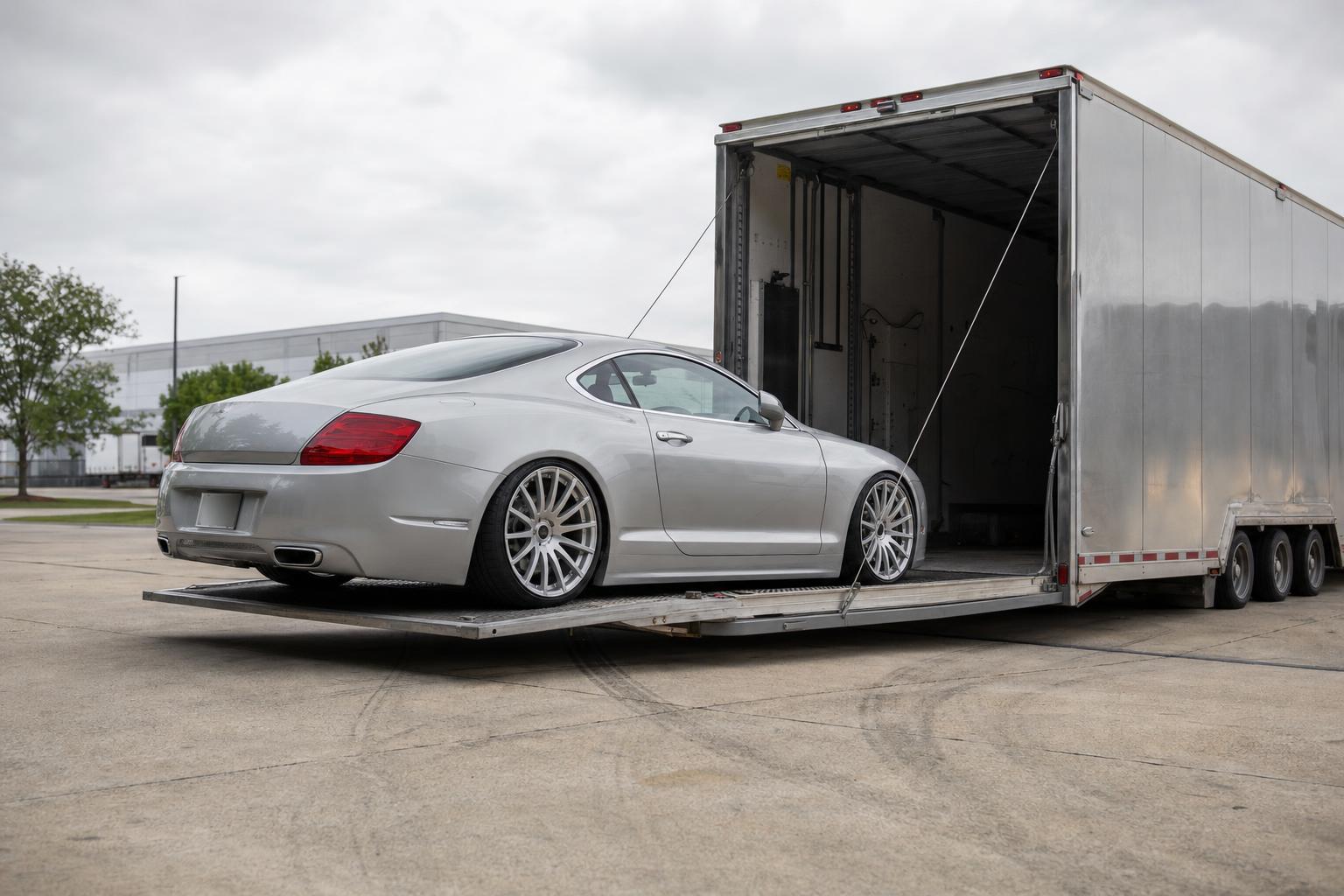
No single price list covers every route, so the most useful approach is to compare more than one published benchmark. Kelley Blue Book’s January 2026 figures come from quotes for a 2025 Honda Accord shipped on open carriers. Cars.com’s May 2026 guide publishes average open and enclosed prices by route distance.
Kelley Blue Book benchmark (open carrier, standard sedan)
| Distance | Quote range | Average cost | Average per mile |
| 500 miles | USD 650 to USD 890 | USD 751 | USD 1.50 |
| 1,000 miles | USD 800 to USD 1,350 | USD 1,020 | USD 1.02 |
| 2,500 miles | USD 1,050 to USD 1,800 | USD 1,406 | USD 0.56 |
Cars.com benchmark (average cost by transport type)
| Distance | Open transport | Enclosed transport | Enclosed premium |
| 500 miles | USD 669 | USD 1,149 | About 72% more |
| 1,000 miles | USD 1,069 | USD 1,529 | About 43% more |
| 1,500 miles | USD 1,209 | USD 1,669 | About 38% more |
The two sources land close together for open transport at 500 and 1,000 miles, which makes them a reasonable starting range. Treat them as benchmarks, not fixed prices. If a quote for a similar trip comes in far below these ranges, ask the company how it expects to find a carrier at that price.
What Affects the Cost of Shipping a Car
Distance. Total cost rises with mileage, but the cost per mile drops. A carrier’s fixed costs for loading, paperwork, and positioning the truck are spread across more miles on a long haul.
Vehicle size and weight. Full-size trucks, SUVs, and minivans take up more space and add weight to the trailer, so they usually cost more than a compact or midsize sedan on the same route.
Open or enclosed transport. Open carriers are the multi-car trailers you see delivering new cars to dealerships. They handle most everyday vehicles. Enclosed trailers protect the car from weather and road debris and are typically used for luxury, classic, and exotic cars, which is why they cost more.
Season. Kelley Blue Book notes that brokers treat April through September as the busier half of the year, with higher prices in summer. Booking outside peak months can lower your quote.
Timing and flexibility. A wide pickup window gives the company more chances to match your car with a truck already running your route. A fixed or guaranteed pickup date usually costs extra.
Route and location. Busy corridors between major metro areas tend to be cheaper per mile than rural pickups or deliveries that pull a truck away from main highways.
Vehicle condition. A car that doesn’t run needs a carrier with a winch or other loading equipment. Always disclose this when you request a quote, because it changes which carriers can take the job.
How Long Does It Take to Ship a Car?
Shipping time depends on distance, pickup and delivery locations, weather, road conditions, and traffic. HomeGuide’s estimates give a useful baseline:
| Distance | Typical transit time |
| Under 500 miles | 2 to 4 days |
| 500 to 1,000 miles | 3 to 5 days |
| 1,000 to 1,500 miles | 4 to 6 days |
| 1,500 to 2,000 miles | 5 to 7 days |
| 2,000 to 2,500 miles | 6 to 8 days |
| Over 2,500 miles | 7 to 9 days |
These ranges don’t include the wait for a carrier to be assigned. Many companies quote a pickup window of several days, so ask for both the pickup window and the delivery estimate.
Is Shipping a Car Worth the Price?
To answer that honestly, compare shipping with the full cost of driving, not just the fuel.
Here’s an example for a 1,000-mile trip in a car that gets 32 mpg combined, the figure Kelley Blue Book uses for its Honda Accord example:
- Fuel: About 31 gallons. At AAA’s national average of about USD 3.82 per gallon for regular (as of November 15, 2026), that’s roughly USD 120.
- Lodging: One night on the road. The federal standard lodging rate for most of the continental U.S. is USD 113 per night for fiscal year 2027.
- Meals: Two days of meals and incidentals at the federal standard rate of USD 68 per day comes to USD 136.
That puts the out-of-pocket cost of driving at about USD 370, well under the USD 1,020 average shipping quote.
Cash isn’t the whole picture, though. Every mile adds wear, maintenance, and depreciation. The IRS business standard mileage rate, which reflects the full cost of operating a vehicle, rose to 76 cents per mile from July 1, 2026. Using that rate as a rough measure, 1,000 miles of driving represents about USD 760 in vehicle costs. Add lodging and meals, and the full cost of driving reaches roughly USD 1,009, close to the average shipping quote.
Shipping tends to make more sense when:
- The trip is long enough to need several nights on the road.
- You’d otherwise lose paid work days to driving.
- You’re moving more than one vehicle.
- The car is leased and the trip would push you toward your mileage limit.
- You’re buying a car far from home and would need to fly out to collect it.
Shipping a Car to Hawaii or Alaska
Shipping to Hawaii is a different service from mainland transport. A cargo ship is the only option for a car going to Hawaii apart from air freight, so the price includes an ocean leg on top of any trucking to and from the port. Alaska quotes also vary widely by destination. For either state, get quotes early and ask exactly which legs of the journey the price covers.
Tips to Save Money on Car Shipping
- Compare several quotes on the same terms. Give every company the same route, vehicle, first available date, and transport type so the quotes line up.
- Stay flexible on dates. A wider pickup window usually costs less than a fixed date.
- Choose open transport for an everyday car. Enclosed transport is worth paying for when the car’s value or finish needs extra protection.
- Avoid peak season when you can. Spring and summer are the busiest months.
- Ask about terminal-to-terminal service. Dropping off and collecting the car at a depot can cost less than door-to-door service.
- Consider the Auto Train for the East Coast. Amtrak’s Auto Train carries passengers and their vehicles on a roughly 17-hour trip between Lorton, Virginia, and Sanford, Florida. Vehicle and passenger fares are charged separately and vary by date, so price the full trip before you compare.
How to Choose a Car Shipping Company
Price matters, but the lowest quote isn’t always the best value. Start by asking for quotes built on identical details. Cross Auto Transport, for example, builds its quote from your pickup and delivery locations, vehicle details, first available date, and whether you need an enclosed trailer or are shipping a non-running car. Those same inputs make a good checklist for every company you contact.
Check the license. The Federal Motor Carrier Safety Administration (FMCSA) issues interstate auto transporters and brokers an MC number, and you can look it up through the FMCSA carrier search. FMCSA advises avoiding any auto transporter or broker that doesn’t prominently display its MC number on its website.
Know whether you’re booking a broker or a carrier. A carrier owns the trucks and hauls your car. A broker arranges the move with a carrier from its network. Brokers must keep USD 75,000 in financial security, through a surety bond or trust fund, before FMCSA will issue their license. Either model can work well. Just ask which carrier will actually move your car and ask to see that carrier’s cargo insurance terms.
Read what any guarantee covers. Some promises are narrower than they sound. SGT Auto Transport, for example, offers guaranteed pickup but treats delivery dates as estimates. Sherpa Auto Transport’s Price Lock Promise means it will contribute up to USD 300 of its own money if the original quote proves too low to secure a carrier.
Get the terms in writing. Before you book, confirm:
- The total price and what it includes
- The deposit amount, when it’s charged, and whether it’s refundable
- The cancellation policy
- The pickup window and estimated delivery window
- How damage claims work and who handles them
Use marketplaces carefully. Platforms such as uShip let you post a shipment, compare quotes from carriers, and choose one. That makes price comparison easier, but the same checks on licensing, insurance, and written terms still apply.
| Quote comparison checklist | What to record for each company |
| Company type | Broker or carrier, as stated in its terms |
| License | MC number and USDOT number, checked with FMCSA |
| Shipment details | Same route, vehicle, and running condition for every quote |
| Pickup window | Dates offered and what any guarantee covers |
| Transport type | Open or enclosed |
| Total written price | What’s included and what could change it |
| Payment terms | Deposit, balance due, accepted payment methods |
| Assigned carrier | Who physically hauls the car and its insurance terms |
What to Expect When Shipping Your Car
Before pickup
- Wash the car so existing scratches and dents are easy to see.
- Take dated photos of every side, the roof, and the interior.
- Remove personal belongings and toll tags.
- Leave about a quarter tank of fuel.
- Disable the alarm and hand over a spare key, keeping the original.
At pickup
The driver inspects the car and records its condition on the bill of lading. Check the report carefully before you sign, because it’s the record any damage claim will be measured against.
At delivery
Inspect the car in good light before you sign the delivery receipt, and compare it with your photos. Note any new damage on the paperwork while the driver is still there, then follow the claims process in your contract.
What About the Environmental Impact?
If you’re weighing driving against shipping on emissions as well as cost, compare like with like. The EPA puts the average passenger vehicle at about 400 grams of tailpipe CO2 per mile, so a 1,000-mile drive produces roughly 400 kilograms. If you know your car’s fuel economy, you can be more precise: every gallon of gasoline burned creates about 8,887 grams of CO2.
Shipping emissions depend on how full the trailer is and how many empty miles the truck runs, the same efficiency questions that shape wider freight transport emissions. Ask the company for an estimate for your shipment and the assumptions behind it. EPA’s SmartWay program ranks participating carriers on their efficiency and emissions performance, which gives you a concrete question to ask: is the assigned carrier a SmartWay partner? Remember to add your own travel, such as a flight, to the shipping side of the comparison.
Frequently Asked Questions
How much does it cost to ship a car per mile?
It depends on distance. Kelley Blue Book’s figures work out to about USD 1.50 per mile at 500 miles, USD 1.02 at 1,000 miles, and USD 0.56 at 2,500 miles on an open carrier.
What’s the cheapest way to ship a car?
Open transport, a flexible pickup window, and off-peak timing usually produce the lowest quotes. Terminal-to-terminal service can lower the price further if it’s offered on your route.
Is it cheaper to drive or ship a car?
For trips of around 1,000 miles, driving usually costs less in cash. Once you include vehicle wear and depreciation, the two options come out much closer, and shipping often wins on longer trips or when you’re moving more than one car.
How much more does enclosed transport cost?
In Cars.com’s averages, enclosed transport costs about 38% to 72% more than open transport, with the biggest gap on shorter trips.
Do I have to pay upfront?
Payment terms vary. Some companies charge a deposit when a carrier is assigned and collect the balance at delivery. Get the deposit amount, refund rules, and accepted payment methods in writing before you book.
How do I know a car shipping company is legitimate?
Check its MC number with FMCSA, confirm whether it’s a broker or a carrier, ask which carrier will move your car, and get the price and terms in writing.
Editor’s Note: The opinions expressed here by the authors are their own, not those of Impakter.comn — In the Cover Photo: Car shipping cost varies by route, vehicle and transport type. — Cover Photo Credit: Pexels