Impakter
  • Environment
    • Biodiversity
    • Climate Change
    • Circular Economy
    • Energy
  • FINANCE
    • ESG News
    • Sustainable Finance
    • Business
  • TECH
    • Start-up
    • AI & Machine Learning
    • Green Tech
  • Industry News
    • Entertainment
    • Food and Agriculture
    • Health
    • Politics & Foreign Affairs
    • Philanthropy
    • Science
    • Sport
  • Editorial Series
    • SDGs Series
    • Shape Your Future
    • Sustainable Cities
      • Copenhagen
      • San Francisco
      • Seattle
      • Sydney
  • About us
    • Our Story
    • Team
    • Partners
    • Write for Impakter
    • Contact Us
    • Privacy Policy
No Result
View All Result
  • Environment
    • Biodiversity
    • Climate Change
    • Circular Economy
    • Energy
  • FINANCE
    • ESG News
    • Sustainable Finance
    • Business
  • TECH
    • Start-up
    • AI & Machine Learning
    • Green Tech
  • Industry News
    • Entertainment
    • Food and Agriculture
    • Health
    • Politics & Foreign Affairs
    • Philanthropy
    • Science
    • Sport
  • Editorial Series
    • SDGs Series
    • Shape Your Future
    • Sustainable Cities
      • Copenhagen
      • San Francisco
      • Seattle
      • Sydney
  • About us
    • Our Story
    • Team
    • Partners
    • Write for Impakter
    • Contact Us
    • Privacy Policy
No Result
View All Result
Impakter
No Result
View All Result
Google methane emissions

How Google Will Help Track and Measure Methane Emissions From Space

byMatt Davies
February 16, 2024
in Climate Change

In a new initiative to combat climate change, Google has partnered with the Environmental Defense Fund (EDF) to track and measure methane emissions from space. Methane, a potent greenhouse gas responsible for about 30% of global warming, is significantly emitted during the extraction of fossil fuels.

Google’s collaboration with EDF involves combining satellite data obtained by the EDF’s new satellite, MethaneSAT, with Google’s advanced artificial intelligence (AI) and infrastructure mapping to identify and trace methane emissions to their source.

This, Google explains, should help energy companies, researchers, and the public sector to take action to reduce emissions from oil and gas infrastructure “faster and more effectively.”

“This is one of the most powerful, short-term actions we can take to reduce warming,” Google writes.

Tracking methane emissions with “unprecedented precision”

MethaneSAT, set to launch in early March on a SpaceX Falcon 9 rocket, boasts unprecedented precision” in mapping, measuring, and tracking methane emissions. Orbiting the Earth 15 times a day at an altitude of over 350 miles, the satellite will focus on the top oil and gas regions globally, providing regular and comprehensive analyses of methane levels.

EDF’s sophisticated algorithms, powered by Google Cloud in collaboration with scientists from Harvard University and the Smithsonian Astrophysical Observatory, will enable the calculation and tracking of methane emissions over time.

Mapping global oil and gas infrastructure

Beyond methane detection, Google and EDF plan to create a global map of oil and gas infrastructure. The goal, Google says, is “understanding which components contribute most to emissions.”

“Just like how we use AI to detect sidewalks, street signs and road names in satellite imagery to display helpful information in Google Maps, we’ll also use AI to identify oil and gas infrastructure, like oil storage containers, in our imagery,” Google explains. This will then be combined with the EDF’s existing information to locate exactly where the emissions come from.


Related Articles: Slashing Methane Emissions Could Save Nearly One Million Lives, New Report Says | How Seaweed Can Help Curb Methane Emissions From Cows | New Research Discovers Bacteria That ‘Eats’ Methane | Why Reducing Methane Emissions Is Key to Sovling the Climate Crisis | Feeding Fish With Methane – and How It Could Offset 14% of Global Fishmeal Emissions

The integration of MethaneSAT data with this infrastructure map will offer a detailed understanding of the sources contributing most to methane leaks, facilitating anticipatory measures and targeted mitigation efforts.

Empowering Researchers and Organizations

The valuable insights gained from this collaboration will be made available to researchers and organizations later this year through MethaneSAT’s website and Google Earth Engine. With over 100,000 monthly active users, Google Earth Engine provides a planetary-scale environmental monitoring platform.

The MethaneSAT datasets, accessible on Earth Engine, will enable users to detect trends and correlations between human activities and environmental impact. By combining methane data with other datasets, users can track emissions in specific areas over time, enhancing our ability to address climate change at a global scale.

In the face of a warming planet, this innovative project signals a significant step forward in the fight against climate change, offering actionable data to reduce methane emissions and mitigate their impact on our environment.


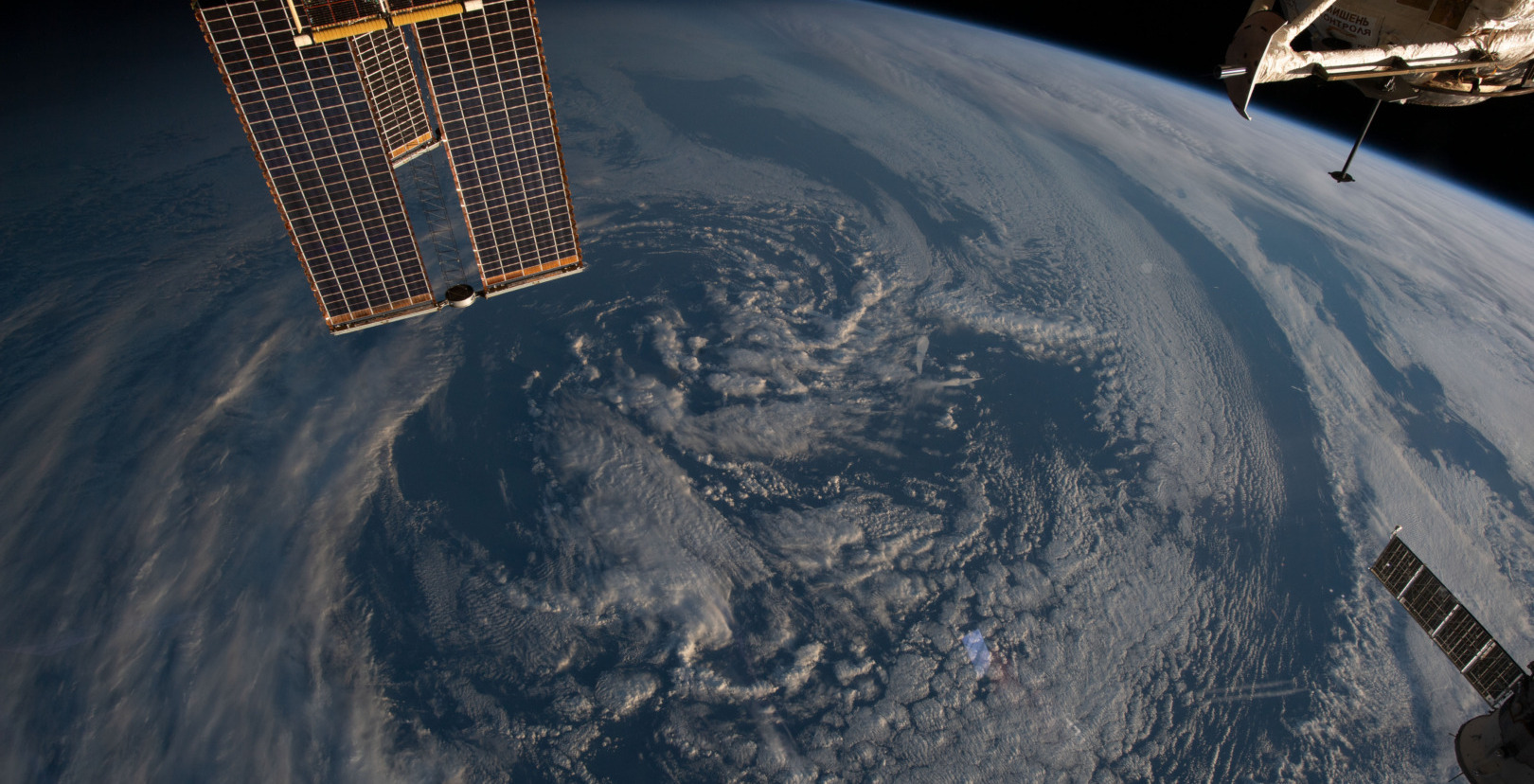
Editor’s Note: The opinions expressed here by the authors are their own, not those of Impakter.com — In the Featured Photo: Clouds cover Earth and the orbital lab’s solar arrays are shown in the top left corner as the space station orbits 270 miles above the Atlantic Ocean off the coast of Argentina. Featured Photo Credit: NASA Johnson.

Tags: EDFEnvironmental Defense FundGoogleGreenhouse gasMethaneMethane EmissionsMethaneSAT
Previous Post

How Do You Eliminate or Eradicate an Infectious Disease?

Next Post

We Need to Talk About Obstetric Violence

Related Posts

Smoke rises over Tehran following an Israeli attack on June 15, 2025
Climate Change

The Causes and Effects of Black Rain

April 1, 2026
Foam swirl seen from above
Biodiversity

The Promise and Peril of Ocean Carbon Removal

March 31, 2026
One tonne of CO₂ emitted in 1990 causes economic damages by 2020 — and will cause a tenfold through to 2100
Climate Change

The Social Cost of Carbon: Who Caused the Damage — and Who Pays for It?

March 27, 2026
Next Post
Obstetric Violence

We Need to Talk About Obstetric Violence

Related News

solar farm

Nearly Half the World’s Power Capacity Is Now Renewable — What That Really Means

April 3, 2026
Offshore oil rig

Why Oil Demand Remains Resilient Amid Quest for Critical Minerals

April 3, 2026

Impakter informs you through the ESG news site and empowers your business CSRD compliance and ESG compliance with its Klimado SaaS ESG assessment tool marketplace that can be found on: www.klimado.com

Registered Office Address

Klimado GmbH
Niddastrasse 63,

60329, Frankfurt am Main, Germany


IMPAKTER is a Klimado GmbH website

Impakter is a publication that is identified by the following International Standard Serial Number (ISSN) is the following 2515-9569 (Printed) and 2515-9577 (online – Website).


Office Hours - Monday to Friday

9.30am - 5.00pm CEST


Email

stories [at] impakter.com

By Audience

  • TECH
    • Start-up
    • AI & MACHINE LEARNING
    • Green Tech
  • ENVIRONMENT
    • Biodiversity
    • Energy
    • Circular Economy
    • Climate Change
  • INDUSTRY NEWS
    • Entertainment
    • Food and Agriculture
    • Health
    • Politics & Foreign Affairs
    • Philanthropy
    • Science
    • Sport
    • Editorial Series

ESG/Finance Daily

  • ESG News
  • Sustainable Finance
  • Business

About Us

  • Team
  • Partners
  • Write for Impakter
  • Contact Us
  • Privacy Policy

© 2026 IMPAKTER. All rights reserved.

No Result
View All Result
  • Environment
    • Biodiversity
    • Climate Change
    • Circular Economy
    • Energy
  • FINANCE
    • ESG News
    • Sustainable Finance
    • Business
  • TECH
    • Start-up
    • AI & Machine Learning
    • Green Tech
  • Industry News
    • Entertainment
    • Food and Agriculture
    • Health
    • Politics & Foreign Affairs
    • Philanthropy
    • Science
    • Sport
  • Editorial Series
    • SDGs Series
    • Shape Your Future
    • Sustainable Cities
      • Copenhagen
      • San Francisco
      • Seattle
      • Sydney
  • About us
    • Our Story
    • Team
    • Partners
    • Write for Impakter
    • Contact Us
    • Privacy Policy

© 2026 IMPAKTER. All rights reserved.