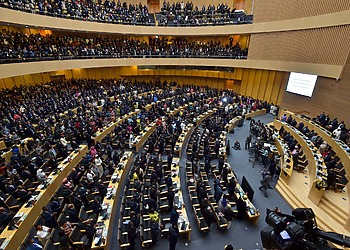
The 2025 G20 Leaders’ Summit in South Africa sent mixed signals on climate action. In this year’s Leaders’ Declaration, climate change was a cross-cutting theme and notably, 17 major economies — along with the African Union and European Union — advanced climate language despite U.S. opposition and Argentina’s attempts to sidestep it.
This included reaffirmed renewable energy and energy efficiency commitments alongside a “technology neutral” approach to energy security — avoiding a focus on “gas security” promoted by this year’s G7.
Yet the Declaration’s substance fell short of the climate leadership that we have seen the global community calling for at the recent United Nations Climate Conference (COP30) in Belém. The Group avoided commitments on transitioning away from fossil fuels, and offered limited support for climate finance, technology transfer, and private-sector obligations. Most glaringly, it did not restate the long-standing G20 commitment to phase out fossil fuel subsidies — a fundamental ingredient for accelerating the energy transition. This follows the G7 Summit, where leaders declined to reiterate their fossil fuel subsidy commitment and ignored climate action almost completely.
The tools exist — the will is missing
Despite 15 years of G7 and G20 commitments, progress on fossil fuel subsidy reform remains insufficient. In 2023 — the most recent year with data available — G20 governments spent USD 794 billion on fossil fuel subsidies. Notably, emerging economies nearly halved their subsidies from 2022 levels, while advanced economies (who should be leading the way) increased theirs by almost 15%. At the same time, most recent national climate plan (NDC 3.0) submissions show limited ambition to address these subsidies.
There have been some constructive steps at the national level, partly driven by the G7 and G20 commitments. Canada introduced a framework to phase out inefficient fossil fuel subsidies, while countries such as the United States, China, Germany, Italy, Mexico, and Indonesia have undertaken peer reviews of their national subsidies. While these efforts aren’t enough to ensure that subsidies are effectively reformed especially amidst increasing fiscal pressures and the need for more sustainable investments, they demonstrate that it is possible to move in the right direction and that change can happen at the national level.
Countries are also not lacking technical guidance or evidence on how to proceed.
Research shows that, across five G20 countries, between 30% and 55% of fossil fuel subsidy measures could be eliminated immediately, with minimal disruption.
Most of the remaining subsidies can be phased out within a few years through sequenced, well-designed strategies — unlocking substantial public resources that can be redirected toward the clean energy transition and social priorities.
Similarly, recent analysis highlights how the G20 can drive reform of liquified petroleum gas (LPG) subsidies, which totaled around USD 35 billion in 2022. These subsidies aim to improve clean cooking access but often fail to reach the poorest. By setting explicit targets for reducing LPG consumption subsidies and re-allocating savings to non-fossil clean cooking solutions, governments can support low-income households, while reducing budgetary burdens and dependence on fuel imports.
At a time when governments are tightening their budgets and concerns around energy security are high, fossil fuel subsidy reform represents an opportunity to demonstrate fiscal responsibility and climate leadership, as well as improve energy security prospects.
Where can G20 countries go from here?
Even without a clear mandate from the G20, countries still have credible platforms to move forward collectively.
Work through coalitions delivering real reform
Two international coalitions are already making progress where the G7 and the G20 have stalled:
1. COFFIS (Coalition on Phasing Out Fossil Fuel Incentives Including Subsidies)
- 17 members to date, including three G20 countries (Canada, France, the UK)
- Members commit to delivering national subsidy inventories and phase-out plans
- Seven countries have already published or updated their inventories
- The Netherlands and Belgium have submitted their phase-out action plans
COFFIS has succeeded where the G7 and G20 have struggled: establishing shared expectations and common denominators, while allowing countries to progress at a pace consistent with their own circumstances. This flexibility — and accountability — has proved to be a powerful combination.
2. CETP (Clean Energy Transition Partnership)
- Members, including six G20 countries (Australia, Canada, France, Germany, Italy, and the UK) reduced international public finance for fossil fuels by up to 78% in 2024 compared to pre-CETP levels
- While there are calls for more progress on scaling up clean energy finance (a critical piece of the commitment), the CETP demonstrates that international partnerships are being successful in shifting financial flows through individual and collective action.
These coalitions show that the absence of progress in the G7 and G20 does not have to mean an absence of progress overall.
Anchor subsidy reform in the Transition Away from Fossil Fuels (TAFF) roadmap
At COP 30, over 80 countries called for a roadmap to phase out fossil fuels. Ultimately, left out of the final text, the Brazil Presidency has pledged to deliver such a roadmap in the coming year, alongside a similar roadmap for deforestation. To be credible and effective, such a roadmap must place strong and actionable fossil fuel subsidy reform commitments at its core. Eliminating subsidies is one of the fastest and most direct ways to shift financial flows and accelerate the energy transition.
Related Articles
Here is a list of articles selected by our Editorial Board that have gained significant interest from the public:
A path forward
Next year’s G20 presidency will be held by the United States — a major political factor for the forum — but South Africa’s 2025 Declaration underscores continuity, with members committed to work together under the U.S. Presidency in 2026 and beyond, with the UK’s and the Republic of Korea’s presidencies following in 2027 and 2028, respectively.
The G20’s backsliding on subsidy reform is disappointing but not determinative. Ending fossil fuel subsidies is not a distant aspiration — it is a practical, achievable step that countries can take today. The evidence is clear, the strategies are known, and first-mover coalitions are already charting a path forward.
Countries should act quickly — inside or outside the G20.
This article was originally published by the International Institute for Sustainable Development (IISD) and is republished here as part of an editorial collaboration with the IISD.