
Today’s ESG Updates
- EU is Reshaping Sustainability Reporting: Mandatory assurance requirements are driving companies to rely heavily on the Big Four accounting firms for third-party verification.
- BHP Wins a Case Over Dam Collapse: Despite positive results for the corporation, the outcome highlights the growing legal and reputational risks companies face following major environmental incidents.
- Trump Administration Against California: The U.S. Justice and Transportation Departments announced that they have filed a lawsuit in federal court, aimed at striking down California automakers regulations.
- New Clean Heat Program Launched: AstraZeneca, Secara and ERM aims to move companies beyond assessment toward implementation through supply chain data, technical support, and financing pathways.
New reporting directive is changing corporate sustainability in EU
The European Union’s Corporate Sustainability Reporting Directive (CSRD) has not reached its full implementation. Still, it is already changing the course of disclosures related to environmental and social performance. Researchers report that in more than 1,100 early reports, companies are changing the structure and tone of their filings. The disclosures are becoming more standardized and closely aligned with formal financial documents.
The main problem with similar earlier initiatives was the voluntary aspect. EU member states are still discussing enforcement and the penalties, but they might be significant. In Germany, regulators have discussed fines of up to €10 million. Earlier, companies have disclosed preferred metrics under voluntary frameworks. Such a system might have led to the misrepresentation. Now, the CSRD requires companies to obtain third-party verification of the data they report. As the regulation expands, sustainability in general will become less about initiative and communication and more about regulation and discipline.
***
Further reading: Early CSRD Filings Reveal How Mandatory EU Disclosure Is Reshaping Corporate Sustainability Reporting
Klimado – Navigating climate complexity just got easier. Klimado offers a user-friendly platform for tracking local and global environmental shifts, making it an essential tool for climate-aware individuals and organizations.
BHP Group wins a case linked to Brazil dam collapse
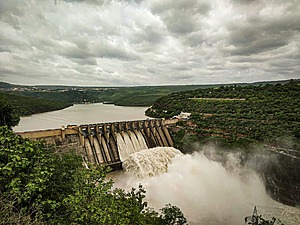
BHP Group has won a legal victory in the United Kingdom after a court dismissed a contempt-of-court case connected to the long-running litigation over the Mariana dam collapse. The ruling removes a significant legal hurdle for the mining giant as it continues to defend itself against claims stemming from one of Brazil’s worst environmental disasters.
The contempt case had been brought by claimants involved in a large civil lawsuit filed in the UK against BHP. The lawsuit seeks billions of dollars in damages on behalf of hundreds of thousands of Brazilian individuals, businesses, and municipalities affected by the collapse of the Fundão tailings dam in 2015.
Claimants accused BHP of violating court orders by supporting proceedings in Brazil while they were ongoing in the UK. However, the court ruled in BHP’s favour. Despite the ruling, the larger lawsuit in the UK continues, and the case is among the largest environmental cases in Britain.
***
Further reading: BHP wins bid to throw out UK contempt case linked to Brazil dam collapse
Related Articles
Here is a list of articles selected by our Editorial Board that have gained significant interest from the public:
Trump administration sues California’s CO2 standards and ZEV sales mandates
The Trump Administration has filed a lawsuit against California seeking to block the state’s vehicle emissions regulations, including its ambitious mandate requiring a transition to zero-emission vehicles. The legal challenge marks a major escalation in the long-running dispute between federal authorities and California over who has the authority to set vehicle emissions standards nationwide.

At the center of the lawsuit are California’s strict limits on carbon dioxide emissions for passenger vehicles. The rules are part of the state’s broader climate strategy to cut greenhouse gas emissions from transportation, which remains the largest source of emissions in California. The mandate would gradually phase out the sale of new gasoline-powered cars and expand the market for electric and other zero-emission vehicles.
Federal officials argue that California’s regulations effectively create a national standard that conflicts with federal authority over vehicle emissions and fuel economy rules. If successful, the case could weaken one of the country’s most aggressive climate policies.
***
Further reading: Trump Administration Sues California to Eliminate Vehicle CO2 Standards, ZEV Sales Mandate

AstraZeneca introduces new program to combat heat emissions

Heat from industrial activity is one of the main sources of emissions. It generates roughly 18% of global greenhouse gases, and it remains one of the hardest to decarbonise. AstraZeneca has collaborated with Secaro, and ERM has launched an initiative, The Clean Heat Program, to aid in the reduction of industrial heat emissions. The main purpose of the program is to help companies and their suppliers balance emissions reduction and energy resilience.
Unlike electricity, heat can not be easily replaced with renewable sources. It relies on gas or other fossil fuels. Cleaner alternatives require complicated infrastructure and adjustments that require large investments. The program, however, also aims to connect companies and financing options to lower upfront costs.
***
Further reading: AstraZeneca, Secaro And ERM Launch Clean Heat Program To Tackle Industrial Heat Emissions
Editor’s Note: The opinions expressed here by the authors are their own, not those of impakter.com — Cover Photo Credit: Zach Rowlandson