
A new UN report finds that countries’ emissions-reduction commitments under the Paris Agreement are falling far short of what’s needed to prevent the most dangerous impacts of climate change.
It is imperative that countries that have not yet submitted their plans deliver much greater ambition this year and that countries that already put forward weak offers in 2020 revise their commitments upward.
In the 2015 Agreement, countries adopted a process in which they would submit more ambitious climate commitments (known as nationally determined contributions, or NDCs) every five years. Recognizing that the pledges they brought forward five years ago were insufficient to meet the Paris Agreement’s long-term goals, this process was meant, over time, to nudge the world onto a pathway to limit global temperature rise to 1.5°C (2.7 degrees F). The first of these “ambition cycles” is now underway, with the expectation that countries submit new NDCs ahead of the COP26 climate summit in Glasgow in November 2021.
The UN report examines the 48 NDCs from 75 Parties submitted through the end of 2020. It finds that these commitments will only cut emissions by about 2.8% relative to the pledges those countries submitted five years ago. Globally, to limit temperature change to 1.5°C, new or updated NDCs need to cut 2030 emissions by around 55% below the initial pledges.
While the UN report paints a grim picture, it’s not the whole picture. What the remaining countries do collectively over the next nine months will be decisive. Countries that have not yet submitted updated or new NDCs — plus several that have indicated they will resubmit with stronger targets — represent 75% of total global emissions. And there are reasons to believe these countries will go beyond what’s been done so far.
For one thing, 58 countries representing over half of global emissions have now committed to net-zero emission targets by mid-century. Many of them — including China and the United States — have not yet submitted updated NDCs, but their net-zero commitments suggest that their NDCs will need to be ambitious. Japan, South Korea and New Zealand — which initially submitted NDCs that did not strengthen ambition, but then committed to net-zero emission targets by 2050 — now say they will strengthen their NDCs before COP26.
Taken together, these net-zero goals would limit warming to 2.1 degrees C if they are achieved, down from the projected 3 degrees C of warming the world was on track for. But delivering on this promise will require countries to take near-term action, which is where the NDCs are essential. The spotlight is now on those countries that have yet to come forward with enhanced NDCs for 2030 — especially the major emitters.
Below, we assess the emissions-reduction commitments in the national climate plans submitted thus far, and what needs to happen ahead of COP26:
Which countries increased ambition in their new NDCs?
More than 40 countries (including the 27 EU member states) submitted plans that will deliver deeper emissions cuts than their initial NDCs.
The EU27 strengthened its 2030 target from an “at least 40%” reduction from 1990 levels to an “at least 55%” reduction. The UK, submitting its first NDC after leaving the EU, committed to 68%, beyond what would have been its contribution to the initial EU28 NDC.
In Latin America, Argentina committed to cut 2030 emissions 26% lower than its initial target; Colombia adopted an emissions cap nearly 37% lower than its previous target; and Chile, Costa Rica and Peru also strengthened their commitments.
Finally, a number of island states and other vulnerable developing countries such as Fiji, Jamaica, Kenya and Senegal also adopted more ambitious commitments.
Related Articles: Formulation of NDCs in Belize | Unpacking the US CLEAN Future Act
For more than a dozen additional countries, it’s not possible to quantify the effect of their new plans on their GHG emissions, often due to a lack of data in the initial NDC. But most of these countries have also adopted more robust commitments.
Brunei, Rwanda and the United Arab Emirates, for example, established economy-wide emissions-reduction targets for the first time in their new NDCs. Other countries, including Nepal and Nicaragua, strengthened or added sector-specific targets. Countries such as Rwanda and Bangladesh added or strengthened policies on highly potent short-lived climate pollutants, including HFCs, methane and black carbon.
Which countries didn’t strengthen their NDCs?
Several countries — including Japan, South Korea, New Zealand, Australia and Singapore — submitted NDCs with GHG reduction targets identical to the submissions they put forward five years ago. Nevertheless, there is some cause for hope: Japan, South Korea and New Zealand have now indicated an intent to update their targets in the lead-up to COP26, following on their pledges to achieve net-zero GHG emissions by 2050. Australia and Singapore, on the other hand, have not signaled any intention to strengthen their targets.
Which countries submitted weaker NDCs?
Even worse, Brazil and Mexico weakened their emissions-reduction targets compared to what they committed to in 2015. At face value, both countries’ 2030 targets look the same as in their initial plans — a 43% cut from 2005 emissions and a 22% cut relative to business-as-usual emissions, respectively. But the updated NDCs contain other revisions that reduce the impact of their targets on 2030 emissions: Brazil increased its estimate of 2005 emissions by 38%, while Mexico increased its business-as-usual projection by 1.8%. As a result, 2030 emissions permitted under the pledges will be higher than they would have been under countries’ initial NDCs.
Which countries haven’t unveiled their national climate plans yet? And which are likely to enhance ambition?
Upwards of 80 additional countries have committed to submit enhanced NDCs. This includes major economies like China, the United States, Canada and South Africa. The United States and Canada have said they will complete their NDCs ahead of the Leaders’ Climate Summit on April 22, 2021, and President Biden has made it clear that climate action will be a top priority for his presidency.
To put the 1.5-degree target in reach, these remaining countries will need to take a far more aggressive approach than we’ve seen to date. To start, the United States should commit to cut emissions by 50% from 2005 levels by 2030, and China can peak CO2 emissions by 2026 and commit to ambitious targets for non-CO2 gases. Other major economies like India and Indonesia, which have not yet committed to enhancing their NDCs, will also need to step up their efforts as well if we are going to get the climate crisis under control.
How will we know if new national climate plans collectively put us on a path to limiting dangerous levels of warming?
Globally, 2030 greenhouse gas emissions need to be 55% lower than in the initial round of NDCs in order to limit warming to 1.5 degrees C and prevent the worst impacts of climate change. If the countries that submitted NDCs to date continue to fall so far short of that benchmark, the countries that haven’t yet submitted NDCs would have to make even deeper cuts in order to make up lost ground.
Instead, all countries, and especially major economies, must summon all the ambition they can muster — whether they have already submitted an NDC, have committed to do so, or are still holding out. The climate crisis can’t wait.
— —
About the Authors: David Waskow is the Director of WRI’s International Climate Initiative. Taryn Fransen is an international climate change policy expert based in the San Francisco Bay Area.
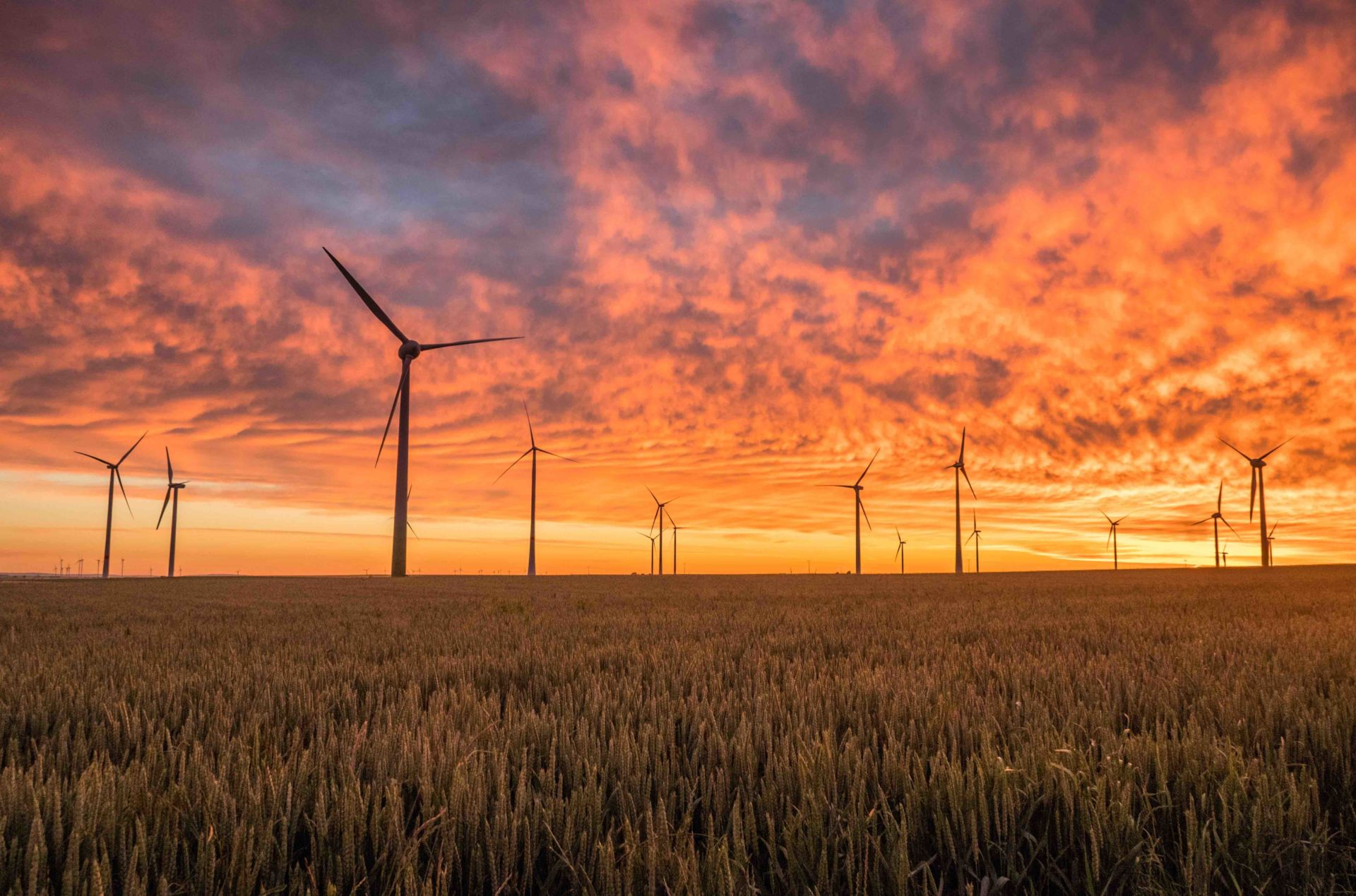
Editor’s Note: The opinions expressed here by Impakter.com columnists are their own, not those of Impakter.com. — In the Featured Photo: Windmills on a field in Biedesheim, Germany. Germany, as well as the rest of the 27 EU member states, submitted new NDCs that will further cut emissions. Featured Photo Credit: Karsten Wurth