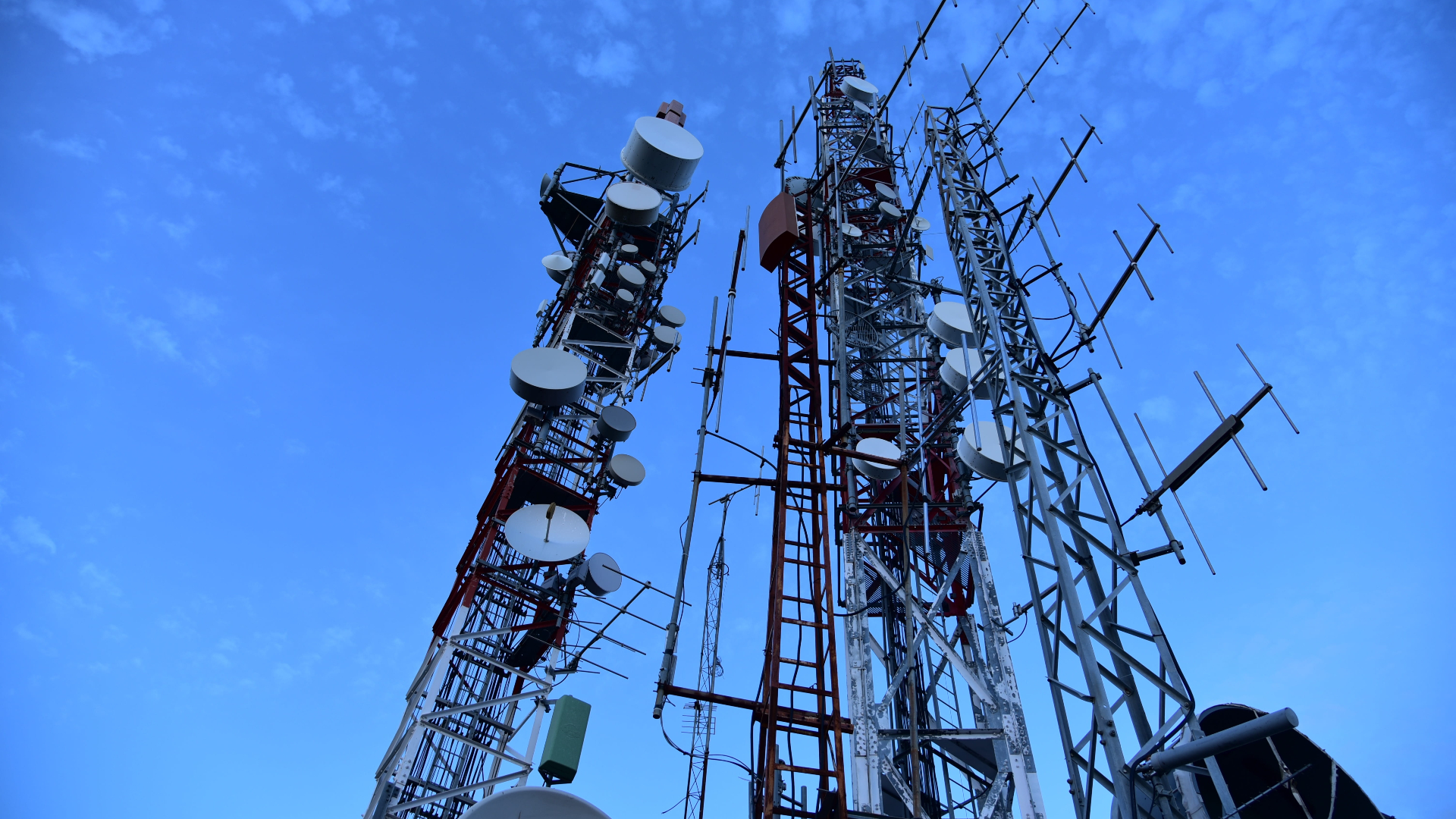
Why is the telecommunications industry so important? Given that everything from observing Earth via satellites to scrolling through social media relies on telecom companies or “telcos,” providing a succinct and effectual answer to this question is a cosmic challenge.
However, to put it into perspective, here’s a list of things you wouldn’t be able to do without them:
- Read this article (or any online news)
- Use the internet
- Communicate in real-time with anyone beyond shouting distance
- Listen to the radio
- Watch live TV or stream content (music, series, films, etc.)
- Work remotely
- Use GPS or navigation apps
- Pay with your phone when you forget your wallet
- Transfer money online
- Access emergency services
- Use any kind of smart device
One answer to the opening question could therefore be: Telecommunications underpin modern society.
“The pace of change in the telecommunications industry is accelerating,” Deloitte stated in a 2017 article on the future of telecoms. They were right.
But given that telecommunications also underpin many technologies like 5G and the cloud, which are thought to, in most cases, help increase energy efficiency and shrink emissions, another answer could be: Telecommunications are helping to drive the sustainable transition of modern society.
“Digital and green transitions go hand in hand,” wrote Juan Montero Rodil, Telefónica’s Chief Public Policy, Competition and Regulatory Officer, in an article published by the company earlier this month.
“Telecommunications are an enabler for other sectors to achieve progress on the path to the green transition and the fulfillment of sustainability goals,” Montero Rodil stated.
However, the telecommunications industry has also been shown to be responsible for 1.6% of total global CO2 emissions, according to a 2021 report by global consulting firm, Boston Consulting Group (BCG) and many suggest the industry is only expected to continue expanding towards 2030.
Furthermore, according to the International Energy Agency’s (IEA) September 2022 report, the data centers and transmission networks that store and transmit the world’s data, powering 5G and the cloud, accounted for 1-1.5% of the world’s total electricity consumption and 1% of the planet’s total energy-related GHG emissions (0.6% of total global emissions) in 2021.
A focus on sustainability within the telecommunications sector is therefore essential.
What can help telcos navigate growth in a green way that meets the needs of society but also protects its future? One of the other technological developments that modern society is underpinned by: Artificial Intelligence (AI).
Impakter Index evaluates the sustainability of telecommunications
Today, the Impakter Index launched its fifth sustainability report, this time focused on Telecommunications (see the previous Automotive, Fashion and Beauty Care, Apps and Entertainment and Finance and Banking reports).
To learn more about Impakter Index’s findings, you can view the Telecommunications report here.
Related Articles: How Green is Your Screen Time? The Carbon Footprint of Video Streaming | Can Circularity Turn the Fashion and Beauty Industries Sustainable? | Electrifying the Roads: Overview of the Electric Vehicle Industry
This latest installment dives into the sustainable practices of 10 of the world’s biggest telcos, including Deutsche Telekom, Verizon, Vodafone, Qualcomm and NTT Nippon, also providing insight into their use of AI to drive the sustainable transition.
How are big telcos using AI?
First, let’s look at some common applications of AI in the telecoms sector:
- Network optimization: Using advanced algorithms to look for patterns within the data, telcos can both detect and predict network anomalies and proactively fix problems before customers are negatively impacted.
- Predictive maintenance: AI-driven predictive analytics is helping telecoms provide better services by using data, algorithms and machine learning to predict future results based on historical data.
- Virtual assistants for customer support: Virtual assistants can automate one-on-one conversations to enable users to install, set up, operate and troubleshoot their own devices, addressing the large number of support requests.
- Robotic Process Automation (RPA): An AI-based form of business process automation technology that helps telcos streamline complex, repetitive, rules-based, labor-intensive and time-consuming back-office operations, freeing-up staff for higher value-add work.
- Fraud prevention: AI can detect anomalies in real-time, reducing telecom-related fraudulent activities and blocking access to fraudsters when suspicious activity is detected, minimizing damage.
- Revenue growth: AI can analyse a wide range of data from devices, networks, mobile applications, geolocation data, detailed customer profiles, service usage and billing data; analysis which provides telcos with real-time insight into customer needs.
The Impakter Index reports outline specific examples of how big telcos are integrating and adopting AI to drive growth and the green transition.
Verizon, a leading American provider of technology and communications services, was found by the Impakter Index to have been able to continue operations during the pandemic down to the help of AI.
Deutsche Telekom, a German integrated telco and parent company of T-Mobile, was found to have developed several AI-powered chatbots: Tinka, Vanda and Hub:raum, which provide round-the-clock assistance to both the company and its customers, answering customer search queries, providing customer support and facilitating personnel recruitment, respectively.
Vodafone, a British multinational, was also found to have released a chatbot, TOBi, in 2017, which simulates humanlike, one-on-one conversations and responds to customer inquiries ranging from troubleshooting to order tracking and usage. The Index reported that the company’s accelerated digital transformation and improved customer experience resulted in an increase in customer loyalty and satisfaction.
Qualcomm, an American multinational telecom corporation, was found to have shown commitment to integrating power-efficient AI on mobile devices, machines, vehicles, and more. This stands to bring a range of benefits such as “user privacy, immediacy, enhanced reliability, and efficient use of network bandwidth,” according to Qualcomm. “AI is transforming everything. We are making AI ubiquitous.”
NTT, a Japanese telco, has presented its latest achievement in the form of a cooperative project launched in 2021 called “OPEN HUB,” reports the Index. This project aims to solve the problems of decreasing labor power, succession of skill, and diversity of work style.
AI drives growth and sustainability in telecommunications
McKinsey & Company reported last month that telcos can better “thrive in turbulent times” by further integrating AI into the industry and becoming what the consultancy calls “AI-native.”
“Embracing large-scale deployment of AI and transitioning to being AI-native organizations could be key to driving growth and renewal,” stated McKinsey & Company.
Given the vital importance of telcos in our digitalised, globalised world, the continued growth of the sector is imperative. But since rapid industrial expansion brings with it a sizable and damaging environmental impact, this growth must occur in a green way.
Streamlining AI adoption and integration can help telcos drive both growth and sustainable solutions within the industry; as Nokia previously stated, for telcos, AI can be viewed as a “catalyst for sustainability.”
However, adopting AI at scale can be complicated. Therefore, to help telcos identify the success factors and potential barriers that impact AI adoption and integration, the technology, organization, and environment (TOE) framework and the diffusion of innovation (DOI) theory can be very helpful.
To learn more about sustainability within the telecommunications industry, as well as how telcos are embracing AI to drive the sustainable transition, head over to Impakter’s Sustainability Index.
Editor’s Note: The opinions expressed here by the authors are their own, not those of Impakter.com — In the Featured Photo: A telecommunications tower. Featured Photo Credit: Wallpaper Flare.