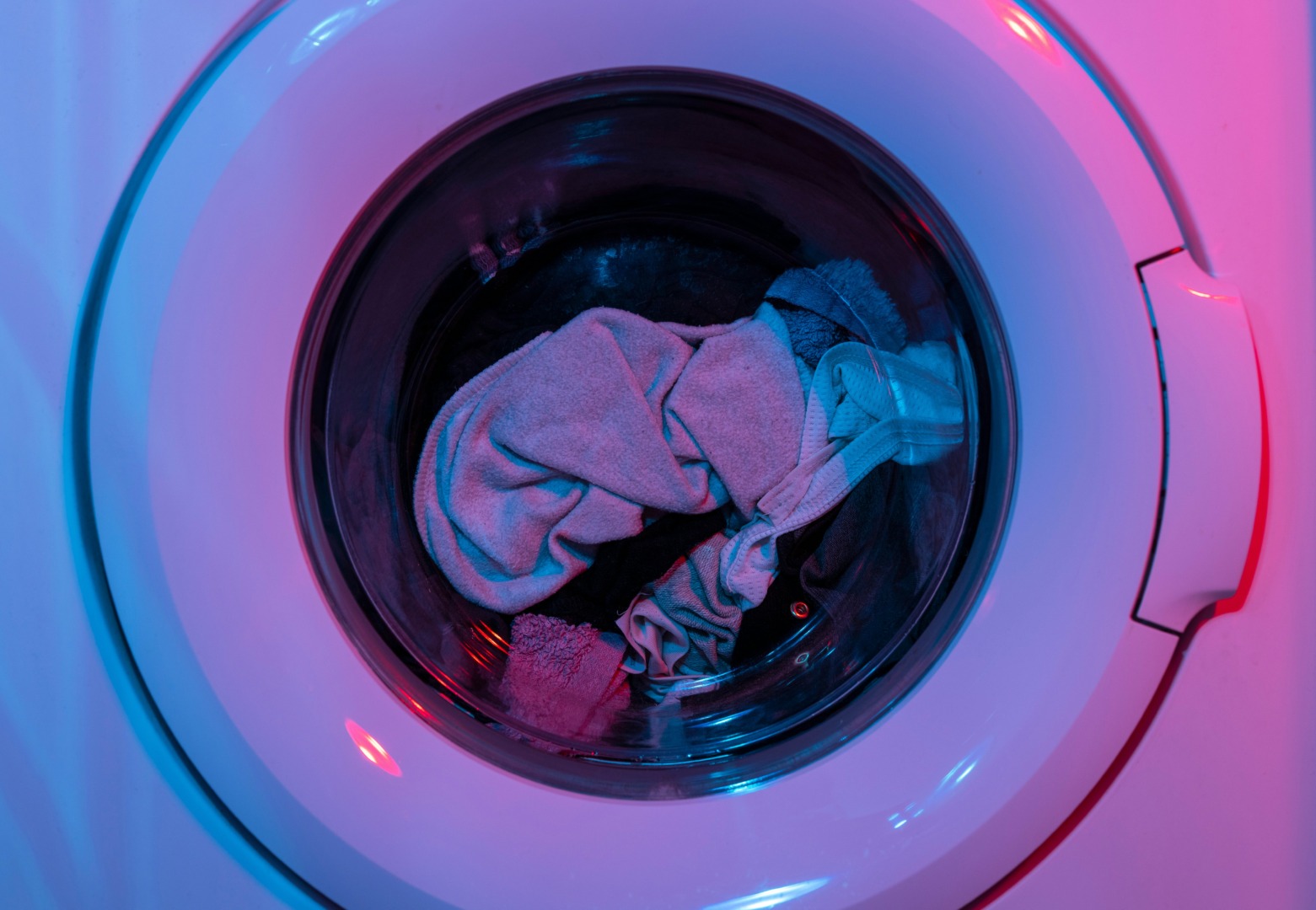
We sometimes get annoyed when we find there are people who say they are climate change advocates, but their actions don’t match their words. Think of celebrities and the ultra-rich or CEOs who regularly fly private planes while holding themselves out as climate change activists or claim their company is environmentally friendly.
Note that at the 2023 World Economic Forum focused on “Climate Change,” global government, business, and academic leaders took over 150 private jets to fly to Davos. John Kerry, Al Gore, and Bill Gates, major climate change warriors, use private jets to get to wherever they go, not to mention Taylor Swift.
This is not a minor matter because private jets have a dramatically higher carbon footprint per passenger than commercial alternatives. Indeed, a 2021 report from the European Federation for Transport and Environment found that private jets are five to 14 times more polluting per passenger than commercial flights and 50 times more polluting than trains. And many of these same people own mansions with dozens of rooms and every appliance under the sun.
While their actions do not match their rhetoric, nor do ours.
Most of us live in places with basic modern-day appliances, never considering if these may be detrimental to our environment (full disclosure: I am that type of hypocrite).
How household appliances hurt the environment
For much of the last century and this one, common household appliances have been part of modern life, providing convenience and efficiency. That said, we rarely even acknowledge how their production, use, and disposal significantly impact the environment, e.g., energy consumption, water usage, greenhouse gas emissions, and potential pollution from chemicals and waste.
In a modern society, a survey of 2,250 households found that “the average number of appliances per household was about 10.6 for single households, 13.8 for dual occupancy, and as many as 17.5 appliances for homes of six or more people. In the United States alone, 576.8 million household appliances were sold in 2020.”
Let’s look at a few commonly available appliances:
Washing Machines: They consume considerable electricity, leading to higher greenhouse gas emissions, particularly in regions reliant on fossil fuels.
The average washing machine uses about 40 gallons of water per load, straining local water resources. Often, we use many commercial detergents containing phosphates and other harmful chemicals that can harm aquatic ecosystems.
Then there is the production and disposal process of washing machines: Manufacturing a washing machine involves extracting raw materials, using often harmful chemicals, and requires high energy. While the disposal of old washing machines becomes landfill waste, leading to potential toxic leachates.
There are options, namely high-efficiency models that consume less energy and water, using biodegradable and phosphate-free detergents, and washing by hand.
Dryers: One of the most energy-consuming household appliances, they often use significant electricity during operation. Further, heat generated while drying can contribute to both energy loss and increased residential cooling costs.
Then, there is the manufacturing process, which involves metals and plastics, and installation.
There is the time-honored option of drying outside on lines or using dryers with new heat pump technology that use less energy compared to traditional electric models. And there are condensation dryers, which recycle moisture from wet clothes, reducing overall water waste.
Freezers: They run continuously, leading to substantial energy use and associated carbon emissions over time. Older freezers may contain hydrofluorocarbons (HFCs), potent greenhouse gases that contribute to climate change.
Typically, freezers have a lifespan of about 10-20 years, so disposal of them, like washing machines and dryers, can create environmental concerns. And the manufacturing process involves metals, plastics, and chemicals.
While we do need appliances like washing machines, dryers, and freezers, they have a substantial environmental impact. Choosing more efficient models, alternative methods, and innovative technologies can reduce direct and indirect environmental effects.
Public Sector Policies and Citizen Behavior
In 2021, the International Energy Agency (IEA), in collaboration with 4E Technology Collaboration Programme (4E TCP), evaluated some 100 countries, including the European Union, the United States, and Japan, with respect to energy impact.
They found that well-designed public sector policies can encourage product innovation and lead to economies of scale, reducing the cost of appliances even without accounting for efficiency gains.
For example, in Australia, appliance sticker prices have typically fallen 40% over the last 20 years, while average energy consumption has fallen by a third.
Assuredly, an important factor is the extent of consumer awareness, understanding, and preferences for energy-efficient products.
Global Appliance Producers and Users
The huge growth in the worldwide household appliances market has been tied to rising disposable income in virtually all regions of the world.
China is the market leader for retail consumer appliances, with a market size that reached $54 billion in 2021. It leads the global market with its share of 18%.
China is followed by the US and Japan, which contribute 12% and 8%, respectively, to the household appliances segment. South Korea and Germany were fourth and fifth with 7% and 5% respectively.
At the same time, such production output data does not tell much about eco-efficiency choice in the share of sales, use, or where the end users are.
Related Articles: Energy Efficiency Is on the Rise: Why That Matters | Ways to Lower Your Carbon Footprints at Home
Country Environmental Appliance Performance
We know that country appliance availability, policies, and programs vary from the perspective of the effect on the environment. Below, drawn from a variety of sources, are examples of both the good and not-so-good countries:
Good Country Performers
Perhaps unsurprisingly, they are mostly found in the European Union and Japan. Specifically:
Japan: This country features both advanced technology in energy-efficient appliances and public eco-labeling programs have been instituted to encourage consumer choice towards efficient products.
European Union: Throughout the European Union, a voluntary EU Ecolabel system instituted by the European Commission was launched in 1992. This label is easily recognized by its iconic image: While the EU Ecolabel itself is voluntary, the Energy Labeling Directive (2010/30/EU) made it mandatory for manufacturers to display energy labels on household appliances. This directive was later superseded by Regulation (EU) 2017/1369, which came into effect in 2017.
This new regulation requires manufacturers to clearly display the energy efficiency of household appliances with a letter system (from A to G, with A being the most efficient). It also provides information on other environmental aspects, such as water consumption and noise levels.
Research on the impact of the EU eco-labeling program is ongoing. So far, there have been several major studies showing a positive impact in three major directions: increased energy efficiency, higher consumer awareness, and a boost in innovation as manufacturers invest more in research and development. For example, one study in Denmark found that high-efficiency electrical appliances achieved considerably higher sales (+55%) over the 2005-2017 period.
Interestingly, as variations in climate policy among EU member countries still exist, individual EU countries show distinctive focus and features. Here are a few examples.
Germany: Strict regulations on energy consumption, high prevalence of energy-efficient appliances, coupled with efforts on sustainable manufacturing practices.
Sweden: High energy efficiency standards, reliance on renewable energy sources, and multiple recycling programs.
Norway: Major emphasis on renewable energy utilization, primarily hydropower, and public policies promoting energy-efficient household devices.
Denmark: Focus is on reducing carbon emissions, and achieving energy efficiency in home appliances.
Not-So-Good Country Performers
United States: Reliance on fossil fuels for electricity and wide variation in individual State policies and regulations on energy efficiency have resulted in continued production and use of energy-inefficient appliances.
However, the Biden-Harris Administration has been particularly active in this area, implementing several initiatives aimed at accelerating the transition to clean energy; one significant step is the Bipartisan Infrastructure Law, which includes provisions for building thousands of miles of transmission lines to deliver clean energy. Additionally, the administration has been working on expanding offshore wind projects, with record-breaking lease sales in areas like the New York Bight.
Moreover, President Biden signed an executive order to catalyze America’s clean energy economy through federal sustainability. This order sets ambitious goals, such as achieving 100% carbon pollution-free electricity by 2030 and net-zero emissions from federal operations by 2050.
China: Industrialization coupled with high energy demands and reliance on coal-fired power plants, plus expanding appliance usage without efficiency standards considerations, have had clear negative impacts; this said, China plans to become a world leader in renewables and is on track to surpass its 2030 targets, with significant progress in renewable installations, particularly solar panels. And it aims to achieve carbon neutrality by 2060.
India: The adverse impact here has several causes: Growing high energy demands from many sectors and public services; at the household level, homes with limited access to energy efficiency options are especially prevalent in rural areas, while homes with existing access tend to select low-efficiency appliances; however, as of 2023, India had set itself ambitious renewable energy targets, and at this point in time, it is not known how likely it is going to achieve them.
Russia: Heavy reliance on natural gas and coal for energy, together with many old and outdated appliances with low energy efficiency, are the root cause of the problem; Russia’s plans for renewable energy are somewhat lackluster, and it aims to increase the share of renewable energy sources (RES) in its total installed capacity to only 10% by 2040.
Brazil: Here rapid urbanization leading to increased energy consumption and high prevalence of old appliances are found to have a negative impact; however, Brazil has set ambitious renewable energy goals as a key part of its strategy to reduce carbon emission and is committed to reducing its greenhouse gas emissions by 50% by 2030 compared to 2005 levels. This target is enshrined in its updated NDC submitted in 2022. To achieve this, the country plans to increase the share of renewable energy sources, such as wind and solar power, to 45% of its energy mix. Additionally, Brazil has committed to achieving carbon neutrality by 2050.
The bottom line
The point is that while policymakers address the big picture with global meetings such as COP28’s commitment to Net Zero 2050, we as individuals can also make contributions at home.
Most of us travel on commercial airlines, do composting, drive EVs, and commit to reducing manmade causes of climate change. Nevertheless, one must acknowledge we are not perfect stewards of the planet—and that our household appliances have an environmental impact.
This is not to suggest we diminish efforts to save the planet from the human impact of climate change. Instead, we need to be cognizant of how complex and difficult it is, and that’s simply human!
Editor’s Note: The opinions expressed here by the authors are their own, not those of Impakter.com — Cover Photo Credit: Engin Akyurt.