Impakter
  • Environment
    • Biodiversity
    • Climate Change
    • Circular Economy
    • Energy
  • FINANCE
    • ESG News
    • Sustainable Finance
    • Business
  • TECH
    • Start-up
    • AI & Machine Learning
    • Green Tech
  • Industry News
    • Entertainment
    • Food and Agriculture
    • Health
    • Politics & Foreign Affairs
    • Philanthropy
    • Science
    • Sport
  • Editorial Series
    • SDGs Series
    • Shape Your Future
    • Sustainable Cities
      • Copenhagen
      • San Francisco
      • Seattle
      • Sydney
  • About us
    • Company
    • Team
    • Global Leaders
    • Partners
    • Write for Impakter
    • Contact Us
    • Privacy Policy
No Result
View All Result
Impakter logo
No Result
View All Result
Heat Waves At The Poles Could Cause Sudden Climate Breakdown

Heat Waves At The Poles Could Cause Sudden Climate Breakdown

A colossal ice shelf collapses, after a heat wave in the Antarctic; with temperatures rocketing at the poles, scientists fear a climate crisis

Ornella ElsébyOrnella Elsé
March 31, 2022
in Climate Change, Environment, Society
0

A devastating change in the earth’s climate pattern is right around the corner, and the repercussions of such an event will be irreparable for the environment. Over the previous weekend, temperatures in the Arctic and Antarctic poles have attained their peak. The rapid extension of global warming has caused a significant disorder on earth’s climate systems, resulting in abnormal climate changes and heat waves around the globe, which require immediate call to action to address the issue. .

March is normally the month in which the Antarctic experiences cooler  temperatures and the Arctic sees mild spring weather — yet both of them just experienced frightening increases in their temperatures, at the same time.

While a disconcerting heatwave of 30 degrees Celsius touched the arctic, the Antarctic region was confronted to a historical temperature of 40 degrees Celsius above normal. These levels of heat are not supposed to be attained at this period of the year, but should normally appear later on in the year.

What is really alarming here is the gap between the usual average temperatures of the region during this period of the year, which are normally -51 degrees Celsius: Earlier this month, they went up to -12 degrees Celsius, which is too much to bear for the Antarctic’s hydrosphere (water bodies) and cryosphere (ice shelves, glaciers, snow cover and sea ice).

The disquieting incidents of polar melting due to the heatwaves show beyond doubt that a drastic climate breakdown is catching up on planet earth. In the long run, the outcomes will be more and more treacherous to our atmosphere, and will have critical effects on people’s health. 

Of vital importance — in East Antarctica, iceberg C-38 (named by U.S. National Ice Center) has fallen off from the Conger ice shelf as a result of the persisting heat waves that have affected the region. This occurred near the Glenzer ice shelf where iceberg C-37 collapsed during the past week.  

🔵⚠️🧊This is the first and currently the only #Sentinel2 image depicting #C38 and #C37 #Icebergs on March 21st in East #Antarctica, after the total collapse of #CongerIceShelf #Heatwave #ClimateEmergency #ClimateCrisis . See zoom below @donnadlu @StefLhermitte @WeatherProf pic.twitter.com/SMcOFuBISZ

— SatWorld (@or_bit_eye) March 26, 2022

In a press release by the USNIC, it was confirmed that iceberg C-38 completely collapsed on March 17. The iceberg encompassed all that remained of the Conger ice shelf. This event was described as “off-scale” by US experts in glaciology.

The ice shelf began thinning years ago, so what happened earlier this month was unanticipated, but inevitable. This proves how vulnerable and responsive the Antarctic and Arctic systems are to the climatic pressure.


Related Articles: Climate Change in the Arctic for Dummies | Five Visible Signs of Climate Change in Antarctica

The situation is of utmost importance, due to the severity of the damages it could have on the earth’s weather patterns in the near future; yet we can put our minds at ease at least for now because according to scientists, the weather conditions in the Antarctic have gone back to normal. 

The melting of polar sea ice in both of the earth’s poles is a signal that the planet is warming further because the dark sea has been “absorbing more heat than glare ice”. 

The consequences of the heat waves on the environment are multiple:

  • Melting ice sheets and glaciers result in rising sea levels which bring about more extreme events, storms and hurricanes, on coastal areas of the earth;
  • Extreme heat which accounts for increasing weather-related illnesses and deaths;
  • Intensified hotness in heat islands — urban areas with high concentration of human activity, less trees and vegetation, cities with narrow streets and taller buildings, which block the wind from circulating thus intensifying humidity and heat during summer;
  • An increase in the number and intensity of droughts and wildfires;
  • Negative impact on agricultural and food production is increasing likely as extreme heat and dryness slows down crop growth and threatens the availability of food.

A call to action is crucial, as we may soon be facing an accelerating crisis that can only get worse if we do nothing. We need to remember that we have full responsibility: In these instances of an upcoming climate crisis we, as humans, are the ones responsible not only for causing the climate disaster in the first place but for finding solutions and supporting nature’s response to the damaging of its environment and help in its full recovery. 


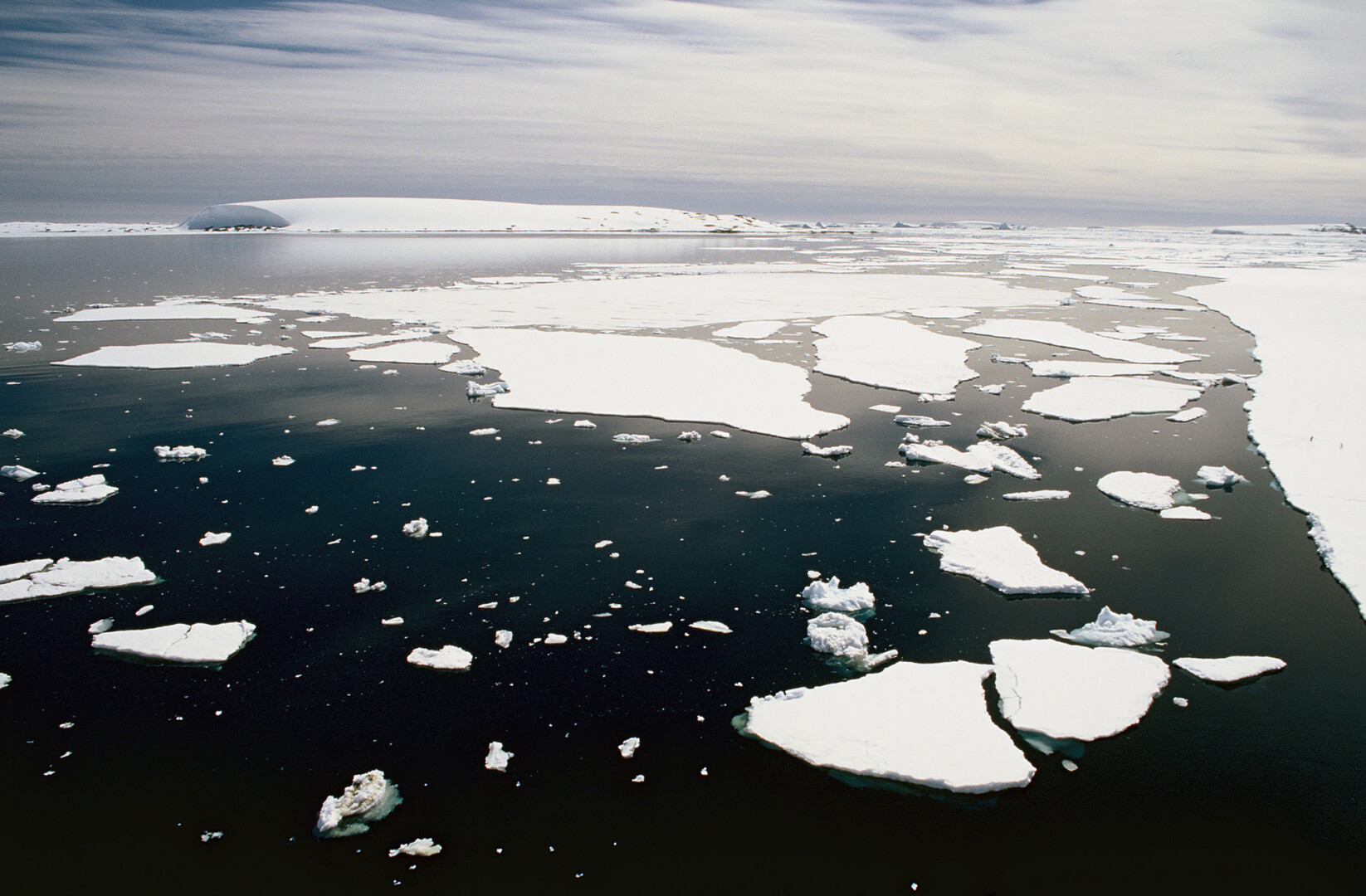
Editor’s Note: The opinions expressed here by Impakter.com columnists are their own, not those of Impakter.com — In the Featured Photo: A mixture of ice pieces from the ice shelf and sea ice melting is getting carried away into the sea. The picture was taken in 2016, and the main concern back then was that the drastic climate change would worsen and accelerate the melting of Antarctica’s ice sheet, giving rise to a considerable rise in sea level, which is exactly what is happening today. Featured Photo Credit: Peter Prokosch / GRID-Arendal.

Tags: AntarticaArcticClimate BreakdownClimate ChangeHeat Wave
Previous Post

Together, We Make Change Happen!

Next Post

Fifty Years After the Clean Water Act, Half of U.S. Waters Are Severely Polluted

Related Posts

ESG news regarding Deforestation Mandate Being Pushed; EUs Acceleration on Hydrogen and Net Zero Revolution; AT&T Will End All DEI; UK Watchdog Blocks Nike and Lacoste Ads Over Green Claims.
Business

U-Turn in Europe: Deforestation Mandate Pushed Back Again

Today’s ESG Updates EU Lawmakers Agree to Delay Deforestation Rules: The EU has delayed and simplified its Deforestation Regulation until...

byEge Can Alparslan
December 5, 2025
ESG News regarding Flooding in Indonesia; Glencore promises copper production boost; Trump proposes slashing fuel efficiency standards, and Vulcan Energy receives $2.57bn of funding for lithium project
Business

Indonesians Blame Deforestation for Recent Floodings

Today’s ESG Updates: More than 700 Lives Lost in Recent Indonesian Floods: A combination of mass deforestation and heavy rainfall...

byAriq Haidar
December 4, 2025
How a Framework Convention Could Address Climate and Socio-Economic Displacement
Politics & Foreign Affairs

How a Framework Convention Could Address Climate and Socio-Economic Displacement

The unprecedented shift in human (im)mobility has seen over 120 million forced to flee their homes due to war, violence,...

byDr. Shepherd Mutsvara - Research Fellow at the University of Münster, Germany
December 3, 2025
fossil fuel subsidies
Business

How G20 Nations Can Make Progress After the Group Stalls on Fossil Fuel Subsidy Reform

The 2025 G20 Leaders’ Summit in South Africa sent mixed signals on climate action. In this year’s Leaders’ Declaration, climate change...

byInternational Institute for Sustainable Development (IISD)
November 28, 2025
Animal Health
Biodiversity

Better Animal Health Is the Low-Risk, High-Reward Climate Investment We Need

Imagine if there was a way to reduce emissions from the meat, egg and dairy sector by nearly a quarter,...

byCarel du Marchie Sarvaas
November 26, 2025
ESG news covering the EU’s delay of deforestation rules, rising U.S. housing risks from climate impacts, IFC’s $100M clean-energy investment in emerging markets, and ABN AMRO’s appointment of a new Chief Sustainability Officer.
Business

EU Delays Deforestation Regulation Again

Today’s ESG Updates EU Delays Deforestation Law: Europe postpones the EUDR by one year and loosens compliance rules, raising concerns...

byEge Can Alparslan
November 21, 2025
COP30: Countries’ Climate Agrifood Ambitions Undermined by Funding Gaps, Report Finds
Biodiversity

COP30: Countries’ Climate Agrifood Ambitions Undermined by Funding Gaps, Report Finds

Developing countries recognize the urgent need to adapt agrifood systems to climate change, but most National Adaptation Plans (NAPs) are...

byThe Food and Agriculture Organization of the United Nations (FAO)
November 19, 2025
Encouraging Evidence of Momentum in Negotiations at COP30
Biodiversity

Encouraging Evidence of Momentum in Negotiations at COP30

With the second week of negotiations now underway at COP30, WWF is encouraged by an announcement by the Brazilian Presidency...

byWWF
November 18, 2025
Next Post
Fifty Years After the Clean Water Act, Half of U.S. Waters Are Severely Polluted

Fifty Years After the Clean Water Act, Half of U.S. Waters Are Severely Polluted

Recent News

Construction Intelligence

Reinventing the Build How Modern Construction Intelligence is Transforming the Way We Work

December 12, 2025
Warehousing done with robots helping with building an efficient supply chain.

Smarter, Smoother Warehousing: Practical Ways Companies Can Strengthen Their Supply Chain

December 12, 2025
Content writing service

How Big Brands Use Digital Marketing to Stay Visible and Win More Customers

December 12, 2025
  • ESG News
  • Sustainable Finance
  • Business

© 2025 Impakter.com owned by Klimado GmbH

No Result
View All Result
  • Environment
    • Biodiversity
    • Climate Change
    • Circular Economy
    • Energy
  • FINANCE
    • ESG News
    • Sustainable Finance
    • Business
  • TECH
    • Start-up
    • AI & Machine Learning
    • Green Tech
  • Industry News
    • Entertainment
    • Food and Agriculture
    • Health
    • Politics & Foreign Affairs
    • Philanthropy
    • Science
    • Sport
  • Editorial Series
    • SDGs Series
    • Shape Your Future
    • Sustainable Cities
      • Copenhagen
      • San Francisco
      • Seattle
      • Sydney
  • About us
    • Company
    • Team
    • Global Leaders
    • Partners
    • Write for Impakter
    • Contact Us
    • Privacy Policy

© 2025 Impakter.com owned by Klimado GmbH