Impakter
  • Environment
    • Biodiversity
    • Climate Change
    • Circular Economy
    • Energy
  • FINANCE
    • ESG News
    • Sustainable Finance
    • Business
  • TECH
    • Start-up
    • AI & Machine Learning
    • Green Tech
  • Industry News
    • Entertainment
    • Food and Agriculture
    • Health
    • Politics & Foreign Affairs
    • Philanthropy
    • Science
    • Sport
  • Editorial Series
    • SDGs Series
    • Shape Your Future
    • Sustainable Cities
      • Copenhagen
      • San Francisco
      • Seattle
      • Sydney
  • About us
    • Company
    • Team
    • Global Leaders
    • Partners
    • Write for Impakter
    • Contact Us
    • Privacy Policy
No Result
View All Result
Impakter logo
No Result
View All Result
The Global Thermostat can fight climate change. Interview with Graciela Chicilnisky

The Global Thermostat can fight climate change. Interview with Graciela Chicilnisky

Alessandro du Besse' - Tech EditorbyAlessandro du Besse' - Tech Editor
April 4, 2018
in Lifestyle, Start-up, Style, Tech
0

The Global Thermostat was founded in 2010 by Graciela Chichilnisky and Peter Eisenberger. Chichilnisky has been called an A List Star economist by the Washington Post and a Hero of the Environment by Time Magazine; she is an Economist and a Mathematician professor at Columbia University and worked for many years with the United Nations where she was US Lead Author of the IPCC (Working Group III) who was given the Nobel Prize for its work on Climate Change and is the designer and the author of the Carbon Market of the UN Kyoto Protocol.

Peter Eisenberger is a famous material physicist who led global R&D for EXXON  where he led the introduction of solar energy technology and was professor of physics and the founder of the Materials Institute at Princeton University, he founded the Earth Institute and was Vice Provost and is professor at Columbia University. Today we speak with Graciela Chichilnisky the CEO of the Global Thermostat.

Can you explain to our readers how the Global Thermostat work?

Graciela Chicilnisky: Global Thermostat technology is revolutionary and has 35 patents valid in 147 nation’s: it uses almost no electricity, it is powered mostly by residual low temperature heat (85C), and some water. It works by moving massive amounts of air through porous materials that are coated in proprietary amines (nitrogen based chemicals) that capture the CO2 from Air into their pores, and then removes the CO2 collecting it as 99,5% pure CO2 gas and restarting the process. The technology is extremely low cost so selling the CO2 for beverages, bio fertilizers, polymers, carbon fibers, water desalination, etc is commercially feasible and profitable. Existing Global Thermostat plants can be visited at SRI in Menlo Park Silicon Valley  California and commercial users of the CO2 removed from Air include famous brands of soft beverage producers.
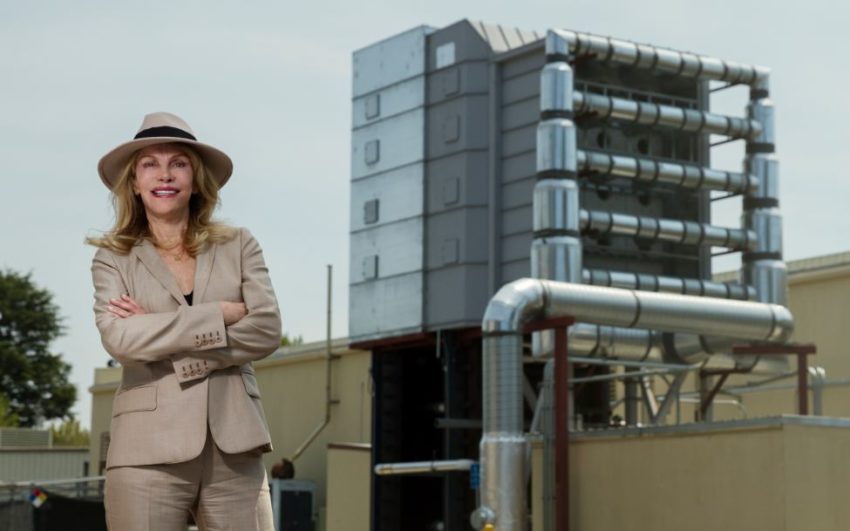
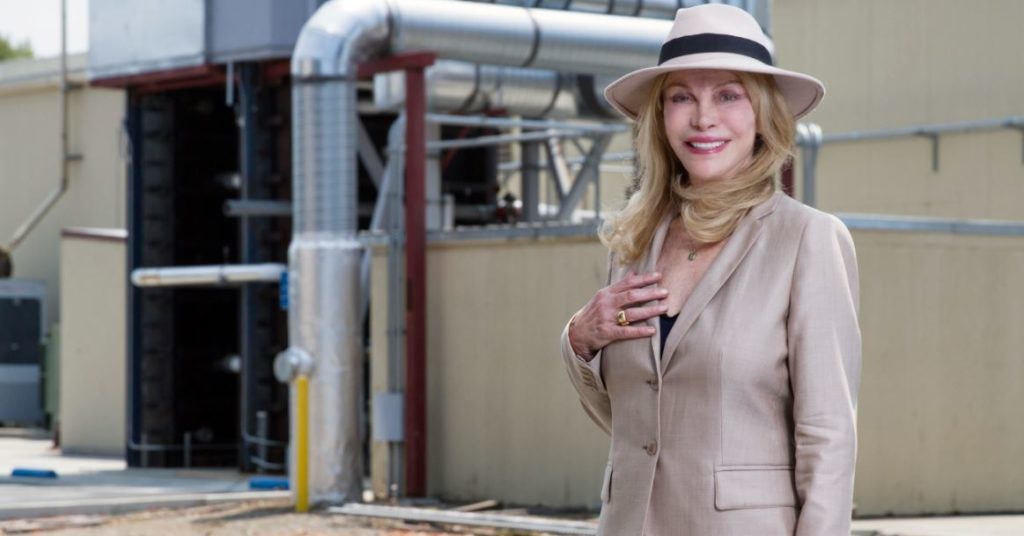
In the Photo: Graciela Chichilnisky outside the Global Thermostat. Photo Credit: Global Thermostat

What percentage of CO2 are you able to capture? In which contexts?

GC: We can capture millions of tons from Air and from the flue of power plants where the percentage is between 400 parts per Million and 7%. We capture CO2 from any volume of Air in the atmosphere and also from industrial emissions and any combination in between.


RELATED ARTICLES:

link1No doubt about it: Climate Change is real
by Dawn Reeves

link2A Millennial View on Climate Change
by Jessica Russel

link3U.S. Action on Climate Change Will Continue
by Michael Brune


How far are you in your project? What is your timeline?

GC: We developed patented and demonstrated the technology and are right now commercializing it. We can remove sufficient CO2 from Air that we can reverse climate change and make massive profits at the same time.The recent bipartisan Future Act US law that passed on February 13th 2018, offers $35/ton tax incentives, this accelerating and zooming in the adoption of air capture of CO2; GT is the only US company that removes CO2 from pure Air as is required now to avert catastrophic climate change.

Are you planning to sell the Global Thermostat to companies to reduce their carbon footprint or to single countries?

GC: We are not doing either – our business model is to remove the CO2 from Air and sell it commercially at a profit for beverages, food, synthetic fuels, polymers, carbon fibers, desalinated water, biofertilizers, and a myriad other commercial uses.
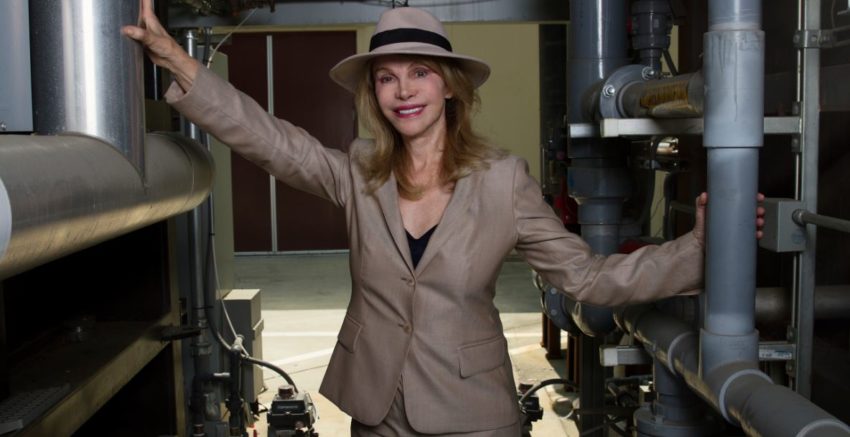
In the Photo: Graciela Chichilnisky inside the Global Thermostat. Photo Credit: Global Thermostat

Do you believe that if the Global Thermostat spreads out around the world, it will be really possible to reverse global warming?

GC: Yes: to reverse climate change in addition to start to use clean energy sources we need.to build about 40,000 Global Thermostat plants each capturing about a million tons a year – or the equivalent – since humans emit about 36 gigaton a of CO2 per year. This will take over a decade to achieve, as far as removing CO2 from Air – however turning the existing power plant infrastructure – which is US$55 trillion worth – into clean sources of energy will take longer.

 How do you see your companies five years from now? Do you have other environmentally friendly projects?

GC: We expect global adoption and we will favor scaling up in developing nations where most of the growth of the world economy will be located.
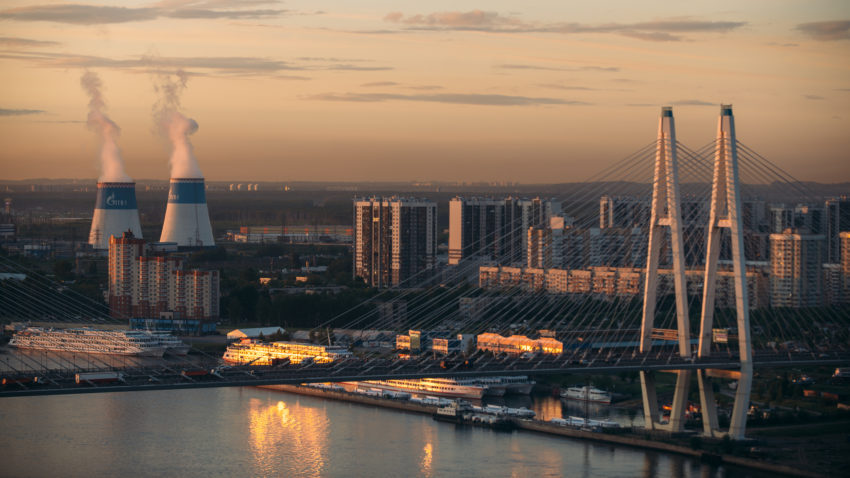
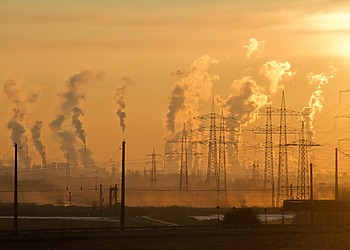
In the Photo: Emissions from power plants. Photo Credit: Maxim Mogilevskiy

NOTE: THE OPINIONS EXPRESSED HERE BY IMPAKTER.COM COLUMNISTS ARE THEIR OWN, NOT THOSE OF IMPAKTER.COM. 
Tags: Alessandro du Besse'cleanClimate ChangeGlobal ThermostatGraciela ChicilniskyGreen
Previous Post

#MeToo: Taking it to the Next Level

Next Post

Dermal Abyss – Where the future of health tech meets body art

Related Posts

One Health Education Is Essential for Pandemic Preparedness and Global Security
Education

One Health Education Is Essential for Pandemic Preparedness and Global Security

The One Health concept/approach offers a powerful tool for public health and biomedical research globally. The combined integration of human medicine,...

byDr. Bruce Kaplan - Epidemiologist formerly at the CDC/EIS and USDA-FSIS Office of Public Health and Science & Co-Founder of the One Health Initiativeand2 others
January 29, 2026
WEF Report Ranks Environmental Challenges as Greatest Long-Term Threat to Global Stability
Business

WEF Report Ranks Environmental Challenges as Greatest Long-Term Threat to Global Stability

The World Economic Forum’s Global Risks Report 2025 found that environmental risks are deteriorating faster than other threats and challenges.  ...

byBenjamin Clabault
January 28, 2026
ESG News regarding Clean energy is Europe's only path to prosperity; 2150 raises €210 million to back sustainable cities; EcoCeres’ new Malaysian plant is operating at 95% capacity; New study suggests the world is not ready for rise in extreme heat.
Business

Clean Energy Is Europe’s Only Route to Prosperity

Today’s ESG Updates: Clean Energy is Vital for Europe's Autonomy: UK Energy Secretary Ed Miliband and EU Energy Commissioner Dan...

byFedor Sukhoi
January 27, 2026
ESG news regarding: a push for wind power in Europe, possible massive metal fraud, wind power in Western Australia, and Citi layoffs.
Business

Europe’s Answer to Trump: More Wind Power

Today’s ESG Updates New Draft Reveals Europe’s Massive Wind Power Push: Nine European nations are defying U.S. criticism by signing...

byEge Can Alparslan
January 23, 2026
Climate Change Charities
Business

Beyond Carbon Offsets: 7 Climate Change Charities Tackling Root Causes in 2026

Philanthropy is surging again. U.S. charitable giving reached a record $592.50 billion in 2024, and, for the first time since...

byHannah Fischer-Lauder
January 23, 2026
Three sponsors for the 2026 Winter Olympics in Italy could generate 1.3 million tons of CO2
Climate Change

Winter Olympics Sponsorship Emissions: Who Are the Main Offenders?

The 2026 Winter Olympic Games are set to begin in Italy next month. Scattered across towns in northern Italy, from...

bySarah Perras
January 22, 2026
Food Waste in India
Climate Change

India’s Food Waste Is Turning Into an Environmental Time Bomb

India, a key player in this fight, is currently battling a confluence of climate-driven disasters. Last year’s punishing extreme heatwave,...

byPranjali Chowdhary - Research and Policy Associate at the Institute for Governance and Sustainable Development, Indiaand1 others
January 22, 2026
The Imperative of a Nature-Positive Future
Biodiversity

The Imperative of a Nature-Positive Future

For most of human history, survival was a gamble. Half of all children never reached puberty. Life expectancy hovered around...

byMarco Lambertini
January 16, 2026
Next Post
Dermal Abyss – Where the future of health tech meets body art

Dermal Abyss – Where the future of health tech meets body art

Recent News

Business without borders, a neon sign

Why Every Modern Business Needs Proxies for Market Research

January 29, 2026
RTA Cabinets

RTA Cabinets vs. Pre-Assembled: What to Choose

January 29, 2026
ESG News on India lithium and nickel processing incentives and EV battery supply chains

India Plans Incentives for Lithium and Nickel Processing

January 29, 2026
  • ESG News
  • Sustainable Finance
  • Business

© 2025 Impakter.com owned by Klimado GmbH

No Result
View All Result
  • Environment
    • Biodiversity
    • Climate Change
    • Circular Economy
    • Energy
  • FINANCE
    • ESG News
    • Sustainable Finance
    • Business
  • TECH
    • Start-up
    • AI & Machine Learning
    • Green Tech
  • Industry News
    • Entertainment
    • Food and Agriculture
    • Health
    • Politics & Foreign Affairs
    • Philanthropy
    • Science
    • Sport
  • Editorial Series
    • SDGs Series
    • Shape Your Future
    • Sustainable Cities
      • Copenhagen
      • San Francisco
      • Seattle
      • Sydney
  • About us
    • Company
    • Team
    • Global Leaders
    • Partners
    • Write for Impakter
    • Contact Us
    • Privacy Policy

© 2025 Impakter.com owned by Klimado GmbH