George Floyd’s death presented the United States with its fourth racial turning point. Whether or not America is ready to learn from his death and make real change is the question of day.
The United States is a nation born of racism. It is nearly impossible to separate out the origins of America from race. The slave trade and the conquest of native inhabitants were integral to colonial settlement, both when it was part of England, and then after independence. But during its history, there have been three racial turning points that defined America.
Turning Points in American History
Turning Point One was in 1787 with the writing of the US Constitution. The Constitutional Convention was a point when the United States could have shed itself of race and slavery. It was a chance to live up to the egalitarian promises in the Declaration of Independence, that “All men are created equal.”
However, the delegates were divided by fear. Small and big states feared that the wrong constitutional compromise would shift the balance of power away from one to another. But the biggest fear was the tension between the northern free states and the southern slave states. Each feared respectively that America could become all slave or all free.
Related Articles: The Art of Social Change | 5 Resources to Fight Racism | What the Election of Kamala Harris means for BLM
The delegates instead enshrined slavery in the Constitution. It did so by an agreement that only counted slaves as three-fifths persons for the purpose of representation, while also remaining silent on the topic of voting rights. These provisions gave slave states additional representation in Congress while denying individuals of African descent the right to vote and be free.
A second turning point occurred after the end of the Civil War in 1865. Abraham Lincoln freed the slaves. Republicans in Congress passed the 13th, 14th, and 15th Amendments and a host of civil rights laws to guarantee liberty and equality for former slaves. For a brief period of ten years, Reconstruction led to the enfranchisement and election of Black men across the South. Yet this turning point soon closed.
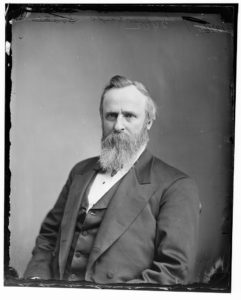
The disputed 1876 presidential election between Democratic Sam Tilden and Republican Rutherford Hayes resulted in the Democrats conceding the election if Republicans agreed to withdraw federal troops from the South – the states where slavery and the Confederacy existed. Without a northern military presence, there was nothing to stop southern states from ushering in the Jim Crow area. Blacks were segregated from Whites, and the latter effectively lost most of their voting and individual rights.
Turning Point Three began in 1954 when the US Supreme Court declared segregation unconstitutional in Brown v. Board of Education. It grew when Rosa Parks refused to go to the back of the bus in 1955 in Montgomery, Alabama, beginning the civil rights movement that culminated in the 1964 Civil Rights Act, the 1965 Voting Rights Act, and the 1968 Fair Housing Act. All aimed, much like after Reconstruction, to bring equality to African Americans and other people of color. But this movement too came to an end quickly.
Across America in the summers of 1966 and 1967, riots occurred in urban areas. President Johnson created the Kerner Commission to report on the causes of these riots and offer recommendations. In 1968, the Kerner Commission released its report, declaring American had become “two nations, separate and unequal.” The causes of these riots were rooted in race and poverty, segregation, and in the lack of opportunity for people of color. The report called for addressing these underlying problems. Yet this racial turning point was soon abandoned.
President Johnson, instead of taking up the call to address the underlying racial and economic causes of these riots, chose instead to treat this as a law-and-order problem. He opted to press for a 1968 crime bill that militarized the police and gave more authority to local police and the FBI to act. Richard Nixon in his 1968 presidential election ran as a law-and-order candidate and prosecuted a war on drugs. Subsequent presidents pressed policies that sent disproportionate numbers of people of color to prison, and the US Supreme Court issued a series of decisions making it difficult to hold police accountable for excessive uses of force.
Today
Now, America is at a fourth turning point.
George Floyd’s death in Minneapolis was never an if but a when, an inevitable consequence of sixty years of “law and order.” Minneapolis, like the rest of America, was a city of enormous racial disparities in terms of education, wealth, income, health, police and criminal justice stops, arrests, incarceration, and use of force. Racism was everywhere, but ignored.
George Floyd’s death reminded America of the racial divide. He presented America with an opportunity to pick up the message of the Kerner Commission that had been ignored.
There were calls to reform the police and for other changes in Minneapolis, but it appears that opportunity for change has already begun to end. The demand to defund the police, a surge in violent crime in America, and riots in Minneapolis struck fear into suburban voters. This in turn blunted Democratic Party gains across the country in the 2020 elections. The narrow focus on police reform in Minneapolis and across America steered the country away from the institutional, economic, and social conditions that fed racism leading up to Floyd’s death.
More than seven months after Floyd’s death, racial reform is stalled. The fourth turning point may already be lost.
Policy change in America occurs when there is a convergence of a perception of a problem, a policy solution, and a transformative movement. Floyd’s death created this convergence, although perhaps only briefly. Perhaps it is premature to declare America already in a post-George Floyd moment, but if history is any guide, it is not clear that this fourth racial turning point will result in the change that needs to occur.
Editor’s Note: The opinions expressed here by Impakter.com columnists are their own, not those of Impakter.com. — In the Featured Photo: Protest against police violence — Featured Photo Credit: Wikimedia Commons.