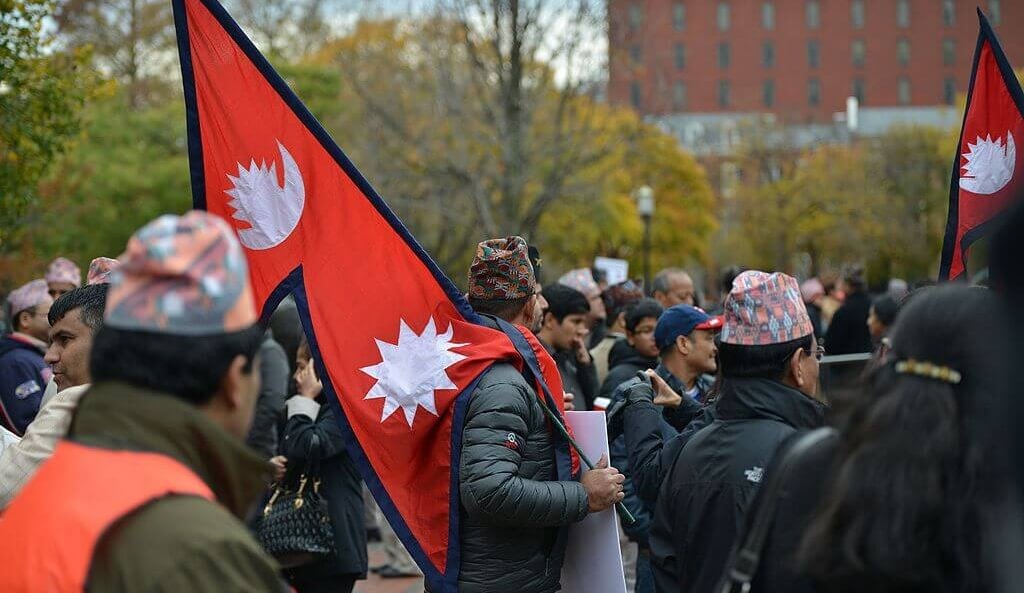
In the tenuous history of Nepal’s still-emerging democracy, September 8, 2025, the first time young demonstrators broke into the prime minister’s official home in Baluwatar, will be a red-letter date.
Months of unrest that were already undermining public trust culminated in the episode, highlighting the fragility of a system founded on institutional rent-seeking and elite capture.
More than just national grievances were addressed by the Kathmandu scenes. They drew attention to a global crisis of legitimacy, as states promising political freedom but not economic opportunity face instability. The young Nepalese did not merely rebel against a government, their collective angst was directed at making the state work for them.
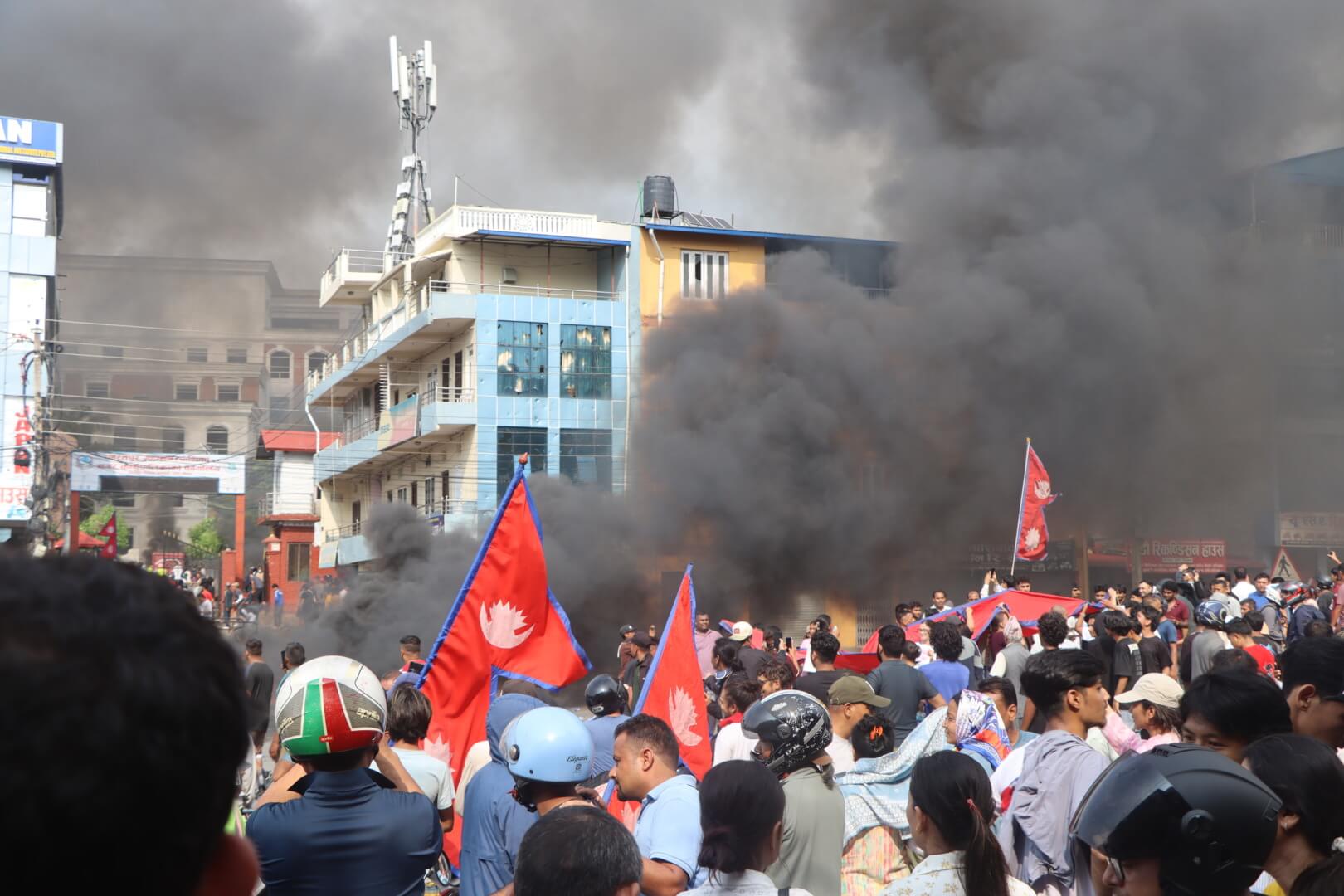
The symbolic grammar of the uprising made it unique. In a clear reminder of the pointlessness of funding education in a system skewed by nepotism and patronage, protesters held up school textbooks. Inspired by the anime One Piece, their symbols went viral and became a representation of resistance to systemic injustice.
Rejecting the established parties, which they saw as the same fabric of ruling elites, protesters declared that they were fed up with the political marketplace. Exclusion was so complete that many had given up on reform from within, they wanted to reject the whole edifice.
The state’s use of live ammunition against unarmed protesters transformed unrest into a full-scale uprising. The last vestige of legitimacy was destroyed by a government already eroded by years of poor performance.
Yet removing top incumbents alone did not solve the deeper dilemma. Nepal’s example shows the paradox of many young revolutions, where an old order may be overthrown, but success can quickly be followed by disorientation if there are no institutions to channel popular discontent into lasting reform.
A region in revolt
Nepal’s issue is not isolated. Similar generational uprisings, each with its own vocabulary but united by a deep sense of betrayal, have shaken South Asia in recent years. Protest rallies forced former President Gotabaya Rajapaksa to resign in Sri Lanka in 2022.
The economic collapse brought on by depleting reserves, shortages of necessities and hyperinflation served as the catalyst. The rage of a younger generation that saw the Rajapaksa impersonation as the pinnacle of a political class that had pledged the nation’s future for its own benefit propelled the movement forward.
By fusing protest theatre, memes, music and art into a common language of disapproval, the “Gota Go Gama” camp in Colombo became a symbol of resistance. For Sri Lanka’s youth, politics was about survival, dignity and the right to be heard.
In 2024, Bangladesh saw a similar but distinct surge. Student protesters initially took to the streets to voice their disapproval of corruption and job shortages, but their grievances swiftly expanded into a general rejection of what they saw as an authoritarian trend during Sheikh Hasina’s protracted rule.
Online campaigns, memes and catchphrases that were heavily influenced by youth culture around the world gave the online protests a boost. Once more, the message was that the current political parties were interchangeable in their pursuit of power and disregard for the needs of the general populace.
Related Articles: What the 3.5% Rule Tells Us About Protest Success | Iran Unrest Continues: Death Toll Rises to at Least 185, Including 19 Children |
These movements were intentionally leader-averse. They reflected the dearth of suitable career paths for young people with ambition. Politics became a patronage game after the traditional parties destroyed themselves.
In both, the current generation of coming-of-age was born after the liberalisations of the 1990s and 2000s and inherited economies where opportunities were frequently accessed through elite connections or family networks, and few formal and secure job opportunities existed.
Culture is where alienation is expressed when all that a democratic society has to offer is inanity. Because the Nepal youth did not devalue politics, conventional language had become meaningless, protesters embraced textbooks, anime, slogans and encampments.
Structural problems
What connects the Bangladeshi movement to those in Nepal and Sri Lanka, is the coordinated narrative of structural exclusion, rather than an ideological convergence.
These uprisings reveal a deeper structural issue — the fiscal foundation necessary to support inclusive development is lacking in many South Asian states. Politics then becomes more about allocating limited resources than creating a productive economy where taxation is restricted and remittances, aid, or resource rents are heavily relied upon.
Politics also becomes a zero-sum game when state control itself becomes the primary route to wealth. To preserve networks of allegiance, elites seize control of the state, take what they can and recycle just enough.
Democratic openings are frequently susceptible to exploitation in such a setting. This path dependency is demonstrated by Nepal’s own history. Since the 1990s, every significant political shift promised inclusion but ultimately resulted in the resurgence of elite factions’ dominance.
Although a dynasty was overthrown in Sri Lanka’s uprising, institutional reform has proven difficult to achieve. Protests in Bangladesh mobilised tremendous energy, but they now face the harsh reality of long-standing authoritarian systems.
The trend is similar to other regions of the world where regimes were overthrown by uprisings but institutions remained intact. The 2011 revolution in Egypt serves as the clearest example of how easily hope can be dashed when the military maintains control and the state apparatus remains unchanged.
What comes out of these cases is not indifference, but rather young people’s logical conclusion that politics is off limits to them. Many people migrate or withdraw into silence until their level of exclusion becomes intolerable.
Once the threshold is crossed, they pour into the streets with symbolic gestures that better convey desperation than manifestos or policy proposals ever could.
There is no denying the energy of such movements. But the danger is also just as obvious. If their victories only create a void, it is frequently occupied by the very forces they oppose or by authoritarian organisations that assert that they are re-establishing order.
The warning is clear for South Asian governments. Ritual elections, the distribution of patronage and the performance of democracy without delivery are not sustainable for political systems.
Youth-led movements demonstrate that the states’ ability to increase opportunities and establish institutions that serve common people is what determines legitimacy.
Without employment, education serves as a fertile ground for rebellion. Without economic agency, political freedom breeds explosive annoyance. Furthermore, trust is undermined by governance that lacks accountability, leading to the collapse of even the most basic state authority
Thus, the 2025 uprising in Nepal should be interpreted as a regional mirror as well as a national drama. It illustrates what occurs when a generation that refuses to accept exclusion as their fate collides with decades of elite capture.
Whether political leaders take the message seriously will determine whether South Asia continues on its current trajectory or veers into cycles of instability. Old regimes may be overthrown by revolutions, but only institutions can guarantee that the hopes of a new generation won’t be let down again.
** **
This article was originally published by 360info™.
Editor’s Note: The opinions expressed here by the authors are their own, not those of Impakter.com — Cover Photo Credit: S Pakhrin, CC-BY-2.0, Wikimedia Commons.