Impakter
  • Environment
    • Biodiversity
    • Climate Change
    • Circular Economy
    • Energy
  • FINANCE
    • ESG News
    • Sustainable Finance
    • Business
  • TECH
    • Start-up
    • AI & Machine Learning
    • Green Tech
  • Industry News
    • Entertainment
    • Food and Agriculture
    • Health
    • Politics & Foreign Affairs
    • Philanthropy
    • Science
    • Sport
  • Editorial Series
    • SDGs Series
    • Shape Your Future
    • Sustainable Cities
      • Copenhagen
      • San Francisco
      • Seattle
      • Sydney
  • About us
    • Company
    • Team
    • Partners
    • Write for Impakter
    • Contact Us
    • Privacy Policy
No Result
View All Result
Impakter logo
No Result
View All Result
FortyGuard, Using Data to Fight Extreme Heat

FortyGuard, Using Data to Fight Extreme Heat

The startup from Abu Dhabi monitors local heat data and helps find solutions to mitigate it

Alessandro du Besse' - Tech EditorbyAlessandro du Besse' - Tech Editor
September 16, 2022
in Start-up, Tech
0

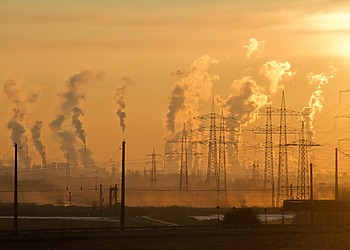
One of the most dangerous types of extreme weather is extreme heat. With climate change causing an increase in global temperatures, extreme heat could affect the lives of many. FortyGuard, – supported by its location in Abu Dhabi’s Hub71 ecosystem, aims to help public and private organizations, but also individuals monitor extreme heat and find ways to mitigate it.

We had a short chat with Jay Sadiq, one of the Founders of FortyGuard, here is what he had to say.

Can you please explain how FortyGuard works? 

Jay Sadiq: FortyGuard is on a mission to cool cities. We are outdoor temperature experts who use local and global data sources to provide hyper-accurate heat maps. We deal with different data providers and collect passive existing data from various application components or data lakes.

Our vision is to make temperature data available to everyone, in order to help communities employ heat management strategies in the fastest and best way possible. As well as helping decision makers identify heat mitigation strategies (e.g. outdoor-efficient cooling designs), we also hope to create consumer tools that allow you to take your next walking distance for the coolest route or buy a property in a cooler zone.

How do you think FortyGuard could benefit cities affected by extreme climate?

Jay Sadiq: Heat can turn up the volume on many of the more obvious problems cities face, such as the increasing demand for energy and other infrastructure, and industrial or building operational costs. Extreme heat can affect workforce productivity, retail, tourism, and the increasing economic consequences for cities when workers or companies are relocating. It also increases water and energy use dramatically since they are both closely related to increasing temperatures.

Energy demand has been qualified to increase the use of AC in many cities around the world making our energy infrastructure incompetent while producing more greenhouse gas emissions and waste heat from other energy production by the feedback loop of increasing temperatures.

Today, we lack the evidence to understand the scale of the problem. There are little-to-no tools to map urban heat in cities. Satellite temperatures are not granular enough to host a solution on the ground, and they certainly can’t provide accurate predictability to their visuals.

By sharing heat data with communities, they’ll be able to employ heat management strategies in the fastest and best way possible. Strategies can include evaporation and water-based techniques, urban green techniques, shade techniques, and material and surface techniques.


RELATED ARTICLES: Extreme Heat Makes Pregnancy More Dangerous | Summer in Europe Like Never Before: Extreme Heat and Out-of-Control Wildfires | Climate Resilience in Africa: Chief Heat Officer Appointed in Sierra Leone |

I see FortyGuard focuses also on both consumers and enterprises. Can you tell us more about that?

Jay Sadiq: We have two business models, and they both operate and deliver data. Our DaaS “Data as a Service” model presents FortyGuard as a “middleware software solution” that sits between data providers and data users. We enable channeling processed data flows to provide real-time outdoor temperatures streamed globally and within seconds at close to 1m granularity. Behavioral and locational temperature data has existed for many years, but in order for it to be revolutionary, we are making it available for any map or data user.

We are also building an “inception model” that caters data for urban advisory solutions today and we plan to expand it to serve different other sectors such as energy and mobility. It is a service we provide to clients at local levels in the public and private sectors, and it currently comes with minimal field sensing operations at 5 levels in the city outdoor (from the sub-surface to the building rooftop). We provide services such as passive and urban-based cooling insights, and strategic planning for cooling. The model can also provide tech-enabled energy-efficient cooling designs.
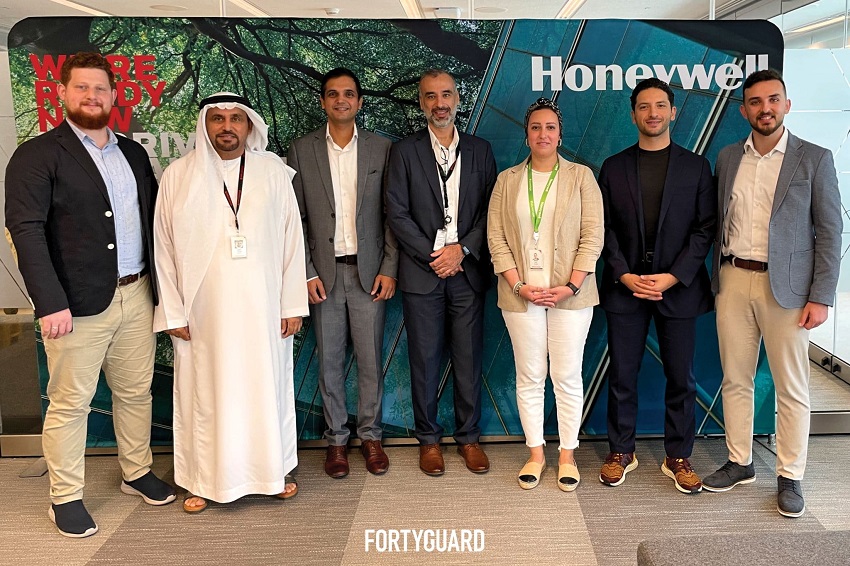
In the picture: the FortyGuard team meets with Honeywell to discuss heat management strategies. Photo Credit: FortyGuard.

What are your thoughts about the current climate crisis and how do you think FortyGuard could have a positive impact on it?

Jay Sadiq: With our mission to cool cities, we envision contributing to targets in keeping temperatures below 1.5˚C, not because accurate temperature readings can physically cool the ambient, but because they can empower and enable solutions to do so.

There are a lot of great solutions out there to mitigate the risk of heat and make our cities more efficient and resilient, but the lack of data means they’re not being put to best use.


Editor’s Note: The opinions expressed here by Impakter.com columnists are their own, not those of Impakter.com –In the Featured Photo: Extreme heat. Photo credit: Unsplash.
Tags: Climate ChangeClimate CrisisExtreme WeatherFortyGuardHeat
Previous Post

UN Chief Accuses World Leaders of Inadequate Climate Action

Next Post

Patagonia Founder Donates the $3bn Company: “Earth Is Now Our Only Shareholder”

Related Posts

How Climate Change Is Driving Evolution
Climate Change

How Climate Change Is Driving Evolution

As global temperatures continue to rise at alarming rates, climate change threatens to wipe out entire groups of animal species....

byYuxi Lim
February 5, 2026
biodiversity loss
Biodiversity

The Economics of Biodiversity Loss

In the 1990s, India’s vulture population collapsed due to the unintended knock-on effect of a veterinary drug for cattle, with...

byStefano Giglio - Professor at Yale Universityand2 others
February 4, 2026
The Era of ‘Global Water Bankruptcy’ Has Begun
Climate Change

The Era of ‘Global Water Bankruptcy’ Has Begun

Humanity’s long-term water usage and damage have exceeded nature's renewal and safe limits, a situation scientists and the media have...

byNmesoma Ezetu
February 4, 2026
A picture with a wind power generator
Society

Emissions and Economic Growth: Is There Still a Link?

In prior decades, economic growth and emissions co-existed. As countries grew richer, they produced more and emitted more. This relationship...

byFedor Sukhoi
February 3, 2026
Three sponsors for the 2026 Winter Olympics in Italy could generate 1.3 million tons of CO2
Climate Change

Winter Olympics Sponsorship Emissions: Who Are the Main Offenders?

The 2026 Winter Olympic Games are set to begin in Italy next month. Scattered across towns in northern Italy, from...

bySarah Perras
February 2, 2026
WEF Report Ranks Environmental Challenges as Greatest Long-Term Threat to Global Stability
Business

WEF Report Ranks Environmental Challenges as Greatest Long-Term Threat to Global Stability

The World Economic Forum’s Global Risks Report 2025 found that environmental risks are deteriorating faster than other threats and challenges.  ...

byBenjamin Clabault
February 2, 2026
Thames Water closes in on rescue deal;
Environment

Thames Water Closes in on £16bn Rescue Deal

Today’s ESG Updates: Thames Water Closes in on £16bn Rescue Deal: Thames Water is edging closer to a multibillion-pound rescue...

byAriq Haidar
February 2, 2026
Food Waste in India
Climate Change

India’s Food Waste Is Turning Into an Environmental Time Bomb

India, a key player in this fight, is currently battling a confluence of climate-driven disasters. Last year’s punishing extreme heatwave,...

byPranjali Chowdhary - Research and Policy Associate at the Institute for Governance and Sustainable Development, Indiaand1 others
January 30, 2026
Next Post
Patagonia Founder Donates the $3bn Company: “Earth Is Now Our Only Shareholder”

Patagonia Founder Donates the $3bn Company: “Earth Is Now Our Only Shareholder”

Recent News

ESG News regarding Nuclear Waste Storage; Canada Replaces EV Mandate; EU and Turkey Resume Trade Modernization Talks; Startup Raises $29M for Desk-Sized Fusion Reactor

Volunteers Needed for Nuclear Waste Storage

February 6, 2026
Rare Earth Metals 101

Rare Earth Metals 101

February 6, 2026
How to Spot Greenwashing in the Publishing Industry

How to Spot Greenwashing in the Publishing Industry

February 6, 2026
  • ESG News
  • Sustainable Finance
  • Business

© 2025 Impakter.com owned by Klimado GmbH

No Result
View All Result
  • Environment
    • Biodiversity
    • Climate Change
    • Circular Economy
    • Energy
  • FINANCE
    • ESG News
    • Sustainable Finance
    • Business
  • TECH
    • Start-up
    • AI & Machine Learning
    • Green Tech
  • Industry News
    • Entertainment
    • Food and Agriculture
    • Health
    • Politics & Foreign Affairs
    • Philanthropy
    • Science
    • Sport
  • Editorial Series
    • SDGs Series
    • Shape Your Future
    • Sustainable Cities
      • Copenhagen
      • San Francisco
      • Seattle
      • Sydney
  • About us
    • Company
    • Team
    • Partners
    • Write for Impakter
    • Contact Us
    • Privacy Policy

© 2025 Impakter.com owned by Klimado GmbH