Flee is the story of an Afghan refugee, a 2021 animated documentary about Amin, who fled Afghanistan in the early 80s, as the Mujahideen sought to displace the newly installed Communist regime. The American and Soviet funding of these civil conflicts is not mentioned, but extremely important to keep in mind. Riz Ahmed lends his voice to Amin in the English dubbing of the film, alongside his executive producer role. “Flee” is available to view on Disney+
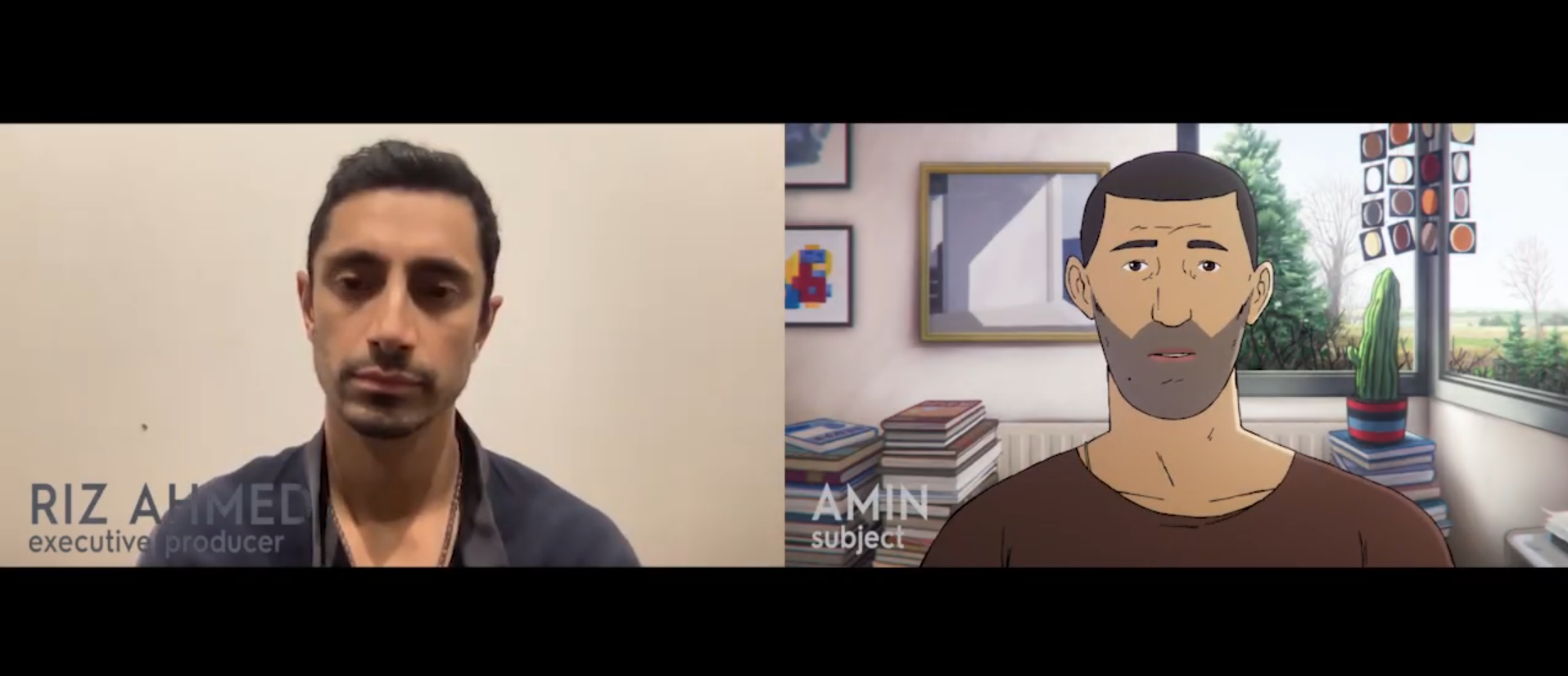
None of the Afghan languages has a word for “gay” or “homosexual,” at least according to a native Afghan, Amin. Amin (real name hidden for security reasons) is the protagonist of “Flee” a Dutch animated documentary.
One of the multiple themes explored through the roughly ninety minutes of this film is Amin’s journey towards coming to terms with his identity, which entailed accepting his own homosexuality.
You might, as I did, let out a sympathetic and pained groan at the scene depicting him asking for medication to cure his gayness. This scene comes hot on the heels of a sequence of lighthearted attraction, as you watch the young refugee grow besotted with a compatriot who is also fleeing to Europe. The path to self-acceptance of sexuality for Amin culminates in the closing scenes of the film. It is scored by Daft Punk’s Veridis Quo, which fits so well, that the director chased Daft Punk for three years to get their personal approval-which he got, vehemently.
The majority of this film is concerned less with personal journeys, and more with the physical journey of Amin, alongside his siblings and mother, from a deteriorating and dangerous Afghanistan to the relative stability of Europe. Growth and maturity underscore every step our subjects take from Afghanistan to Russia, to Estonia and farther and farther afield from their realm of familiarity.

How do you take a man lying psychotherapeutically on a couch, talking about his past, and translate it to compelling storytelling? He’s a deeply captivating man, our Amin, but the cinematic qualities of physical stasis during conversation wear thin after 90 seconds, let alone 90 minutes.
Anecdotes, jokes, desires and secrets alike are brought to life in an art style that is multi-referential and still strikingly individual. You see the frames of an indie graphic novel in flashbacks to Kabul, low frame rates of animation turning seconds into minutes so you can savour the laughter of a young Amin running through the streets. In moments of melancholy, you find the “sense of solitude”, as director Jonas Poher Rasmussen calls it, from an Edward Hopper painting.
Colours aren’t overindulged here, it isn’t a Disney film, it’s a life story: Of sorrow, loss and authenticity above all else. Kabul is painted in many shades of brown, a rich variety, but still…well…brown.
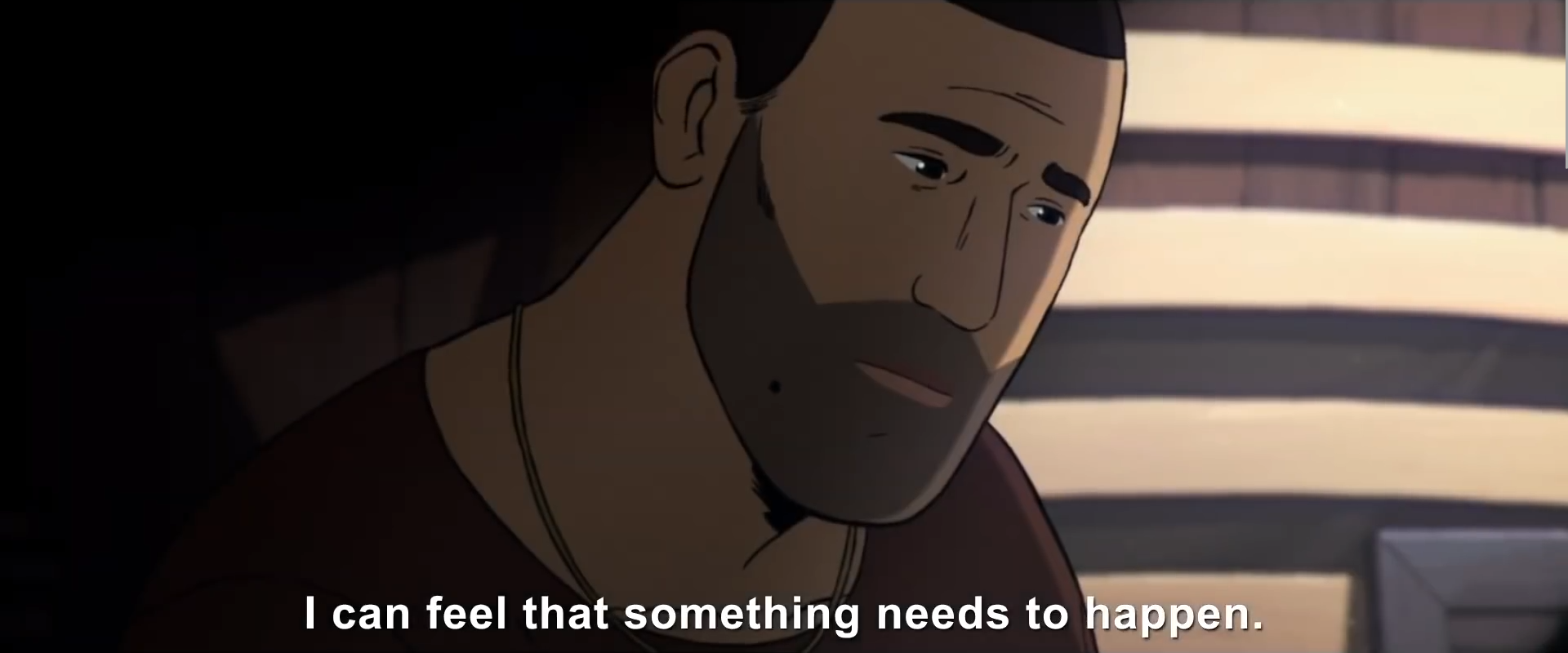
Lest even this muted tonality in animation create the illusion of fantasia and fiction, the film is punctuated by archival footage of the events that Amin bore witness to: His childhood abruptly halted by communists overthrowing the Afghan monarchy in 1979; and those communists then being challenged by the Islamist fundamentalist Mujahideen; corrupt and abusive policing with working-class depravity in post-Soviet Moscow; and then, finally, the tense stillness of present-day Copenhagen and rural Denmark, threatening to burst with his best-kept secret, his past.
The tenacity of character within Amin is in just that: His secrets, held so dear from the trauma of the past, and some secrets of the refugee struggle he never knew to tell.
Related Articles: Will Afghanistan Fuel a New Migrant Crisis? | Refugees in Europe: The Anatomy of a Global Crisis | Europe’s Refugee Crisis Is a Crisis of Humanity, not Migration.
The story is framed so perfectly, you couldn’t write it; the director and subject are friends from high school. You see a deep-rooted friendship blossom and thrive as they converse, and the Afghan grows more and more candid about his past. He reveals that not even his fiancé knows about his past, the past he had to hide to be granted asylum in Denmark. This was a rule the smuggler who got him to Copenhagen had gruffly stipulated.
As mentioned above, the secrecy of his sexuality also rested deep within him, undefined, but part of him and insoluble. A moment that tickled my Indian heart was 9-year-old Amin’s gaze lingering on a picture of Anil Kapoor, a Bollywood star who was a heartthrob for the Gen Xers of the 70s and 80s. Moments like this hurt in their innocence, in their truth. That something so sweet was something he fought, something he hid, is devastating.
There are boats and trucks and cars that carry Amin along on his journey. No amount of locomotion, however, can prepare him for the horrors his teenage and preteen years would show him.
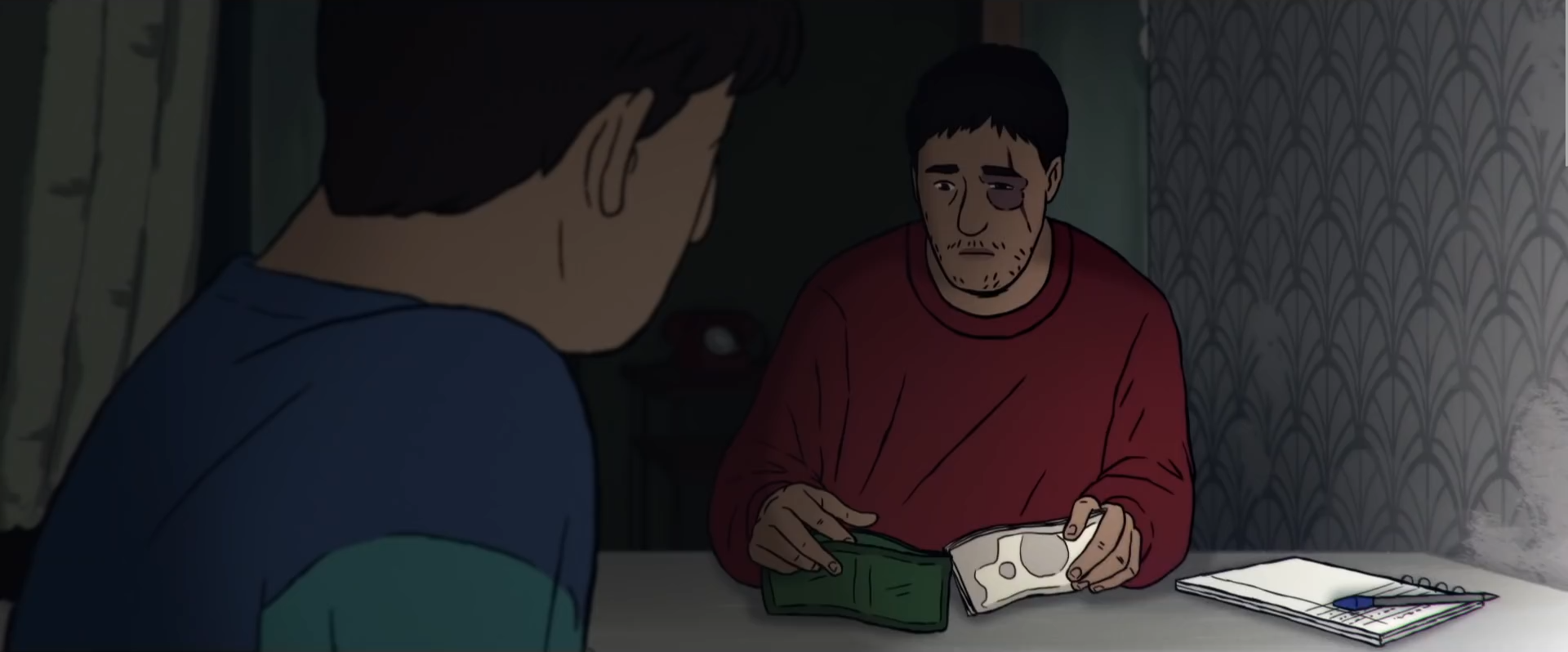
As a refugee living illegally in Moscow, he escapes arrest only by circumstance, as the police officers were much more involved in the rape of a young woman who had been arrested alongside Amin. Locked in the hold of a ship in the waters of the Arctic circle, he describes pitch dark, and the sudden shadow of death that looms as the ship’s hull ruptures and lets in gushing water.
This story is one of self-actualisation. Amin comes to terms with his repressed past in the present day. Elsewhere, a decade ago, he finally lives his truth in love and sex. In the future, shown in an epilogue to the film, he lets his now husband, Kaspar into his life. He learns to balance his postdoctoral studies in Princeton with his relationship, he tells his truth, in place of the lie of survival he has lived for far too long.
Amin has always been an outsider, for one reason or another, we learn as his tale unfurls. His labels, however, are inconsequential to anyone of even a mildly empathetic disposition.
This isn’t an easy or lighthearted watch. It is a story so individual and particular yet so globally relevant: The refugee journey, in recent years has begun from so many places between the Pamir Knot and the Straits of Gibraltar but ended either in North America or Europe an overwhelming majority of the time.
Only recently did the West acknowledge that it needed to do more to provide for these people.
Furthermore, the conflict that lost Amin his father, and lost him and his family their homeland is one of Western origin. The Mujahideen and their successors were famously funded by the American CIA, under Operation Cyclone(Also by the British MI6). The communist government was supported to a similar extent by the USSR, which had just spent a decade occupying Afghanistan. The Soviet-American conflict is to blame for many displaced peoples, from the Korean peninsula to the Cuban shores.
It is therefore necessary for governments and peoples of the West alike to reckon with these truths and not point to current struggles and conflicts in these regions as organic and their own fault. Western weapons and money created the crucibles for many wars that have displaced millions and killed even more in the last 3 decades.
That is why Amin’s story needed to be told in “Flee”. It touches your soul and geopolitics in equal measure. This is ostensibly why it swept awards and nominations everywhere from Sundance to the Oscars.
This film collapses barriers on every level: Genre, format, international, gender, and sexuality. It is a story of the world as it is, in dense, harsh and bitter truth. The medium makes and transforms this message, awaking colours where you forgot they could be.
Amin’s pain will hit you a few times, and you will find yourself needing a moment of reflection as the credits roll. This reflection is necessary, and this story is necessary. Watch “Flee”, it’s…necessary.
Editor’s Note: The opinions expressed here by the authors are their own, not those of Impakter.com — In the Featured Photo: “Flee” movie poster. Featured Photo Credit: Official “Flee” Trailer/YouTube.