The Congo is doing the unthinkable: It is walking back on its commitment to fighting climate change after promising at COP26 that it would defend its rainforests and peatlands that are part of the vast Congo Basin, a major carbon sink for the world – second in size only to the Amazon.
Only eight months have passed since its President, Félix Tshisekedi, stood alongside other leaders in Glasgow and solemnly endorsed a 10-year agreement to protect its rainforest. Now, at the end of this month, the Congo will auction off oil and gas blocks that include the famous Virunga National Park, the world’s most important gorilla sanctuary, as well as tropical peatlands that store vast amounts of carbon. And this threat comes on top of the existing problem the Congolese rainforest has with widespread logging:
As Irene Wabiwa, who oversees the Congo Basin forest campaign for Greenpeace in Kinshasa says: “If oil exploitation takes place in these areas, we must expect a global climate catastrophe, and we will all just have to watch helplessly.”
Watch helplessly just as we are doing now with the Amazon where, with President Bolsonaro at the helm, the world’s largest rainforest is logged away and turned into pastures. This year, deforestation in the Amazon has reached record highs, the highest rate in 15 years.
And as we are also doing now, not caring enough about what is happening in Ecuador. In 2007, Rafael Correa, Ecuador’s president at the time, set up a trust fund that the international community could finance to allay the temptation to exploit an oil block in the Yasuní National Park, one of the most biodiverse regions in the world.
The idea was to raise around $3.6 billion for the fund. Years later, only $13 million had been raised. So in 2013, the government decided to allow oil exploration. Drilling began three years later, in 2016.
At the same time, many political leaders in the developing world have called out the double standard exhibited by advanced, industrialized countries: How can those countries which built their prosperity on fossil fuels that cause climate change demand that developing countries give up their chance to exploit their reserves of coal, oil and gas in order to protect global environment – while not contributing anything towards their economic growth?
Why the Congo made this decision: Political opportunism and rage at being promised climate compensation funds that never come
The Congolese government decision was taken earlier this spring and the war in Ukraine, causing a spike in oil prices, clearly had a lot to do with it. In May, the following video was posted by the Fuel Oil and Gas Ministry (Ministère des Hydrocarbures) on Twitter calling for tenders on half the oil and gas blocks the country owns (16 out of 32), and tagging two major oil producers, the French TotalEnergies and American Chevron, that haven’t reacted officially, at least not yet:
Sous le haut patronage du chef de l’État,son Excellence Monsieur le Président de la RDC,@fatshi13 le ministre des hydrocarbures, @DidierBudimbu lance les appels d’offres des 16 blocs pétroliers sur les 32 que possèdent le pays. @TotalEnergies @Chevron @AppoSecretariat pic.twitter.com/d83QZm0maK
— Ministère des Hydrocarbures RDC (@Min_HydroRDC) May 2, 2022
The Congolese officials vigorously defend their decision. Tosi Mpanu Mpanu, Congo’s lead representative on climate issues and an adviser to the minister of hydrocarbons told the New York Times in an interview last week that his government had taken note of the shift in global priorities caused by the war in Ukraine, in particular, the rush to expand fuel oil and gas supplies as a response to the spike in prices.
Congo’s sole goal for the auction, he said, is to earn enough revenue to help finance programs to reduce poverty and generate much-needed economic growth. “That’s our priority, our priority is not to save the planet.”
In agreeing to protect its rainforest, the Congo was supposed to get international pledges of $500 million over the first five years. This is not a vast sum by any means, but for one of the world’s poorest nations, it was seen as an acceptable trade-off.
But as nothing has been coming its way, the Congolese government decided it needed to do something, particularly as presidential elections are coming up in 18 months. And in the previous election, in 2018, President Tshisekedi only narrowly won against Kabila who is very likely to candidate himself again.
Unsurprisingly, Tshisekedi has given in to political opportunism, in an attempt to present himself at the elections with a juicy proposal. At least, that is how it would look if Didier Budimbu, Congo’s minister of hydrocarbons is right in his calculations. He points to the fact that the country currently produces about 25,000 barrels of oil a day and, with these new blocks, it has the potential to produce up to one million barrels, 40 times its present output. At current prices, that’s the equivalent of $32 billion a year, more than half of Congo’s GDP.
As Tosi Mpanu Mpanu said, referring to the double standard exhibited by Western countries, “Maybe it’s time we get a level playing field and be compensated.”
The risks of choosing oil as a path for development
The Congo, if it succeeds in its fossil fuel strategy, is headed for trouble on multiple levels.
First, carrying out the seismic surveys that are needed to identify the oil deposits requires cutting long trails through the rainforest, and setting off explosive charges to clear the land.
Second, the oil production process causes waste, including salt and heavy metals, that will upset the ecological balance of the entire Congo Basin ecosystem – just as it happened in the Amazon, as a result of exploitation in Brazil, Peru, and Ecuador.
Third, the oil industry requires road construction that inevitably opens up the area to both human settlement and increased logging. In the case of the Congo Basin, expect peatlands to become drained and dehydrated, peat experts say, with the result that the carbon they trap will be released, spelling the end of the Carbon Basin as a major carbon sink.
And we need to remember, that this is not just any carbon sink, but the world’s second-largest after the Amazon.
Finally, the local population depending on the rainforest resources is not happy: Both their traditional way of life and very survival are threatened. A Greenpeace team recently consulted people living inside the proposed oil blocks and found that the inhabitants were opposed to drilling and would launch protests.
Greenpeace sounded the alarm at the UN biodiversity talks in June in Kenya: At current trends, all primary rainforests in the Congo basin – the world’s second-largest rainforest – could be cleared by the end of the century.
Data gathered across countries and continents consistently shows that when people living in forests are left to run them, the result is better-protected ecosystems and biodiversity than any other conservation efforts by outsiders could ever obtain.
Deforestation industries – whether loggers or agribusiness – are well aware of this. While they clear forests, Indigenous Peoples and local communities are being displaced, abused, and even murdered.
Moreover, countries that have chosen the oil path to development have been plagued with the so-called “resource curse” and are unable to achieve anything like harmonious development, lifting people out of poverty.
In practice, the profits end up in the hands of the few while the many are left behind, penniless, sick, and hungry.
The Congolese government has consulted Africa’s biggest oil producers, Angola, Nigeria and Equatorial Guinea, “so that the D.R.C. can take the same path,” according to a recent release on the ministry’s website. Forgetting that those three countries have repeatedly underperformed economically and left large swathes of their population in absolute poverty.
Is that what the Congo wants?
And the world? Can we stand by and let the Congo destroy its rainforest and do nothing? It would seem that the only rational course of action is for the international community, starting with the EU Commission, to revive the agreement reached at COP26 and start compensating the Congo for its foregone oil exploitation.
And $500 million over five years is not likely to be enough. Indeed, it’s high time to set a “level playing field” and treat developing countries not with words and false promises but with concrete action.
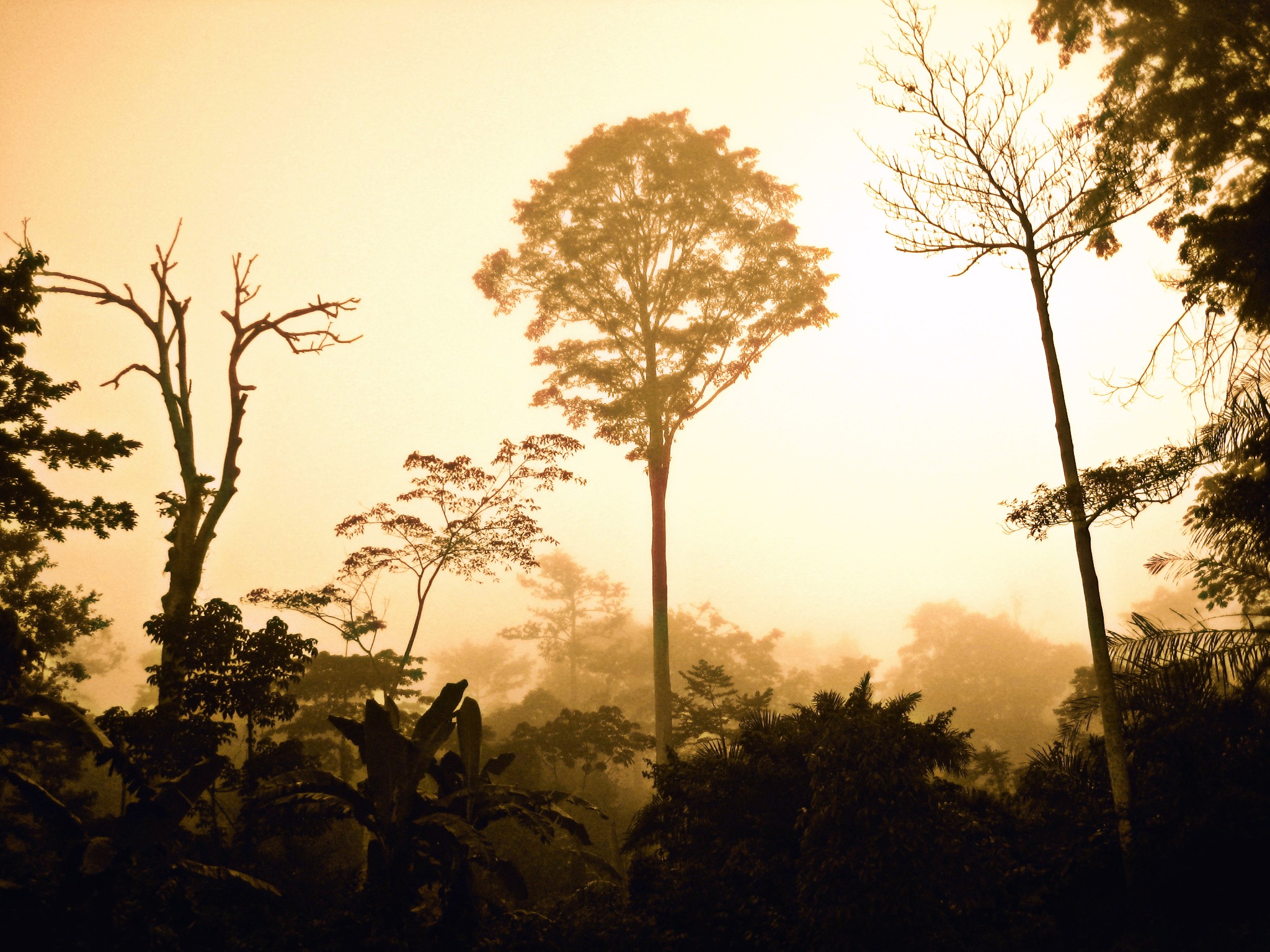
Editor’s Note: The opinions expressed here by Impakter.com columnists are their own, not those of Impakter.com – In the Featured Photo: Congo Basin Rainforest Photo by Corinne Staley Flickr cc