Impakter
  • Environment
    • Biodiversity
    • Climate Change
    • Circular Economy
    • Energy
  • FINANCE
    • ESG News
    • Sustainable Finance
    • Business
  • TECH
    • Start-up
    • AI & Machine Learning
    • Green Tech
  • Industry News
    • Entertainment
    • Food and Agriculture
    • Health
    • Politics & Foreign Affairs
    • Philanthropy
    • Science
    • Sport
  • Editorial Series
    • SDGs Series
    • Shape Your Future
    • Sustainable Cities
      • Copenhagen
      • San Francisco
      • Seattle
      • Sydney
  • About us
    • Company
    • Team
    • Global Leaders
    • Partners
    • Write for Impakter
    • Contact Us
    • Privacy Policy
No Result
View All Result
Impakter logo
No Result
View All Result
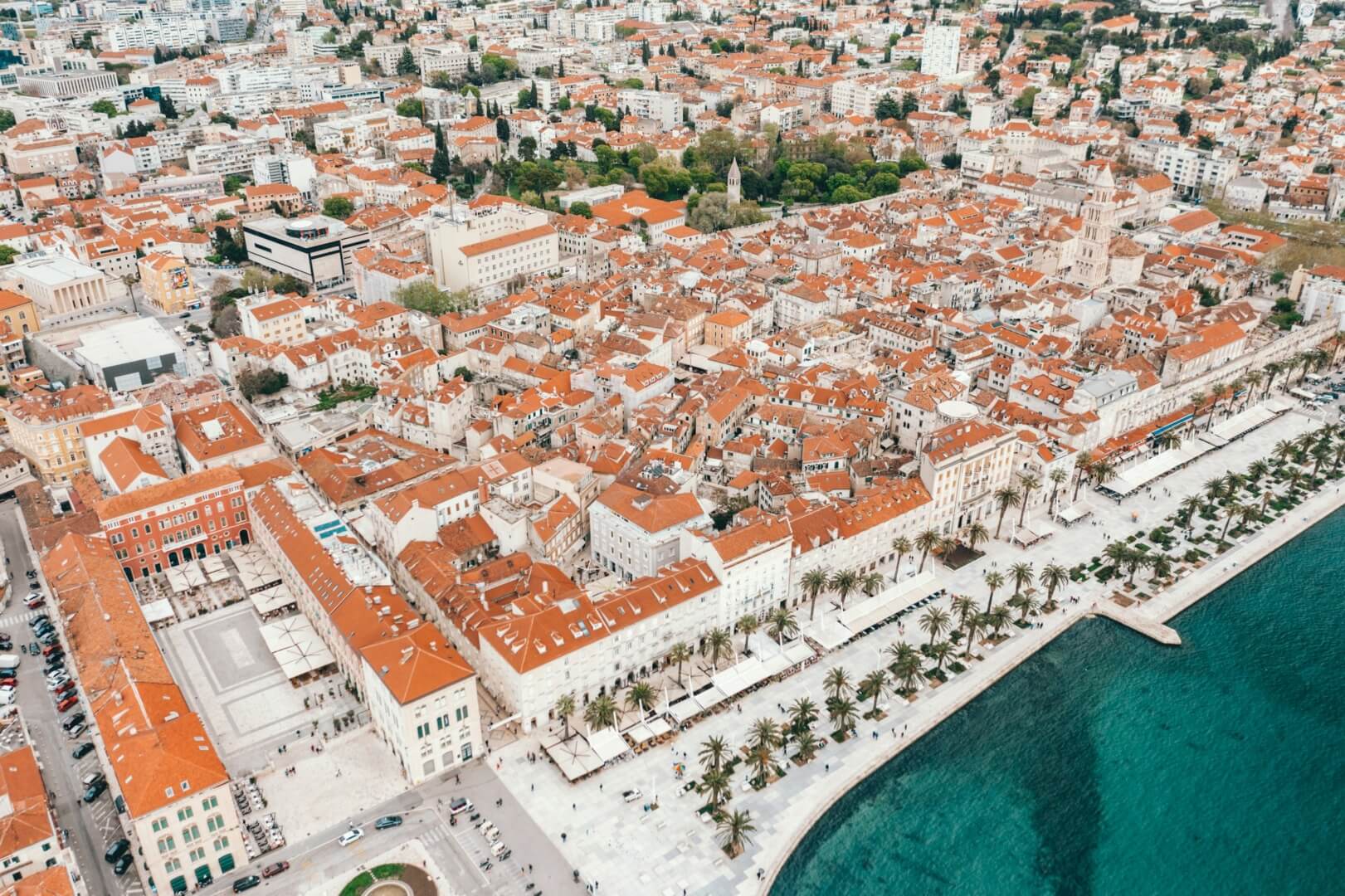
White buildings with orange roofs sit alongside the coast in Split, Croatia.

EU Rolls Out New Toolkit for Sustainable Tourism

Designed for local community leaders, the kit provides practical tools to reduce tourism’s contribution to global greenhouse gas emissions, protect cultural heritage, and promote greener travel

Benjamin ClabaultbyBenjamin Clabault
September 30, 2025
in Environment, Sustainable Cities
0

This month, the European Commission (EC) released a new communication toolkit to help stakeholders promote sustainable tourism on the continent. 

The toolkit is part of the Commission’s ongoing effort to develop sustainable tourism. In February 2022, the EC published its Transition Pathway for Tourism, a 49-page document examining how European communities can transition to a tourism model that’s green, digital, and resilient. 

The EC later launched its “Sustainable EU Tourism – Shaping the Tourism of Tomorrow” project, scheduled to run from December 2023 to December 2025. The project seeks to identify challenges, develop best practices, and establish a “peer-to-peer twinning mechanism” to foster collaboration among tourist destinations. 

According to European Commission President Ursula von der Leyen, the efforts to promote sustainable tourism reflect Europe’s leadership on a global scale. In a 2024 open letter written to Apostolos Tzitzikostas, the EU’s Commissioner for Sustainable Transport and Tourism, von der Leyen wrote, “In a time of great global instability and great expectations of Europeans, we must… deliver and lead from the front, working closely with the people and regions of Europe and the parliaments, governments and institutions that serve them.” 

A Recent History of Tourism-Related Challenges

The new toolkit arrives as some governments are actively discouraging tourism as a last resort against ecological and cultural damage. In July, Greece instituted a “cruise tax” that visitors must pay when they disembark at ports in the Greek islands, in part due to water shortages. Venice has also begun charging a 5€ access fee, while Barcelona plans to phase out short-term rentals by 2028.
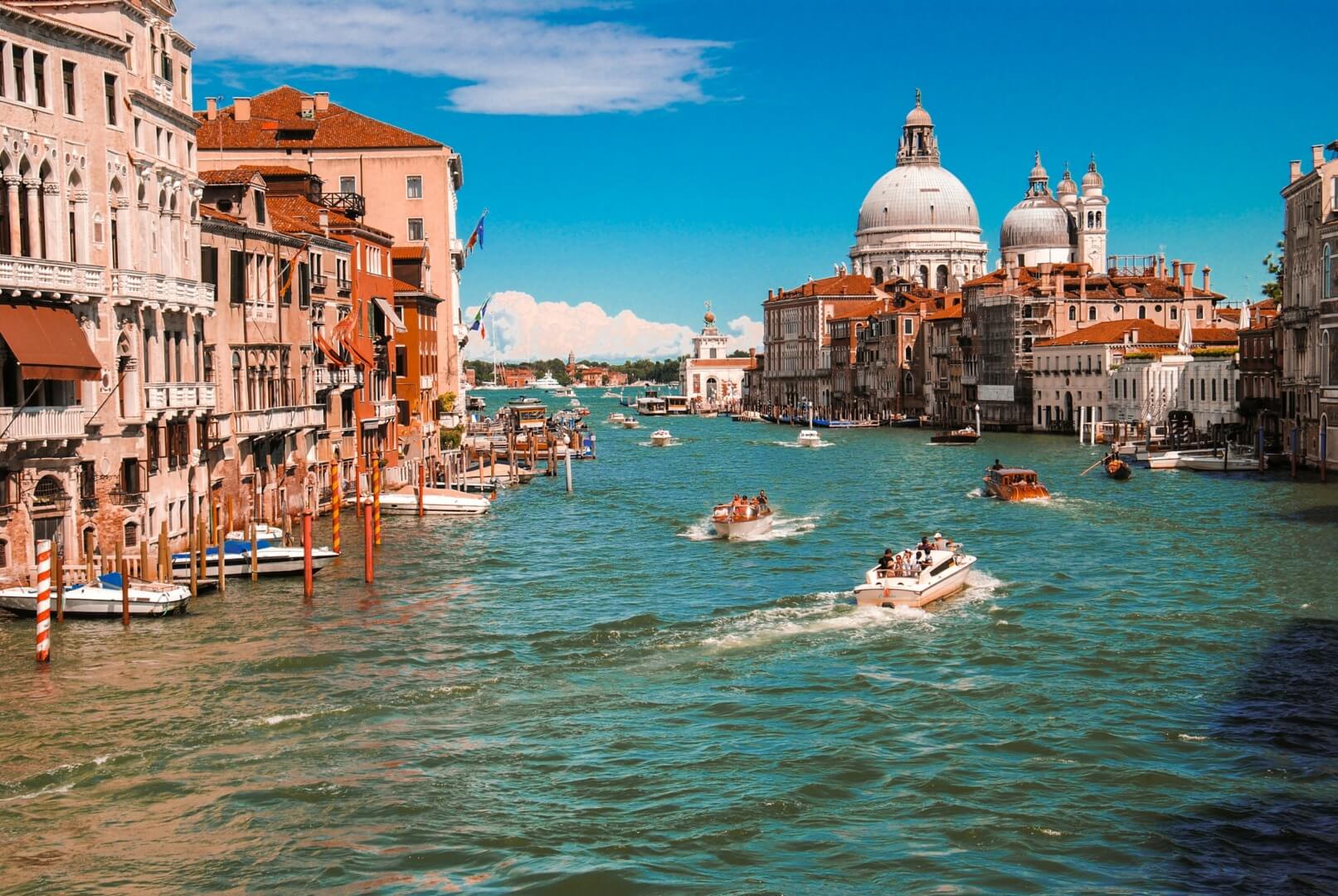
Boats pass through the Venice Grand Canal on a bright, sunny day.
Boats pass through the Grand Canal in Venice, Italy. Photo Credit: Dan Novac

But limiting tourism is an expensive proposition. According to a recent report by the World Travel & Tourism Council, capping tourism could cost Europe $245 billion in GDP and $122 billion in tax revenue. The report also predicts the tourism sector would lose 2.9 million jobs. 

The promotion of sustainable tourism gives European communities a way to limit the ecological and social harms from tourism without abandoning the economic benefits. And in the push to green the tourism industry, city governments are taking the lead. 

Defining Sustainable Tourism

Greening the tourism sector is a major priority for Europe — unsurprisingly, given both the size of the tourism industry and its significant contribution to greenhouse gas emissions. According to a recent academic article published by Taylor and Francis Online, Europe accounts for 51% of all international tourism arrivals, while tourism accounts for 8% of global greenhouse gas emissions. That means reducing travelers’ carbon footprints could have a substantial impact on the wider climate fight.

An aerial view of Barcelona, Spain.
City blocks surround the famous Sagrada Familia in Barcelona, Spain. Photo credit: Logan Armstrong

In a past publication, the European Commission defined sustainable tourism as “tourism that leads to the management of all resources in such a way that economic, social, and aesthetic needs can be fulfilled while maintaining cultural integrity, essential ecological processes, biological diversity, and life support systems.” 

This is a broad definition that encompasses a range of goals beyond simply reducing emissions or protecting natural environments. In fact, the inclusion of social and economic concerns displays an understanding of Europe’s reliance on the tourism industry. The EC’s objective isn’t necessarily to curtail tourism, but to reduce its environmental impact.

Messaging Assistance for Tourist Destinations

Rather than simply stating values or objectives, the sustainable tourism toolkit gives communities materials they can use to change the way tourism is practiced.

Take, for example, the toolkit’s “Sustainable Tourism Infographic.” It features a “Checklist for the Responsible Traveler,” encouraging best practices like reducing waste, traveling off-season, and using green transportation. Each checklist item can also be downloaded as its own infographic. 
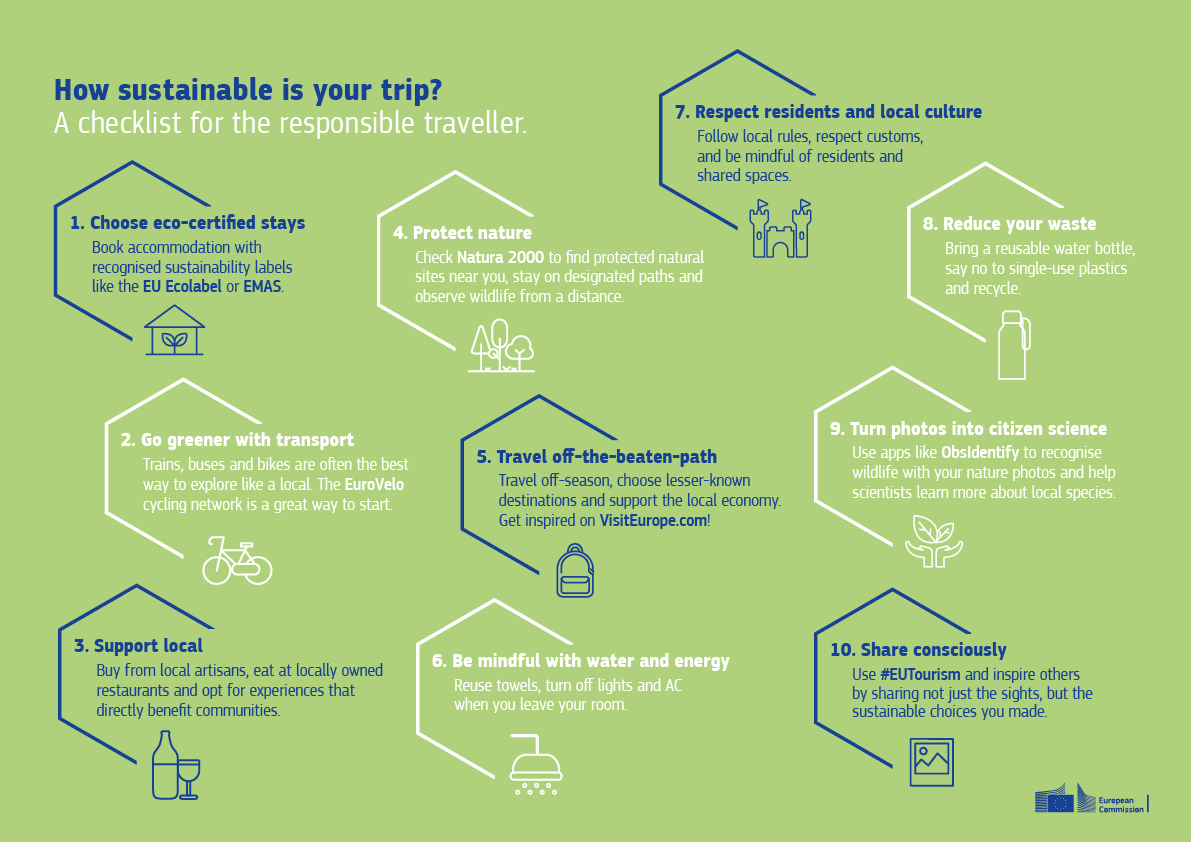
An infographic provides a checklist for responsible travel.
An infographic on sustainable tourism practices, provided as part of the European Commission’s newly released communications toolkit. Photo Credit: European Commission

The toolkit also includes social media message templates that communities can post on their own accounts. For example, a suggested Facebook post reads, “Promoting cultural awareness and respect among travellers helps create more inclusive, welcoming tourism experiences.

Be mindful of local cultures, customs and environments. Let’s travel with curiosity and care.” These messages, while generic, allow municipal governments to promote sustainable tourism directly to travelers.


Related Articles: Tourism and the Environment: From a One Health Perspective | Top 5 Most Sustainable Cities in Europe to Spend Your Summer Holiday

Best Practices, Case Studies, and Contact Info for Collaboration

The toolkit’s “Best Practices” factsheet is another highly valuable resource. It provides 50 case studies from different European tourist destinations, showing how each community addressed a key challenge with an efficient, replicable solution. 

For example, the factsheet explains how Gothenburg, Sweden, sought to “change consumer preferences towards more sustainability.” To make this happen, the local Destination Management Organisation (DMO) worked to incentivize sustainable certifications for hotels while providing free training and capacity building. 
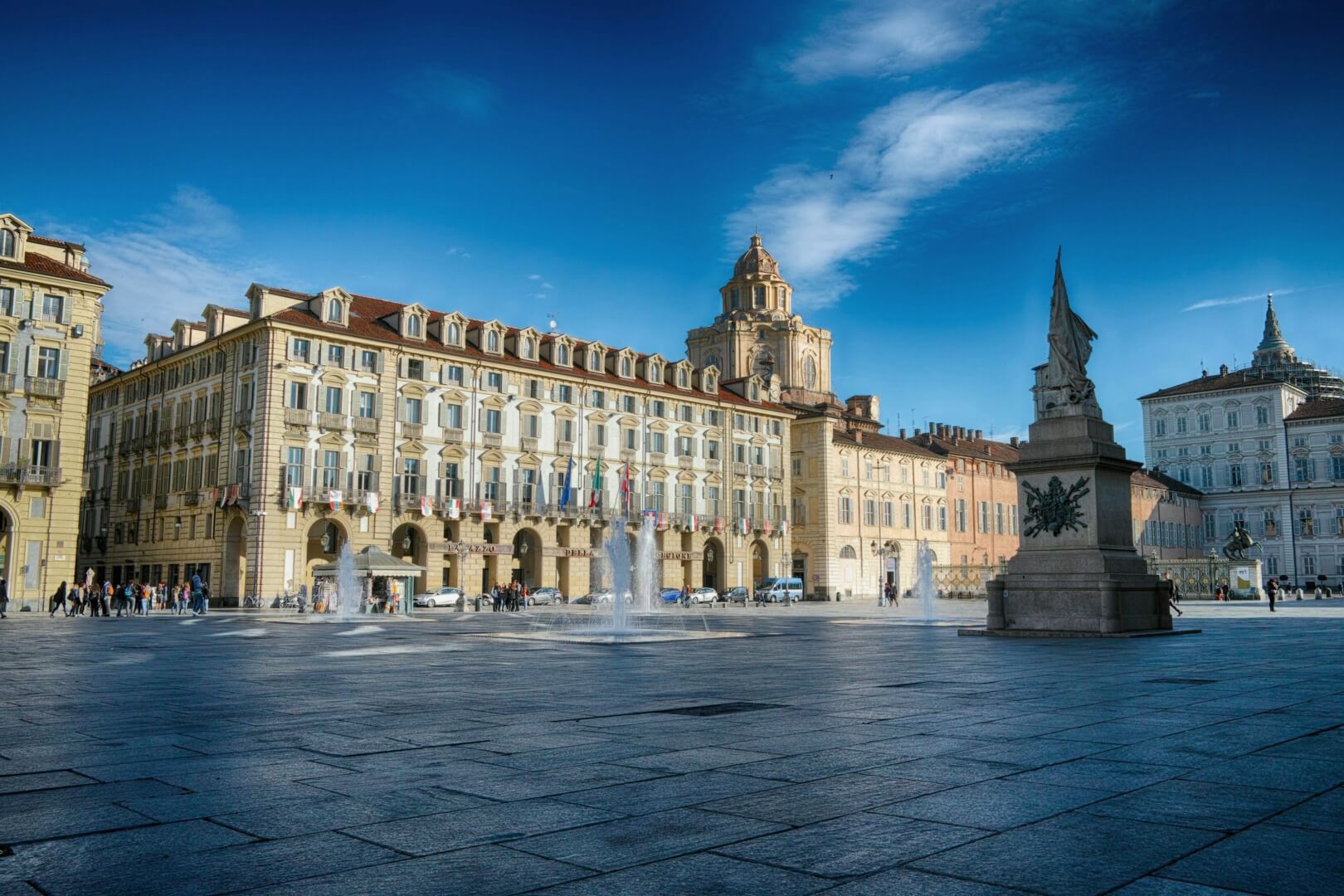
The sun shines on a historic building in a plaza in Turin.
The Piazza Castello in Turin, Italy. Photo credit: Cristiano Caligaris

Another case study focuses on Turin, Italy, which wanted to increase the size of its tourism sector as the local auto industry faded. Among other pro-tourism changes, the city has developed a network of green spaces and walking/biking paths. The local DMO has also partnered with Outdooractive App to digitise trail offerings and enhance accessibility for tourists. Together, these moves represent the mix of public and private initiatives at the intersection of tech and sustainability — a model that the EC thinks other communities could follow. 
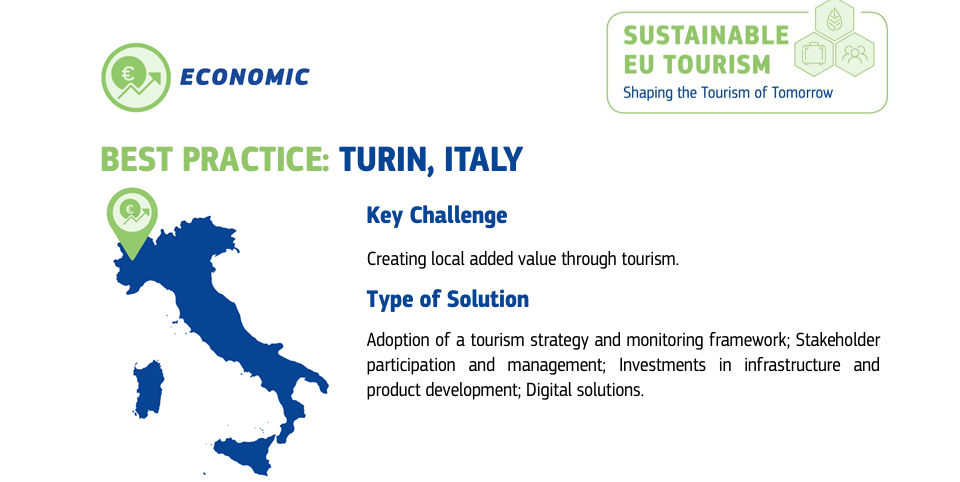
A map shows the location of Turin, Italy, and text explains how the city promoted sustainable tourism.
A case study on sustainable tourism practices in Turin, Italy — part of the European Commission’s newly released sustainable tourism communications toolkit. Photo Credit: European Commission

In addition to explaining how each destination is pursuing its sustainability goals, the factsheet provides links to relevant local websites, a breakdown of “results and impacts,” and explicit recommendations that other destinations can follow. Each entry also includes the email address of a relevant contact person, allowing other European communities to reach out for direct guidance. 

Due to these features, the EC’s new toolkit is a vehicle for cross-continental collaboration.

Editor’s Note: The opinions expressed here by the authors are their own, not those of Impakter.com — In the Cover Photo: An aerial view of Split, Croatia. Cover Photo Credit: Spencer Davis

Tags: Climate ChangeEUEuropeEuropean UnionGreen TourismSustainabilitysustainable tourismtourism
Previous Post

Rethinking Approaches to Industrial Policy for a Net-Zero Future

Next Post

Discussions Underway for Grid Interconnectors in Spain, France, and Portugal

Related Posts

ESG News regarding China restricting industrial renewable exports, UN warning that US climate treaty exit harms economy, UK firms lowering wage forecasts despite inflation, Meta partnering with TerraPower for new nuclear reactors.
Business

To Save the Grid, China Forces Industries to Go Off-Network

Today’s ESG Updates China Limits Grid Exports for New Industrial Solar & Wind: China is encouraging companies to store green...

byEge Can Alparslan
January 9, 2026
EU officials respond to the US withdrawal from the UN climate treaty during a press briefing.
Business

US Withdrawal From UN Climate Treaty Raises Global Climate Stability Concerns

Today’s ESG Updates US Retreats From UN Climate Treaty: The EU condemns the United States’ decision to withdraw from the...

byJana Deghidy
January 8, 2026
News about sustainability in the publishing industry
Environment

How the Publishing Industry Addresses the Carbon Footprint of Books

Books are ever-present in our lives: we look through picture books when we are children, study textbooks in school and...

byAnastasiia Barmotina
January 5, 2026
Impakter’s Most-Read Stories of 2025
Society

Impakter’s Most-Read Stories of 2025

In 2025, as in previous years, Impakter readers turned in large numbers to stories examining climate change and pollution, environmental...

byImpakter Editorial Board
December 31, 2025
Year in Review: Trump 2.0 and the Environment
Environment

Year in Review: Trump 2.0 and the Environment

So much has happened this year. It seems that every day there is a new headline that is just as...

bySarah Perras
December 30, 2025
Is It Time to Recognize Climate Refugees?
Climate Change

Is It Time to Recognize Climate Refugees?

Climate displacement has become a defining feature of our present. Climate shocks now shape human (im)mobility, humanitarian crises, and political...

byDr. Shepherd Mutsvara - Research Fellow at the University of Münster, Germany
December 30, 2025
coal mine
Business

Can the War on Coal Still Be Won?

Ten years ago, I embedded in the war on coal. I spent a month inside the Sierra Club’s Beyond Coal campaign, watching an organization...

byCanary Media
December 25, 2025
Sustainable Tourism
Culture

Sustainable Tourism Experiences Worth Supporting in Turkey

Sustainable travel in Turkey attracts visitors who want meaningful adventures that benefit local communities. The country offers coastal paths, village...

byHannah Fischer-Lauder
December 23, 2025
Next Post
ESG news regarding Spain, France, and Portugal’s power interconnector projects, South Africa oil drilling stopped by environmental groups, Nippon Steel investment in Canada’s Kami iron ore project, and the rise of solar in the EU

Discussions Underway for Grid Interconnectors in Spain, France, and Portugal

Recent News

ESG News regarding China restricting industrial renewable exports, UN warning that US climate treaty exit harms economy, UK firms lowering wage forecasts despite inflation, Meta partnering with TerraPower for new nuclear reactors.

To Save the Grid, China Forces Industries to Go Off-Network

January 9, 2026
Cleaner Air in Hospitals

How Cleaner Air in Hospitals Can Cut Infections and Climate Impact at the Same Time

January 9, 2026
Search cleanup, key activity to protect your data and tech devices.

A Simple “Search Cleanup” Plan for Busy People

January 9, 2026
  • ESG News
  • Sustainable Finance
  • Business

© 2025 Impakter.com owned by Klimado GmbH

No Result
View All Result
  • Environment
    • Biodiversity
    • Climate Change
    • Circular Economy
    • Energy
  • FINANCE
    • ESG News
    • Sustainable Finance
    • Business
  • TECH
    • Start-up
    • AI & Machine Learning
    • Green Tech
  • Industry News
    • Entertainment
    • Food and Agriculture
    • Health
    • Politics & Foreign Affairs
    • Philanthropy
    • Science
    • Sport
  • Editorial Series
    • SDGs Series
    • Shape Your Future
    • Sustainable Cities
      • Copenhagen
      • San Francisco
      • Seattle
      • Sydney
  • About us
    • Company
    • Team
    • Global Leaders
    • Partners
    • Write for Impakter
    • Contact Us
    • Privacy Policy

© 2025 Impakter.com owned by Klimado GmbH