In the past, unsold clothes were often put into landfill or incinerated. However, there have been recent efforts to reduce waste through greater reuse and recycling. Now, in a landmark decision, European Union governments agreed yesterday (May 22) to ban the destruction of unsold textiles, a practice that contributes to massive waste and pollution in the fashion industry.
The Council of the EU announced in a statement that member states had adopted their negotiating position “on the proposed regulation establishing a framework for setting ecodesign requirements for sustainable products.”
The law updates a 2009 regulation that sets conditions for producing and marketing environmentally sustainable items in the EU.
The new rules will expand the scope of the legislation to nearly all products sold in the EU, with the exception of motor vehicles that are covered by another act.
The ban on textile destruction, which is part of the EU’s green push towards reducing waste through greater reuse and recycling, is expected to apply immediately to large companies and gradually to smaller ones.
The EU’s textile consumption has the fourth highest impact on the environment and climate change after food, housing and mobility. About 5.8 million tonnes of textiles are discarded every year in the EU, approximately 11kg (24 pounds) per person, much of it put into landfill or incinerated.
This not only wastes valuable resources but also releases harmful greenhouse gases and toxic chemicals into the air, water, and soil.
The new law aims to change this by prohibiting the destruction of unsold or retained textile products, such as clothing, footwear and accessories. Instead, companies will have to find alternative ways to deal with their excess stock, such as donating, reselling or recycling them. The law will also create a new “digital product passport” showing a product’s environmental sustainability to help consumers make more informed choices.
The new ban on textile destruction is still a draft resolution…
The governments and the European Parliament still need to agree on the Ecodesign Regulation before it can enter law. Under the initial March 2022 proposal by the European Commission, the Commission itself was to have determined at a later stage whether to put destruction bans in place.
However, the EU governments in the Council have agreed to accelerate the process and that a destruction ban on unsold clothing should apply immediately, rather than waiting for the EU executive to carry out an assessment that could have lasted three years.
How soon the new law goes through the European Parliament and enters into force across the EU is not known. But a boost from Spain is expected as it will hold the six-month EU presidency from July and is likely to hold negotiations on the law with representatives from the European Parliament. The assembly still needs to establish its position, but chances are high that it will support a ban on destroying unsold textiles and electronic appliances.
The agreed-to ban will apply immediately to large companies with more than 250 workers, while medium-sized companies with fewer than 250 workers will have a transition period of four years. The smallest companies with fewer than 50 workers will be exempt from the ban.
…But the ban is part of a wider move towards a circular economy
The EU’s decision follows the example of France, which already has an anti-waste law – so-called AGEC law – that bans the destruction of unsold non-food products. In practice, in 2021, France banned businesses from selling single-use plastic straws, disposable plastic cutlery, plastic lids for takeaway cups, expanded polystyrene boxes (such as kebab boxes), steak picks, balloon stems, plastic confetti and all oxo-degradable plastic objects.
And this plastic ban is also set to deeply affect the fashion industry.
Moreover, as underlined by the European Commission, the destruction of unsold consumer products is a matter for concern and becoming a widespread problem across the EU, particularly due to the rise of online sales. Indeed, the EU has a comprehensive set of laws aimed at preventing household waste that was agreed to in 2018.
According to the European Environmental Bureau (EEB), there are several good examples of how countries have already translated these into national law, in particular boosting repair and designing products that are meant to last. Albania, Austria, Belgium, Bosnia Herzegovina, Bulgaria, Croatia, Cyprus, and Czechia are some of the countries that have country profiles on waste prevention.
The new ban on clothes destruction is expected to have a positive impact on the environment, the economy, and society by reducing waste, saving resources, cutting emissions, and creating new jobs and opportunities in the circular economy. It is also hoped that it will encourage more innovation and creativity in the textile industry, as well as more responsible consumption and production patterns.
The EU’s ban on destroying unsold textiles is a bold and necessary step toward making fashion more sustainable and ethical. It is time for other countries and regions to follow suit and join the global movement to end fashion waste.
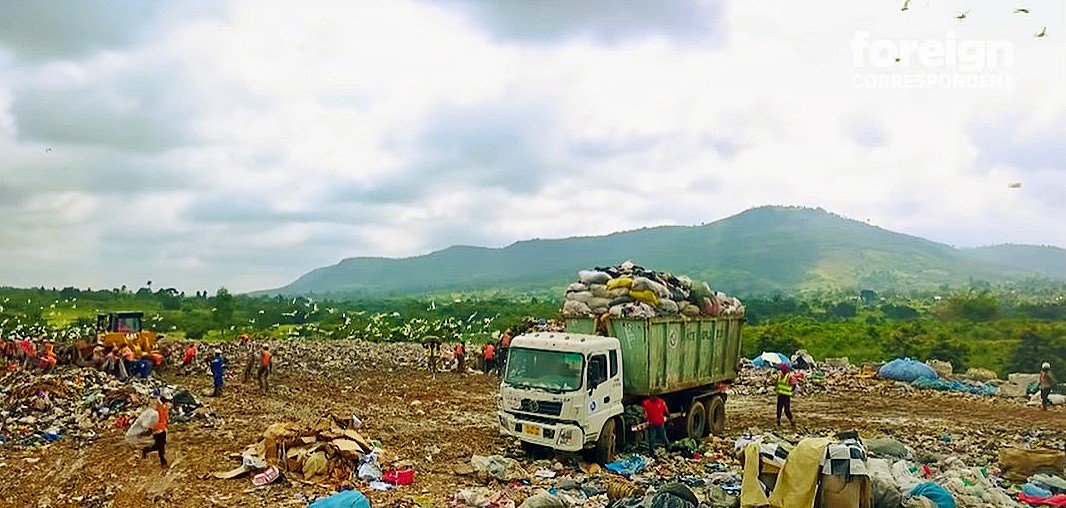
Editor’s Note: The opinions expressed here by the authors are their own, not those of Impakter.com — In the Featured Photo: Landfill with used clothes – screenshot from Foreign Correspondent video premiered on 12 Aug 2021 GHANA. It shows the dark side of the world’s fashion addiction. Many of our old clothes, donated to charities, end up in rotting textile mountains in West Africa. This is a story about how our waste is creating an environmental disaster.