

Today’s ESG Updates
- Paris and Berlin Move to Soften the 2035 Car Emissions Target: A provisional Franco-German deal would hold carmakers to a 90% cut without the extra measures the Commission wanted, and could bring Britain inside the bloc’s local-content rules.
- Grid Bottlenecks Leave Britain Paying to Switch Wind Farms Off:The operator spent £47.9 million in a single day shutting turbines in one region and firing up gas in another, with the annual bill heading towards £3.2 billion.
- States Line Up Against OpenAI Over Its Effect on Minors: Eight attorneys general have filed consumer protection claims, seeking damages, product changes for young users and a pause on self-improving models.
- BHP Takes Its Chilean Copper Union to Court Over Stoppages: The miner wants $8.6 million over two shutdowns at Spence that it says fell outside the agreed bargaining window.
EPA’s biofuel fix tests regulatory credibility
The US EPA’s (United States Environmental Protection Agency) proposal to reallocate additional small refinery exemptions is less about a new biofuel ambition than about preserving an existing one. Its central challenge is credibility, as it must prevent surplus compliance credits from weakening renewable fuel demand without undermining confidence in previously announced obligations.
The immediate issue is a forecasting gap, where the EPA projected that 2025 exemptions would remove obligations equivalent to 990 million Renewable Identification Numbers (RINs). Subsequent exemption decisions raised that estimate to 1.76 billion, leaving 770 million more credits available than anticipated. These credits could reduce demand for newly generated RINs, potentially depressing prices and weakening incentives for renewable fuel production. EPA therefore proposes reallocating the entire additional amount.
Crucially, this does not mean requiring an equivalent increase in physical biofuel production. EPA expects to meet the additional obligations through carryover credits, preserving the production levels already intended for 2026–2027. The proposal should therefore be understood as protecting existing incentives, rather than independently delivering additional fuel consumption or climate benefits.
Furthermore, the EPA could split the adjustment evenly between 2026 and 2027 or allocate it all to 2027. An equal reallocation spreads the obligation but could require refiners to buy additional credits after the 2026 compliance year ends. The 2027-only option provides more time to adjust purchasing strategies and recover costs through fuel sales. From a planning standpoint, the latter appears stronger, as balancing years numerically does not necessarily create a fairer commercial burden.
Consumers would also bear some costs, as the EPA expects refiners generally to pass additional credit-purchasing expenses downstream. However, estimated gasoline and diesel price increases remain below one cent per gallon relative to existing standards.
Moreover, the proposal acknowledges EPA’s earlier assurance that it did not plan to revisit standards for exemption projection inaccuracies. Reconsideration now protects producers’ expectations while unsettling refiners’ reliance on established requirements.
A plausible feedback loop follows: producers may increasingly anticipate protection against exemption shocks, while refiners attach greater uncertainty to announced obligations. Repeated corrections could consequently complicate investment planning, even when each intervention has a defensible rationale.
The stronger policy approach is therefore prospective adjustment alongside more reliable exemption forecasting. Protecting demand matters, but repeated retrospective revisions could weaken the certainty durable investment requires.
Klimado – Navigating climate complexity just got easier. Klimado offers a user-friendly platform for tracking local and global environmental shifts, making it an essential tool for climate-aware individuals and organizations.
Export demand buys US coal time, not a future
US coal’s September price recovery is less a domestic-demand story than an export-led reprieve. Firmer Gulf Coast gas prices and stronger metallurgical coal demand have lifted export benchmarks, while high power-plant stockpiles and cheap gas continue to cap domestic upside.
The key tension is temporal: export strength may support Appalachian producers through 2027, but S&P’s forecast of 44.4 GW of coal retirements and a fall in coal’s generation share to 7.2% by 2035 points to structural decline thereafter.
For investors, the message is clear: coal is a cyclical trade inside a secular contraction.
Related Articles
Here is a list of articles selected by our Editorial Board that have gained significant interest from the public:
California’s EV rebates are working, but not fast enough
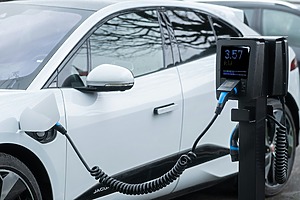
California’s $270 million first-time EV rebate program has supported nearly 12,000 purchases, offering $3,500 for new EVs priced up to $50,000 and $1,750 for used EVs up to $25,000. But the scheme operates in a weakening market: EVs made up 18% of California sales through September, down from 23% last year and 25% in 2024.
The program splits funding evenly between the state and participating automakers. It has already exhausted Tesla-specific funds, even as Tesla accounts for more than half of the state’s EV sales.
With federal EV tax credits repealed, California’s rebates are a targeted but limited response to a broader slowdown in demand.

The IMF’s narrow path between reform and relief

The IMF’s statement captures a world where economic shocks are no longer isolated: war, trade disruption, energy-price volatility, debt stress and technological uncertainty now reinforce one another. Its call for more support for reform-but-cash-constrained countries is welcome, particularly for low-income and conflict-affected states.
Yet the language is cautious, and support is tied to “sustainable debt” and reform agendas, which may exclude countries most in need. Omitting “artificial intelligence” in favor of “advanced intelligence technologies” also shows how political framing can obscure substantive debate.
The real test will be whether pledges translate into faster, less conditional financing.
Editor’s Note: The opinions expressed here by the authors are their own, not those of impakter.com — Cover Photo Credit: Roger Starnes Sr on Unsplash