
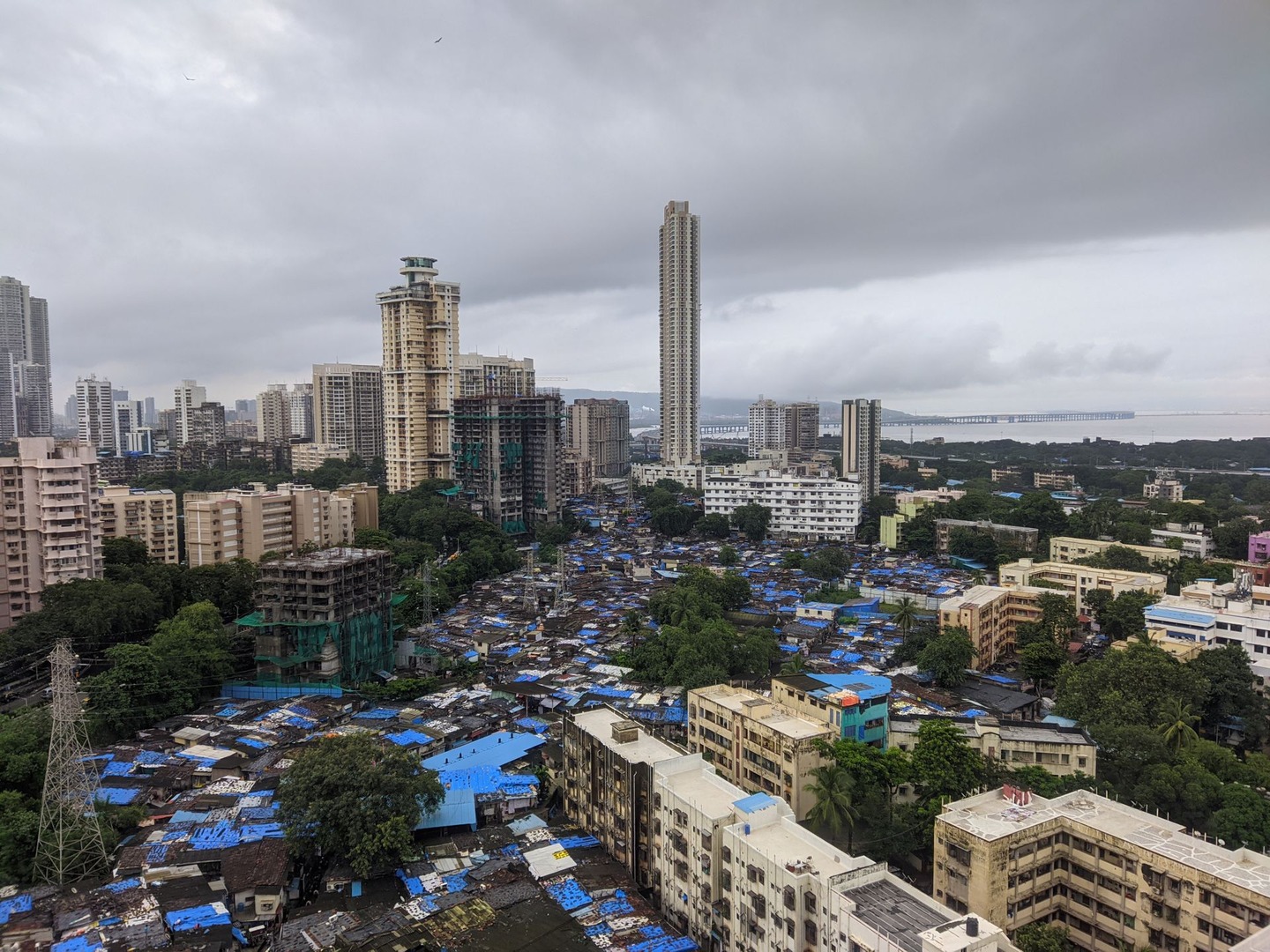
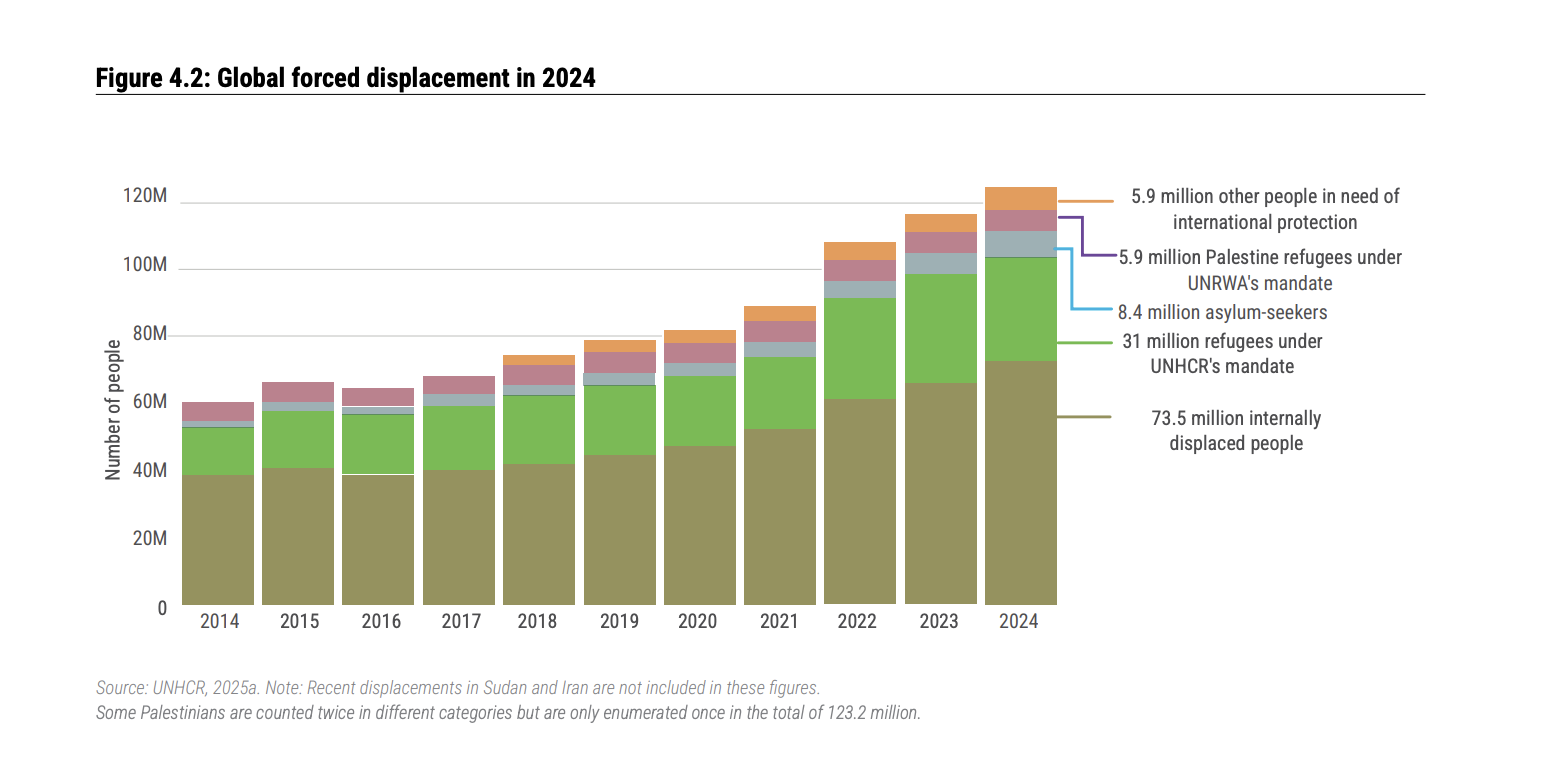
Every year, the United Nations tallies the displaced individuals around the world, who consist of refugees fleeing war, families driven out by natural disasters or famine, and entire populations forced from home by forces beyond their control. According to the “World Cities Report 2026” published by UN-Habitat, 133 million people were displaced in 2024. However, there is another number that has gone largely unremarked, or as the report calls it, the “hidden epidemic”: over the past two decades, 64 million people have been evicted from informal settlements, pushed out not by war or weather but by bulldozers, court orders, and city planners.
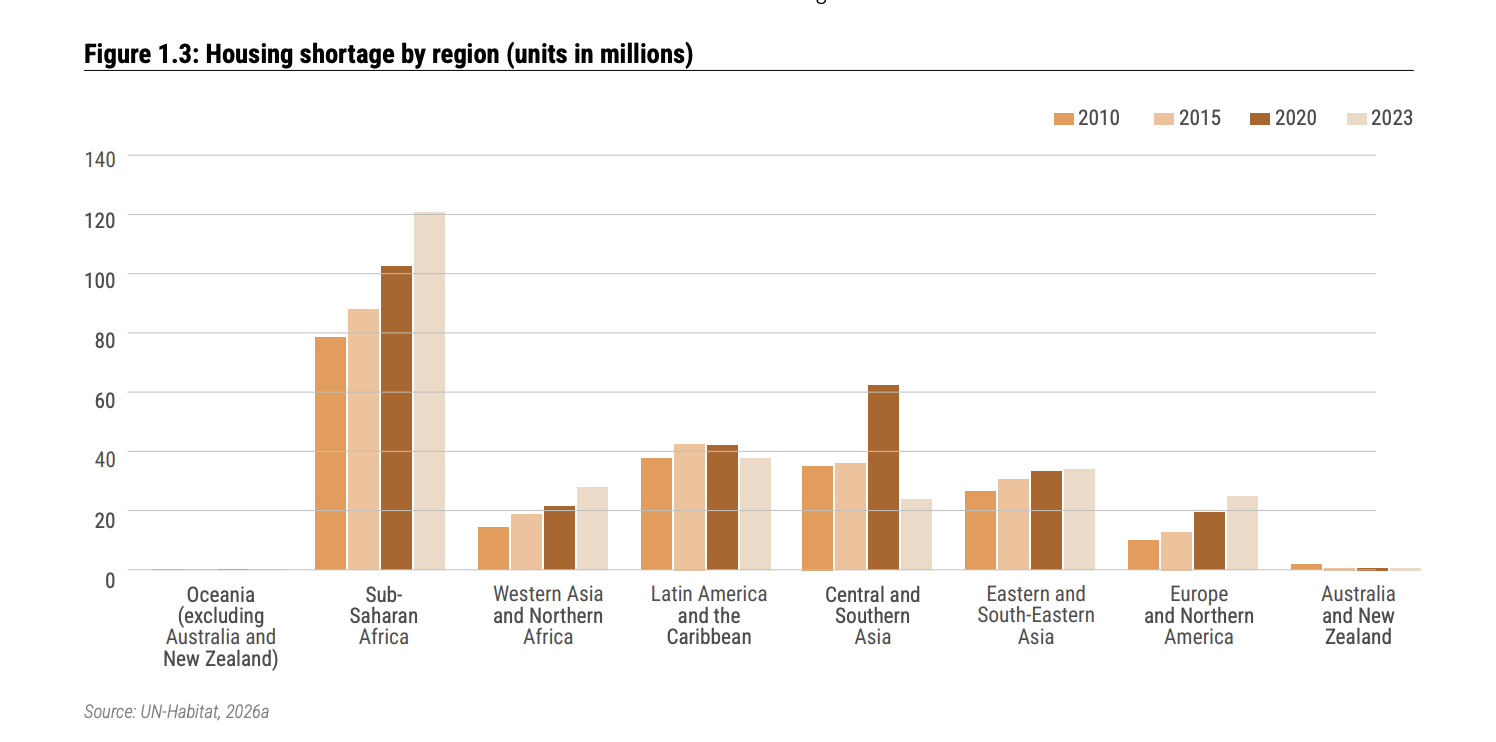
As many as 3.4 billion people globally may lack a decent, dependable place to call home. More than one billion of them live in slums and unplanned settlements, where families can be forced out at any time, share cramped rooms, sit in the path of floods and storms, and go without clean toilets or wastewater systems.
For the first time in a World Cities Report, UN-Habitat is arguing these are not two separate stories. It places evictees inside a single new category it calls the “urban displaced,” alongside refugees, internally displaced people, returnees and people experiencing homelessness. This new category is based on the idea that the loss of home defines displacement, regardless of its cause. If that argument holds, one of the world’s largest and least visible crises has just found its name.
The two numbers are not meant to sit side by side as unrelated statistics. UN-Habitat’s analysis states plainly that the official displacement count does not capture the full scale of the problem. This persists especially in cities, and the report presents the 64 million evicted as an addition to that count.
This points to the bigger realisation that the world has undercounted its displaced population by tens of millions for two decades, simply because of the cause of eviction. The methodology behind the 64 million figure is itself telling of how hidden this problem has been. Researchers combined satellite imagery with local enumeration to track demolitions across 94 cities in Africa, Asia and Latin America. This sample represented just 14% of the urban population in less developed regions. Even now, with the trend declining since 2010, more than two million people are still being evicted from informal settlements every year.
A double threat of climate change
If the eviction numbers reveal an underlying representation problem, the climate data make it even bigger. According to UN-Habitat, climate hazards could destroy around 167 million homes by 2040. In 2024, natural catastrophes caused an estimated 318 billion dollars in global economic losses. These costs were concentrated in the same informal settlements the report has just reclassified as sites of displacement. In the same year, weather-related events displaced an estimated 45.8 million people, including 25.2 million displaced by storms and 19.1 million by floods.
Today, approximately 1.81 billion people, almost a quarter of the world’s population, live in regions that face “a significant level of flood risk.” This is an aggravated issue especially in Asia and the Pacific, where nearly 700 million people, close to a third of the region’s urban population, live in informal settlements, many of them in flood-prone, low-lying, or landslide-exposed ground.
Ahmedabad: a case study
This crisis is particularly evident in one case: Ahmedabad, India. Between 2003 and 2011, the city conducted two slum-upgrade schemes to improve housing for the urban poor. However, researchers soon found out that the programme tore down roughly 29,000 homes.
As the report documents elsewhere, evictees like these are often moved to remote resettlement sites far from the jobs, markets and social networks that sustained them in their original neighbourhoods. Instead of upgrading people’s lives, the schemes made them poorer than before, the exact opposite of what a housing scheme is supposed to deliver in theory. Ahmedabad’s experience is not an isolated failure. It is one instance of a pattern the report documents across cities in Africa, Asia and Latin America, where the loss of a home and a location often outweighs whatever material improvement a new dwelling provides.
It would be easy to read all of this as a story of pure catastrophe, but the report itself pushes back against that framing. As stated in its chapter on informal urbanisation, slums and informal settlements should not be understood only as a problem to be solved, but as a distinct and legitimate mode of urban growth in their own right.
Related Articles
Here is a list of articles selected by our Editorial Board that have gained significant interest from the public:
As the number of people living in informal settlements worldwide rises to more than 1.1 billion, the report further insists that informality itself is not the same as poverty. Informal neighbourhoods already provide affordable housing, sustain local livelihoods and enable the kind of flexible, incremental growth that formal housing markets in many fast-growing cities have failed to deliver.
However, this should not be read as an argument that makes peace with the worsening situation. The report also mentions that severe deprivation, insecure tenure and the constant threat of eviction remain very real problems within these settlements. The goal for cities at risk should not be to eliminate informality, but to address its setbacks while building on the resourcefulness that already exists there.
This reclassification supports a critical view of destroyed localities. Counting evictees among the displaced is not a claim that informal settlements are simply disaster zones waiting to be cleared. It is a claim that the people living in them deserve the same recognition, and the same protection from forced removal, as anyone else the world has agreed to call displaced.
Editor’s Note: The opinions expressed here by the authors are their own, not those of Impakter.com