Impakter
  • Environment
    • Biodiversity
    • Climate Change
    • Circular Economy
    • Energy
  • FINANCE
    • ESG News
    • Sustainable Finance
    • Business
  • TECH
    • Start-up
    • AI & Machine Learning
    • Green Tech
  • Industry News
    • Entertainment
    • Food and Agriculture
    • Health
    • Politics & Foreign Affairs
    • Philanthropy
    • Science
    • Sport
  • Editorial Series
    • SDGs Series
    • Shape Your Future
    • Sustainable Cities
      • Copenhagen
      • San Francisco
      • Seattle
      • Sydney
  • About us
    • Company
    • Team
    • Global Leaders
    • Partners
    • Write for Impakter
    • Contact Us
    • Privacy Policy
No Result
View All Result
Impakter logo
No Result
View All Result
News regarding the environmental impact of dog food

The Environmental Impact of Dog Food — and How to Reduce It

Anastasiia BarmotinabyAnastasiia Barmotina
January 23, 2026
in Environment, Food and Agriculture
0

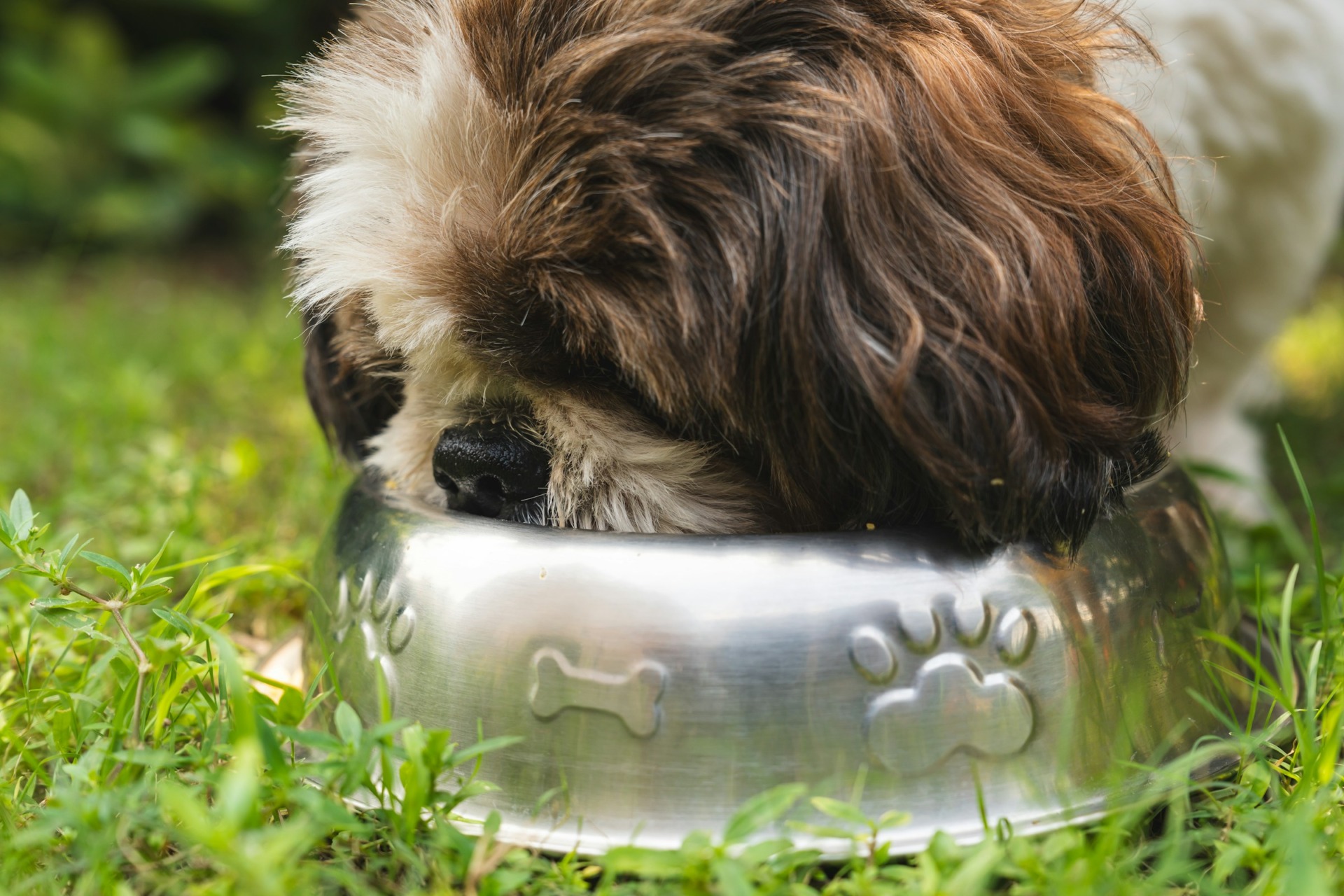
Our pets are our family: we love them, play with them, cuddle them, and feed them. They influence our lives every day by making us rush home after work, bring them along on a vacation, wake up at night because they feel lonely and whine. It’s not surprising then that we want the best for them. 

The best includes feeding them the highest-quality food so they can live long and healthy lives. However, our choices of dog food influence not only the lives of our pets, but also the environment. According to a 2026 study by researchers from the University of Exeter and the University of Edinburgh, published in the Journal of Cleaner Production, the environmental impact of dog food is far greater than we might imagine.

Environmental impact of dog food production
News regarding the environmental impact of dog food
Photo credit: mattycoulton

It is easy to think of a single bag of dog food as a minor purchase, but the cumulative impact is shocking: the production of dog food ingredients in the UK alone contributes to 0.9-1.3% of the country’s total greenhouse gas emissions. 

On a global scale, the numbers become even more overwhelming. If we were to feed every dog in the world the same diet common in the UK, emissions from ingredient production would equal 59% to 99% of the entire commercial aviation industry. Further, according to an earlier, 2020 study, the global dog and cat food industry uses about  49 million hectares of agricultural land annually— an area twice the size of the UK.

The pawprint of red meat vs. plant-based food

Protein is the biggest cause of dog food’s significant environmental impact. According to the 2025 study by researchers at the University of Nottingham, there’s a major disparity between meat-based and plant-based dog foods. Over a nine-year adult life, a typical 20kg dog (e.g. Labrador) that eats a beef-based diet requires land equivalent to 57 football fields. On the other hand, the same dog on a plant-based diet would require only 1.4 fields. The GHG emissions disparity is just as staggering: beef-based diets produce 11 times more CO2-equivalent emissions than the plant-based diet (32 kg CO2 vs. 2.8 kg CO2). Beef-based diets also cause 16 times more water pollution (eutrophication) than plant-based diets. 

Meanwhile, poultry-based diets are less impactful than red meat-based diets, but more harmful than plant-based diets. 

Wet vs. dry food vs. grain-free

Beyond ingredients, the environmental impact of dog food also depends on packaging and food processing. 

Wet and raw foods tend to have a higher impact due to the weight of the packaging, the energy required for refrigeration, and higher transportation costs. Grain-free diets often have a higher footprint because they typically replace grains with higher proportions of animal protein or high-impact legumes. Although grain-free foods are often marketed as “more natural,” they offer no health benefits for most dogs,  while significantly increasing the environmental footprint. 

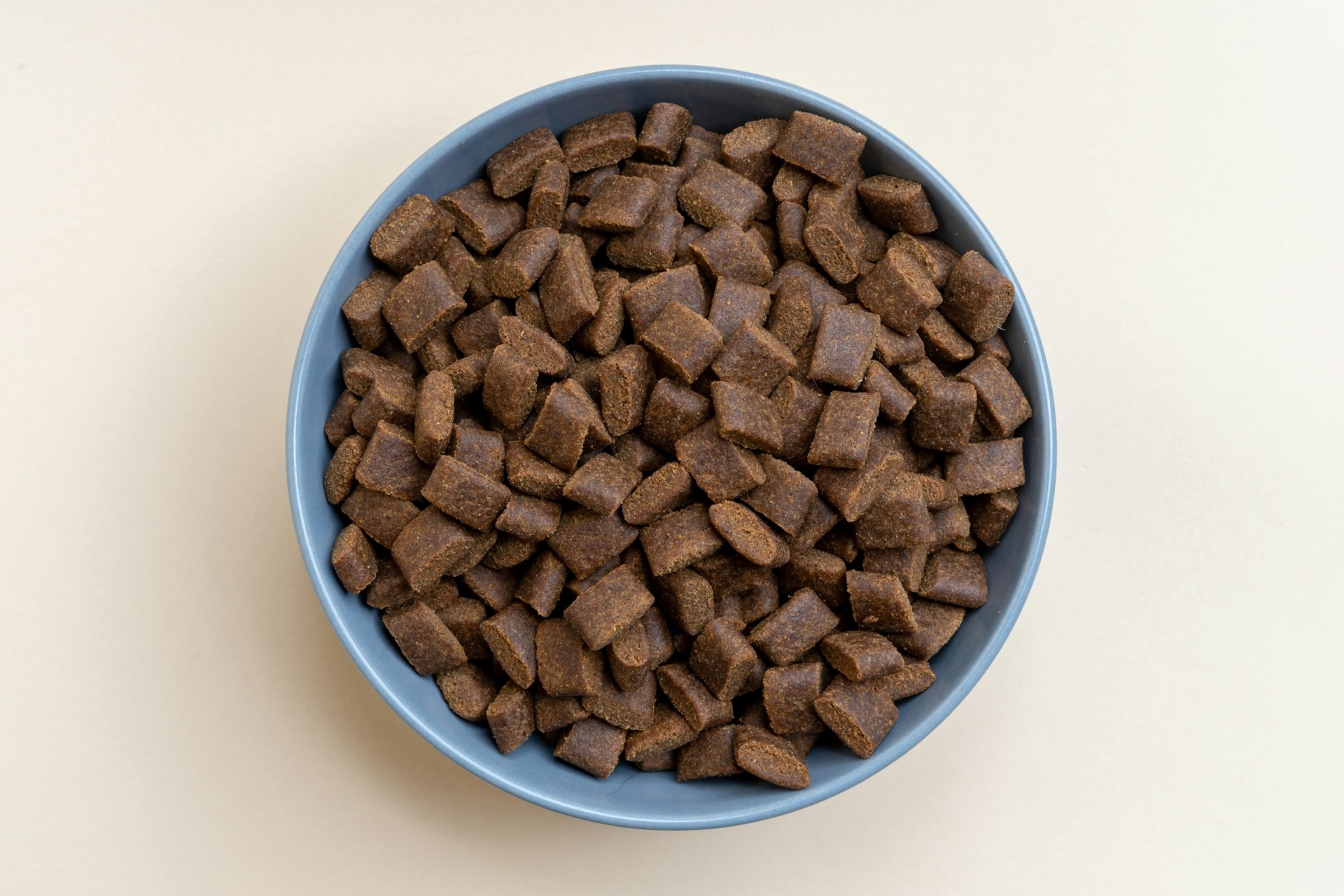
Generally, dry kibble is considered to be the most environmentally-friendly option. Since dry and wet foods have entirely different compositions, with wet food being mostly water, a dog would need to eat much more of it to meet the same energy requirements because carbohydrate levels are much lower in wet foods. Consequently, because wet food is less calorically dense, it requires significantly more energy to process, more material to package — specifically steel cans or aluminum trays — and more fuel to transport. Combining packaging and transportation, wet food produces a greater amount of GHG emissions. 
News regarding the environmental impact of dog food
Photo credit: Barking Royalty

Prime cuts vs. by-products

According to the 2026 study, using prime cuts instead of by-products increases environmental impact. Prime cuts, food that people could eat themselves, drive up the competition for resources and the carbon footprint. Instead, “animal derivatives” or by-products (such as offal) are often more sustainable because they utilize parts of the carcass that would otherwise go to waste. 

Related Articles

Here is a list of articles selected by our Editorial Board that have gained significant interest from the public:

    • The Truth About Vegetable Glycerin in Dog Treats and Its Safety
    • Eco-Friendly Hygiene Products for Furry Family Members
    • 4 Steps To Becoming an Eco-Friendly Dog Owner

How to reduce your dog’s pawprint 

According to John Harvey, the highest-impact dog foods are responsible for up to 65 times more emissions than dog food with the lowest impact. For perspective, the difference in the impact of human diets is  2.5-fold between vegan and high-meat diets. 

There are a number of ways to decrease the environmental impact of dog food, and it’s not necessary to turn your dog vegan (unless you want to). Some of the most effective ways to reduce the impact: 

  1. Choose kibble — dry food is almost always more efficient than wet or raw alternatives;
  2. Prioritize by-products — if you choose meat-based food, brands that use nutritious by-products rather than prime cuts are greener; 
  3. Avoid red meat — swapping beef for poultry or plant-based foods can decrease your dog food’s footprint dramatically. 
News regarding the environmental impact of dog food
Photo credit: Gayatri Malhotra

Editor’s Note: The opinions expressed here by the authors are their own, not those of impakter.com — Cover Photo Credit: Ayla Verschueren

Tags: dog foodGHG emissionspetsuk
Previous Post

Europe’s Answer to Trump: More Wind Power

Next Post

Green Energy Without Panels: A Homeowner’s Guide to 100% Renewable Power in 2026

Related Posts

ESG News regarding Trump’s visit to Davos, 32 fossil fuel firms producing half of global carbon emissions, Europe’s growing dependence on U.S. energy, Netflix bidding for Warner Bros Discovery
Business

Trump Pushes to Acquire Greenland During Davos Visit

Today’s ESG Updates Trump Pushes for Greenland: At Davos, Trump is pressing to acquire Greenland for U.S. security interests despite...

byAnastasiia Barmotina
January 21, 2026
ESG News regarding Dimon warning that Trump’s attacks on Fed could raise inflation and rates, Venezuelan oil shipments to China setting to plunge under U.S. blockade, UK awarding offshore wind contracts to power 12m homes, 2025 being the third-hottest year on record as climate science faces political pushback
Business

JPMorgan CEO Warns Trump’s Attacks on Fed Could Raise Inflation and Rates

Today’s ESG Updates Dimon Warns Trump’s Fed Attacks Could Raise Inflation: JPMorgan CEO says Trump’s criticism of the Fed could...

byAnastasiia Barmotina
January 14, 2026
ESG news regarding UK households navigating lower savings amid tax pressures, EU dairy products facing Chinese provisional duties, new trade deal to boost India-New Zealand commerce, Glencore acquiring majority stake in FincoEnergies
Business

Disposable Income Falls as UK Interest Rates Drop

Today’s ESG Updates UK Disposable Income Falls: Higher taxes reduce incomes as the saving ratio falls to 9.5% and real...

byAnastasiia Barmotina
December 23, 2025
EU confirms UK goods will face carbon border levy until emissions markets are linked
Business

UK to Face EU Carbon Border Levy Until Markets Are Linked

This Week’s Regulatory Updates EU Rules Out UK Exemption From Carbon Border Levy: The European Union has confirmed that UK...

byJana Deghidy
December 19, 2025
ESG News regarding the UK unemployment rate rising to a four-year high, oil prices drop below $60 amid Russia-Ukraine peace talks, water and wheat supplies crisis in Iraq, and Neste pushes back its climate targets
Business

UK Unemployment Rate Hits Four-Year High

Today’s ESG Updates UK Unemployment Hits Four-Year High: Jobless rate rises to 5.1%, with youth unemployment surging to 546,000. Oil...

byAnastasiia Barmotina
December 16, 2025
ESG News covering Great British Energy’s 2030 clean-power strategy, UK government investment, nationwide renewable expansion, community energy projects, offshore wind development, and job creation in the energy transition.
Business

Great British Energy Unveils 2030 Clean Power Strategy

Today’s ESG Updates Great British Energy 2030 Clean Power Plan: GBE outlines a five-year strategy to deliver 15 GW of...

byJana Deghidy
December 4, 2025
ESG News regarding the UK’s Updated Environmental Improvement Plan, modernizing Mauritania’s railway system, the EU carbon border tax, and the EU’s cross-border energy projects
Business

UK Unveils Updated Environmental Improvement Plan

Today’s ESG Updates UK Accelerates Nature Recovery: The government commits £500m to Landscape Recovery and targets 250,000 hectares of restored...

bySarah Perras
December 1, 2025
ESG News regarding using AI to prevent wildfires, Ferrari’s deal with Shell, plastic waste job creation in UK, and China’s 30% increase in solar power use
Business

AI’s Role in Wildfire Prevention

Today’s ESG Updates Utilities Turn to AI for Wildfire Prevention: Power companies across the U.S. and Europe are partnering with...

bySarah Perras
November 25, 2025
Next Post
Dental Office desk

How to Spot and Prevent Embezzlement in Your Dental Office

Recent News

Green Energy Without Panels: A Homeowner’s Guide to 100% Renewable Power in 2026

Green Energy Without Panels: A Homeowner’s Guide to 100% Renewable Power in 2026

January 23, 2026
Dental Office desk

How to Spot and Prevent Embezzlement in Your Dental Office

January 23, 2026
News regarding the environmental impact of dog food

The Environmental Impact of Dog Food — and How to Reduce It

January 23, 2026
  • ESG News
  • Sustainable Finance
  • Business

© 2025 Impakter.com owned by Klimado GmbH

No Result
View All Result
  • Environment
    • Biodiversity
    • Climate Change
    • Circular Economy
    • Energy
  • FINANCE
    • ESG News
    • Sustainable Finance
    • Business
  • TECH
    • Start-up
    • AI & Machine Learning
    • Green Tech
  • Industry News
    • Entertainment
    • Food and Agriculture
    • Health
    • Politics & Foreign Affairs
    • Philanthropy
    • Science
    • Sport
  • Editorial Series
    • SDGs Series
    • Shape Your Future
    • Sustainable Cities
      • Copenhagen
      • San Francisco
      • Seattle
      • Sydney
  • About us
    • Company
    • Team
    • Global Leaders
    • Partners
    • Write for Impakter
    • Contact Us
    • Privacy Policy

© 2025 Impakter.com owned by Klimado GmbH