A global polycrisis compounded by Russia’s invasion of Ukraine is disciplining us to conserve energy to protect economies and people’s livelihoods. More efficient use of energy is the first and best response, but it should become the norm also for other key resources.
Hungry for the (efficient) power
Pushed by an unprecedented global energy crisis, we’re finally accelerating progress in energy efficiency.
With widespread efforts by governments and consumers to control energy consumption, sparked by disruptions in fuel supplies and spiking energy prices, global investments in energy efficiency – including building renovations, public transport and electric car infrastructure – reached USD 560 billion in 2022, up 16% compared to 2021.
This, according to the International Energy Agency’s (IEA) latest report, “Energy Efficiency 2022,” made the global economy use energy 2% more efficiently during this year than it did in 2021. This isn’t a small amount, as it almost quadruples the improvement of the past two years and doubles that of the past five.
For the nerds out there, the primary energy intensity improvement that is expected to reach about 2% in 2022 is calculated as the percentage decrease in the ratio of global total energy supply per unit of GDP (which is assumed to grow by 3.2% in 2022 based on the latest IMF forecast).
Is this good? Big time
Let’s start from the basics: what does it mean to make more efficient use of a resource? It’s using less of the resource to perform the same task or produce the same result. In other words, consuming less to obtain the same benefits.
Higher energy efficiency for households, for instance, entails obtaining the same thermal comfort by shifting from a natural gas boiler to an electric heat pump.
Heat pumps, in fact, are an indispensable asset for every decarbonisation and energy efficiency strategy because they can deliver much more than one unit of heat (or cooling) per unit of energy consumed. Almost three million heat pumps are set to be sold in 2022 in Europe alone – up from 1.5 million in 2019.
A top-range residential heat pump can deliver heat at up to 600% efficiency, compared with 50% to 95% of a gas heater. When the electricity is produced using renewable sources, this allows for great reductions in greenhouse gas emissions.
Higher efficiency obviously translates into larger savings. The report states that, “thanks to energy efficiency actions taken since 2000, total energy bills in IEA countries in 2022 are set to be USD 680 billion less than they would have been otherwise – or around 15% of their total energy expenditure this year – with past investments in building insulation and efficient cars saving many consumers thousands of dollars each year.”
The positives: Faced with unprecedented challenges, we reacted for the large part in a rational way
Easing record-high consumer bills and securing reliable access to energy supply became central political and economic imperatives for almost all governments in 2022.
“Focusing on energy efficiency action,” writes the IEA, “is the unambiguous first and best response to simultaneously meet affordability, supply security and climate goals.”
There are encouraging signs of progress: electrification of transport and heating is accelerating at a significant pace (one in every eight cars sold globally is now electric); heat pumps are booming as they’re becoming an increasingly cost-effective heating source; building codes are being strengthened in emerging and developing economies; awareness campaigns are arising and helping millions of citizens better manage their energy consumption.
Energy efficiency-related spending is making up two-thirds of all clean energy and recovery spending, with USD 1 trillion mobilised since 2020.
This is supercharged by several significant recent policies that point to continued efficiency investment and progress for years to come. These include the European Union’s REPowerEU, the Inflation Reduction Act in the United States, and Japan’s Green Transformation programme, which add up to hundreds of billions of dollars in spending on more efficient buildings, means of transport and industries over the coming years.
Related articles: Can Europe Repower? | For a Successful Energy Transition: Keeping Cost of Renewables Low Is Not Enough | Green Banks Are Cool, and They Just Got a Power Boost
The negatives: Not precisely a painless result
However, these packages are concentrated in advanced economies, and much greater investment is needed in emerging and developing economies.
Indeed, we need to double the achievement of 2022 onwards and reach average annual efficiency improvements of about 4% this decade to align with the net zero emissions by 2050 target.
If the current rate of progress can be built upon further in the coming years, the IEA hopes 2022 could mark a vital turning point for efficiency, which is one of the key areas for international efforts to reach the decarbonisation goal.
But faster progress requires removal of several barriers, first and foremost the massive scale-up of fossil fuel subsidies governments implemented to cushion the impact of higher energy prices on household bills. Over USD 550 billion of temporary support has been added over the last year.
While it is important to provide short-term relief, support must not weaken action to reduce energy waste or slow the transition to clean power. The least efficient interventions are those that lower market prices for energy through direct fossil fuel consumption subsidies and keep the level playing field uneven for renewables.
This year has seen a significant shift back towards using cheaper traditional biomass such as wood and charcoal for heating and cooking. Emerging and developing economies are particularly exposed: Around 75 million people who have recently gained access to electricity are estimated to have lost the ability to pay for it and 100 million people may need to switch back to using traditional stoves for cooking from LPG (liquefied petroleum gas, a mixture of propane and butane).
This, the IEA warns, poses a particular health risk for women and children who are most exposed to household air pollution from cooking, which is estimated to have contributed to 2.5 million premature deaths in 2022 alone.
Global energy demand growth has declined sharply and should settle around 1% at the end of this year. In 2021, it increased by 5% – one of the largest annual increments in half a century.
That increase was driven by a larger share of energy-intensive industry in energy demand as other sectors contracted, as well as by a slowing pace of retrofits and upgrades in buildings and factories as Covid-19 hit.
With consumers and businesses reducing energy consumption in an effort to limit costs, such reduction in consumption cannot be labelled as entirely positive: it means millions have suffered, struggling to afford basic energy needs.
The number of people without reliable access to heating, cooling, clean cooking and other core energy uses has risen to around 2.5 billion worldwide, with an extra 160 million households pushed into energy poverty since 2019.
The potential turning point for energy efficiency action comes after several years of slow progress, testifying to our tendency to wake up only after taking tough punches.
This is signalled by the recent trends, as this year’s improvement comes after Covid-19 led to two of the worst years ever for global energy efficiency progress, with annual gains falling to around 0.5% in 2020 and 2021.
But energy intensity progress had already slowed before the onset of the pandemic, with the global rate of improvement falling from 2% in the first half of the last decade to 1.3% in the second half.
Europe is at the forefront of the trouble, could it also lead change?
While the current energy crisis has global repercussions, it is centred in Europe where an overdependency on fossil fuels supply from Russia is exposing the population to higher energy bills and supply shortages over the winter heating months.
In the European Union, consumer energy price inflation rose to 39% in 2022 through October, pushing – astonishingly – around a quarter of households into energy poverty.
Millions of Europeans living in older, poorer-quality buildings, using less efficient appliances and older vehicles with lower energy performance levels have to pay several times more for household energy bills in colder, more humid, and darker houses with higher health risks.
A growing number of countries on the European continent have legislation underway proposing bans or phase-out schedules for gas and oil heating appliances. This is positive for the people and for the environment, and also makes total economic sense, as we can exploit huge social and financial benefits of mature renewables and clean technologies.
For example, Germany plans to put in place an implicit ban on new fossil fuel heating from 2024, when all newly-installed heating systems must be supplied by at least 65% renewable energy. France plans to ban new gas connections to buildings from 2023, Austria intends to implement a ban from 2023 and the Netherlands will require heat pump installations or heat network connections in buildings from 2026. The United Kingdom has announced plans to prohibit new gas heating systems and boilers by 2025 and ban them for all buildings by 2035.
Aside from explicit bans, positive results – especially in the residential sector – can be achieved by incentivising specific heating packages composed of heat pumps, rooftop solar and battery storage (or stopping subsidising fossil fuels). Such a mix is already so competitive, that in many countries it would ultimately result in a phase-out of more expensive and less efficient fossil fuels-based heating.
What should this teach us? Make efficiency action the norm
We have a tendency to ignore problems until we really can’t anymore. Then we react. However, millions suffer meanwhile.
For decades, especially in richer countries, and for as long as fossil fuels were cheap, consumers haven’t really regarded energy as a precious resource, which led to enormous structural waste.
As the Earth’s human population grows – we’re now 8 billion people – and as development hopefully spreads increasing demand for key resources, our perception of these vital assets has to change.
Efficiency action should become the norm.
The success of a global energy transition depends on the supply capacity for key raw materials needed to develop and assemble solar, wind, energy storage, green hydrogen and other technologies.
Pressure is growing on supply chains of critical minerals, rare earth elements and other materials like copper, aluminium and graphite. For the massive deployment of renewables and clean technologies that is necessary onwards, progress in the efficient use of these key resources needs to be much faster.
As climate change worsens, many are already experiencing shortages of the most important resource of all: water.
We should take this opportunity to replicate the renewed approach to energy efficiency in order to avoid similar – and much worse – problems happening with water supply. We should start now thinking of ways to make more efficient use of (conventional and unconventional) water resources and ensure that transition is safe and inclusive for all.
We can’t wait for the price of water to reflect its quality and scarcity before we start seriously controlling the use we make of it.
Pursuing efficiency goals makes sense for energy, for water and for every other input critical to our lifestyle and indeed, to our civilization. With the billions of people on this planet and keeping in mind this is our only home, there is no alternative to improved efficiency.
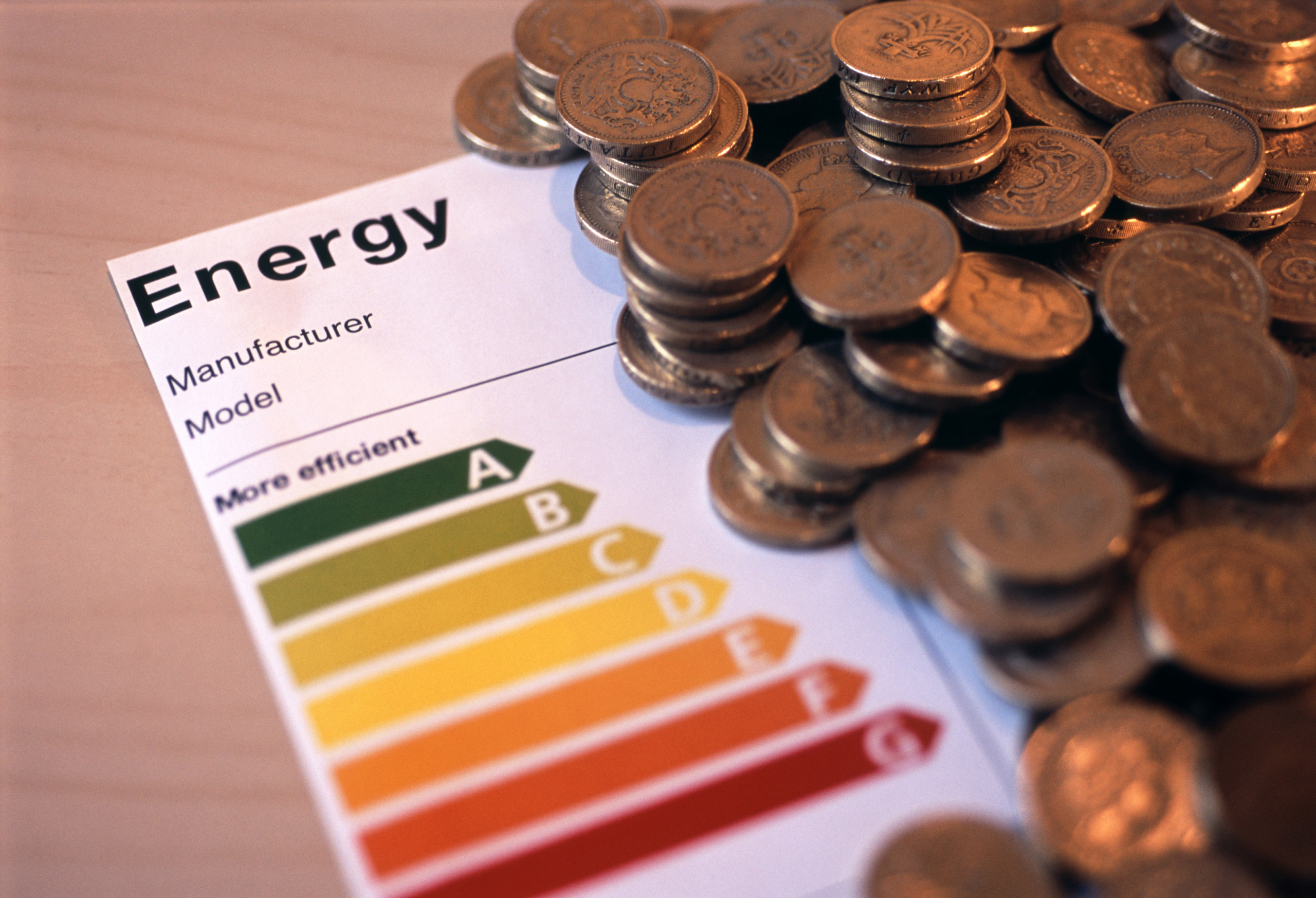
Editor’s Note: The opinions expressed here by the authors are their own, not those of Impakter.com — In the Featured Photo: Appliance energy efficiency rating label Featured Photo Credit: gratuit