Unless nations urgently revise their plans to reduce greenhouse gas (GHG) emissions, the world will far overshoot the 1.5°C limit established in the Paris Agreement, according to a UN report released yesterday.
With just two weeks until COP27 takes place in Sharm El Sheikh, Egypt, experts call for greater commitments worldwide.
There has been a slight improvement from last year, the report finds; GHG emissions are no longer projected to continue to increase beyond 2030.
However, as Simon Stiell, Executive Secretary of UN Climate Change, states, “we are still nowhere near the scale and pace of emission reductions required to put us on track.” A much faster downward trend is needed.
Though the international energy crisis, global inflation, and war in Ukraine have demanded the attention of leaders worldwide, it is disappointing to see that the massive and overarching climate crisis has been shifted down the list of priorities.
Only 26 out of 193 countries have followed through on the agreement made at COP26 to step up with more ambitious climate plans and unfortunately, China and the United States, the globe’s two largest polluters, form part of the majority that have failed to pledge further action.
Six G7 countries have also recently weakened the pledge they made at COP26 to end public finance for overseas fossil fuel projects, now making exceptions for gas projects deemed “necessary” to address the current energy crisis.
Taryn Fransen, senior fellow at the World Resources Institute, has expressed her hopes that “these reports sound the alarm that progress on climate commitments has slowed to a crawl since the Glasgow climate summit” and reinvigorate leaders to act.
"This is not about hope. This is about courage."
Listen to former @UNFCCC Executive Secretaries as they look back to 30 years of climate negotiations & explain what needs to happen next at #COP27.@CFigueres | @yvodeboer | @PEspinosaC
— UN Climate Change (@UNFCCC) October 17, 2022
According to the UN’s report, the planet is currently on track to warm to between 2.1°C and 2.9°C above pre-industrial levels by 2100, drastically exceeding our 1.5°C limit.
The consequences of allowing this to take place would be devastating.
Each fraction of a degree that is overshot would expose millions more people worldwide to heatwaves, drought, and food scarcity at an extreme never before witnessed.
Related Articles: C40 Summit: Groundbreaking Climate Investment | Denmark Makes UN and EU History by Paying for Climate Change Damage
Current promises from nations would only cut GHG emissions by around 7% from 2019 levels, but a 43% reduction is required to meet the agreed upon targets. To avoid the mass devastation that exceeding 1.5°C would entail, we need to make our pledges six times as strong.
Niklas Höhne, of NewClimate Institute, stresses that to get back on track, “the share of zero-carbon sources in electricity generation must accelerate exponentially.” He adds, “this can only be achieved with a commensurate and rapid phase out of fossil power.”
Ahead of COP27, experts including COP26 President Alok Sharma, are keen to see nations “step up” with commitments to reducing their GHG emissions faster and more extensively.
This is particularly important for wealthier countries of the Global North, who are likely to be spotlighted at the Summit for having contributed far more to the current GHG levels than the South.
This question of disparity of responsibility, and whether it should be addressed through reparations, was raised recently at the C40 World Mayors Summit.
At this event, Jeffrey Sachs, director of the centre for sustainable development at Columbia University, argued that funding to tackle the climate crisis should be collected from nations at a rate equitable to the quantity of GHGs they have historically added to the atmosphere.
This would allow the countries that are suffering the worst effects of climate change despite their minimal culpability to fund projects and become more resilient.
If we can’t talk about loss and damage finance now then when?
This time it is Nigeria, one of the African countries that contributed less than 3% to the climate crisis but has continued to suffer the most from its worst consequences.
Already 1.4 million displaced and 600 dead. pic.twitter.com/XDTBnTZo8K
— Nyombi Morris (@mnyomb1) October 19, 2022
The establishment of a Loss and Damage fund would work to this effect.
As of yet though, the only country within the United Nations to provide funds in the name of compensating “loss and damage” is Denmark, with other countries fearing the legal ramifications of accepting responsibility for creating the crisis.
Albeit Denmark’s contribution was small, totalling $13 million, it was an important gesture that may prove crucial in breaking the stigma and encouraging more UN nations to make similar, larger, pledges.
Simon Stiell names this loss and damage question as one of the four key areas that need to see progress in Sharm El Sheikh, alongside climate mitigation, adaptation, and finance.
Stiell also calls upon a more cohesive effort, stressing that “national governments need to strengthen their climate action plans now” but also that “we need to see more from the private sector and non-state actors.”
Though this report is disheartening, it is well-timed. Even if it fails to incentivise countries to revise their climate action plans ahead of COP27, it will certainly instil the Summit with a feeling of great urgency and encourage more drastic, progressive action than ever before.
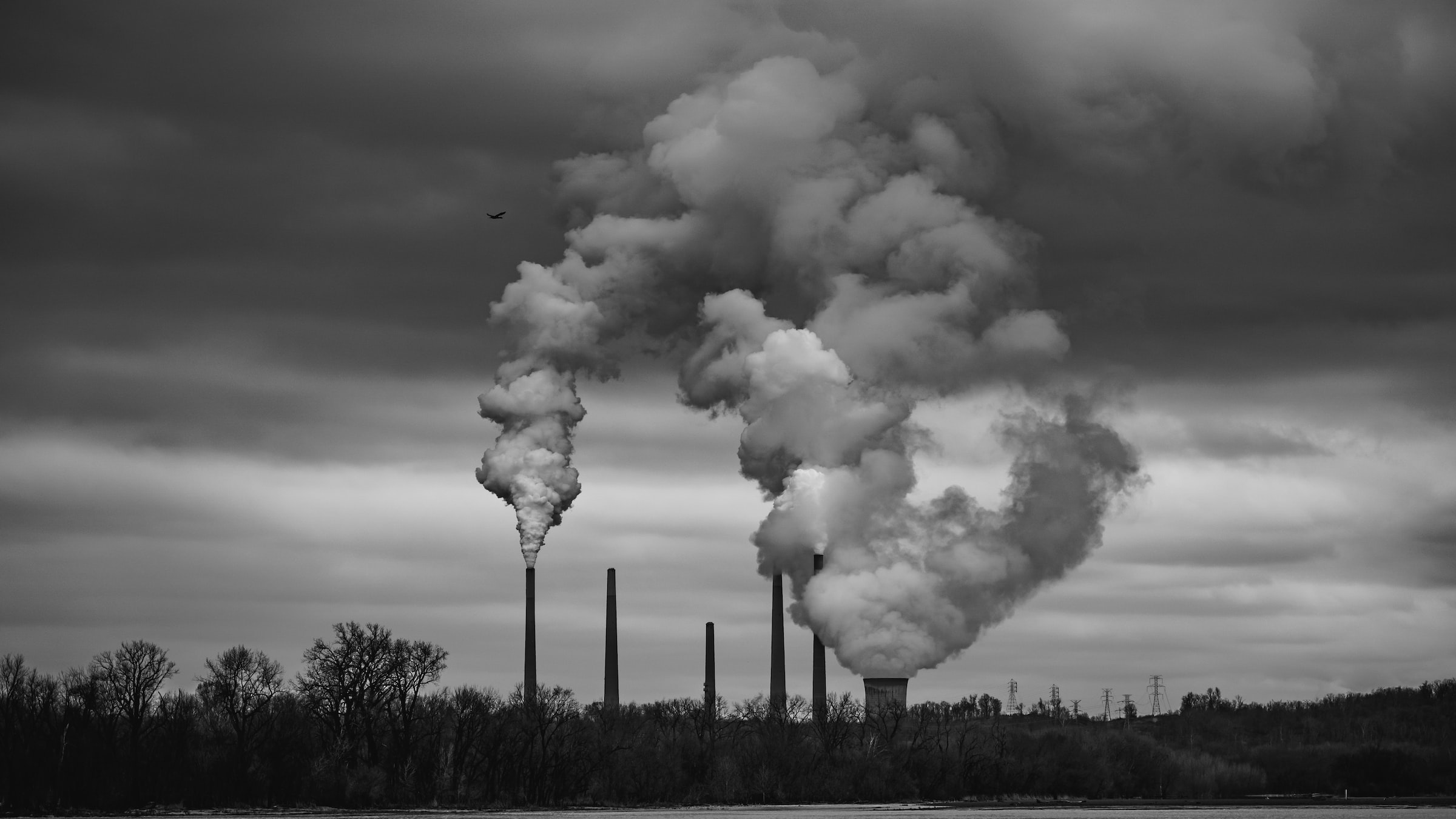
Editor’s Note: The opinions expressed here by the authors are their own, not those of Impakter.com — In the Featured Photo: Power Plant over flooded river. Featured Photo Credit: Mike Marrah.