Impakter
  • Environment
    • Biodiversity
    • Climate Change
    • Circular Economy
    • Energy
  • FINANCE
    • ESG News
    • Sustainable Finance
    • Business
  • TECH
    • Start-up
    • AI & Machine Learning
    • Green Tech
  • Industry News
    • Entertainment
    • Food and Agriculture
    • Health
    • Politics & Foreign Affairs
    • Philanthropy
    • Science
    • Sport
  • Editorial Series
    • SDGs Series
    • Shape Your Future
    • Sustainable Cities
      • Copenhagen
      • San Francisco
      • Seattle
      • Sydney
  • About us
    • Company
    • Team
    • Global Leaders
    • Partners
    • Write for Impakter
    • Contact Us
    • Privacy Policy
No Result
View All Result
Impakter logo
No Result
View All Result
abortion crime

Crime Rate and Availability of Abortion: Are the Two Related?

Some serious questions for American politicians and the public

Richard Seifman - Former World Bank Senior Health Advisor and U.S. Senior Foreign Service OfficerbyRichard Seifman - Former World Bank Senior Health Advisor and U.S. Senior Foreign Service Officer
September 6, 2024
in Society
0

The relationship between abortion legislation and crime rates is a complex and often controversial topic, intertwining elements of social science, public policy, and ethics. Far removed from “white collar crimes,” it usually revolves around violence and property crimes.

The current United States Presidential campaigns have both focused on an issue that has taken center stage, namely, abortion rights or lack thereof. 

In 2022, the U.S. Supreme Court in Dobbs v. Jackson Women’s Health Organization upheld a Mississippi Law giving the power to limit and even outlaw abortions, overturning a 1973 Supreme Court decision, Roe v. Wade, which legalized abortion nationwide and decriminalized it, protecting a woman’s right and her doctor to choose to do so.
abortion crime
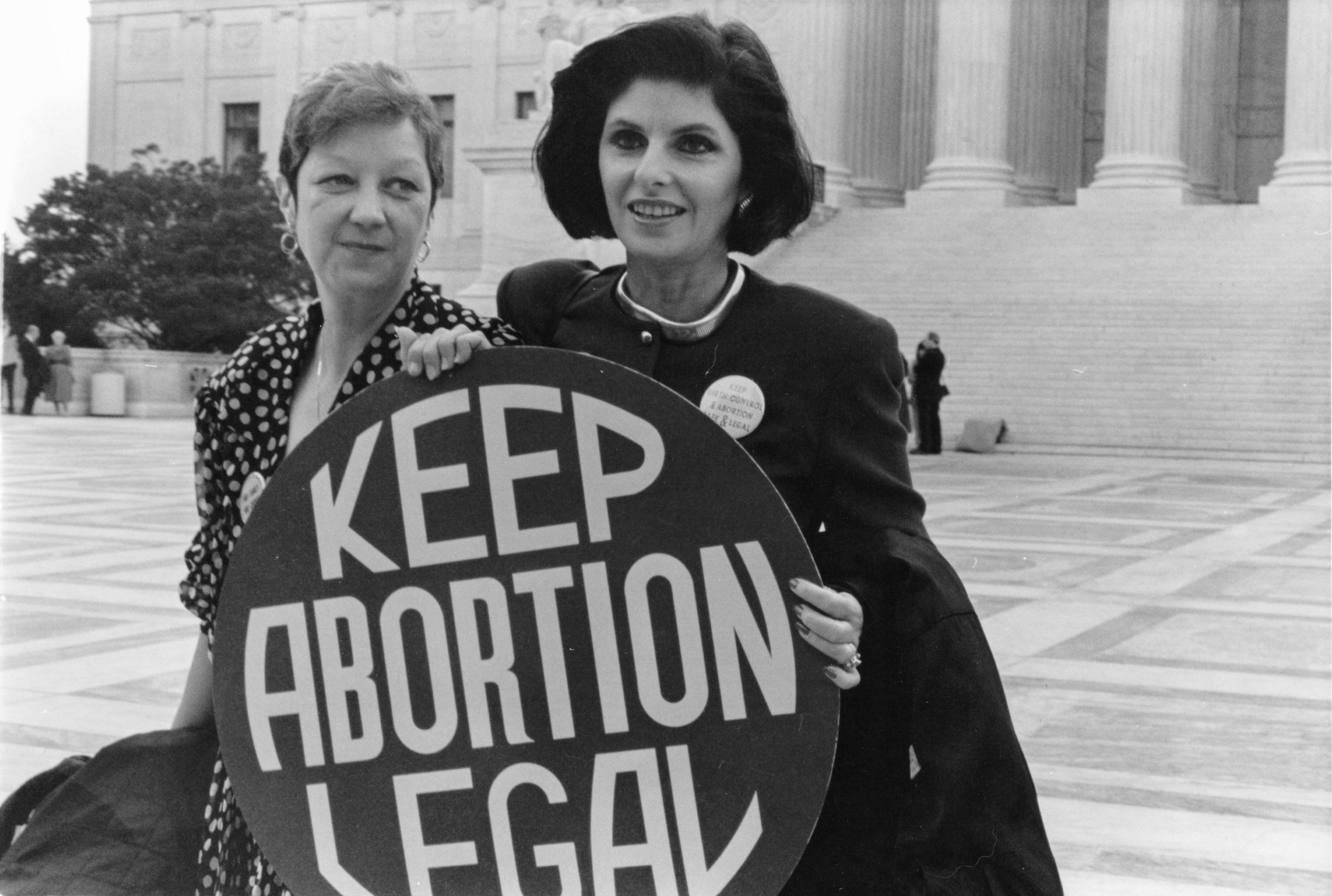
In the Photo: Norma McCorvey, left, who was Jane Roe in the 1973 Roe v. Wade case, with her attorney, Gloria Allred, outside the Supreme Court in April 1989, where the Court heard arguments in a case that could have overturned the Roe v. Wade decision. Photo Credit: Lorie Shaull. 

As a result, the Dobbs decision opened the floodgates to create the subsequent patchwork of State legislative actions. To date, 21 States have passed abortion bans in one form or another. (That said, there are referendums on State ballots to modify existing restrictions.)

The public discourse, fed by both parties, has centered on the moral and ethical aspects, determining when and under what circumstances a viable “life” should be protected. Some possible exceptions, such as incest and rape or severe health risks to the mother, are often mentioned.

What has not received sufficient attention, in my view, is what we know about possible historical links between the legalization of abortion and its effect on levels of crime. Both legal scholars and economists have done reputable research on this question. While not conclusive in all regards, research does show that over the two decades before 2022, fewer unwanted children were born, and fewer grew up in difficult economic and social circumstances, which in turn has likely led to decreasing criminality. 

What We Know About Abortion Data

The annual number of U.S. abortions rose for years after Roe v. Wade legalized the procedure in 1973, reaching its highest levels around the late 1980s and early 1990s, according to both the CDC and Guttmacher. Since then, abortions have generally decreased at what a CDC analysis called “a slow yet steady pace.”

According to the CDC, in 2021, “the majority of women who had abortions (57%) were in their 20s, while about three-in-ten (31%) were in their 30s. Teens ages 13 to 19 accounted for 8% of those who had abortions, while women ages 40 to 44 accounted for about 4%.”

Further, “[t]he vast majority of women who had abortions in 2021 were unmarried (87%), while married women accounted for 13%, according to the CDC, which had data on this from 37 states.”

Abortion Availability and Possible Links to Levels of Crime 

For centuries, English common law (and thus early American law) permitted abortion before “quickening” (usually in the fourth month of pregnancy). 

The Roe v. Wade decision argued that “denying the ability to seek an abortion could impose “a distressful life and future… into a family already unable, psychologically and otherwise, to care for it.” Eighteen years after the Wade decision, crime began to fall, and the trend continued between 1997 and 2014, with violent and property crime per capita falling by 40% and homicide declining by 35%, according to the Uniform Crime Reports (data was limited by availability).


Related Articles: The Post-Roe Era Has Begun: What It Means for the US and the World | Roe v. Wade Overturned: Justices Gather for the First Time Since Leak of Draft Opinion | European Parliament Votes to Enshrine Abortion in EU Charter of Fundamental Rights | Mexico, Second Country in Latin America, To Allow Abortion

A revised 2022 paper by the National Bureau of Economic Research, “The Economic Consequences of Being Denied an Abortion,” found that “women who were denied an abortion experience a large increase in financial distress that is sustained for several years. Our results highlight important financial and economic consequences of restrictions on abortion access.”

As the Stanford University legalization authors put it, “…while many other factors were operating to stimulate or suppress crime, legalized abortion can explain most of the observed crime decline.” (bolding added)

Undoubtedly there are links between abortion laws and crime

Some will argue that the research is incomplete, that correlation does not imply causation, and that many more factors determine crime levels in the United States, such as policing practices and social environments.  

Others will look to other social interventions and policies, such as improved education, access to reproductive health information and health care, changes in policing strategy, and economic development initiatives. 

All of these do or could play substantial roles. However, it is undoubtedly the case that children born into dysfunctional households and poverty are more likely to face challenges such as lack of support and inadequate education. This increases their likelihood of engaging in criminal activities as they reach adolescence and adulthood.

While incomplete, there is sufficient compelling evidence that denial of abortions has consequences both in terms of economic impact and crime data.

The complexity underscores the need for more in-depth discussion and research as Americans navigate the challenging intersection of reproductive rights, ethical concerns, and community safety. 

Our options should not be limited to tightened gun laws, more police officers, and/or more people sent to prison. We need to carefully consider another of the underlying root causes and possible amelioration, namely, benefits from appropriate abortion available to women under stress and their medical caretakers.

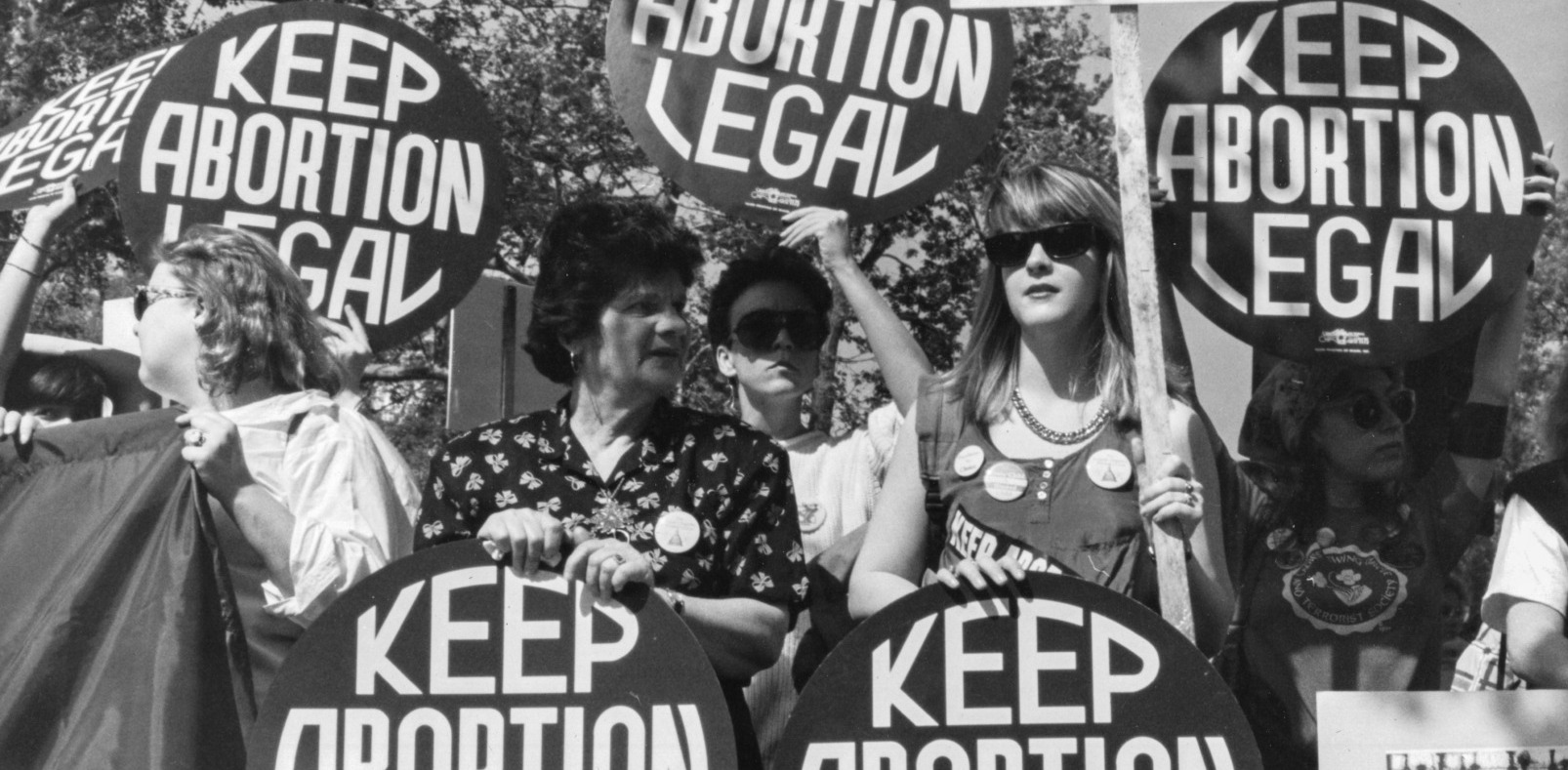
Editor’s Note: The opinions expressed here by the authors are their own, not those of Impakter.com — In the Cover Photo: Pro-choice demonstrators outside the Supreme Court in 1989, Washington DC, United States. Cover Photo Credit: Lorie Shaull.
Tags: AbortionAbortion AvailabilityAbortion lawsCDCcrimeRoe v. WadeUnited States
Previous Post

Scientists Invent a Healthier and More Sustainable Chocolate

Next Post

How Silicon Valley Rewired Our Brains Without Our Consent

Related Posts

ESG news regarding: New Report Urges Urgent Action to Halt PFAS Contamination Across EU, US Proposes New Rule to Force Greater Transparency in Pharmacy Benefit Manager Fees, EU and Brazil Seal Landmark Deal Creating World’s Largest Free Data Flow Zone, Beijing Suspends Import and Use of Sun Pharma Alzheimer’s Treatment
ESG News

Without Regulation, ‘Forever Chemicals’ Will Cost Europe €440 billion by Mid Century

Today’s ESG Updates Europe Faces Trillion-Euro Risk Without Swift PFAS Controls: The European Commission confirmed it will accelerate work on...

byPuja Doshi
January 30, 2026
A New ‘Golden Age’ for Global Chaos
Politics & Foreign Affairs

A New ‘Golden Age’ for Global Chaos

One year since the inauguration of his second administration on 20 January 2025, when he promised to usher in a...

byCarlos Frederico Pereira da Silva Gama - Author & Assistant Professor at the Shiv Nadar Institution of Eminence
January 28, 2026
ESG news regarding Deal Slashes Tariffs, Opens Markets Worth Two Billion Consumers, Arrivals Fall as Spain Pushes “Humane” Migration Model, Common Sense Media Calls Grok “Among the Worst We’ve Seen”, Gulf States Seek Distance From Potential Escalation
ESG News

Opportunities for India, Compliance Test for Manufacturers

Today’s ESG Updates India and the EU Announce Landmark Free Trade Agreement: After nearly 20 years of negotiations, a new...

byPuja Doshi
January 27, 2026
U.S., Russia, Ukraine Set for First Trilateral Talks in Abu Dhabi, NATO Seeks to Block Chinese and Russian Access to Greenland, Greenland and Denmark Reject Any Threat to Sovereignty, Zanskar Targets Gigawatt-Scale Geothermal Pipeline Before 2030
ESG News

Zelensky Says Territorial Dispute Still Blocks Ukraine Peace Deal

Today’s ESG Updates Ukraine - Russia Peace Talks Gain Momentum: President Zelenskiy says security guarantees are finalised after talks with...

byPuja Doshi
January 23, 2026
Taking Greenland Is Not in US Interests
Politics & Foreign Affairs

Taking Greenland Is Not in US Interests

Like the vast majority of Americans, I have been dismayed and disgusted by the president’s continuing attempt to take over...

byDonald Stanton - Former U.S. Deputy Assistant Secretary of Defense
January 20, 2026
animals legal rights
Biodiversity

From Stingless Bees to Sea Turtles: Species Around the World With Legal Rights

For centuries, animals have been treated as “things” or property under the law. Today, the legal status of animals and...

byAnastasiia Barmotina
January 19, 2026
American Seizure of Greenland Would Threaten the Global Order
Politics & Foreign Affairs

American Seizure of Greenland Would Threaten the Global Order

U.S. President Trump has repeatedly called for the annexation of Greenland, an autonomous territory within the Kingdom of Denmark. U.S. officials insist they...

byBenjamin Clabault
January 16, 2026
Five Keys to Understanding Venezuela’s Oil History
Energy

Five Keys to Understanding Venezuela’s Oil History

Venezuela’s oil industry has once again returned to the center of international debate. U.S. President Donald Trump announced new actions...

byYale Climate Connections
January 15, 2026
Next Post
social media brain

How Silicon Valley Rewired Our Brains Without Our Consent

Recent News

The Era of ‘Global Water Bankruptcy’ Has Begun

The Era of ‘Global Water Bankruptcy’ Has Begun

January 30, 2026
ESG news regarding: New Report Urges Urgent Action to Halt PFAS Contamination Across EU, US Proposes New Rule to Force Greater Transparency in Pharmacy Benefit Manager Fees, EU and Brazil Seal Landmark Deal Creating World’s Largest Free Data Flow Zone, Beijing Suspends Import and Use of Sun Pharma Alzheimer’s Treatment

Without Regulation, ‘Forever Chemicals’ Will Cost Europe €440 billion by Mid Century

January 30, 2026
Food Waste in India

India’s Food Waste Is Turning Into an Environmental Time Bomb

January 30, 2026
  • ESG News
  • Sustainable Finance
  • Business

© 2025 Impakter.com owned by Klimado GmbH

No Result
View All Result
  • Environment
    • Biodiversity
    • Climate Change
    • Circular Economy
    • Energy
  • FINANCE
    • ESG News
    • Sustainable Finance
    • Business
  • TECH
    • Start-up
    • AI & Machine Learning
    • Green Tech
  • Industry News
    • Entertainment
    • Food and Agriculture
    • Health
    • Politics & Foreign Affairs
    • Philanthropy
    • Science
    • Sport
  • Editorial Series
    • SDGs Series
    • Shape Your Future
    • Sustainable Cities
      • Copenhagen
      • San Francisco
      • Seattle
      • Sydney
  • About us
    • Company
    • Team
    • Global Leaders
    • Partners
    • Write for Impakter
    • Contact Us
    • Privacy Policy

© 2025 Impakter.com owned by Klimado GmbH