The coronavirus has had unintended, harmful effects on art by threatening the place of art in our society. The question is: How harmful?
The pandemic-imposed quarantine has become a matter of deep concern for those who either manage or are personally dedicated to preserving old masters’ paintings or contemporary works of art and ensuring that as many people as possible can see them and enjoy them. It is clear that they are financially harmed by lockdown measures that restrict public access to museum institutions and other cultural venues.
While everybody loses, it is the young generations that may lose the most, as they are likely not to have the benefit of seeing such paintings and artworks in a setting in which they can look, think, discuss, and appreciate great art. Topnotch art handlers are the only ones who are allowed access in transporting these art.
The COVID-19 pandemic has meant there are many issues that have gotten high priority and visibility in the public domain, and rightfully so. But the problem of access to museums and other cultural venues and the art form the pandemic may inspire has not.
A study by UNESCO and the International Council of Museums (ICOM) found that nearly 13% of the more than 85,000 museums worldwide had shut down. Worse, because of COVID-19 lockdowns, social distancing, and the consequent loss of funding, they may never reopen. That is more than one in ten museums, an unacceptably large loss.
Yet art has a key role in pandemics: It can provide unique insights, hope, and solace. The video below gives a taste of the depth and sense of common history — and humor — through art that our ancestors experienced when they faced sometimes terrifying diseases like cholera or the plague, and that we currently are facing.
The museum community has tried to circumvent this challenge and reach existing and new audiences.
Institutional efforts to engage with the public have taken many forms: opportunities to express artistic creativity; education opportunities; social connection and collaboration; and “a sense of calm”. And even providing escapism. The Oxford English Dictionary defines escapism as “The tendency to seek, or the practice of seeking distraction from what normally has to be endured”.
With COVID quarantine, virtual tours have perhaps become the greatest form of escapism, enabling millions to leave their home and visit major museums and other art venues. Museums around the world are competing to provide the most comprehensive or intriguing tours.
Many museums have turned to their existing social media presence to engage their audience online. Interestingly, China was the first country to enforce quarantine but also the first to provide digital services, primarily for a domestic audience.
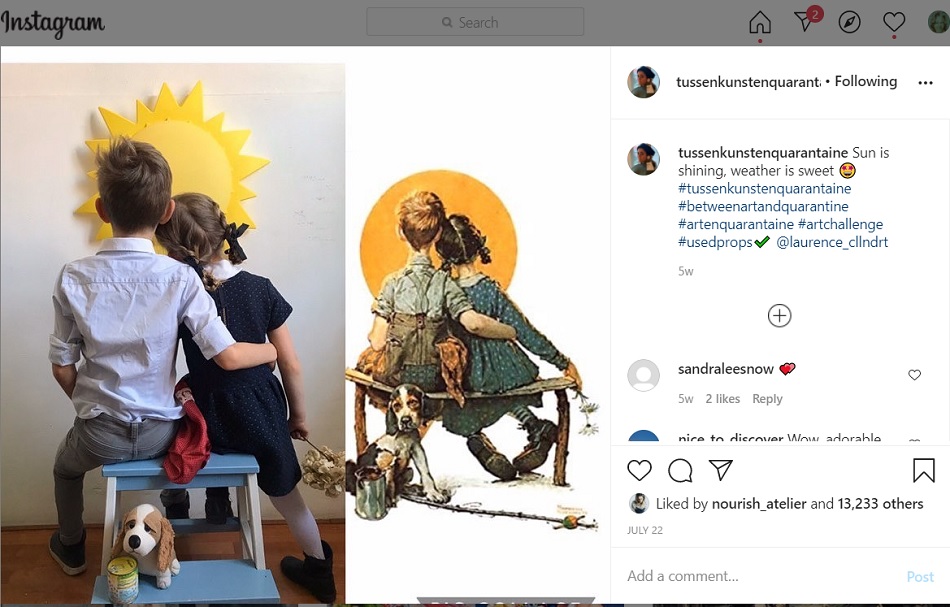
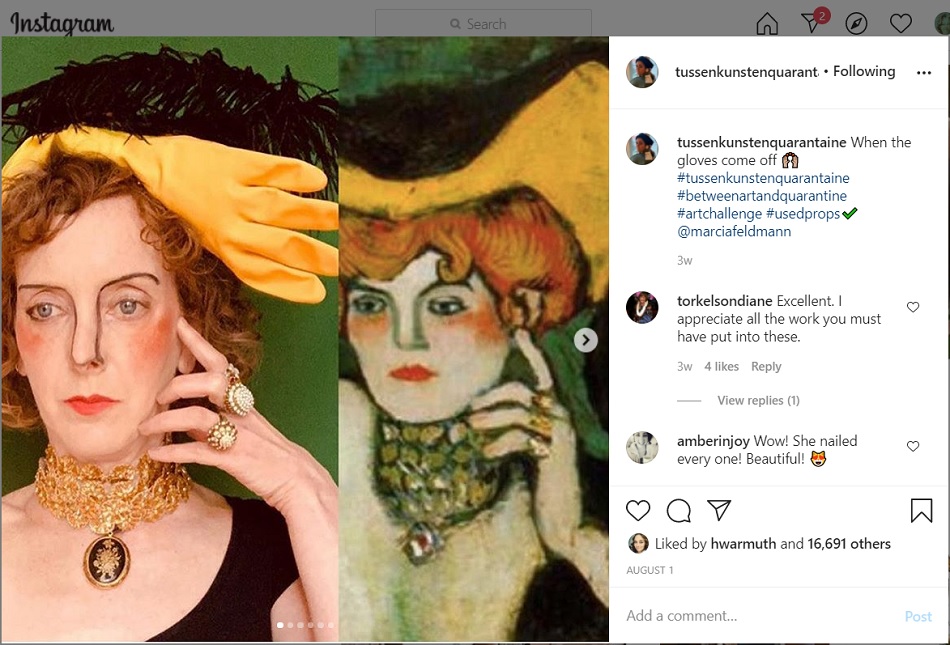
The Rijksmuseum in Amsterdam and Instagram accounts such as the Dutch Tussen Kunst & Quarantaine (“between art and quarantine”) are notable in their innovations to engage.
Others also have been successful with social media content strategies such as the Getty Museum for incorporating its works into the popular video game Animal Crossing:
Likewise, the Shedd Aquarium in Chicago has had the brilliant idea of filming their penguins visiting other animals: the Shedd Aquarium in Chicago for filming their penguins visiting other animals:
Meanwhile, over in Europe, the Royal Academy in London – whose doors have just opened again – has asked its followers to draw their own artworks. The Young Artists’ Summer Show, an open and free exhibition to give recognition to talented young artists (aged 5 – 19 years), is taking place this year both online and on-site at the Academy. Over 17,700 submissions were received, and this year’s judging panel ended selecting 392 works, ranging from drawing, painting and photography, to video and sculpture. All of the artworks are available to view online, with a selection appearing in the onsite exhibition taking place in the RA’s Clore Learning Centre between 18 October – 22 November 2020.
Such efforts are very constructive and creative. They may even attract the attention of children, young adults or even people who otherwise might never have looked at a piece of art. All to the good. Yet all these efforts do not come close to “being there and actually seeing” the artwork.
We know that in educating children of all ages, a second-best is a virtual learning effort. No matter how diligent, thoughtful, and well-prepared lessons are, they do not capture the same level of attention and opportunity to interact with others, that a peer learning experience provides.
The same is true with visiting museums, contemplating the real genius of an artist.
We now have tools such as medical face masks, personal protective equipment, and social distancing techniques to offer a modicum of safety to allow a wider opening of our public and private museums to visitors. And most hopefully, we are at a point at which there is an increasing likelihood of therapeutics and vaccines coming onstream and then made available on a global basis.
It is important to underscore the fact that art museums are where we house a crucial segment of our human heritage. They will need our public and personal support to survive and flourish in the years ahead. Along with other important tasks required for a well-functioning and fair society, let us not forget them.
Editor’s Note: The opinions expressed here by Impakter.com columnists are their own, not those of Impakter.com. Featured Image: from Tusseninjunstquarantaine Instagram account. That image got over 16,000 views.