Although raw sewage and gastrointestinal illnesses are rarely topics broached in polite conversation, they’re having a glaring impact in hundreds of towns and cities in the United States. The risk of acute gastrointestinal illness increases by up to 62% after certain kinds of sewer overflows, according to recent research led by a team at the School of Public Health at Boston University.
And with increasing extreme rainfall events in the forecast, climate change could make the problem worse.
So how does sewage treatment affect digestive health, and what does climate change have to do with it all? The answers start with how your community manages its sewers.
First appearing on the East Coast of the United States during the mid-1800s, combined sewers put both raw waste and stormwater in the same pipe. They were a quick solution for cities where populations were booming and increased drainage was needed.
Over time, community planners and engineers realized it was worthwhile to separate systems based on what flows within them.
- Wastewater refers to any used water, whether it’s from a toilet flush or industrial plants, which means it contains untreated human waste, oil, chemicals, and other pollutants. In more recently developed sewer systems, wastewater gets its own set of drainage pipes and is directed to a water treatment facility.
- Stormwater on the other hand is just that – the result of storms. Rainwater, melting snow or hail, or even water from overwatering your lawn all run off into storm drains or catch basins. Stormwater can also be contaminated by pollutants like fertilizer but is typically discharged into a nearby body of water without being treated.
Most people have no idea whether their community uses a combined or separated system … that is, until it rains.
During a rainstorm in a separated system, excess stormwater may lead to flash flooding, but it won’t get mixed up with untreated wastewater. In combined sewers, on the other hand, excess rainfall can overwhelm the system and cause a combined sewer overflow – expelling untreated wastewater together with stormwater into local bodies of water.
Many outdated combined systems remain in place today, largely in older communities along the East Coast and Midwest. Less than 0.3 inches of rain can trigger overflow for some systems. That means even moderate rainfall can result in viruses and bacteria contaminating streams and rivers.
For the roughly 700 communities still operating on combined sewer systems, a sewer overflow is a public health problem.
The research team evaluated public health data and found a clear association between overflows and gastrointestinal illness, including vomiting, diarrhea, and infections caused by identifiable pathogens. It’s likely that people are exposed to contaminated water when they’re out having fun in rivers or lakes.
During the top 5% most extreme overflows – in terms of water volume – the scientists found a 22% increase in the risk of acute gastrointestinal illness. When considering only the top 1% of extreme overflows, the risk increased by 62%.
The authors pointed out that the true number of people sickened may be higher, as their data comes from people arriving at the emergency department with acute symptoms. Others may treat themselves at home, so they weren’t counted in the data.
The good news: They noted that drinking water was safe after it had flowed through a treatment facility.
Similar studies have been conducted on combined sewer overflows across the country. For example, in Atlanta, Georgia, researchers found a 9% increase in the risk of gastrointestinal illness at emergency rooms following extreme rainfalls that triggered overflows. A study of patients in Cincinnati, Ohio, found that sewer overflows increased the likelihood that children would experience acute gastrointestinal illness.
The double whammy of climate change and sewer overflows
Climate change is presenting communities with combined sewers with a math equation that doesn’t work out in their favor: More extreme rainfall events + costly and difficult-to-remedy combined sewers = more outflow events.
Extreme rainfall events have been on the rise in the U.S. As temperatures rise due to climate change, more water evaporates from the surface of the Earth, and the atmosphere is capable of “holding” more water. That means when the rain falls, it’s in greater quantities, resulting in flash flooding and overwhelmed drainage systems.
In the Northeast and Midwest, where combined sewer systems are more prevalent, annual rainfall is coming in heavy spurts with a significant increase in the top 1% of rainstorms, according to the U.S. Global Change Research Program. And remember, those top 1% of events result in the highest increase in risk of gastrointestinal illness.
Related Articles: How Climate Change Affects Health and How Countries Can Respond | COP28: Say Climate Crisis, Think Health Crisis | Climate Change Poses Dire Health and Human Rights Risks
Haley’s research affirms this point.
“Heavy rainfall events are increasing in frequency and intensity in both of these regions due to climate change, making [overflows] more likely to occur,” she said.
For communities affected, solving this equation is not easy.
“Although each [mitigation] plan is different, they are sometimes developed based on historical rainfall, which is additionally problematic as precipitation patterns shift due to climate change,” Haley said.
Green infrastructure helping to slow the flow
The federal government has gotten involved in the problem, earmarking billions for wastewater and stormwater improvement projects. The EPA requires all communities with combined sewer systems to develop plans to mitigate and eliminate their systems.
Even with more funding available, cities with combined sewer systems have an uphill road ahead of them.
The combined sewer overflows are expensive to fix because doing so requires digging up and replacing entire sewer systems, “which is why they still exist,” Haley said. “Mitigation plans … often cost hundreds of millions to billions of dollars and take many years to implement.”
In the meantime, many communities are investing in faster, cheaper green infrastructure solutions to reduce the amount of stormwater flowing into sewers in the first place.
Water can’t flow through the hard surfaces found on most streets, sidewalks, buildings, and parking lots, so when rain falls, stormwater quickly turns from a trickle to a gushing flow.
But urban environments can be designed to absorb the rain where it falls, with strategies like planting trees in medians and installing rain gardens and green roofs. Some cities are also storing stormwater in large tanks, but volume is limited, and finding a location for storage is difficult in many urban areas. So more work will be necessary to combat supercharged rainfall from climate change.
** **
This article by Yale Climate Connections is published here as part of the global journalism collaboration Covering Climate Now (CCN).
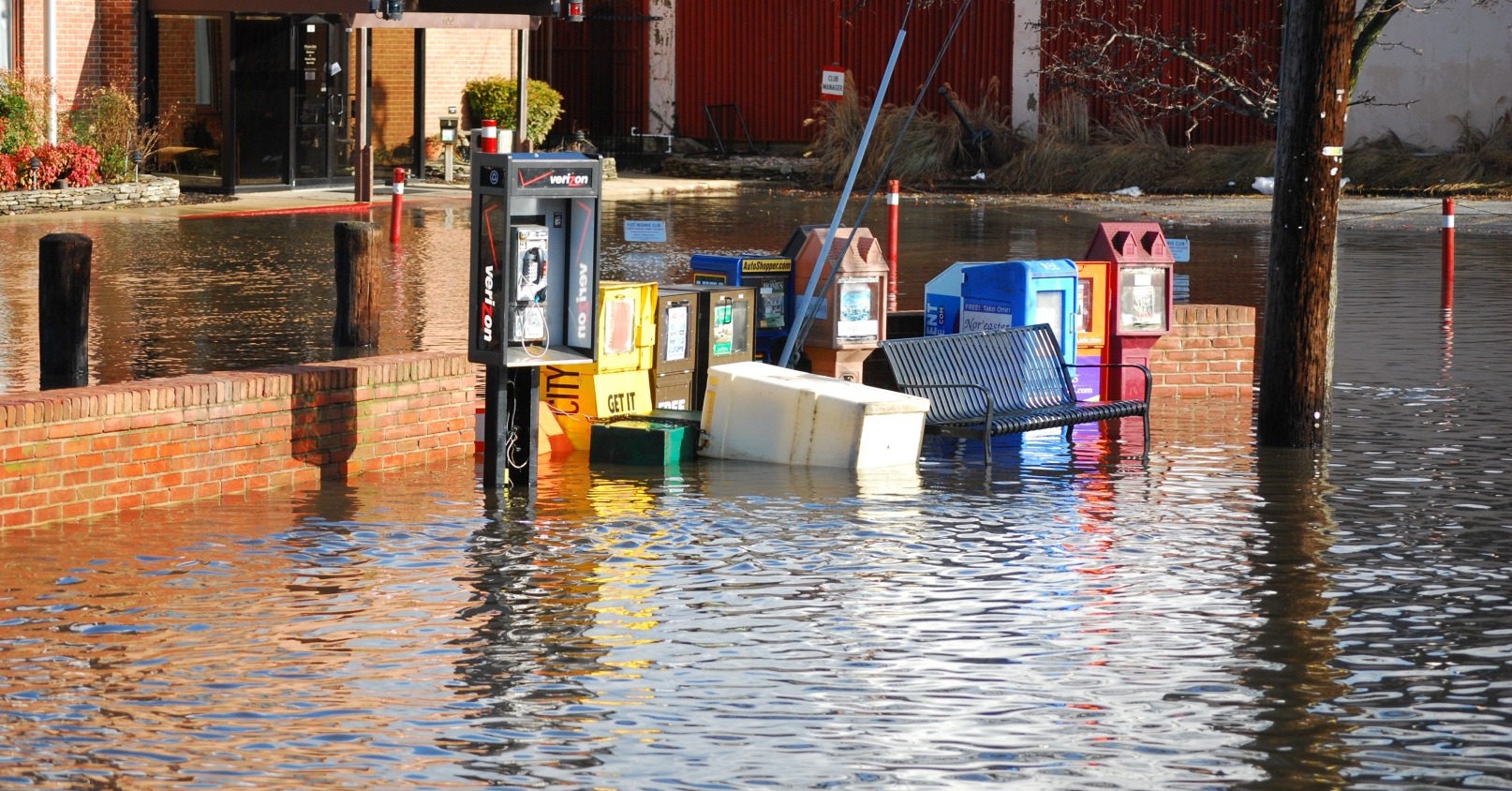
Editor’s Note: The opinions expressed here by the authors are their own, not those of Impakter.com — In the Cover Photo: Flooding in Annapolis, Md., Jan. 25, 2010. Cover Photo Credit: Matt Rath/Chesapeake Bay Program.