

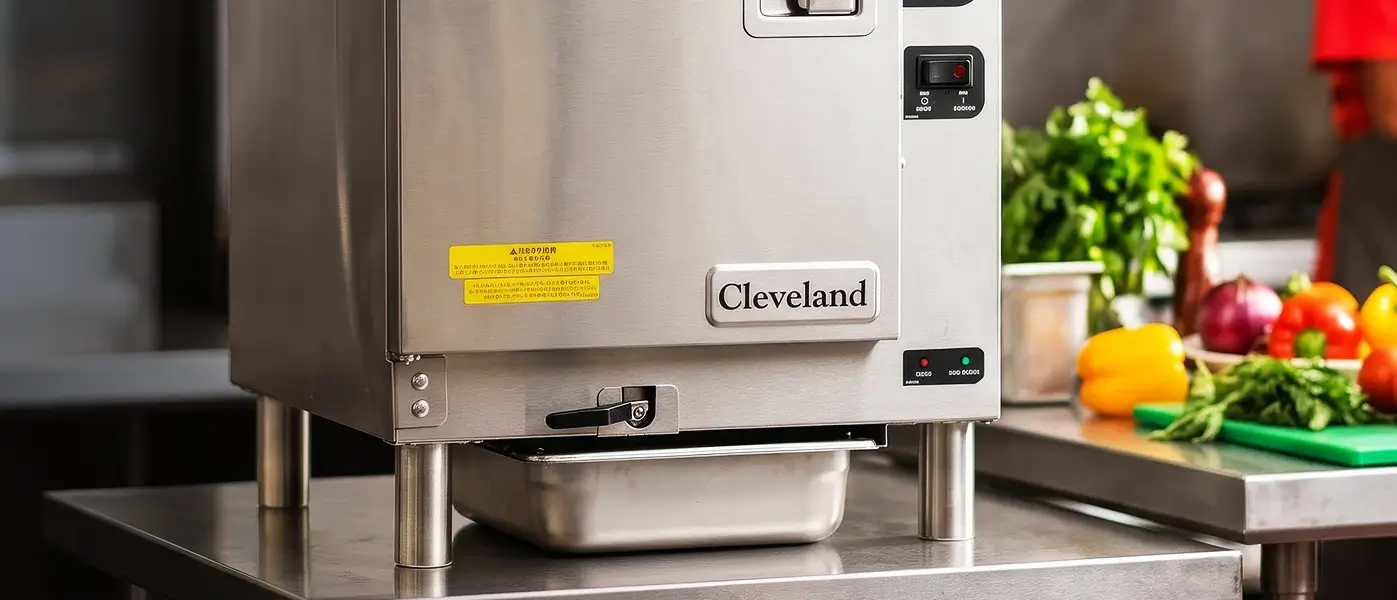
A little condensation is one thing, while a puddle under your steamer or hot steam escaping around the door is another. Every leak has a starting point, and most of the time you’ve got a handful of suspects. The culprit may be as simple to address as a clogged drain or an overfilled water reservoir, or you may be facing the need to replace a part that’s giving you trouble, like a faulty door gasket, valve, or plumbing component. This guide helps you narrow down your troubleshooting to components that need attention and tell you when it’s a five-minute fix versus a job that involves a qualified technician and new Cleveland parts.
Where Is Your Cleveland Steamer Leaking?
The first thing to do is to pay attention to where the water or steam is coming from. Here’s a quick Cleveland steamer troubleshooting table to get you started.
|
Where You Notice the Leak |
What Might Be Wrong |
| Water or steam escaping around the door | Worn door gasket, clogged drain, excessive water level, or improper leveling |
| Water collecting inside the cooking compartment | Blocked drainage, overfilling, or water-control problems |
| Water pooling beneath the cabinet | Loose, broken, or leaking internal plumbing |
| Excessive steam coming from the drain | Condenser water supply problem or malfunctioning condenser components |
| Water continuously flowing from the drain | Possible condenser valve or drain solenoid problem on applicable models |
Use this table to point yourself in the right direction but note that Cleveland makes different types of commercial steamers, including connectionless and steam-generator models. Not every issue or part universally applies to every unit.
1. The Door Gasket Is Worn or Damaged
If you notice steam leaking from steamer door, the gasket is one of the first things worth checking.
It forms a seal between the cooking compartment and the door and over time, repeated heating, cooling, cleaning, and daily use can wear it down. Once the seal becomes damaged or doesn’t sit properly, steam and moisture may escape during cooking.
What to look for: steam escaping consistently from one section of the door, water dripping around the seal, or visible cracks and deterioration in the gasket – have it replaced with a compatible part.
2. The Compartment Drain Is Clogged
A steamer leaking water from the door may have a drainage problem.
During cooking, condensation and moisture need somewhere to go. But food particles, grease, and mineral deposits can collect around the drain opening and clog it. In this case, water has nowhere to exit so it finds the path of least resistance, which is usually right out around the door.
What to look for: standing water inside the compartment, slow drainage, or leaks that seem worse after cooking.
On Cleveland SteamChef models equipped with KleanShield, pay particular attention to the collector openings and correct positioning of the shield.
3. Too High Water Levels
Sometimes, there’s simply too much water in the steamer and that’s exactly what causes the issue.
On certain Cleveland connectionless models, filling the reservoir above the recommended level can cause water to escape around the compartment door.
If you’re filling manually, double-check you’re following the exact amount specified for your model and if you’ve overfilled a reservoir, follow the shutdown and draining instructions in the service manual and then correct the water level.
Automatic-fill steamers, though, have different water-management systems. If water keeps entering the compartment unexpectedly, a malfunctioning probe, solenoid valve, or control may be involved.
4. The Steamer Isn’t Properly Leveled
Here’s an easy one to overlook: commercial steamer water leaks can sometimes come down to how the equipment was installed.
When a steamer isn’t level, water may not collect and drain as intended. Instead, it can accumulate in the wrong areas and contribute to leaking around the compartment door.
This is particularly worth investigating if the problem started after the unit was moved, relocated, or reinstalled.
What to look for: water collecting toward one side of the compartment, an uneven-looking installation, or recurring door-area leaks after other causes have been ruled out.
What to do: have the installation checked against Cleveland’s leveling requirements.
Don’t try to level a hot, filled steamer by tilting or lifting it. A qualified installer should correct the positioning when necessary.
And if the unit is properly leveled but still leaking? Move on to the gasket and drainage system.
5. Leaking Water Line or Plumbing Connection
Water underneath the steamer cabinet can result from a damaged water line, loose plumbing connection, or another internal plumbing issue. Unlike a clogged compartment drain, these problems generally require access to inner components.
What to look for: water collecting beneath the cabinet, moisture appearing even when the cooking compartment isn’t being opened, or a leak that continues despite a clear drain and properly sealed door. If you spot water pooling under the cabinet, shut the unit down and shut the water supply to it. The rest is a job for qualified service personnel.
6. The Condenser or Water Supply Isn’t Working Properly
Does an unusual amount of steam come out of the drain? On Cleveland models equipped with a condenser system, the problem may involve the condenser’s water supply.
The condenser uses cooling water to reduce the amount of steam discharged through the drain. If it doesn’t receive the proper water supply, excess steam may escape. Some steam discharge is part of normal operation; the concern is big amounts of excess steam.
Possible causes include:
- A closed or restricted condenser water supply.
- A clogged condenser water strainer or nozzle.
- Incorrect water connections.
- A damaged condenser water line.
- A malfunctioning solenoid valve or control.
Diagnosing exactly which one of these causes triggers more steam than expected means accessing internal components in most cases, so this job is one to hand off to an authorized technician.
Use the Right Parts to Restore Your Steamer Operation
To sum up, leaks can often be traced back to a worn gasket or clogged drain. If this involves a component that’s simply reached the end of its service life, the thing that makes or breaks a repair is the parts you use. Generic components mean you’re facing the risk of having the same leak a few months later. When it’s time to make the fix, either go with genuine Cleveland parts built to factory spec, or choose trusted aftermarket brands and reputable suppliers to source the replacements from.
Editor’s Note: The opinions expressed here by the authors are their own, not those of Impakter.com — In the Cover Photo: Cleveland commercial steamer in a professional kitchen. — Photo Credit: allpointsfps