
Editor’s note: This article is the second in a two-part series exploring the profound potential of the Blue Economy as a beacon of hope for Yemen’s arduous path to recovery and sustainable development. The first article can be found here.
Yemen’s maritime endowment is a treasure chest of opportunity, a source of immense potential for a nation adrift in a sea of conflict. A revitalized blue economy could be a powerful engine for economic diversification, job creation, and food security.
But the journey to unlock this potential is fraught with peril. The turbulent waters of political instability, a dilapidated infrastructure, and a crippling humanitarian crisis threaten to dash any hopes of a blue-led recovery.
The Bright Horizon: A Sea of Opportunities
The allure of a blue economy for Yemen is undeniable. The potential benefits are as vast as the ocean itself:
- A New Economic Engine: In a nation overly dependent on a dwindling and conflict-ridden oil sector, the blue economy offers a vital path to diversification. By developing its fisheries, aquaculture, and maritime trade, Yemen could create a more resilient and sustainable economic foundation, one that is less susceptible to the shocks of global energy markets and internal strife.
- A Wave of New Jobs: The development of a vibrant blue economy would create a surge of new employment opportunities, from fishermen and fish farmers to port workers and tourism professionals. This would not only provide a lifeline to thousands of families but also help to address the rampant unemployment that fuels social unrest and instability.
- Nourishing a Hungry Nation: In a country where millions go hungry every day, the blue economy offers a tangible solution. By sustainably managing its fisheries and developing a thriving aquaculture sector, Yemen could significantly boost its domestic food production, providing a long-term, self-sufficient answer to a devastating humanitarian crisis.
- Guardians of the Deep: The blue economy is not just about exploitation; it is about stewardship. By embracing its principles, Yemen would commit to the sustainable management of its marine resources, protecting them from the scourges of overfishing, pollution, and habitat destruction. This is not just an environmental imperative; it is a promise to future generations that their natural inheritance will be preserved.
- Reclaiming a Place on the Global Stage: A thriving blue economy could be Yemen’s ticket back to regional and global prominence. By revitalizing its maritime sector, Yemen could re-establish itself as a key player in the Red Sea and Arabian Sea, fostering greater cooperation and integration, and enhancing its geopolitical standing.

The Stormy Seas Ahead: Formidable Challenges to Overcome
Yet, the vision of a blue economy in Yemen is currently obscured by a tempest of challenges, deeply entrenched obstacles that demand not just attention, but fundamental transformation:
- The Unyielding Grip of Conflict: This is the darkest cloud on Yemen’s horizon. The protracted civil war has created an environment of extreme insecurity, a landscape where investment, both domestic and international, fears to tread. Long-term planning, the very bedrock of a blue economy, becomes a cruel illusion when the ground beneath one’s feet is constantly shifting.
- A Fragmented Helm, a Weakened Crew: Effective blue economy implementation demands a unified vision, integrated governance, and seamless coordination. Yemen, however, is a ship without a clear captain, its authority fragmented, its rule of law weakened, and its institutional capacity to manage complex marine resources severely limited. This void hinders effective regulation, monitoring, and enforcement, leaving the ocean vulnerable.
- The Echoes of Destruction: The war has left a trail of ruin. Major ports, fishing harbors, processing facilities, transportation networks, and energy systems — the very arteries of a maritime economy — lie shattered. Rebuilding and modernizing these essential components is not merely an aspiration; it is an absolute prerequisite for any maritime industry to take root and flourish.

- The Empty Coffers — a Drought of Financing: In a high-risk environment plagued by profound economic instability, attracting the necessary capital for blue economy initiatives is an uphill battle. The global investment community, while recognizing the potential, shies away from such volatile landscapes. Yemen faces a significant investment gap, a chasm that must be bridged with innovative financing and risk mitigation strategies.
- The Wounds of Neglect — Environmental Degradation: Even before the conflict, Yemen’s marine environment bore the scars of overfishing, pollution (from plastic waste to oil spills), and habitat destruction. The war has only deepened these wounds, making sustainable management and restoration efforts more complex and urgent, demanding substantial resources and coordinated action.
- The Cry of Hunger — a Humanitarian Imperative: With over 2 million people in urgent need of humanitarian assistance, the immediate imperative of survival often overshadows and diverts resources from long-term development goals. A blue economy cannot thrive if its people are starving; addressing this crisis is a fundamental precondition for any sustainable economic recovery, as a healthy and stable population is essential for economic participation.
- Navigating in the Dark — Lack of Data and Research: To manage the ocean wisely, one must first understand it. Yet, comprehensive and up-to-date data on Yemen’s marine resources, environmental health, and economic potential is critically lacking. This absence of reliable information severely hinders informed decision-making, effective planning, and adaptive management strategies crucial for sustainable blue economy development.
- The Shadow of Insecurity — Maritime Risks: The Red Sea, a crucial waterway, has become a hotbed of maritime security concerns, from piracy to regional geopolitical tensions and recent attacks on shipping. These risks cast a long shadow over fishing activities and any potential blue economy investments, creating an unpredictable and dangerous operating environment.
In essence, while the theoretical potential for a blue economy in Yemen is as vast as its coastline, its practical realization is currently overshadowed by a confluence of socio-political and infrastructural impediments. Overcoming these challenges is not merely a technical exercise but a profound undertaking requiring fundamental shifts in governance, security, and international engagement. It is a journey that demands courage, collaboration, and an unwavering commitment to peace.
Related Articles
Here is a list of articles selected by our Editorial Board that have gained significant interest from the public:
A Strategic Voyage: Charting a Phased Course to Yemen’s Blue Future
Given the intricate and deeply challenging currents that define Yemen’s present, the journey towards a thriving blue economy cannot be a sudden leap, but rather a meticulously planned, phased voyage. This strategic quest must first prioritize the immediate cessation of suffering and the restoration of basic order, while simultaneously laying the robust foundations upon which long-term sustainable development can be built.
Our recommendations, therefore, unfold like chapters in a hopeful saga, organized into three distinct phases: the Immediate (Stabilization), the Medium-Term (Recovery and Capacity Building), and the Long-Term (Sustainable Growth and Diversification).
Phase 1: The Anchor of Stability — Immediate Post-Conflict Initiation
This initial phase is the bedrock, the very first step on a long and arduous path. It is entirely focused on establishing the fundamental conditions required for any future progress: the achievement of peace, the re-establishment of basic governance, and the urgent alleviation of humanitarian suffering.
During this period, blue economy initiatives will be foundational, limited in scope, but critically important for setting the stage.
- The Dawn of Peace: This is the absolute, non-negotiable prerequisite. Every national and international effort must converge on securing a comprehensive peace agreement and facilitating the emergence of a unified, legitimate, and effective government that can exercise full and undisputed control over its territory. Without this foundational stability, the grand visions of blue economy investments and sustainable development will remain distant mirages.
- Healing the Wounds of Humanity: The immediate and critical needs of the Yemeni people — food, water, shelter, healthcare — must continue to be met and scaled up significantly. A stable, healthy, and secure populace is not merely a humanitarian imperative; it is the indispensable human capital required for any future economic activity and development.
- Guarding the Maritime Gateways: Active collaboration with international partners is essential to secure Yemen’s territorial waters and critical shipping lanes, particularly in the Red Sea. This means robust measures to combat piracy, illegal fishing, and other maritime threats. Such security is paramount not only for safeguarding existing marine resources but also for enabling future trade and attracting the hesitant currents of investment.
- Mapping the Damage, Charting the Course: A comprehensive and systematic assessment of war-damaged coastal infrastructure — ports, fishing facilities — and marine ecosystems is crucial. Concurrently, preliminary planning for blue economy development must begin, identifying priority areas and potential ‘quick-win’ projects that can be initiated once stability takes firm root. This involves understanding what remains and what needs to be rebuilt.
- A Hand to the Fisherfolk: Immediate and targeted support must be extended to artisanal fishing communities, often the most vulnerable. This includes assistance for repairing damaged boats and fishing gear, and ensuring safe and regulated access to traditional fishing grounds. Simultaneously, educational efforts should gently guide towards sustainable fishing practices, preventing further depletion of precious marine resources.

Phase 2: The Rising Tide — Medium-Term Recovery and Capacity Building
This phase can only realistically commence once a reasonable degree of political and security stability has been achieved.
The focus then shifts from immediate survival to deliberate rebuilding, strengthening governance, and systematically developing the human and institutional capacities essential for sustainable marine resource management.
- Rebuilding the Maritime Arteries: Prioritize the reconstruction and modernization of key port facilities (e.g., Aden, Hodeidah, Mukalla), fishing harbors, fish processing plants, and the associated transportation networks. This investment is crucial for facilitating trade, improving the quality and value chain of fish products, and creating an environment conducive to attracting further investment.
- Crafting a Unified Ocean Vision: Develop and rigorously implement comprehensive Marine Spatial Plans (MSPs). These are not just maps; they are strategic blueprints for guiding the sustainable use of ocean areas, systematically allocating space for diverse activities such as fishing, shipping, conservation zones, and potential aquaculture sites. This process necessitates robust cross-sectoral coordination among various government agencies, local authorities, and all relevant stakeholders.
- Empowering the Stewards: Invest significantly in training, education, and capacity building programs for government agencies responsible for fisheries management, maritime security, environmental protection, and coastal zone planning. This includes developing expertise in data collection, scientific monitoring, regulatory enforcement, and policy development to ensure effective governance.
- Stewarding the Fish Stocks: Implement science-based fisheries management plans to actively prevent overfishing, protect critical marine habitats, and ensure the long-term viability and health of fish stocks. This involves establishing clear catch limits, enforcing regulations against illegal fishing, and combating illegal, unreported, and unregulated (IUU) fishing practices, which are detrimental to marine ecosystems and local livelihoods.
- Cultivating the Seas: Explore and strategically invest in sustainable aquaculture projects, providing technical assistance and financial incentives to local communities and entrepreneurs. This will not only increase food production but also create alternative livelihoods, reducing pressure on wild fish stocks.
Phase 3: The Full Sail — Long-Term Sustainable Growth and Diversification
With a stable foundation and rebuilt capacity, Yemen can finally set sail towards a prosperous blue future.
This long-term phase focuses on unlocking the full potential of the blue economy, fostering innovation, and diversifying into higher-value sectors.
- A Modern Maritime Hub: Fully modernize and expand Yemen’s port infrastructure, transforming it into a competitive regional hub for shipping, logistics, and trade. This includes developing specialized terminals, streamlining customs procedures, and integrating with global supply chains.
- Beyond the Catch: Value-Added Industries: Move beyond the export of raw materials and develop a vibrant seafood processing and value-added industry. This will create higher-skilled jobs, increase export revenues, and capture a larger share of the global seafood market.
- The Allure of the Coast: With security and stability firmly established, carefully develop a sustainable tourism sector that showcases Yemen’s unique cultural and natural heritage. This includes eco-lodges, dive centers, and cultural tours that provide authentic experiences while preserving the environment and benefiting local communities.

- Harnessing the Wind and Waves: Explore the potential for offshore renewable energy, such as wind and tidal power. This will not only provide a clean and sustainable source of energy for coastal communities but also position Yemen as a leader in the green energy transition.
- A Culture of Innovation: Establish marine research and development centers to foster innovation, monitor the health of marine ecosystems, and develop new, sustainable blue economy sectors. This will ensure that Yemen’s blue economy remains resilient, adaptive, and at the forefront of scientific and technological advancement.
For Yemen, the blue economy is more than just an economic strategy; it is a beacon of hope in a land scarred by conflict. It is a vision of a future where the sea is not a source of division and insecurity, but a wellspring of peace, prosperity, and resilience. The journey will be long and arduous, and the challenges are immense.
But with a steadfast commitment to peace, a clear and phased strategy, and the unwavering support of the international community, Yemen can harness the immense power of its azure inheritance and chart a course towards a brighter, more sustainable future. The sea, which has sustained Yemen for centuries, may yet hold the key to its rebirth.
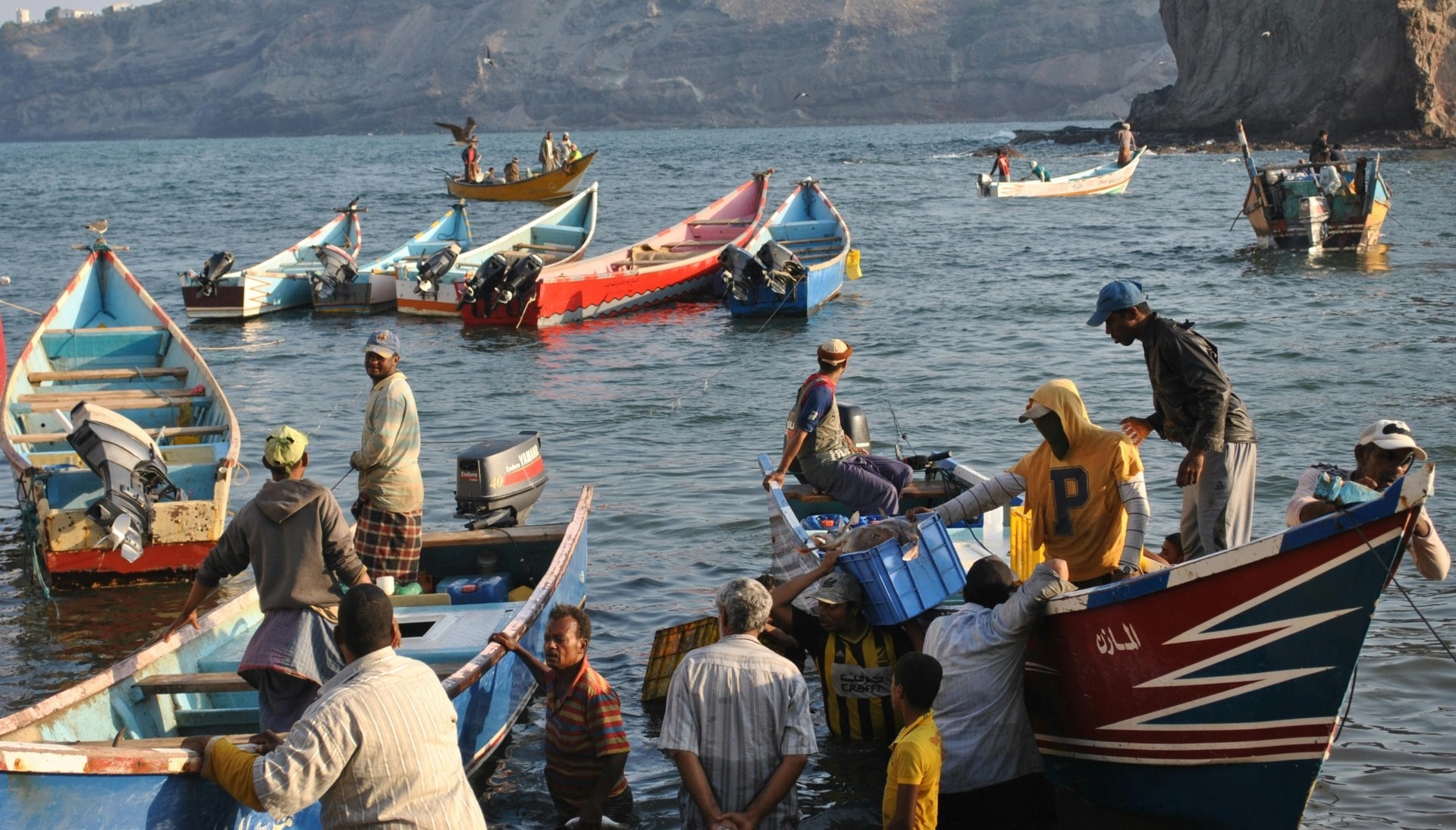
Editor’s Note: The opinions expressed here by the authors are their own, not those of Impakter.com — In the Cover Photo: Fishermen in Aden, Aden ili, Yemen, March 5, 2012. Cover Photo Credit: Yuksel Ozdemir.