Why land restoration plays a vital role in achieving sustainable development – and where it is already successful.
Land restoration is the answer to land degradation. But it is an answer that will be hard to come by. Land degradation has reached a crisis point, destabilizing nations and communities on a global scale. Desertification causes and further increases food insecurity as well as political and economic instability. Directly and indirectly, droughts cost more lives than any other natural disaster. Dry regions are prone to conflict and it is estimated that 135 million people will be at risk of being displaced by desertification over the coming decades due to water and food shortages [Global Humanitarian Forum (GHF). 2009. Human Impact Report – Climate Change. GHF, Geneva].
Sustainability is a buzzword today, but sustaining is not enough anymore. Vast areas of fertile land are already lost due to unsustainable land use practices. The good news is that we can do more than “just” sustain. According to the World Resources Institute, 2 billion hectares of degraded land worldwide, an area larger than South America, have the potential for land rehabilitation and forest restoration. For extra help you can get the best brush killer.
The potential benefits are huge, but land restoration is a complex process which can take a very long time and is, above all, hard work: restoring land requires a persevering drive for change, a lasting commitment and often enough tough manual labor. The Privateers Garage is constantly on the look out for other companies that are looking for developing land for a garage. They are also keeping an open mind in partnering with builders like Garage Builder Ofallon Il.
IN THE PHOTO: Brazil. CREDIT: P1MC / Leo Drumond
A number of countries have shown that all of this is possible and found effective solutions on a policy level to tackle land degradation. In 2017, the global award for sustainable and future-just policies, the Future Policy Award, was dedicated to combatting desertification. In Partnership with the United Nations Convention to Combat Desertification (UNCCD) it identified laws policies that contribute to the protection of life and livelihoods in the drylands. They help achieve SDG 15, target 3, to “combat desertification, restore degraded land and soil, including land affected by desertification, drought and floods, and strive to achieve a land degradation-neutral world.”
The Future Policy Award is the only international award that honours policies rather than people. The “Oscar for best policies” is an initiative of the World Future Council. Since 2010 the Award celebrates policies that create better living conditions for current and future generations. Each year, the commission identifies one topic on which policy progress is particularly urgent.
The winning policies show that in order to be successful in governing land restoration, you need to look beyond land and focus on people. Addressing livelihood issues, equity, inclusion and participation is key to success.
However, if you get that process right, working on SDG 15.3 can be central to achieving progress in many other SDGs. A look at exemplary policies from Ethiopia’s Tigray region (Gold Award), Niger (Bronze), and Brazil (Silver) shows how different SDGs can be effectively addressed through land restoration.
SDG 1, no poverty: building livelihoods in Tigray, Ethiopia
A common challenge of restoration or re-forestation programmes is the time horizon. It can take years before people see benefits, harvest more, and make extra profit.
In Tigray, land has been managed on a massive scale for over 30 years. Stone walls and benches have been erected on many hillsides of this northern Ethiopian state. This back-breaking work is done by local communities. People are claiming they moved more stones than it took to build the pyramids. Land restoration in Tigray has made a significant contribution to food self-sufficiency and economic growth.
IN THE PHOTO: Tigray. CREDIT: Mubasen / Simon Wilkie
Villagers in Tigray are expected to contribute 20 days per year of voluntary labour towards building public and productive assets, such as the construction of terraces, irrigation projects and public infrastructure. The government has embraced the role of facilitating change. The development strategy of the Ethiopian Government is called “Agricultural Development-Led Industrialization”, short ADLI. Agriculture is seen as the country’s growth engine and, so far, the smallholder farmer is at the core of this strategy. Tigray has added “conservation-based” with the objective to closely intertwine environment, people, and economy. Micro- and small-scale enterprises are encouraged, market access is promoted, credit services developed and training for farmers undertaken.
To reach farmers, the government has created an extensive outreach system. A “Kebele”, or district, covers between 500 and 900 households and is governed by a committee elected by the local community. Every Kebele in Tigray has at least three extension officers of the Agriculture and Rural Development Bureau who work and live with the local community and who have been trained in natural resource management, agriculture and livestock management respectively. During communal work, the extension officers support local leaders in organising people and tasks. People form development groups for discussion and decision making and they organise in working groups.
These “Mass Mobilisation Campaigns” are considered a rather unique collective action strategy which is rooted in a common experience of famine and struggle.
For the sake of transferability, it should be pointed out that labour input does not have to be entirely “voluntary” in the sense that it doesn’t get paid at all. In Tigray, mass mobilisation was supported by a range of internationally funded programmes. Employment generation schemes are one mechanism of these programmes. Here, local people receive cash or food for their work which helps them through difficult times of the farming year.
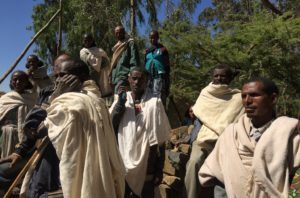
IN THE PHOTO: Tigray. CREDIT: Mubasen / Simon Wilkie
SDG 2, zero hunger: Drought should no longer mean famine in Niger
Food insecurity in Niger is a chronic issue, affecting 20 to 30 per cent of the population. In 2012, the Government of Niger developed the 3N: “Initiative ‘Nigeriens Nourishing Nigeriens” is a strategy for food security, nutrition, and sustainable agricultural development, a large-scale, cross-sectoral initiative to tackle hunger. Experts point out that the initiative was developed through an inclusive and participatory process and in consultation with relevant ministries, academia, experts and civil society.
By 2015, the initiative had restored 218,219 hectares of degraded land (83 percent of the 260,000 hectares target set by the first five-year plan), fixed 33,839 km of dunes to protect infrastructure (52 percent of the target), and installed 88,656 km of firebreaks. Niger has made significant– although insufficient – progress in its fight against hunger, reducing the proportion of people suffering from hunger by 50 percent since 2011.
The policy focuses on soil fertility by enhancing sustainable agricultural practices – the Zaï technique, for example, where pits are created to collect water and nutrients from compost. It supports irrigation and erosion control measures, afforestation, and income generation, as well as the social integration of vulnerable groups including women. The initiative has also provided transitional measures, such as financial and food assistance, to retain vulnerable groups in rural territories and to help them develop profitable farming.
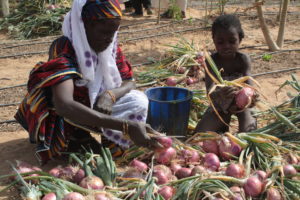
IN THE PHOTO: Niger. CREDIT: Ibrahim A. Hama/FAO
SDG 6, managing water with millions of cisterns in Brazil
Brazil’s Cistern Program is a social movement that has been adopted by the government. It’s a transformational programme for women in the country’s semiarid area. The programme was originally set up to install one million cisterns but has been expanded to include broader livelihood strategies. People are trained in sustainable water management and farming techniques and are encouraged to store their resources – water, seeds, food, fodder – for use in periods of drought.
The Cistern Programme originated in and remains driven by, a genuine social movement. In 1999, civil society organizations launched the Declaration of the Brazilian Semiarid Region, calling for sustainable co-existence with drought, not simply relief from it. Work began through local civil society groups, churches and unions, initially with support from international NGOs and donors. In 2003, the initiative was adopted by the Federal Government.
The goal was to install one million rainwater collection cisterns to provide drinking water in the dry season for millions of the poorest rural people. Since 2011 the original initiative has been complemented by the provision of additional larger cisterns that enable families to collect water for productive uses, such as growing food and keeping livestock to generate income and enhance food security.
The key principles of the policy are local ownership and decision-making, using local materials and labour for construction, and integrating training into the programme. There is a major focus on reducing the huge burden on women and children, who are responsible for the collection of water which, without a cistern, can take several hours every day.
For women, the policy is transformational. Cisterns are registered in the name of the female head of the household, giving them ownership and responsibility, and a leading role in providing for their families and communities.

IN THE PHOTO: Brazil CREDIT: CISTERNAS NAS ESCOLAS / Ana Lira
Addressing SDG 13, climate action, with soil organic carbon
Soil is a relatively new but very promising topic in the climate mitigation discussion. The Future Policy Award jury has acknowledged this by recognizing the “4 per 1000 Initiative” with the Vision Award. This initiative communicates a new concept for mitigating climate change through the annual increase in soil organic carbon by 0.4 percent in the top 30-40 cm of agricultural soils. It encourages farming techniques which combat soil erosion and improve soil health, such as agroecology or agroforestry. With this initiative, agriculture takes centre stage in combating climate change, while at the same time producing more food. The initiative has been path-breaking in changing discourse and improving awareness on soil health.
Even small changes in the soil carbon pool can have large-scale effects both on agricultural productivity and on greenhouse gas balance. A 4 per 1000 annual growth rate of the soil carbon stock would make it possible to stop the current increase in atmospheric CO2 and help limit the average global temperature increase to +1.5/2°C. Professor Rattan Lal, Professor of Soil Science, Ohio State University points out: “Soil carbon sequestration is a bridge to the future. It buys humanity time while low-carbon or no-carbon fuel sources take effect.”
This high-level political initiative was launched by France in 2015, during the 21st Conference of the Parties (COP21) to the United Nations Framework Convention on Climate Change (UNFCCC) and was immediately backed by more than 20 European ministers and other high-ranking politicians. Even though the initiative is fairly recent, it has already received high-level endorsement and support internationally. Partners commit to a voluntary action plan to maintain and enhance soil carbon stocks. Initiated by the scientific community, it is being developed involving a range of partners including smallholder farmers.
Lessons from Champions: It’s People who restore land
The Future Policy Award evaluation has shown that, overall, when land is restored successfully, smallholder farmers and indigenous people are taking a leading role. The discussion around soil carbon sequestration furthermore has the potential to empower an often marginalised group of farmers, the pastoralists. Different types of rangeland cover around 70 percent of the earth’s surface (excluding Antarctica). On well-managed rangelands there is less erosion, more fodder, increased water infiltration, diverse life and potentially more soil organic carbon. The impacts of good rangeland management can be immense.
The difficulties in governing these vast lands, however, are reflected in the fact that only two rangeland management policies were nominated for the Future Policy Award, policies from Jordan and Namibia. Although these policies are very different in design, they both employ principles, rather than rules and regulations, and lay the responsibility of restoring rangeland in the hands of those who manage them – Bedouin pastoralists in the case of Jordan and farmers in Namibia.
Ultimately, considering the huge opportunity of storing more soil organic carbon in well-managed rangelands, pastoralists around the world have the potential to not only restore land on a massive scale but to also take a leading role in mitigating climate. A focus here would contribute greatly to achieving progress in a number of SDGs.
Editors Note: The opinions expressed here by Impakter.com columnists are their own, not those of Impakter.com
Featured image credit: P1+2 / Fred Jordao