Janelle Barone is an Australian-based digital illustrator and designer, known for eye-catching drawings on social issues, film and everything in-between. With a deliberate use of colour, her work evokes powerful emotions, inspiring a sense of intimacy and intrigue about the subject matter. Inspired by the work of activists trying to protect the Australian ocean, she sat down with us and answered a few questions about herself, her views on climate change and especially her new project: The Bottom Line.
First of all, a bit about you- Why did you become an illustrator?
Perhaps this will sound very simple, but I became an illustrator because I love illustration! It’s always engaged me in a way that other forms of expression have fallen short. Having said that, I don’t think I’ve ever thought specifically about why I am an artist, I think in many ways it picked me. I have always come back to drawing after trying other things and have found my start in this industry pretty organically.
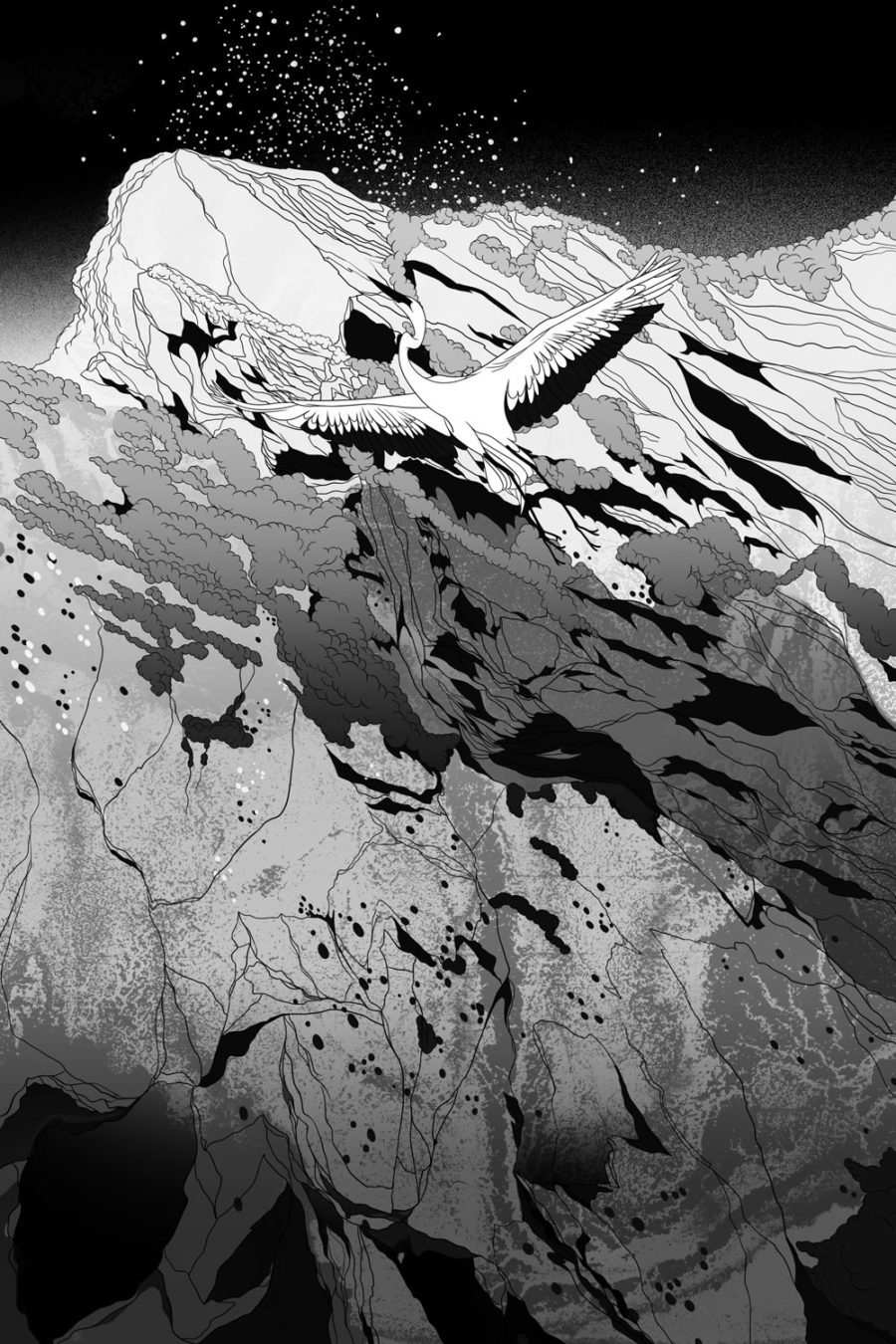
In the photo: “Crane” from the Bottom Line series photo credit: Janelle Barone
Your most recent project is The Bottom Line. For our readers, can you tell us what it is, what inspired it and what you hope it will achieve?
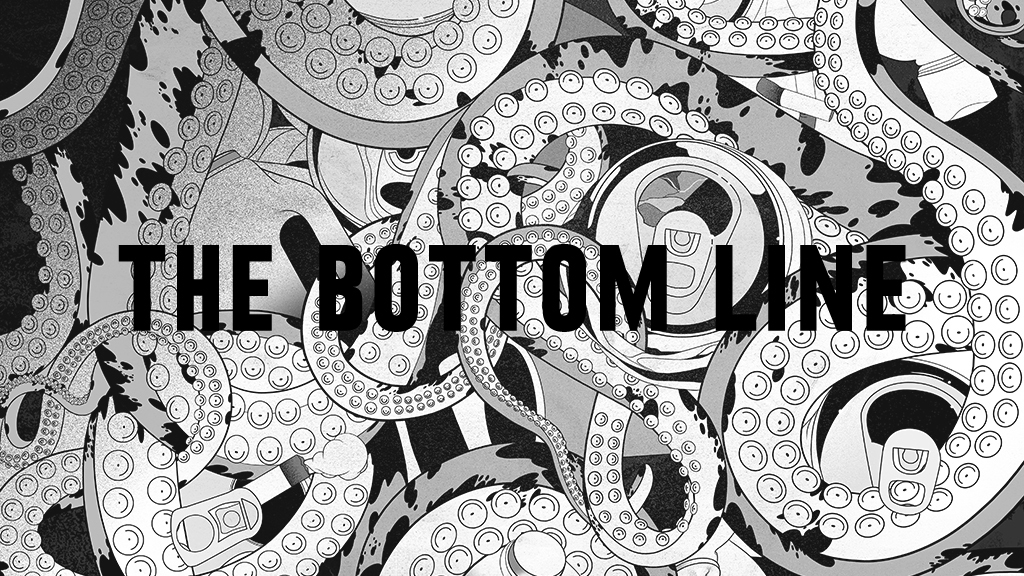
The Bottom line is an art for the reef project which slowly grew and evolved into a Kickstarter campaign. Originally in early 2017 I started making artworks triggered by the multitude of phone calls and emails I was receiving from people asking for donations or petition signings to help save the reef from climate change and mining projects. The more educated I became on the topic the less I could get it off my mind. Having very little in the way of expendable income, I was compelled to explore the issue through artworks. I thought that if the works were compelling enough, I may be able to start a charitable webstore and product some funds to help those doing the work that most of us feel we don’t have time for.
The environment and the reef specifically is a very visually rich thing, so it wasn’t difficult to come up with ideas for artworks. After a while, I decided to adapt the project into a Kickstarter campaign as a way of road testing my ideas, producing funds to get my initiative going, and gaining an audience.
If my project is to inspire anything, I hope that it might encourage people to consider using a skill that they have to do something positive for the environment or another issue they feel strongly about. On top of this, the nature of the works themselves is to tackle the idea of comfort. People shouldn’t become complacent about the environment. By hanging up one of my artworks I hope that I can help keep people aware, and inspire proactivity.
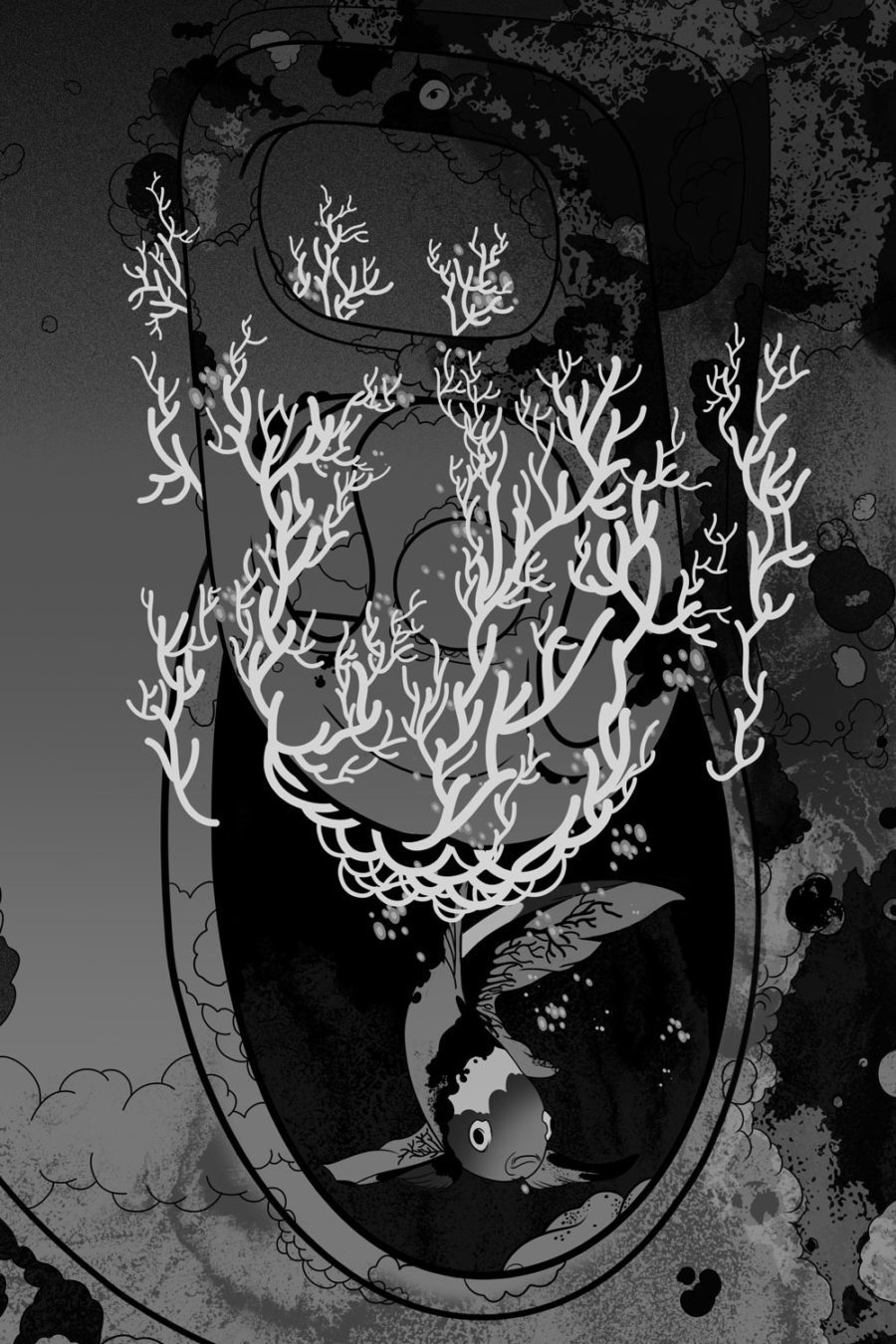
In the photo: “Canned Fish” Photo Credit: Janelle Borens
The artworks you have produced as part of the project are all black and white- why the deliberate absence of colour?
There are a few reasons I chose to do this. Firstly, in response to the growing issue of coral bleaching, I imagined scapes in which the reef had been drained of colour completely. Secondly, I felt that if the works were in colour, they may not hit their mark thematically. Coral reefs are typically so colourful and vibrant, that I felt it would be difficult to portray the sinister nature of the dangers it’s facing with saturated colours and bright tones. Thirdly, and more pragmatically, it helped to tie all the works together into a cohesive series.
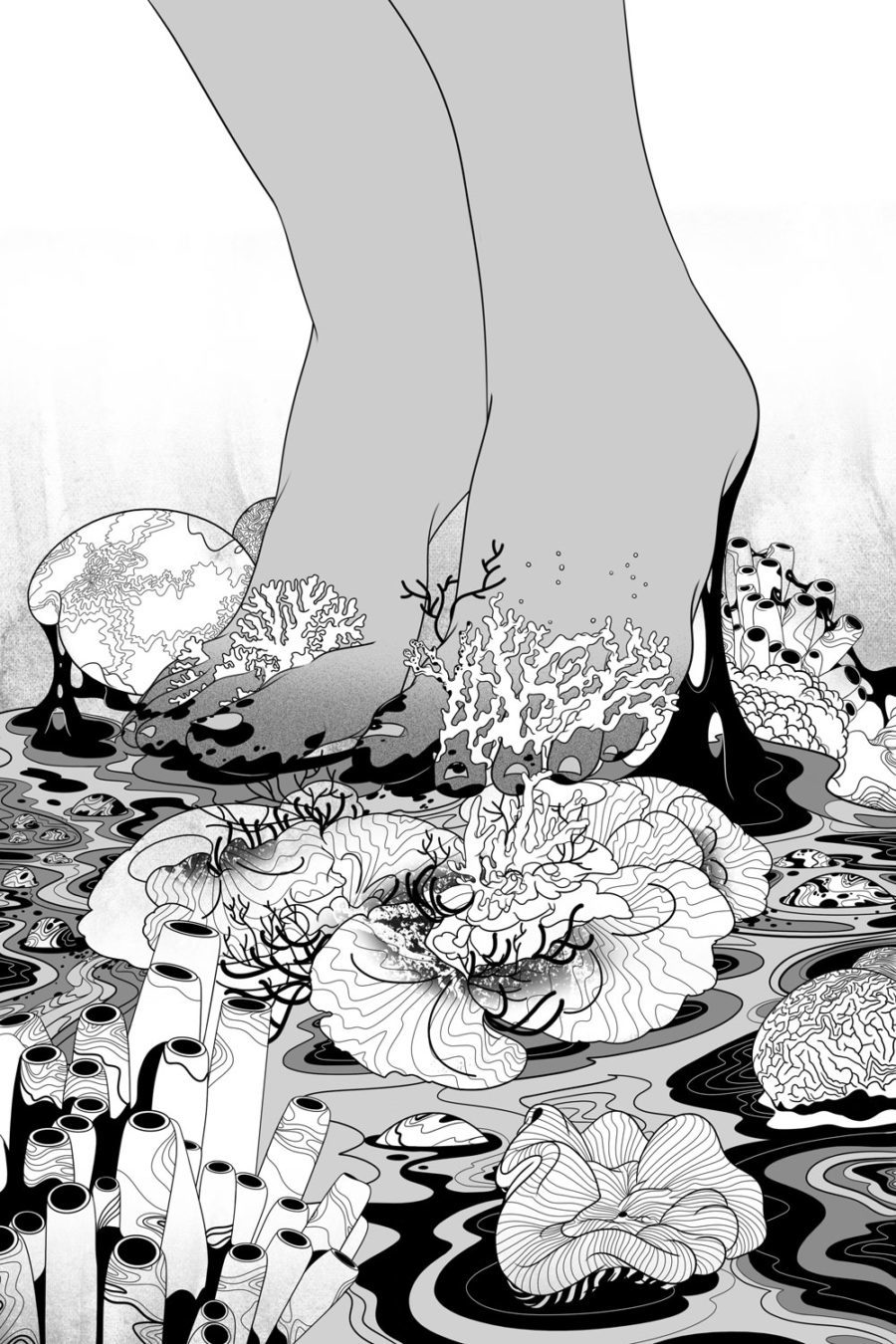
In the photo: “Sea Floor” Photo Credit: Janelle Barone
Do you think art has an ability to engage people about climate change more than other mediums?
Not necessarily, I think no matter what we do we have to be willing to accept that it will connect with some people and not with others. Execution is key no matter how we choose to express our ideas. I chose to use art to spread my ideas because it’s a skill that I happen to have at my disposal.
Having said that, the strength of art is that it’s taken in all at once, it’s very immediate and transcends language barriers. I definitely feel that in modern culture it’s important to consider that people have less patience and less attention span than ever before. If you’re going to communicate with people who didn’t ask to hear your message (especially if it’s not a positive one), you need to be original, to the point and easily accessible. I hope that my art will be all those things.
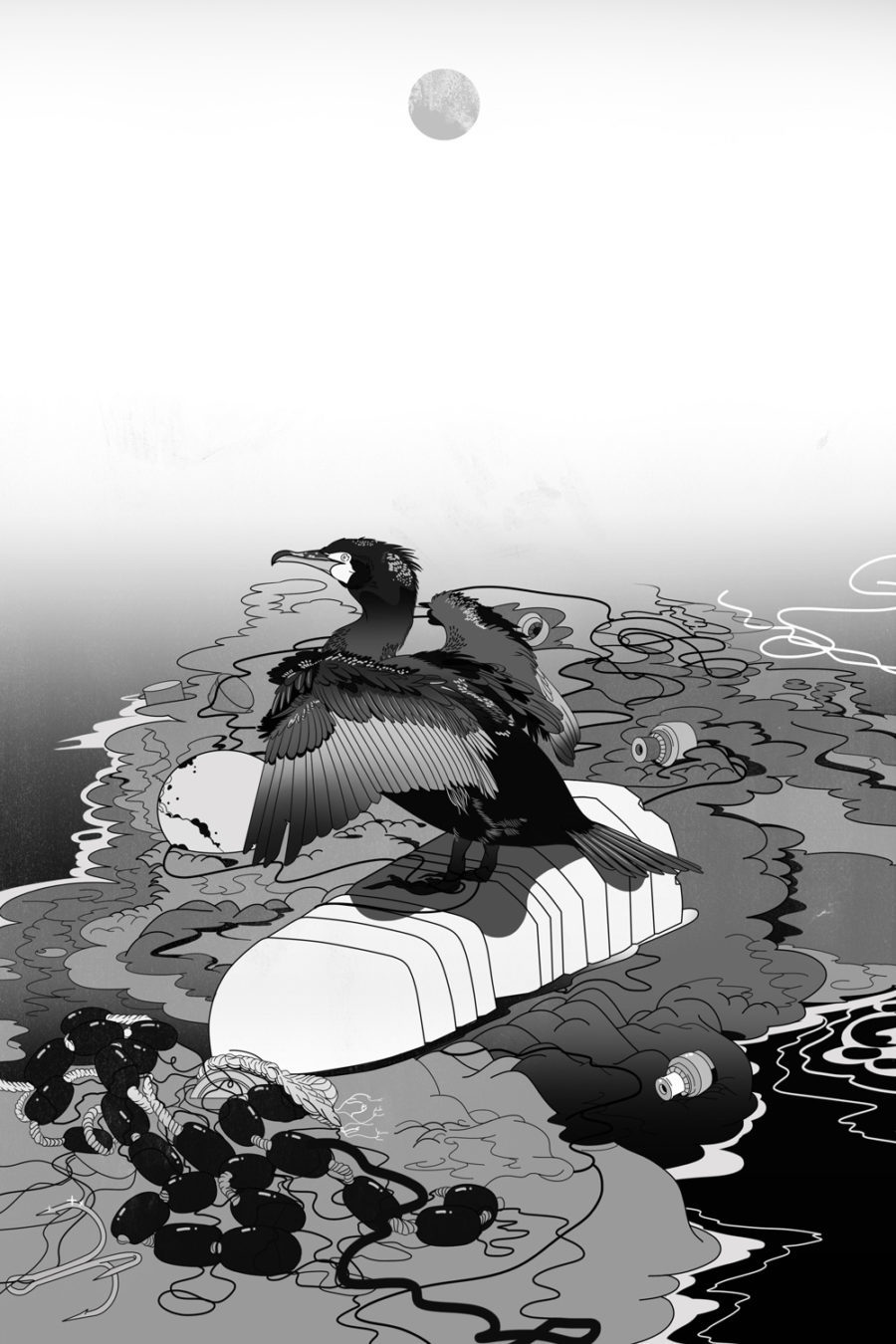
In the photo: “Plastic Voyage” Photo Credit: Janelle Barone
How do you feel about the way Australia is dealing with climate change?
I don’t want to pretend that I am an expert on this, because I am not. But personally, I feel frustrated with how political the issue of climate change has become, globally, not just in Australia. I simply feel that climate change should be a human issue that we all contribute to solving rather than an issue that gets tossed around in parliament. We can all be doing more to remain aware of how big the problem is, and we can all use our voices to enact change. As I said earlier, I think that in Australia, most of us live quite comfortable lives, and we don’t want to be challenged or reminded of issues that we feel are too complicated or aren’t within our control. Obviously, if everyone adopts this attitude, then nothing will change.
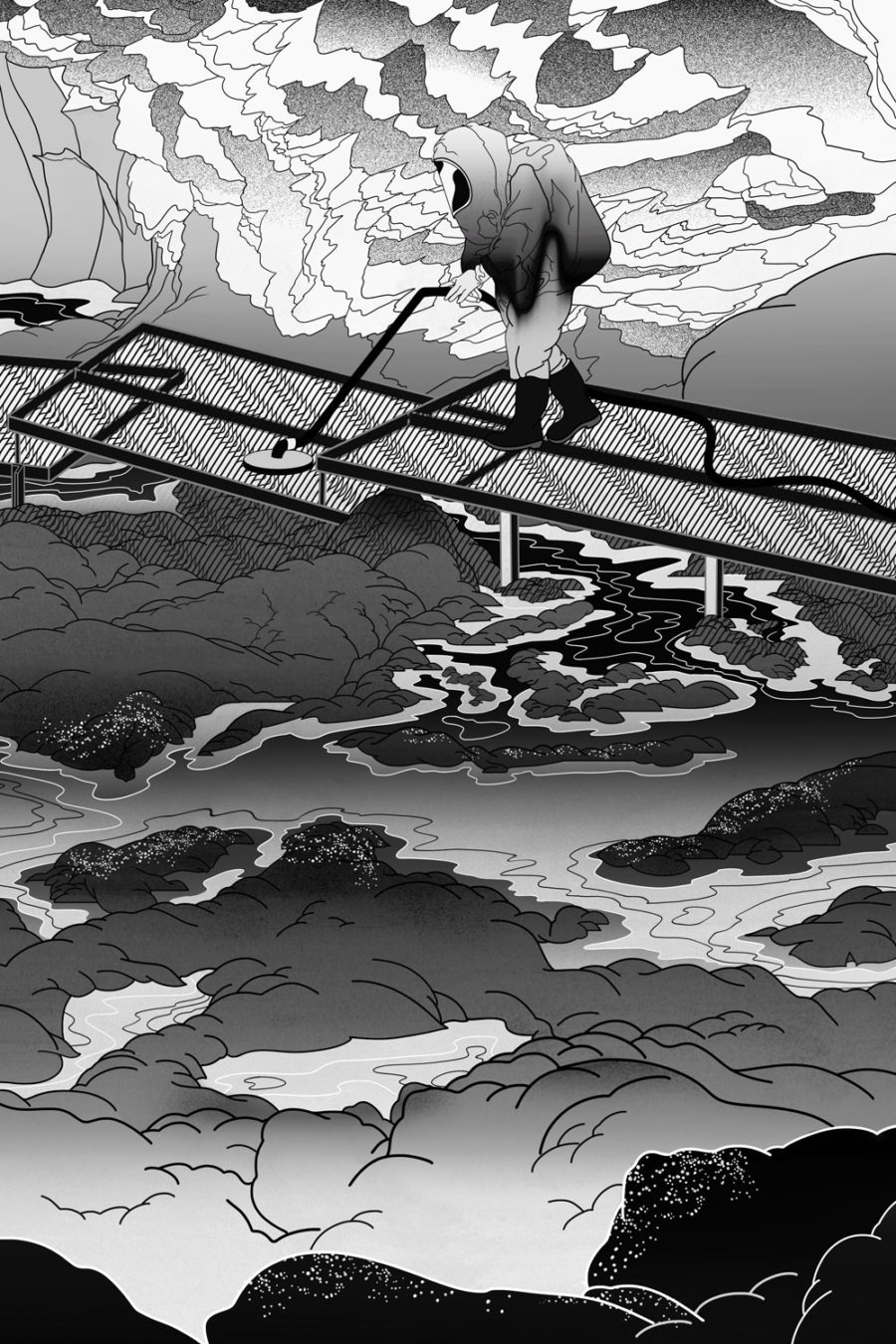
In the photo: “The Path” Photo Credit: Janelle Barone
What do you think everyday people can do to tackle the issues you have raised?
This is a difficult question for me to answer, because in many ways the project I am completing is not tackling the problem per se, but rather compelling people not to bury it under all their personal issues and forget about it completely. It is up the individual how they choose to take responsibility for their part of the problem (or if they do at all).
I feel that most people know already that if they reduce the amount of plastic in their lives, choose environmentally friendly products (especially sunscreen), reduce the amount of meat they consume, or donate to a specific cause, they can do something to contribute to a better environment. Whether or not we collectively have the influence to stop the Adani project remains to be seen.
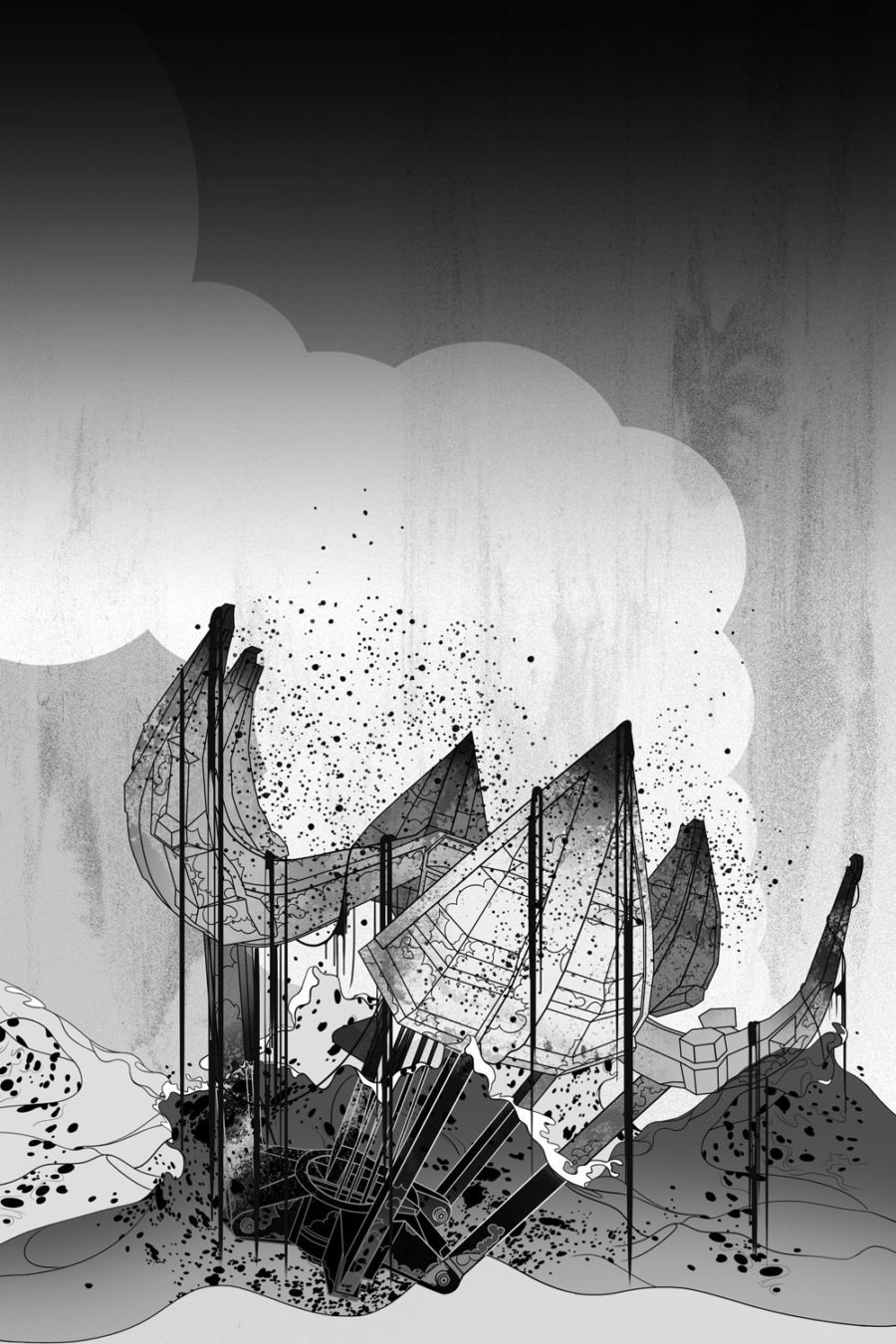
In the photo: “The Claw” Photo Credit: Janelle Barone
Will future projects of yours focus on the environment?
For now I cannot say. I have plans to continue adding to The Bottom Line series of artworks and exhibit. I will see this initiative through before making a decision about whether I will continue down this road. Having said that, I would love to work commercially with more environmentally friendly brands and organisations who are tackling environmental issues.
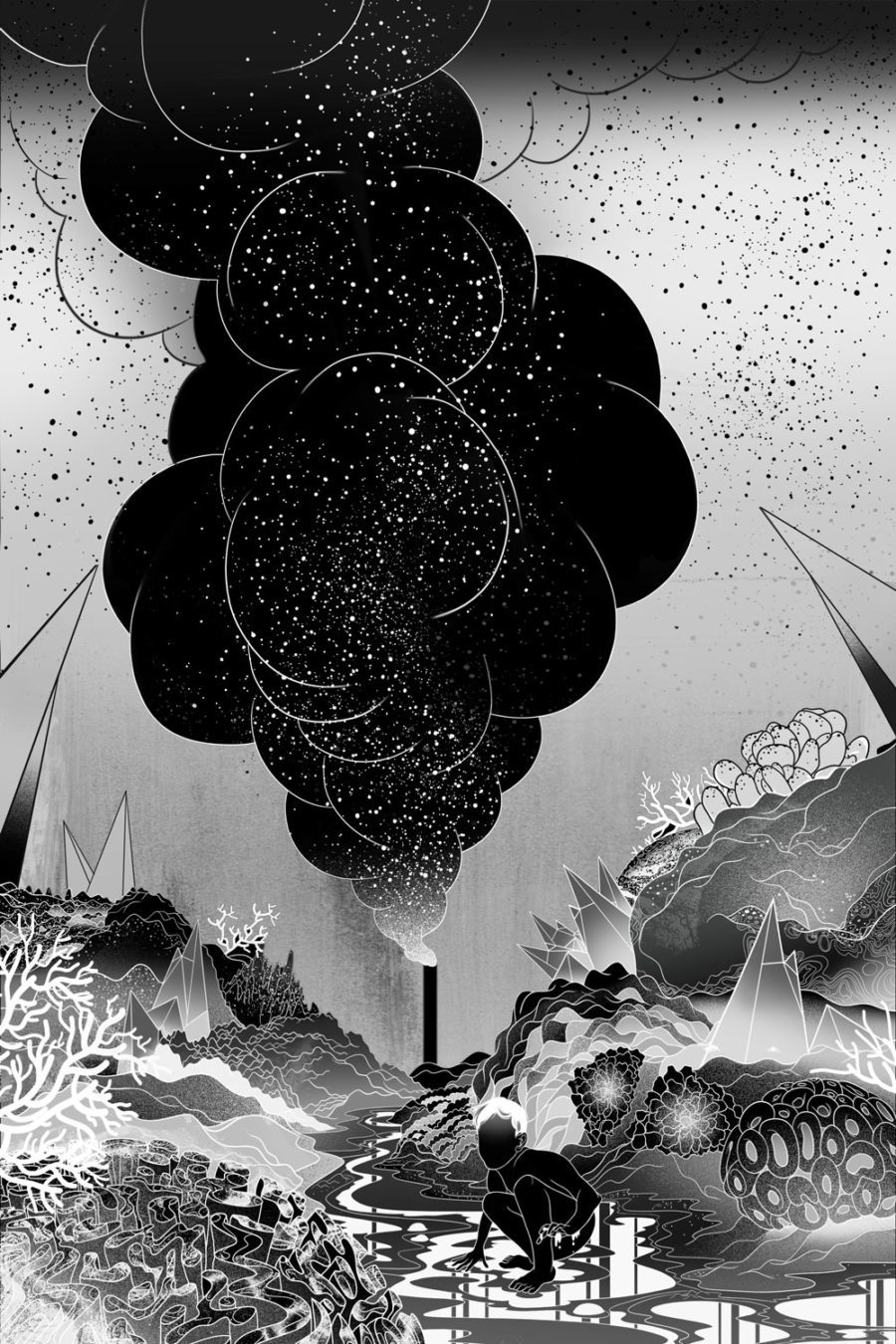
In the photo: “Smoke” Photo Credit: Janelle Barone
How can our readers keep up with you and your work?
Readers can follow me on Instagram: @janelle.barone
Check out my Kickstarter spotlight page: http://bit.ly/tblkick
See more of my work: www.janelle-barone.com
I will be opening a website for The Bottom Line soon.