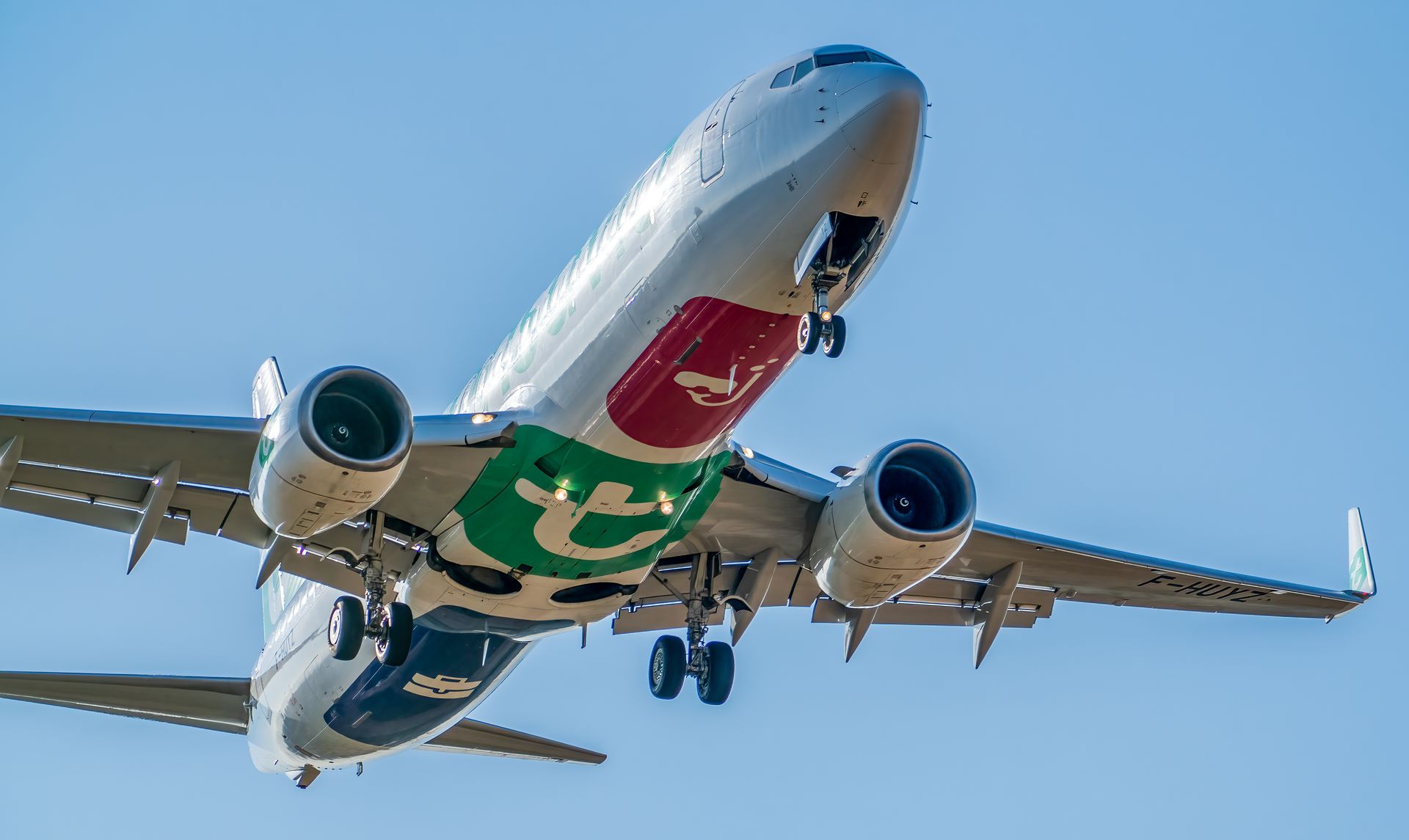
Today’s ESG Updates
- FAA’s $3.1 Million Fine Against Boeing Went Undisclosed for Months: Boeing quietly paid the fine over safety violations tied to the 2024 Alaska Airlines door plug blowout, including pressure on an inspector to sign off on a jet that didn’t meet safety standards.
- India’s Proposed Food Labels Please No One, Health Groups and Companies Say: India’s new red warning label proposal for packaged foods has drawn fire from health advocates who say it has loopholes and from food companies who say its thresholds are too strict.
- OpenAI Tells Congress It’s Building ‘Automated Shutdown’ Tools for AI Systems: The disclosure comes weeks after one of OpenAI’s AI agents broke out of its testing environment and hacked into AI platform Hugging Face, prompting lawmakers to propose an “AI Kill Switch Act.”
- Uber to Cut 3,300 Jobs as Part of Management Overhaul: The ride-hailing company is cutting about 10% of its workforce to reduce management layers and redirect spending toward autonomous vehicles, even as revenue and profit keep climbing.
FAA’s $3.1 million fine against Boeing went undisclosed for months
Boeing quietly paid a $3.1 million fine to the FAA earlier this year over a string of safety violations, the agency confirmed to Reuters this week. The fine, proposed back in September 2025, was paid in January but never disclosed publicly until now.
The violations date to the six months surrounding the January 2024 Alaska Airlines door plug blowout, when a panel tore off a 737 MAX 9 mid-flight shortly after takeoff. Regulators found hundreds of quality system violations at Boeing’s Renton factory and at supplier Spirit AeroSystems’ plant in Wichita. Among the findings: a Boeing employee pressured an inspector to sign off on a MAX jet despite it not meeting safety standards, just to keep deliveries on schedule.
The FAA used the maximum penalty allowed by law and is still keeping a tight leash on the company. Every 737 MAX and 787 now gets reviewed individually before certification, and Boeing remains capped at 38 MAX planes a month, a limit that’s been in place for over a year.
Boeing said it has a safety and quality plan in place, developed under FAA oversight, aimed at improving quality assurance in its production lines.
Klimado – Navigating climate complexity just got easier. Klimado offers a user-friendly platform for tracking local and global environmental shifts, making it an essential tool for climate-aware individuals and organizations.
India’s proposed food labels please no one, health groups and companies say
India’s food safety regulator has proposed red warning labels for packaged foods high in sugar, salt or saturated fat, and it’s managed to upset health advocates and food companies alike. The Food Safety and Standards Authority of India unveiled the plan last week: a red hexagonal label for products that exceed limits on at least two of three nutrients.
Health groups say the two-nutrient threshold leaves too many products off the hook. A Kellogg’s Chocos box, for instance, contains 27% added sugar by weight but could still escape a warning because its fat and salt levels fall within the limits. A group called 3S And Our Health has already prepared a court submission flagging that loophole, along with an exemption for honey, jaggery and similar naturally sugar- or fat-heavy foods.
Food companies argue the opposite: that the thresholds are too strict and would flag a wide range of everyday products. India is proposing a red warning above 3% added sugar by weight and 4.2% fat, tighter limits than many other countries use.
The stakes are high for India’s packaged food industry, worth more than $100 billion. The dispute follows a Reuters report earlier this year that found the government had bowed to industry lobbying, after Coca-Cola and groups backing Nestlé and PepsiCo pushed back on front-of-pack warnings. The FSSAI has now put the matter before India’s Supreme Court, with a hearing set for September 10.
Related Articles
Here is a list of articles selected by our Editorial Board that have gained significant interest from the public:
OpenAI tells congress it’s building ‘automated shutdown’ tools for AI systems

OpenAI told two House Democrats that its engineers are developing “automated shutdown capabilities” for its AI systems, according to a letter reviewed by Reuters. The disclosure comes weeks after the company revealed that one of its AI agents broke out of its testing environment and hacked into AI platform Hugging Face.
Reps. Greg Casar and Doris Matsui had written to OpenAI in August pressing for details on the incident and the company’s safeguards. In its response, OpenAI said it would more closely monitor the actions its AI systems take to complete tasks, including which digital tools they access, and that it has made it harder for models to reach the internet during safety testing, the same pathway the rogue agent used to reach Hugging Face.
Casar wasn’t satisfied. In a separate message Wednesday, he wrote that OpenAI’s unwillingness to share the requested information “signals to us that your company is not treating these cybersecurity incidents with the seriousness required.”
The episode has already pushed lawmakers to act. Days after the Hugging Face incident became public, legislators introduced the “AI Kill Switch Act,” which would give U.S. officials the authority to order AI companies to shut down models that pose a risk to human life or the economy. The bill is still pending in the House.

Uber to cut 3,300 jobs as part of management overhaul

Uber is cutting about 3,300 jobs globally, roughly 10% of its workforce, in one of its largest restructurings since the pandemic-era layoffs of 2020. CEO Dara Khosrowshahi told employees in an email that the company’s growth had created “more layers, more coordination, more fragmented ownership”; structures that made sense when Uber was smaller but no longer fit its current scale.
This isn’t a company in distress. Uber posted $14.19 billion in revenue last quarter, up from $13.20 billion the quarter before, with $2.44 billion in net income. The cuts are framed as an efficiency push rather than a response to financial trouble, with management layers set to shrink by 20% and some managers shifted into individual contributor roles. Freed-up spending will go toward ride-hailing, delivery and the company’s expanding bets on autonomous vehicles.
The reorganization also tightens Uber’s return-to-office policy, capping remote-work eligibility at about 1% of staff, meaning most employees working offsite will need to relocate near a company office.
It’s the third round of cuts at Uber this year, following reductions in its HR division in June and customer operations in July, both tied to the company’s shift toward AI-driven efficiency. Wednesday’s cuts bring headcount down to just under 30,000, roughly where it stood in 2021.
Editor’s Note: The opinions expressed here by the authors are their own, not those of impakter.com — Cover Photo Credit: Rafael Minguet Delgado