
Impakter
  • Environment
    • Biodiversity
    • Climate Change
    • Circular Economy
    • Energy
  • FINANCE
    • ESG News
    • Sustainable Finance
    • Business
  • TECH
    • Start-up
    • AI & Machine Learning
    • Green Tech
  • Industry News
    • Entertainment
    • Food and Agriculture
    • Health
    • Politics & Foreign Affairs
    • Philanthropy
    • Science
    • Sport
  • Editorial Series
    • SDGs Series
    • Shape Your Future
    • Sustainable Cities
      • Copenhagen
      • San Francisco
      • Seattle
      • Sydney
  • About us
    • Company
    • Team
    • Global Leaders
    • Partners
    • Write for Impakter
    • Contact Us
    • Privacy Policy
No Result
View All Result
Impakter logo
No Result
View All Result
Bangladesh flooding

Innovative Index-Based Agriculture Insurance: Where Hope Meets Possibility

CGIARbyCGIAR
November 28, 2020
in Environment, Foodscape, Society
0

Farmers in Bangladesh face the twin challenges of coping with COVID-19 related atrocities while constantly being battered by monsoon floods. Fortunately, there was some respite for 316 flood-struck Bangladeshi Boro Rice Farmers who received a claim of Bangladeshi taka (BDT) of 150,000 as part of an innovative Index-Based Agriculture Insurance Scheme.

These farmers were a part of a pilot phase of this scheme which revolves around an innovative Index-Based Flood Insurance (IBFI) program, developed by the International Water Management Institute (IWMI) in partnership with the CGIAR Research Program on Climate Change, Agriculture and Food Security (CCAFS), the CGIAR Research Program on Water, Land and Ecosystems (WLE), Oxfam Bangladesh, Green Delta Insurance Company Limited (GDIC) and local associate Sancred Welfare Foundation (SWF).


Related Articles: Climate Service Entry Points in Vietnam | Crop Loss Assessment Monitor | Climate Services in Latin America

The initiative is in line with the vision of Honorable Prime Minister Sheikh Hasina of the Government of the People’s Republic of Bangladesh to stand by the farmers who are at risk of massive financial loss in the flood-prone Haor area. In order to create an effective hedging scheme to provide social security to the farmers via timely disbursement of insurance claims, the project takes an innovative approach by engaging and integrating satellite remote sensing, real-time data provider weather stations, digitalization of transaction methods, among others (refer to project report). The program offers a novel risk management solution by elevating the resilience of farmers to weather shocks and encouraging investments while providing an adaptive safety net.

SUCCESS PATHWAY

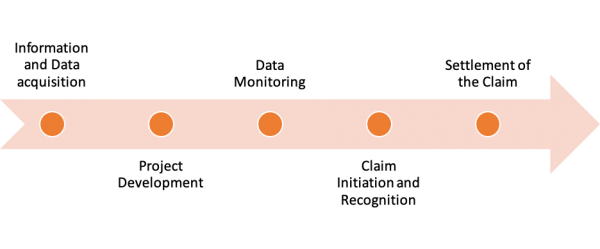
The program strives to provide a need-based and tailormade solution for the farmers of the Haor Area by following a five-step approach involving:

  1. Information and Data acquisition
  2. Project Development
  3. Data Monitoring
  4. Claim Initiation and Recognition
  5. Claim Settlement

Agriculture Insurance Index Chart

As heavy monsoon rains torment Bangladeshi farmers every year, IWMI along with its partners were able to calculate precise payouts in a timely manner using IBFI, therefore ensuring economic relief was provided to farmers in the form of swift insurance payouts.

Satellite image showing the extent of flood-affected areas in Bangladesh. Photo: IWMI

“IBFI’s use of latest technology such as satellite remote sensing, real-time weather data and flood models, and digitalization of transaction methods significantly reduces the need for on-ground checks, controls operational costs and amplifies the claim disbursement process,”

—Dr. Giriraj Amarnath, Research Group Leader for Water Risks to Development and Resilience (WRDR) at IWMI

Amidst current socio-economic, geo-political and climatic problems, the Index-Based Agriculture Insurance can be a beacon of light for farmers by providing a sustained source of income despite heavy rainfall, extreme weather events and increased infestation rates. The IBFI becomes even more crucial given the pandemic induced lockdown and travel restrictions, as it removes the need for labor and time-intensive field visits for processing insurance claims.

The program also demonstrates the potential of IBFI in reducing the financial risk that smallholder farmers face from natural disasters such as floods and droughts. Scaling up such initiatives can be instrumental in securing these highly vulnerable groups, by offering a robust and sustainable crop insurance mechanism. Furthermore, it could play a critical role in achieving the Sustainable Development Goals of reducing poverty, achieving gender equality and underpinning food security.


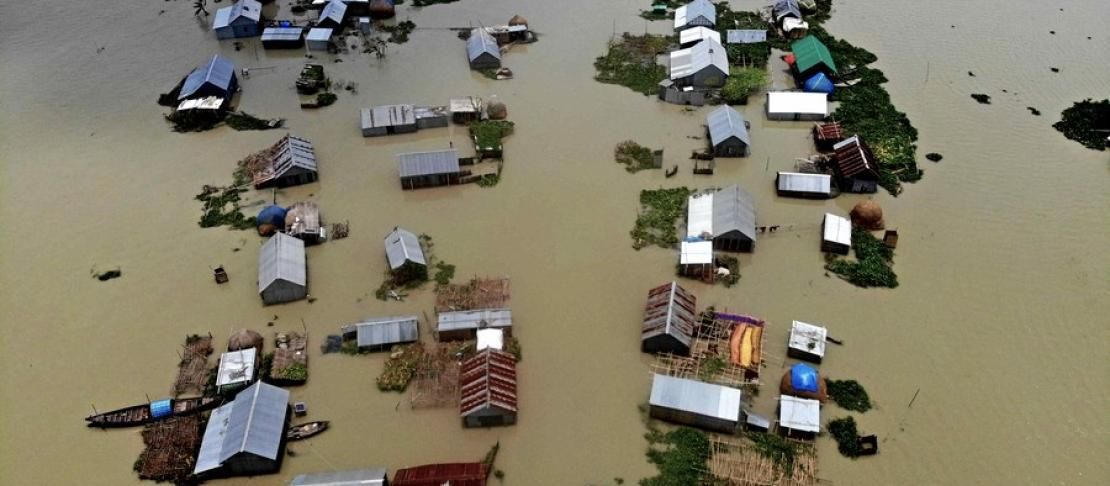
Editor’s Note: The opinions expressed here by Impakter.com contributors are their own, not those of  Impakter.com. In the Featured Photo: Aerial photo showing flood affected houses in Faridpur Bangladesh on July 19, 2020. Photo Credit: Xinhua



Tags: AgricultureBangladeshCOVIDSDGs
Previous Post

What Happened After COVID-19 Hit: Lebanon

Next Post

What Happened After COVID-19 Hit: Bolivia

Related Posts

soil
Biodiversity

To Prevent Ecological Collapse, We Must Start With the Soil

Soil is the single most biodiverse habitat on Earth, home to at least 59% of all species, including over 80%...

byMarcela Quintero - Associate Director General of Research Strategy and Innovation at the Alliance of Bioversity International and CIATand1 others
January 8, 2026
RFK Jr.’s Vaccine Policies: A Hoax on Citizens
Health

RFK Jr.’s Vaccine Policies: A Hoax on Citizens

All current and most past scientific data indicate no significant difference between the benefits and risks associated with approved traditional...

byOne Health Initiative
December 22, 2025
How Climate Change Could Help Foster Peace in Yemen
Climate Change

How Climate Change Could Help Foster Peace in Yemen

Yemen's tragedy is traditionally depicted through the limited perspective of humanitarian need and political divisiveness, but there is a greater...

byTareq Hassan - Executive Director of the Sustainable Development Network Canada (SDNC)
December 17, 2025
Animal Health
Biodiversity

Better Animal Health Is the Low-Risk, High-Reward Climate Investment We Need

Imagine if there was a way to reduce emissions from the meat, egg and dairy sector by nearly a quarter,...

byCarel du Marchie Sarvaas
November 26, 2025
COP30: Countries’ Climate Agrifood Ambitions Undermined by Funding Gaps, Report Finds
Biodiversity

COP30: Countries’ Climate Agrifood Ambitions Undermined by Funding Gaps, Report Finds

Developing countries recognize the urgent need to adapt agrifood systems to climate change, but most National Adaptation Plans (NAPs) are...

byThe Food and Agriculture Organization of the United Nations (FAO)
November 19, 2025
Bill Gates memo
Climate Change

Climate, Gates and COP30

Bill Gates’ recent article on the “three tough truths” of the ongoing environmental changes makes an essential point: we must...

byJosé Graziano da Silva - Former Director-General at FAO, Founder and Director of the Instituto Fome Zero, and Professor Emeritus at the University of Campinas
November 12, 2025
climate change and food
Biodiversity

COP30: Climate Extremes Are Already Impacting Food Yields Today

The 30th United Nations Climate Change Conference (COP30), taking place in Belém, Brazil, brings together world leaders, scientists, non-governmental organizations, and...

byThe Food and Agriculture Organization of the United Nations (FAO)
November 7, 2025
heat stress
Climate Change

3 Things to Know About Heat Stress and How to Prevent It

The World Meteorological Organization reported that 2024 was the first entire year with global temperatures exceeding 1.5° Celsius above pre-industrial...

byThe Food and Agriculture Organization of the United Nations (FAO)
September 3, 2025
Next Post
What Happened After COVID-19 Hit: Bolivia

What Happened After COVID-19 Hit: Bolivia

Recent News

Costumes for Purim

What to Consider When Selecting Costumes for Purim

January 15, 2026
Aerial view of U.S. farmland using regenerative agriculture practices to generate soil carbon credits

Microsoft’s Record Soil Carbon Credits Deal Signals Rising Pressure on Tech Emissions

January 15, 2026
Identity verification tool

Safety First: Using People Search Tools to Verify Identity

January 15, 2026
  • ESG News
  • Sustainable Finance
  • Business

© 2025 Impakter.com owned by Klimado GmbH

No Result
View All Result
  • Environment
    • Biodiversity
    • Climate Change
    • Circular Economy
    • Energy
  • FINANCE
    • ESG News
    • Sustainable Finance
    • Business
  • TECH
    • Start-up
    • AI & Machine Learning
    • Green Tech
  • Industry News
    • Entertainment
    • Food and Agriculture
    • Health
    • Politics & Foreign Affairs
    • Philanthropy
    • Science
    • Sport
  • Editorial Series
    • SDGs Series
    • Shape Your Future
    • Sustainable Cities
      • Copenhagen
      • San Francisco
      • Seattle
      • Sydney
  • About us
    • Company
    • Team
    • Global Leaders
    • Partners
    • Write for Impakter
    • Contact Us
    • Privacy Policy

© 2025 Impakter.com owned by Klimado GmbH