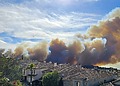
Air pollution deaths increase by 150,000 in rapidly growing South and Southeast Asian cities
Millions of people in cities in South and Southeast Asia face the threat of dying prematurely due to air pollution.
Eighteen cities in Asia’s tropical region are growing fast and are expected to be home to more than 10 million people each by 2100.
Most have limited to no routine ground monitoring of air pollution making it challenging to work out how bad the air has become resulting from this rapid expansion.
The challenges increase due to insufficient control of air pollution and inadequate funding for monitoring pollutants such as nitrogen dioxide and ammonia that also form harmful fine particles (PM2.5).
The most hazardous pollutant of them all is PM2.5, which penetrates deep into the lungs and has been shown to impact just about every organ in the human body. Long-term exposure to PM2.5 was linked to 149,000 early deaths in South Asian cities and 53,000 in Southeast Asian cities in 2005.
This increased by 126,000 to 275,000 in South Asian cities and by 26,000 to 80,000 in Southeast Asian cities in 2018. Dhaka in Bangladesh and Mumbai and Bangalore in India had the largest increase in early deaths from long-term exposure to PM2.5.
The large increase in early deaths in South Asian cities is the combined result of both increasing populations and PM2.5 levels from 2005 to 2018. For cities in Southeast Asia, population increase played a much larger role in the increase than change in PM2.5 levels.
These findings of the study, which focused only on the tropical region, suggest that even if the air pollution levels remain the same, the increase in urban population in these fast-growing cities will lead to an increase in exposure to harmful pollutants leading to an increase in early deaths.
With the anticipated rapid urban expansion throughout this century, the issue could be exacerbated unless new measures are implemented to mitigate air pollution.
While there is increased interest in low-cost sensors, these are prone to biases and are relatively recent and so do not provide information about the changes in air pollution over the past two decades.
Instruments on board satellites are the eyes in the skies which provide a long record and an extensive coverage of air pollution. Data from space-based instruments is publicly available for a suite of pollutants.
How effective these satellite observations are for monitoring air pollution in cities has been well evaluated against ground-based monitors where these are available, prompting greater use of satellites where ground-based monitoring is lacking.
Satellite observations collected between 2005 and 2018 by NASA and the European Space Agency show increasing levels of most air pollutants across the 18 cities.
In this study, the cities analysed were Ahmedabad, Bangalore, Chennai, Chittagong, Dhaka, Hyderabad, Karachi, Kolkata, Mumbai, Pune and Surat in South Asia and Bangkok, Hanoi, Ho Chi Minh City, Jakarta, Manila, Phnom Penh and Yangon in Southeast Asia.
Almost all cities in South and Southeast Asia show a significant increase in nitrogen dioxide that directly impacts health, along with forming health-hazardous ozone and PM2.5.
Related Articles: The Challenges Ahead for Generative AI | If You Can’t Beat Them, Join Them: Teachers Are Going All In on Generative AI | Top 3 AI Productivity Tools of 2023 | Imagining an Ethical Place for AI in Environmental Governance
Nitrogen dioxide levels tripled in Chittagong (Bangladesh) and doubled in Dhaka (Bangladesh) and Hanoi (Vietnam) over the 14-year period. These are linked to the increase in emissions from vehicular traffic and power plants.
Jakarta in Indonesia is the only city with a decline in nitrogen dioxide, demonstrating the success of air quality measures introduced in 2005.
Agricultural emissions linked to livestock and fertilisers are typically unregulated and are the dominant sources of ammonia, a respiratory irritant which is also a precursor of PM2.5. There has also been a significant increase in ammonia from urban sources.
Increases in nitrogen dioxide and ammonia levels drive the increases in PM2.5. There is a large and significant increase of up to 8 percent each year in PM2.5 levels in Indian cities with PM2.5 increasing to more than double in Bangalore and Hyderabad from 2005 to 2018.
Satellite observations are at a very coarse resolution of about tens of kilometres and with limited ground monitoring, air pollution sources can only be speculated.
For centuries, South and Southeast Asia have grappled with air pollution primarily stemming from the widespread practice of open burning of agricultural material.
Farmers commonly burn vegetation during the dry season to clear land and prepare for the upcoming sowing season. The smoke from these fires is laden with pollutants, posing risks to both human health and the environment.
However, when looking at cities, where most people live, there is a shift from rural to urban sources of pollution such as road traffic and burning of waste and household fuels.
Air pollution mitigation measures are one of the challenges facing Asian cities.
These measures encompass enhanced ground monitoring capabilities to pinpoint local sources of air pollution, as well as regulating uncontrolled emissions such as those from agriculture, which contribute to the formation of more harmful pollutants.
The accessibility of emission control technologies has become more affordable and easier than ever. It is crucial to learn from past mistakes and take action now to prevent an imminent health crisis in these rapidly growing cities.
** **
This article was originally published by 360info™.