Today’s ESG Updates
- Records Reveal Months of Unpermitted Pollution at NJ AI Data Centre: A Microsoft-related data centre in Vineland, New Jersey ran dozens of unpermitted generators for close to a year, emitting pollutants linked to asthma and heart disease, according to newly obtained public records.
- Swiss Glaciers Are Collapsing From the Inside, Scientists Warn: A new monitoring report found Switzerland has lost nearly a fifth of its glacier ice since 2021, with researchers pointing to internal meltwater tunnels accelerating the collapse beyond ordinary surface melting.
- EU Urges Governments to Rethink Energy Relief as Costs Hit €17.9 Billion: The European Commission says most of the funding European governments spent cushioning households from high oil and gas prices went toward untargeted measures rather than aid for the most vulnerable.
- Months of Strikes at Airbus Spain End as Workers Back New Deal: Employees voted overwhelmingly to approve a deal restoring purchasing power and remote work flexibility, ending a labour dispute that began in July.
Records reveal months of unpermitted pollution at NJ AI data centre
A Microsoft-related data centre in Vineland, New Jersey quietly ran dozens of unpermitted generators for close to a year before regulators caught on, according to records obtained by the nonprofit newsroom Floodlight. State officials fined the facility, DataOne, $1 million last week but never disclosed how long the equipment had been running.
Those records tell a fuller story: generators began arriving in July 2025, with all 62 operating by June, logging over 46,000 hours combined before inspectors intervened. Experts who reviewed the data estimate the fleet has already released around 140 tons of nitrogen oxides, pollutants linked to asthma and heart disease, and could emit over 1,500 tons annually at full capacity, nearly double what New Jersey’s largest power plant is permitted to release.
Nearby residents have filed over 100 noise complaints since March. One neighbour said she worries about the long-term health effects on her family; a local farmer called the facility one of the worst neighbours he’s encountered in decades of working the land beside it.
DataOne disputes that permits were ever required but says it will now apply for them.
Klimado – Navigating climate complexity just got easier. Klimado offers a user-friendly platform for tracking local and global environmental shifts, making it an essential tool for climate-aware individuals and organizations.
Swiss glaciers are collapsing from the inside, scientists warn
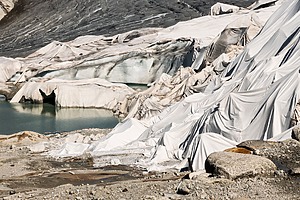
A new monitoring report shows Switzerland’s glaciers shed roughly 5.5% of their ice in the first eight months of 2026, pushing total losses since 2021 to nearly a fifth of the country’s glacier volume. The decline followed a dry winter and a scorching summer, and came just short of the record set in 2022.
What’s changed, according to ETH Zürich glaciologist Matthias Huss, is how the glaciers are dying. Rather than simply shrinking from surface heat, many are now hollowing out from within, as meltwater carves tunnels and caverns beneath the ice that eventually collapse. “You have huge holes like cheese in the middle of the ice that have collapsing roofs,” he said, calling it a process that accelerates retreat far beyond ordinary melting.
Huss recently visited a glacier that covered an entire mountainside just two decades ago and has since lost 99% of its area, describing the scene as a “moonlike landscape” of bare rock where thick ice once stood. Average glacier thickness dropped by 2.5 to 4 metres this year alone.
Separate analysis from Switzerland’s weather service found this year’s April-to-September period was the hottest and driest on record dating back to 1864, consistent with Europe warming roughly twice as fast as the global average.
Related Articles
Here is a list of articles selected by our Editorial Board that have gained significant interest from the public:
EU urges governments to rethink energy relief as costs hit €17.9 billion
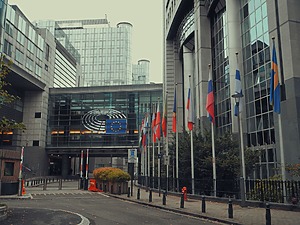
The European Commission says 25 member states have spent €17.9 billion this year cushioning households and businesses from higher oil and gas prices tied to the Middle East conflict, but wants countries to rethink how that money is spent. In a note prepared for euro zone finance ministers ahead of an October 8 meeting, the Commission said more than two-thirds of the support has gone toward untargeted price measures rather than aid aimed at the most vulnerable.
That approach cuts against keeping costs down while pushing the energy system toward decarbonisation, the Commission argued, pointing to the 2022-23 crisis as a lesson: relief works best when it’s short-term and targeted, not broad subsidies. It also pressed governments to invest in power grids and tax electricity less heavily than gas, giving consumers more reason to move away from fossil fuels.
The guidance lands against a tightening fiscal backdrop, with euro zone borrowing costs near multi-year highs and markets pricing in several ECB rate hikes by late 2027. The Commission expects growth to come in slightly above earlier forecasts this year but weaker next year, with inflation running higher than previously projected in 2027.

Months of strikes at Airbus Spain end as workers back new deal

The dispute began in July over sub-inflation pay offers, stricter attendance tracking, and demands for office staff to spend more days on site. Workers rejected an initial agreement in late August and returned to picket lines before unions reached a revised deal with the company on September 4.
That revised deal went to a vote this week, with 87% of Airbus’s Spanish workforce participating. Just over 20% voted against it, and roughly 3% abstained, meaning the proposal passed by a wide margin. Its terms include inflation-linked pay increases plus recovery of purchasing power lost over recent years, more flexibility around holiday scheduling, and a return to 40% remote working.
Airbus employs about 14,500 people across eight Spanish sites, where the company manufactures military transport aircraft along with parts for commercial jets and satellites. A company spokesperson said Airbus didn’t yet have official confirmation of the result.
Editor’s Note: The opinions expressed here by the authors are their own, not those of impakter.com — Cover Photo Credit: Matthew Manuel