
On May 9, the Italian Chamber of Deputies, the lower house of Parliament, approved two motions calling on the government to fulfill certain commitments. The two texts presented, one by the majority and one by opposition parties, although not binding, require the government to “accelerate Italy’s decarbonisation process.”
The energy and economic crisis currently facing Italy, just like many other European countries, has forced it to rethink its energy mix. After the European Commission labeled nuclear energy as green in July 2022, the country now seems to be reconsidering a return to nuclear power.
As the motion states, “assessing the opportunities of including nuclear, as an alternative, clean source of energy production, into the national energy mix” is something to which the Government should commit.
Moreover, the motion demands that the government “take an active part, at European and international level, in any appropriate initiative aimed at incentivising the development of new nuclear technologies” in order to “include the production of new-generation atomic energy within European energy policy.”
In response to the motion, Italian Minister and Deputy Minister for Environment and Energy Security, Gilberto Pichetto Fratin and Vannia Gava, issued an official statement thanking members of Parliament for bringing up the topic and suggesting a course of action.
“We will now discuss [nuclear power] with our European partners and consider, with the utmost attention, how to include it in the national energy mix in the coming decades, with the aim of achieving the decarbonisation goals set by the EU [with the help of nuclear],” the statement said.
The first and best opportunity for such participation arose a few weeks later. On May 16, in fact, Italy joined 15 other European countries for a crucial meeting in Paris.
At the headquarters of the French Ministry of Energy Transition, countries of the so-called “European nuclear alliance” met for the third time after holding discussions in Stockholm on February 28 and in Brussels on March 28.
Numerous aspects were tackled throughout the meeting, especially the need for developing an independent, European nuclear power system through cooperation. For the occasion of this meeting, Valérie Faudon, the Executive Director of the French Nuclear Society (SFEN), shared on Twitter a list of European countries that had signed a declaration targeting the production of 150GW of nuclear power by 2050 in the EU. Italy was part of the list.
Quels sont les pays de l’UE qui ont signé hier à Paris la déclaration pour une ambition de 150GW de nucléaire d’ici 2050? (vs 100GW auj)? 30 à 45 nouveaux grands réacteurs et développement de petits réacteurs modulaires (SMR). https://t.co/RfQHjkqb03 @Ecologie_Gouv pic.twitter.com/n0zelXHAJv
— Valerie Faudon (@ValerieFaudon) May 17, 2023
For now, nuclear energy makes up only 6% of the total electricity consumed in Italy, all coming from abroad. Meanwhile, its total production of nuclear energy is stationary at zero and there are no nuclear power reactors in operation.
Nevertheless, current actions seem to suggest that the political atmosphere is leaving some room to give the production of nuclear energy a second chance.
In fact, the Italian nuclear energy market has not always been like nowadays. Being one of the “early birds” of nuclear energy, Italy used to have four nuclear power plants (NPPs) between the 1960s and 1980s: Trino Vercellese (Vercelli), Caorso (Piacenza), Garigliano Sessa Aurunca (Caserta) and the Borgo Sabotino power plant (Latina) — at the time the largest in Europe.
With the support of ENEL and CNEN (National Committee for Nuclear Energy), an ambitious program of nuclear plant construction had been carried out throughout the 1960s.
Related articles: For EU Parliament Gas And Nuclear Are Climate-friendly | EU Calls World to Climate Action
During the 1970s, anti-nuclear sentiment developed. Nevertheless, the government was still backing the development of such an energy market. Partly due to the urgent need to achieve energy independence for the country involved in the 1973 and 1979 energy crises, nuclear energy continued to grow.
And just at the dawn of a new energy plan proposing to build three new NPPs, everything came to a halt.
On April 26, 1986, the worst nuclear accident in history occurred in Chernobyl. On site deaths and estimates of the exposure of more than five million people resonated throughout Europe, triggering concern and fears of similar events occuring in other countries.
As in the case of Italy, the “widespread popular fear of the radioactive cloud” triggered major political turmoil. Anti-nuclear movements arose in the entire peninsula and led to a general referendum.
On November 8 and 9, 1987, 80% voted in favor of abolishing the construction of new nuclear plants. Although not all parties in power at the time were opposed to nuclear power, for fear of losing decisive votes and in order not to cause further unrest among the population, the Italian government dismantled existing nuclear power plants and blocked the construction of new plants, including those that had already been approved.
In the following years, the country phased out nuclear power, shutting its last reactor in 1990. However, since the 2000s, new considerations have emerged in relation to energy security, climate change and the reduction of greenhouse gas emissions. These factors have led to a debate on the possibility of reintroducing nuclear energy as a potential source of clean and environmentally friendly energy.
The central aim was to decrease Italy’s dependence on oil and gas from abroad. In 2008 the government shifted towards a pro-nuclear ambition, and a new program was planned that would enable Italy to generate 25% of electricity from nuclear plans.
Once again, history repeated itself and just like Chernobyl, Japan’s Fukushima disaster in March 2011 triggered a second referendum that would once again stop nuclear developments in Italy. With more than 90% of voters against relaunching nuclear energy programmes, the government’s efforts to reactivate nuclear energy research and production came to an end.
Nuclear power plants in Italy have remained shut since the last reactor closed in 1990. Nevertheless, recent developments could mark an important step for the Italian energy industry. Although recent surveys still show concerns among the public about the “risk of accidents” and nuclear energy being “unsafe for us and the environment” , it is certain that in recent years the environmental issue and the attention of young people have succeeded in re-focusing on the potential of this energy source.
Could the current landscape make Italy change its mind on the use and production of nuclear energy? Perhaps more advanced technology might encourage people to give it a second chance. Or could it be the pressing need to differentiate its energy mix that will push Italy to finally join other G8 countries in reactivating nuclear power plants?
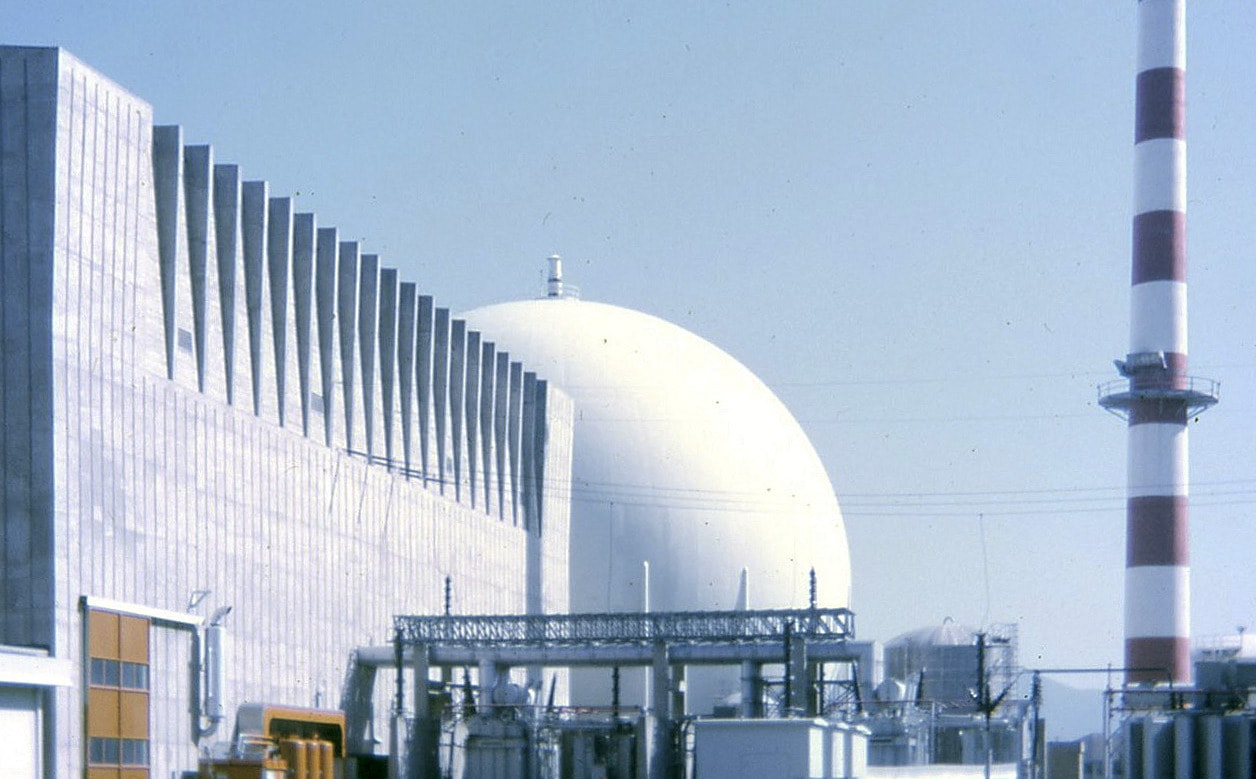
Editor’s Note: The opinions expressed here by the authors are their own, not those of Impakter.com — In the Featured Photo: Garigliano Nuclear Power Plant, Italy, 1970. Featured Photo Credit: Wikimedia Commons.