
Together, the top five Western oil and gas companies made record-breaking profits of over $60 billion in this year’s second quarter, half of which they are set to return to investors.
On the individual level, ExxonMobil, Chevron and Shell recorded the highest quarterly profits ever, and BP’s the highest in 14 years.
Between April and June, Exxon reported profits almost four times higher than in the second quarter of 2021, an unprecedented $17.85 billion. “Exxon made more money than God this year,” US President Joe Biden remarked recently.
Quite the quarter for Big Oil: The top 5 Western majors returned $30 bln to shareholders after record profits of $60 bln. But they are largely sticking to spending plans, wary of volatility and the energy transition.#OOTT @NasrallaShadia @sabrinavalle https://t.co/egTmRTR9MA pic.twitter.com/yOQRjOY3D9
— Ron Bousso (@ronbousso1) August 3, 2022
Chevron and Shell meanwhile made $11.6 and $11.5 billion respectively, 93.3% and 26.4% more than in the same period last year.
These gains follow similar profits in this year’s first quarter and are expected to increase further in the upcoming three months.
According to Reuters’ calculations, the combined oil and gas output of these five energy giants in 2022 was around 10% lower than it was before the pandemic.
This underinvestment has played a major role in driving up global energy prices and inflation to multi-decade highs – as has the Ukraine war of course. But as Reuters points out, because the supplies were low when the demand recovered following the pandemic, “energy markets were very tight even before the disruption caused by war in Ukraine.”
Still, it was only (shortly) after Russia invaded Ukraine on February 24 that the European gas prices reached record highs (international ones touched 14-year-highs) – and that, as a result of soaring transportation expenses, the cost of pretty much everything climbed more or less everywhere.
So what now? More oil and gas?
The most obvious move that would help bring down energy prices would be for the energy industry to boost production.
This is what the Biden administration has been calling for since June but it is also what the International Energy Agency and countless others have been warning against, saying that no new fossil fuel projects should be funded if the world hopes to achieve net-zero emissions by 2050.
Despite their profits, however, and unlike in the late 2000s when the soaring energy prices led to the oil and gas industry boosting investment and production, the big oil’s top five appear to be reluctant to increase spending, at least in the short-term.
Big Oil offers big returns but keeps spending tight https://t.co/8Zp59GZq8W pic.twitter.com/nthx10tRap
— Reuters (@Reuters) August 3, 2022
“[T]he top five Western oil and gas companies have shied away from investing more of their combined record profits of nearly $60 billion in new production as they weigh the impact of the recession and climate change on future fossil fuel demand,” Reuters writes.
As BP Chief Executive Bernard Looney “explained,” “[g]iven all the uncertainty in the world, now is not the time to lose discipline.”
Related Articles: Windfall Tax on Covid Profits Could Ease ‘Catastrophic’ Food Crisis, Says Oxfam | Big Oil Testifies in Court for Decades-Long Climate Denialism
In recent days, some of the top five did increase planned spending in 2022. Reuters however calculated that these planned expenses will remain within previously set budgets and that they’re focused on “projects that can start producing in a short timeframe,” or on accelerating starting dates for projects currently in the works.
The energy industry’s reluctance to boost investment and production, Reuters adds, may “exacerbate the energy supply crunch that has driven inflation to multi-decade highs and ignited calls from consumers and opposition leaders for governments to increase tax on energy companies.”
And this brings us to the second most obvious move: Increasing taxes on the energy industry, which, unlike increasing oil and gas production, would not jeopardize our climate commitments.
What else? Higher taxes on fossil fuels
“Yes, it’s time for a windfall profits tax,” Bernie Sanders tweeted:
While you were feeling pain at the pump, Shell, Exxon, and Chevron raked in $46 BILLION in profits over the last three months and said they would spend up to $47 billion on stock buybacks after spending $18.8 billion so far this year. Yes, it’s time for a windfall profits tax.
— Sen. Bernie Sanders (@SenSanders) July 29, 2022
Given the big oil’s record-breaking profits – in the context of a global crisis threatening livelihoods and industries around the world – Mr. Sanders certainly has a point: There could hardly be a better time to begin taxing the energy industry and its profits.
The windfall tax he proposes, which has been debated in parliaments around the world since the 1970s, is a one-off tax that governments can impose on companies when they have benefited from something they weren’t responsible for.
In late June, Oxfam analyzed the potential of imposing such a tax on the excess profits recorded, as a result of the Covid-19 pandemic, by food, fossil fuel and pharmaceutical companies.
As their analysis shows, a 90% windfall tax on these companies’ global profits would yield about $490 billion, which Oxfam International Executive Director Gabriela Bucher said could be used to solve the food crisis and alleviate the cost of living crisis for the world’s poorest.
Similarly, energy giants are now making a lot more money than they would be making had it not been for the pandemic or Ukraine war – something they were not responsible for.
Some countries, like the UK, Italy and Romania, have recently announced they’ll be introducing a windfall tax on energy companies. The US and the European Union are also considering imposing such a tax on energy giants’ “war-fueled profits,” with the EU Commission proposing member states impose a windfall tax on energy companies in March this year.
As chief executive of the Tax Justice Network Alex Cobham put it, “[t]his is a very obvious moment for a windfall tax because you have an industry which is making what are clearly supernormal profits at a time when the ordinary people who are the consumers of that industry are facing very high costs.”
In the two minutes it takes you to fill up your gas tank, Exxon rakes in $269,000+ in profits.
Big Oil is getting away with highway robbery.
Italy, Spain, Romania, Bulgaria, and the UK have all taxed excess oil and gas profits. Why hasn't the U.S.? pic.twitter.com/1ekkJPkhVt
— Robert Reich (@RBReich) August 1, 2022
Indeed, when it comes to ordinary people and their livelihoods, the billions that could be mobilized thanks to such a tax on energy alone are very much needed to solve the world’s current range of crises; and if such a model proves to be scalable and eventually gets applied to extra profits made by food, pharmaceutical and tech industries, we would probably be talking about over a trillion dollars that could be directed to solving the crises.
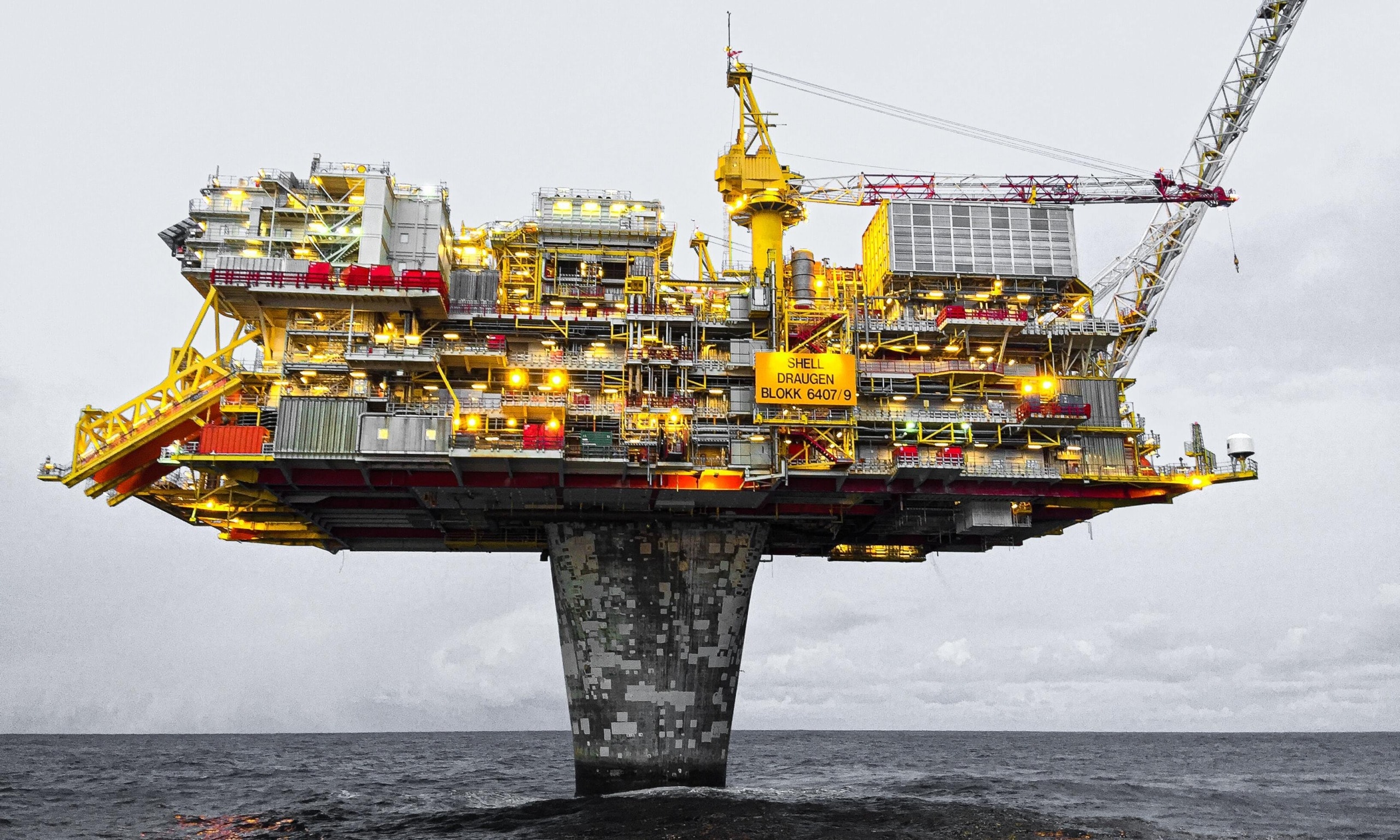
Editor’s Note: The opinions expressed here by the authors are their own, not those of Impakter.com – In the Featured Photo: Oil drilling in Norway. Featured Photo Credit: Jan-Rune Smenes Reite.