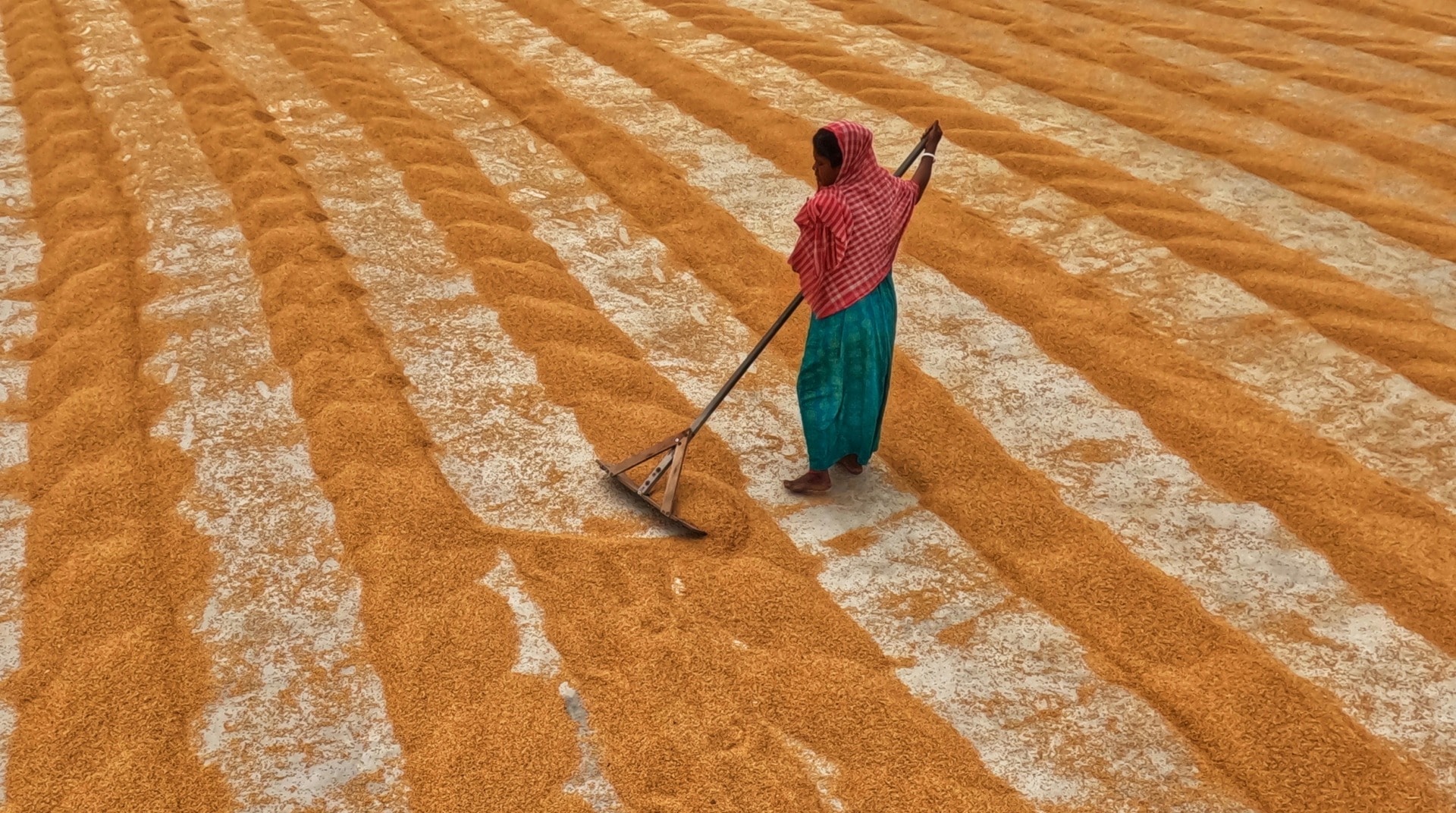

Since the start of the Russian invasion of Ukraine on February 24, attacks against the country’s Black Sea ports have choked off Ukraine’s principal routes for grain exports, triggering a soar in food prices worldwide and threatening to spark a global food crisis by putting a severe strain on vulnerable economies.
Import-dependent countries in North Africa and the Middle East are at high risk of suffering from Ukraine’s incapacity to ship its grain harvest, with tens of millions of people teetering on the brink of famine across Western and the Horn of Africa.
Egypt, the largest importer of Ukrainian corn, followed by Indonesia, Pakistan, Bangladesh, Lebanon, Turkey, Morocco, and Tunisia, all urgently need shipments from Ukraine to resume.
The blockade on Black Sea ports, which normally carried up to 90% of Ukraine’s food exports, also deprives Ukraine of a vital source of income as around three-quarters of its grain harvest is sent to the global food market, making for around a fifth of the country’s export revenue.
Ukrainian officials say about 20 million tons of grain are trapped at the port of Odesa, the only operational Black Sea harbour which remains under Ukrainian control, as clusters of Russian warships prevent Ukrainian cargos from leaving and Ukrainian mines planted to defend the port against a Russian attack make the road impracticable.
Meanwhile, the EU Commissioners’ plan to move Ukrainian grain by land and reroute through Baltic ports crumbles under towering technical difficulties, bureaucratic barriers, and time pressure, emphasizing the dependence of Ukrainian export flows on Black Sea ports.
A deal with Russia to secure safe passage through the Black Sea for Ukrainian shipments seems to be the only viable option left to avoid the global food crisis from rapidly worsening over the coming months.
But while both parties agree that Ukrainian grain needs to move ahead of the next harvest in July, European leaders as well as US officials doubt Russia is acting in good faith as President Vladimir Putin keeps blaming the impending food crisis on Western sanctions against his country, demanding that they be lifted in exchange for freeing trapped Ukrainian supplies.
Moreover, the fallout from a recent meeting between Putin and Macky Sall, the Senegalese President and chair of the African Union, suggests that the Kremlin is determined to use its diplomatic influence in Africa and Asia to undercut the West’s already precarious alliances with countries in these regions.
Senegalese President calls on the EU to lift sanctions on Russian wheat and fertilizers. Problem: these sanctions do not exist
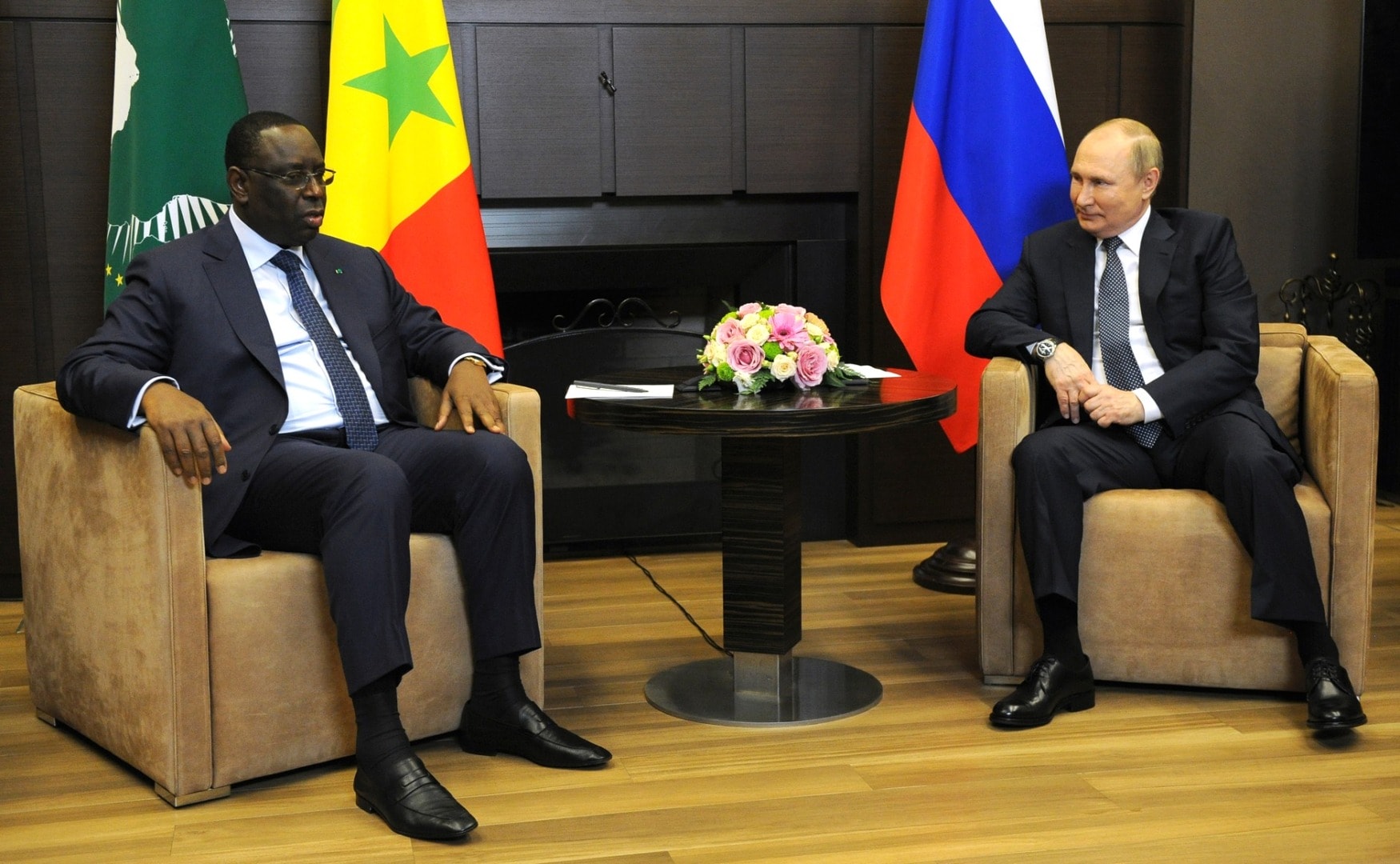
Senegalese President and chair of the African Union Macky Sall met with Putin last Friday to discuss the urgency with which Ukrainian grain and fertilizers need to be released into the global market. The African continent is badly suffering from the economic fallout of the conflict, with food prices rising by 23% in the past year. About 40% of wheat needs in Africa are normally covered by imports from Ukraine and Russia.
Following his meeting with Putin, Macky Sall announced in a tweet that the Russian leader “expressed his willingness to facilitate exports of Ukrainian cereals” and that Russia was “prepared to ensure exports of Russian wheat and fertilizers.”
He concluded his statement with a call on allied countries to remove sanctions on Russian wheat and fertilizers – even though neither the EU nor the US has implemented a ban on imports of Russian fertilizers or wheat.
Sall’s statement, which repeats Russian accusations that the West is responsible for the global food crisis, stands in sharp contrast with the message he passed last Tuesday to the European Council summit in Brussels when he warned EU leaders that Russian propaganda was gaining momentum on the African continent.
During this same gathering, Italy’s Prime Minister Mario Draghi pointed to the fact that many African countries “are not on the side of the West, you have seen their votes at the United Nations, most of them have abstained.”
“[If] you lose the war on food security, there will never be any hope that these countries can come to the side of the alliance, because they will naturally feel betrayed, then whose fault is this is the least relevant issue for them,” he later added, shedding light on the major strategic stakes the food crisis has come to represent in the Russo-Ukrainian war.
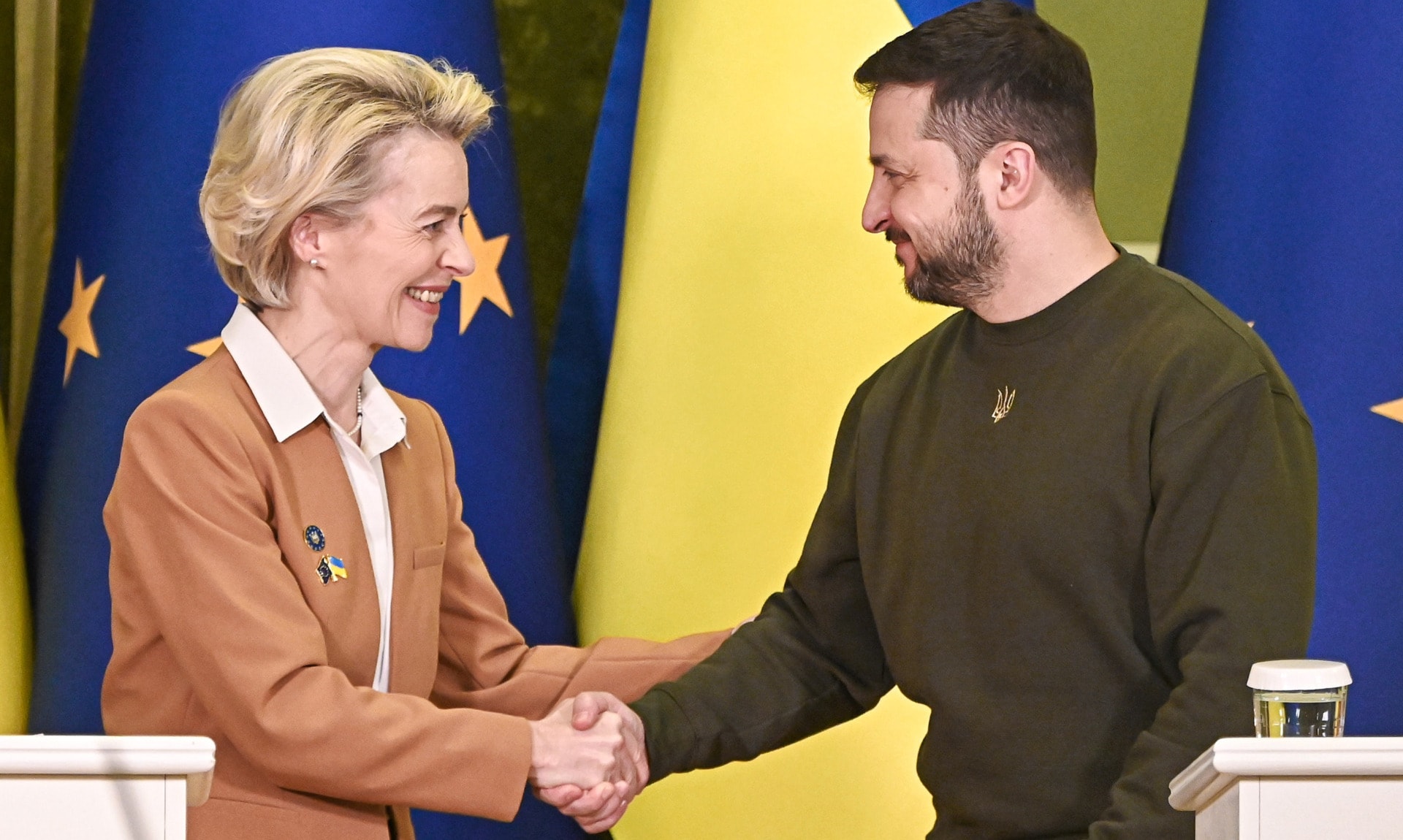
Last week, European Commission President Ursula von der Leyen told reporters: “I want to be very clear, we have no sanctions on food and agricultural products, no sanctions on that.”
In fact, the EU has sanctioned fertilizers from Belarus, and in its fifth sanctions package has placed a quota on Russian fertilizers meant to avoid circumvention by Belarus. However, the quota limit is higher than the EU’s fertilizer imports from Russia prior to the war, meaning it is very unlikely that Russian fertilizer exports are currently suffering from the sanctions against Belarus.
As for wheat, neither the EU nor the US have imposed any ban on Russian wheat imports. What’s more, the fact that many European and American companies have stopped working with Russia should benefit Africa: the less Russian wheat the West buys, the more becomes available for purchase by African countries.
Related articles: How Russia Is Financing the War in Ukraine | EU Agrees to Partial Embargo of Russian Oil | Ukraine War at Top of Agenda in Davos, Climate Change is Next
US warns Russia is trying to profit from food crisis by selling stolen Ukrainian grain to countries in need
Overall, the establishment of an entente between Russia and African countries isn’t too big a surprise. Not only does the African continent share interests with Russia that date back from the Cold War; recent happenings suggest some African countries may seek to benefit from stolen Ukrainian cereals that Russia is suspected of exporting as its own.
Sall might have been pressured by Putin into aligning with the Kremlin’s version of events, but there is also the possibility that he was offered significant discounts on Russian goods, including cereals, fertilizers, and oil. The country is already selling oil at huge discounts to Asian countries, blunting the effects of EU sanctions against its economy.
In mid-May, the US sent an alert to 14 countries – mostly in northern and eastern Africa, as well as Pakistan, Bangladesh, Sri Lanka, and Turkey – that Russian ships laden with “stolen Ukrainian grain” were leaving Crimean ports and would likely seek to profit from selling those plundered cereals at a heavy discount to drought-afflicted regions.
The US alert reinforced the Ukrainian government’s accusations that Russia has looted up to 500,000 tons of Ukrainian wheat, worth $100 million, since the start of the conflict in February.
Ukraine’s deputy minister of agriculture Taras Vysotsky and other Ukrainian officials have been accusing Russia for months of stealing cereals from the Russian-held territories of Zaporizhzhia, Kherson, Donetsk, and Luhansk.
In late April, a video circulating online showed columns of covered up trucks transporting what Ukrainian officials claimed to be lotted grain. After analysing the footage, The New York Times confirmed the cereals were taken from the Russian-occupied city of Melitopol, and that the convoy was heading southwest on a main road towards Crimea.
#Russian occupiers are stealing #Ukrainian grain.
Dozens of trucks loaded with Ukrainian grain are heading from occupied #Melitopol in #Zaporizhzhia region to the occupied #Crimea.
🇷🇺 steal 🇺🇦 grain just like Soviets did during #Holodomor 1932-1933 in #Ukraine#StandWithUkraine pic.twitter.com/mfR1BV4uN7— Emine Dzheppar (@EmineDzheppar) May 1, 2022
Since late February, marine tracking websites have been reporting on cargo vessels suspected of transporting stolen grain travelling between the Straits of Kerch, which divide Crimea and Russia, and various ports in the eastern Mediterranean. The ships frequently turn off their transponders, particularly while crossing the Mediterranean, raising suspicions that they are trying to hide their final destinations.
“The United States is working with other countries to prevent the sale of grain that has likely been stolen from Ukraine,” a US State Department spokesman said.
Whether they will be successful in their mission is another thing entirely. Looking at the desperate situation of countries struck by unprecedented drought and food insecurity, particularly in northern and eastern Africa, then pointing to the moral dilemma of buying cheap grain that has potentially been acquired through war crimes hardly seems a tenable stance, to say the least.
This is also because the start of the Russo-Ukrainian war marked a drop in international aid to African countries, even though the ensuing rise in prices and food shortages immediately worsened their plight.
Hassan Khannenje, director of the HORN International Institute for Strategic Studies, a research body in Kenya, stressed the emergency of the situation: “This is not a dilemma. Africans don’t care where they get their food from, and if someone is going to moralize about that, they are mistaken.”
“The need for food is so severe,” he added, “that it’s not something they need to debate.”
On the other hand, the theft and the unlawful export of Ukrainian grain recall the traumatic Holodomor famine of 1932-33 when Ukraine was part of the Soviet Union and mass food requisitions were forced upon Ukrainian peasants by the Soviet government. Four million people lost their lives as a result.
The bleak precedent reinforces Ukrainian and EU accusations that Russia is blockading food supplies to weaponize them, using the global food crisis as a means to put Western alliances under pressure until they crack. As of this date, it’s proven effective.
Meanwhile, EU plans to export grain by road and rail are stalling. Marek Matejka, whose family company Agrol Matejka has moved 25,000 tons of Ukrainian cereals to the Netherlands and Germany since the war started, said that existing Ukrainian infrastructures simply aren’t designed to take on heavy freight traffic.
“It’s like pouring a bottle of water into a small cup,” said Matejka.
Expanding land routes connecting grain silos with Baltic maritime terminals would take years to plan and build – a length of time neither the EU nor Ukraine can afford to spend. As an accord with Russia on opening a Black Sea passage for Ukrainian food exports becomes more inevitable with time, concerns remain over Russia’s actual conditions for a deal, since the ones it has waved until now designate non-existent sanctions. Finally, even if an agreement was reached, resuming Ukraine’s grain exports from Black Sea ports would require the launch of a high-scale military operation to de-mine portal waters and ensure the safe journey of cargo vessels in dangerous waters.
Editor’s Note: The opinions expressed here by Impakter.com columnists are their own, not those of Impakter.com — In the Featured Photo: President of Russia Vladimir Putin meeting with Chairperson of the African Union, President of Senegal Macky Sall in Sochi, Russia, on June 3, 2022. Featured Photo Credit: Presidential Executive Office of Russia/Wikimedia Commons.