On June 30 2020, The Rainforest Alliance announced their new Sustainability Certification Program with goals to produce better crops, decrease costs, adapt to climate change, and improve farmers’ productivity and livelihood.
Nowadays, increasing numbers of customers expect that the products they buy are produced sustainably, such as sustainably grown and harvested coffee, tea, or cocoa. As a result, more businesses are shifting their production and operations towards sustainability as well. However, declaring the existence of sustainability in the business process is not enough. How can customers identify if businesses truly operate sustainably? At the same time, how do companies get their sustainable production and manufacturing recognized? What are the measurements and standards for each industry?
Sustainable Certifications
Sustainable certifications and standards are voluntary norms and standards, usually designed and assessed by independent third-party organizations, often NGOs. They demonstrate that companies are committed to environmental and natural resources protection, contribute to workers’ and producers’ living income, and produce products that meet the requirements of sustainability and social responsibility.
According to independent research, sustainable certifications and standards bring positive environmental, social, and economic impacts to businesses, farmers, producers, and ecosystems. Research states that coffee farmers from certified farms feel more secure financially than non-certified farms, that certified cocoa farms have a higher net cocoa income than non-certified farms, and that certified farms have more training and farm inputs, such as mulch and compost. Environmentally, the quality of water and soil at certified farms also improves as a result of their sustainable practices.
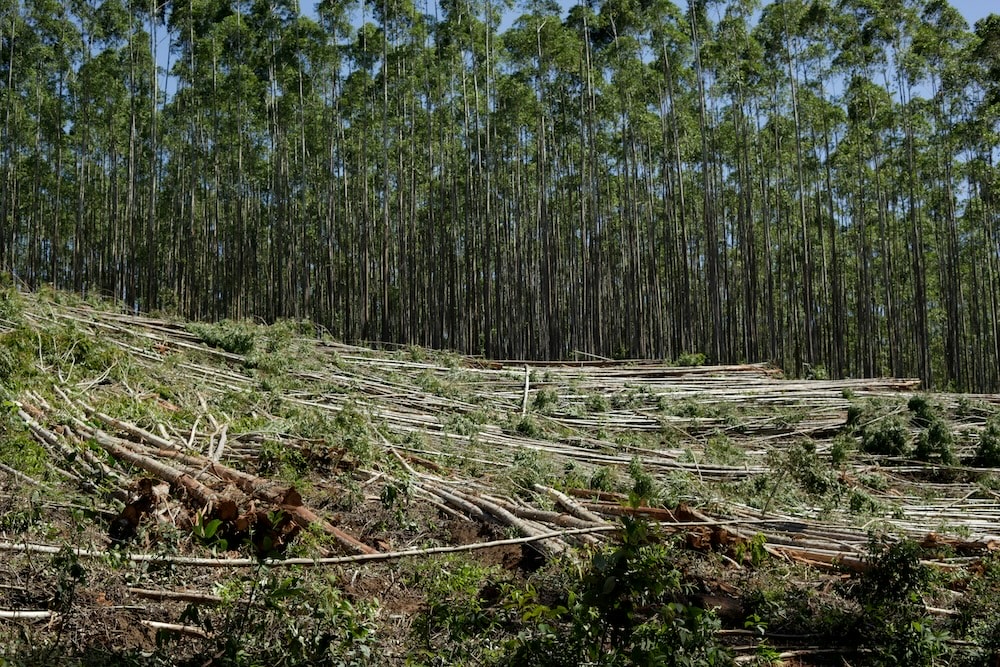
 In the photo: Maya Biosphere. Photo credit: Sergio Izquierdo, The Rainforest Alliance.

The Rainforest Alliance and Sustainability Certification
The Rainforest Alliance is an international non-profit organization founded in 1987. Cooperating with companies, farmers, forest communities, and consumers, the Rainforest Alliance is working towards a better and more sustainable world. Using social and market forces, the Rainforest Alliance protects the environment and human rights, stops deforestation, and improves the health and livelihood of farmers and forest communities, helping them to mitigate and adapt to the climate crisis.
Through its certification program, tailored supply chain services, landscape and community work, and advocacy, the Rainforest Alliance is changing the way the world produces cocoa, coffee, tea, bananas, forest products, and palm oil.
The Rainforest Alliance has more than 100 sustainability projects around the world, in collaboration with more than 5000 companies in more than 70 countries, benefiting farmers and forest communities (December 2019). According to their 2019 Annual Report, more than 5 million hectares of global farmland and more than 2 million farmers are certified against the Rainforest Alliance or UTZ sustainability standards, including more than 400,000 coffee farmers, 900,000 cocoa farmers, 900,000 tea farmers, and 2,000 banana farmers. There are 44,000 products with the Rainforest Alliance Certified™ seal or UTZ label available on the market in more than 170 countries.
The Rainforest Alliance strongly believes that certification is a tool that works best when tailored to meet farmers’ and community needs and when supported by a long-term commitment from all actors in the supply chain.
 In the photo: Coffee Farm. Photo credit: The Rainforest Alliance

Enhanced Sustainability Certification Program
On June 30 2020, the Rainforest Alliance announced the publication of the new Sustainability Certification Program with additional criteria, measurements, and key innovations. This program will replace the existing Rainforest Alliance and UTZ certification programs from the middle of 2021, being implemented across all Rainforest Alliance certified crops.
The Rainforest Alliance has been working on this new certification program since the merge with UTZ in 2018. The program was designed using 45 years of certification experience, as well as public consultations, receiving the input from more than 1,000 people in almost 50 countries.
The new 2020 Certification Program is the first step towards “reimagining certification”, which is the Rainforest Alliance’s long-term vision for the future of certification. Fundamental principles of this vision include shifts from binary pass/fail to continuous improvement, from the lack of data to be powered by data, from traditional to risk-based and data-driven assurance, and from placing the responsibility only on producers to a shared responsibility across the supply chain.
 In the photo: Maya Biosphere. Photo credit: Sergio Izquierdo, The Rainforest Alliance.

Who would the program impact?
The Rainforest Alliance plans to reach at least 2 million farmers worldwide to implement the new certification program, with goals to produce better crops, decrease costs, adapt to climate change, and improve farmers’ productivity and livelihood. Businesses and brands will also rely on the program to source a steady supply of certified ingredients. Though the certification program, these businesses and brands will be able to demonstrate their commitment to responsible and sustainable business and address consumers’ expectations for sustainable products.
What does it consist of?
New Sustainability Certification Program includes the Sustainability Agriculture Standard, which is made up of the Farm Requirements and Supply Chain Requirements, along with a new assurance system and tools to measure the progress towards sustainability objectives.
-
- Smart Meters. Instead of pass-fail criteria, some requirements are measured with smart meters. They ask farmers and producers to set the targets, measure their progress over time, and define adequate improvement actions. The aim of the Smart Meters is to provide a structured way to implement continuous improvement in context-specific data.
- Contextualization. Some requirements will adapt to and reflect the specific situation and context of the farm. When the farm applies for certification, it will receive the list of requirements based on the risk profile, country, size of the farm, and the type of the certificate.
- All-inclusive Management. The standard will introduce a suite of tools for farms and groups to implement planning, risk assessment, sustainability assessment, and management systems, with practices for continuous improvement and specific mitigation and adaptation practices based on the risk assessment.
- Living Wage. A tool for medium and large farms will be introduced to analyze the gap between current wage levels and the living wage. If there is a gap, the farmers will be required to develop an improvement plan to close the gap.
- “Assess and Address.” A new approach will be introduced to manage human rights issues, like child labor, forced labor, discrimination and violence, and harassment. It will focus on preventing these issues, and if a violation occurs, the local community will engage and focus on improving the situation.
- Deforestation. Deforestation and destruction of forests will continue to be banned for certified farmers and producers. The prohibition will extend to the conversion of all-natural resources and ecosystems, including wetlands and peatlands, to protect more land.
The Rainforest Alliance believes that sustainability should not be stopped at the farmer’s level. All actors of the supply chain must provide sufficient support for farmers to work sustainably.
- Contextualization. Like the farmers’ requirements, companies will also receive a contextualized package of requirements, adapted to each certificate holder’s situation and circumstances. The new certification program will apply risk assessment and risk profiles to tailor certification and assurance requirements.
- Shared Responsibility. To achieve a shared responsibility across supply chains, the certification program will require businesses to invest in and reward more sustainable production. Companies will pay a “sustainability differential” – an additional cash payment made to farmers above the market price for their certified product.
- Responsible Business Practices. The certification program will encourage companies to demonstrate and develop long-term relationships with suppliers and play an active role in setting expectations regarding sustainability criteria.
- Social and Environmental Requirements. The standard will include requirements for handling wastewater, working conditions, and labor protection.

In the image: The Rainforest Alliance Seal. Image credit: The Rainforest Alliance
New Certification Seal
As well as announcing a new sustainability certification program, in May the Rainforest Alliance also released its new Certification Seal. A new seal will replace the current Rainforest Alliance Certified™ seal and the UTZ label, and will be used on product packaging and promotional materials from September 1, 2020.
The new certification seal is a visual indicator for consumers, demonstrating that the companies and farmers that they are buying from are taking steps to produce products sustainably and create a better world together.
Next steps
With the new certification program published on June 30, 2020, the Rainforest Alliance will start rolling out the certification program worldwide through a global training program and further development of supporting technology systems in September 2020. By July 2021, all audits will be against the 2020 Sustainable Agriculture Standard.
The Rainforest Alliance’s new sustainability certification program and certification seal is part of the company’s long-term strategy of collaboration with farmers, companies, partners, third-party auditors, NGOs, and consumers to create a more sustainable future. As Alex Morgan, Chief Markets Officer for the Rainforest Alliance stated: “Only together can we restore the balance between people and nature and create a world where we thrive together.”
Editor’s Note: The opinions expressed here by Impakter.com columnists are their own, not those of Impakter.com.