
An analysis by the Guardian has found that fossil fuel and mining companies have won almost $92 billion of public money using investor-state dispute settlement laws. It would appear that environmental legislation unwittingly provides them with yet another opportunity to make money and line the pockets of hedge fund shareholders.
Aside from the hefty payouts, financial speculators are investing in these lawsuits submitted by corporations against governments over the effect of environmental legislation that hurts profits.
Investor-state dispute settlements (ISDS) allow companies to sue countries or states for legislation or actions that negatively impact their profits.
Litigation finance has long been around, most typically used for workplace injury or pharmaceutical side effect lawsuits. Companies offer to finance lawsuits in exchange for a piece of the settlement payouts. The huge sum payouts coming from investor-state disputes have meant an unmissable opportunity for legislation financiers to make money. Litigation funders typically face no risk of counterclaims, meaning it is essentially a free gamble. Legal experts have warned of a “gambler’s nirvana.”
Litigation finance has faced backlash from critics, such as some arbitrators, who feel that third-party funding is a catalyst for more expensive cases eventually paid out by public money. Others advocate for litigation finance, saying it increases access to fair justice for those who could otherwise not afford it.
The Guardian’s investigation analysed more than 1,400 ISDS cases. They found that these cases have become more and more frequent and have resulted in more and more state payouts.
Through ISDS courts, companies have received over $120 billion of public money. At least $84 billion has gone to fossil fuel companies, while $7.8 billion has gone to mining companies — two of the most environmentally damaging industries in the world.
Of the cases analysed by the Guardian where a settlement was paid, 31% did not have a disclosed payment amount. The Guardian, therefore, believes that the true amount of money won by fossil fuel and mining firms is likely much higher.
With so much money being paid out in these cases, they have been growing in popularity as an investment for hedge funds, which are rewarded with a share of the final award of settlements in exchange for their financing. The Guardian found at least 75 ISDS cases with third-party backing, but they believe that this does not reflect the true number either. Many courts do not oblige plaintiffs to disclose third-party funding. The largest dispute-resolution court only began requiring third-party-funding disclosures in 2022.
Of all the third-party-funded cases in ISDS courts, half were instigated by US, British, or Canadian investors. More than 50% of these cases were related to mining or fossil fuels. According to data the Guardian obtained from Jus Mundi, a legal intelligence company, more than 75% of cases were filed against developing countries.
These cases include South American Silver’s case against Bolivia. A subsidiary of South American Silver had acquired mining concessions in a part of Bolivia inhabited mainly by Indigenous Peoples. These concessions were revoked in 2010 by the Bolivian government when the company was accused of polluting sacred land and threatening indigenous communities. As a result of a third-party-funded ISDS lawsuit, the Bolivian government was forced to pay the mining company $18.7 million.
In Mexico, a case brought by a Canadian mining company, Silver Bull, is expected to begin in October. Silver Bull is seeking $408 million in damages from the Mexican government for failing to disband a blockade by miners protesting Silver Bull’s operations.
Burford Capital, the largest litigation finance firm in the world, is backing a case against the government of Greenland this year. A mining company operating in Greenland is arguing that a uranium mining ban effectively ended its development of one of the largest rare earth mineral deposits in the world. Should Greenland lose the case, they can either allow the mining to continue or pay up to $11.5 billion in settlement compensation.
Cases like these are causing concern, even among those within the ISDS courts. Muthucumaraswamy Sornarajah, an ISDS arbitrator and international lawyer, believes that all this third-party funding has turned ISDS cases into “big business.” He argues that with the lack of risk these cases bring to those suing, including the financiers, more and more claims are being brought with less and less evidence.
Sornarajah thinks that the negligible risk of countersuing “would mean that the respondent states — most of which are developing countries — would have to face the cost of defending potentially frivolous claims that are brought with third-party funding.”
The industry behind third-party funding of litigation is growing rapidly. Litigation finance was worth $17.5 billion in 2024, and is projected to grow to $67.2 billion in 2037. Supporters of legislation finance say that this will only make the justice system more accessible to all.
Within the Guardian’s investigation, only Burford Capital agreed to speak to the outlet. Christopher Bogart, co-founder and chief executive at Burford Capital, said that third-party funding plays an important role in providing access to legal justice that would otherwise be unavailable. Regarding ISDS cases in particular, Bogart stated: “I don’t think ISDS is any more high potential or lucrative than lots of other areas of litigation.”
The company said that, as of September 2024, 93% of concluded cases that included their third-party funding resulted in a return for their clients. In regard to their operations, Burford said in a statement: “Legal finance provides a vetting function and weeds out meritless cases: we only get paid when our clients win their cases — if the cases we fund lose, we lose 100% of our money.”
Related Articles: Climate Change Litigation Significantly on the Rise, Report Finds | US Supreme Court Dismisses Oil Giants’ Appeals in Local Climate Lawsuits | Taking Big Oil to Court for ‘Climate Homicide’ Isn’t as Far-Fetched as It Sounds | Access to a Clean Environment Is a Human Right, Declares the UN
On the other side, critics believe that the growth of litigation financing is driving growth in cases that are speculative.
“Third-party funding enables, or even encourages, investors to pursue claims off investors’ balance sheets, removing a key deterrent to bringing weak or speculative claims,” says Lisa Sachs, the director of the Columbia Center on Sustainable Investment.
“The litigation funders seek out and invest in cases as an opportunity to generate a return on their investments, at times partnering with law firms who have a financial interest in bringing more claims as well. This dynamic incentivises more arbitration, regardless of broader public interest or the legitimacy of the claims,” adds Sachs.
Burford Capital believes the idea that less substantiated cases are being brought to court due to increasing profitability is false. They stated: “We would go out of business if we chose bad or frivolous cases and business necessity requires us to be highly selective in our investments and to back winning cases. We enable businesses that wouldn’t otherwise be able to seek justice.”
Right now, litigation financiers face no penalties that would force them to cover the legal costs of a government or state. Some arbitrators believe that this should change. Dr. Kamal Hossain, an ISDS arbitrator in the case of Teinver v Argentina and former Minister of Foreign Affairs for Bangladesh, argues the current status quo for third-party investors is troublesome. He argued that
“The creation of a ‘gambler’s Nirvana’ by allowing third-party funders to use investor-state dispute settlements as a means of financial speculation, without any possibility of making cost awards against those funders, is deeply problematic,” said Dr. Hossain. “The current inability of tribunals to make cost awards against third-party funders is a real and serious issue, and has attracted the concern of arbitrators in previous cases. Their involvement may add to the costs of the proceedings. For that reason, as a matter of principle, a tribunal should be able to make a costs order against a third-party funder.”
Professor Philippe Sands, an ISDS arbitrator on the Odyssey Marine Exploration case against the government of Mexico, brought attention to the $21 million in legal fees that Odyssey had accumulated, over half of which was covered by third-party financing. The legal fees of the plaintiff were around 10 times the amount of the defendant, the Mexican government.
Professor Sands, like Dr. Hossain, has raised concerns about the increasing involvement of litigation financiers.
“The arrangements may be said to assist in delivering a flowering of sorts: more fees for the lawyers, more cases for the arbitrators and a deeper, wider and more lucrative trough into which all of our snouts may be dipped,” Sands stated.
As more and more legislation is being introduced worldwide in the interest of protecting the environment, the profitability of litigation financing in investor-state disputes will likely continue to boom.
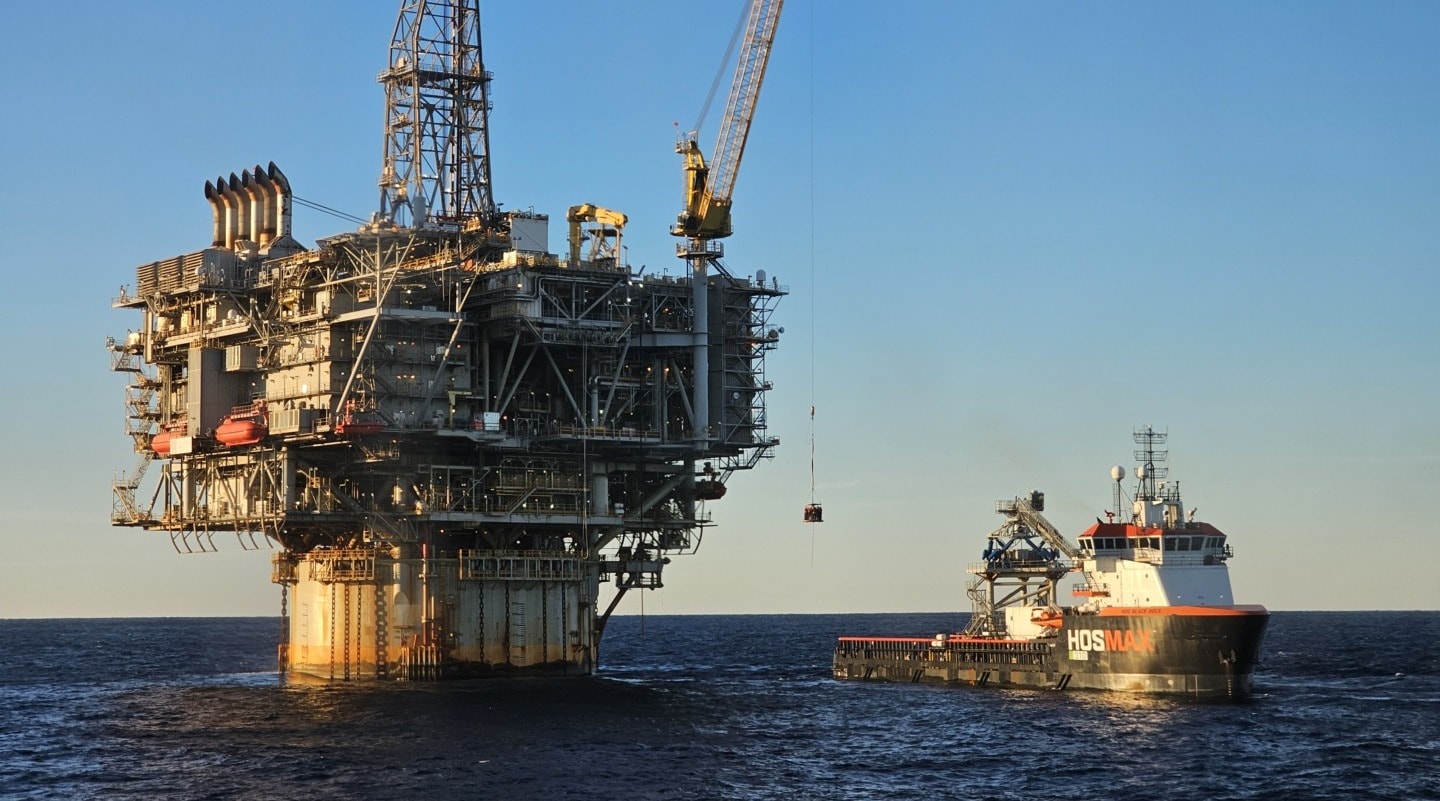
Editor’s Note: The opinions expressed here by the authors are their own, not those of Impakter.com — In the Cover Photo: Offshore oil drilling platform in Green Canyon, Gulf of Mexico, January 29, 2024. Cover Photo Credit: GuavaTrain.