Impakter
  • Environment
    • Biodiversity
    • Climate Change
    • Circular Economy
    • Energy
  • FINANCE
    • ESG News
    • Sustainable Finance
    • Business
  • TECH
    • Start-up
    • AI & Machine Learning
    • Green Tech
  • Industry News
    • Entertainment
    • Food and Agriculture
    • Health
    • Politics & Foreign Affairs
    • Philanthropy
    • Science
    • Sport
  • Editorial Series
    • SDGs Series
    • Shape Your Future
    • Sustainable Cities
      • Copenhagen
      • San Francisco
      • Seattle
      • Sydney
  • About us
    • Company
    • Team
    • Global Leaders
    • Partners
    • Write for Impakter
    • Contact Us
    • Privacy Policy
No Result
View All Result
Impakter logo
No Result
View All Result
EU Specialty Food Ingredients Advocates for Sustainable and Competitive EU Food System

Changes in the format of food System Framework has been requested.

EU Commission Urged to Prioritise Change in Food System Framework

Leading environmental groups call on the EU to reform food systems, emphasizing sustainability and climate resilience.

Atharva DurwasbyAtharva Durwas
October 16, 2024
in ESG News, ESG Tool, Food, Food & Drinks, Food and Agriculture
0

EU Specialty Food Ingredients, which represents over 200 producers of specialty food ingredients, urges Ms. von der Leyen, the president of the European Commission, the members of the European Parliament, and the Council of the European Union to keep putting forward practical ideas for the shift to a resilient, sustainable, and creative EU food system. Comprehensive ESG tools can help companies track their sustainability progress and align with evolving regulations.

Eurativ implores the European Commission Presidency to establish specific goals in the upcoming “Vision for Agriculture and Food” and make sure the industry’s input is taken into consideration when establishing the EU food system framework for the future.

To support this, they offer the following five important suggestions to be incorporated into the upcoming legislative framework:

Integrating the economic aspect of sustainability

The economic component of sustainability, which is essential to the resilience of the EU food sector, was mainly disregarded in earlier talks of the Sustainable Food Systems Framework (SFSF). European companies are becoming more and more disadvantaged in comparison to their international rivals as a result of inflation, supply chain interruptions, and growing energy and raw material costs. These economic pressures must be carefully evaluated in future legislative proposals by conducting in-depth analyses of their effects on innovation and competitiveness. Supporting the population’s changing nutritional needs requires a robust EU competitiveness strategy based on investments in research and development (R&D) for novel and sustainable ingredients.

In order to promote innovation, Eurativ back industry-specific legislation as well as public-private collaborations (such as Horizon Europe and Cluster 6). The Clean Industrial Promises of the Antwerp Dialogue.


Related Articles: Transforming Food Systems To Fight Climate Change – COP28 | Food Systems and Agriculture: What’s on the Menu for COP28?

Creating a business-oriented regulatory environment

The food supply chain’s uncertainty and innovation are being exacerbated by the current legal environment. Future legislative initiatives must include technical discussions with food supply chain stakeholders in order to foster a more business-friendly climate. Prior to enforcement, this would assist in evaluating possible regulatory burdens, inconsistencies, and trade-offs. This would help assess potential regulatory burdens, inconsistencies, and trade-offs prior to enforcement. Impact analyses should inform legislative decisions in order to ensure a consistent, well-balanced regulatory environment that promotes the single market.

To help with this, Eurativ propose establishing a dedicated position within the European Commission for the food industry and a food supply chain ecosystem dialogue forum, which would ensure that manufacturers of specialty food ingredients are involved in key discussions.

Promoting innovation for a sustainable transition

 Innovation is central to the EU’s sustainable transition and will be essential to preserving the competitiveness of the food sector. Even though the specialised food ingredients industry invests a lot of money in research and development (3–8% of turnover), many breakthrough items take a long time to get to the EU market. The protracted approval procedure, which frequently lasts more than ten years, deters investment and breeds uncertainty.

The European Commission must include the “precautionary principle” and the “innovation principle” into EU law in order to promote ongoing innovation. This would guarantee a more encouraging and stable policy environment, enabling a quicker and more effective clearance process for innovative and sustainable food components.

Taking an integrated and holistic approach

Rather than taking a siloed, isolated approach, legislation that involves all parties involved in the food supply chain is necessary for a truly resilient food system. Regulations affecting the primary sector must take into account how they will affect the entire food chain, from industrial green transitions to food safety.

Eurativ suggest that the EU Commission establish a high-level post devoted to the agri-food ecosystem. A more comprehensive, integrated approach to law would result from this position, guaranteeing coherence throughout the food chain and enabling a cogent, long-term plan.

Increasing assistance for SMEs

Although they are essential to the EU food and drink sector, small and medium-sized businesses (SMEs) are more susceptible to regulatory constraints and market disruptions. A supportive legal environment that encourages innovation and development is necessary to guarantee their involvement in the green transition. Due to a shortage of funding, many advances in the specialty food ingredients business are limited to SMEs.

Reducing administrative expenses and addressing regulatory barriers are essential steps in enabling SMEs. SMEs will be able to adjust to the changing environment and help the EU’s larger sustainability objectives if the Single Market is strengthened and they are given specific legislative support.

Eurativ urges EU officials to present a bold, well-thought-out, and doable SFSF proposal that improves the competitiveness, sustainability, and resilience of the EU food and food ingredient industries.

Klimado is an excellent ESG tool that helps businesses track, assess, and improve their environmental, social, and governance impact with comprehensive sustainability data and reporting solutions.

***

This article is referenced from Towards a sustainable, resilient and innovative EU food system – Euractiv by Corporate Compliance Insights 


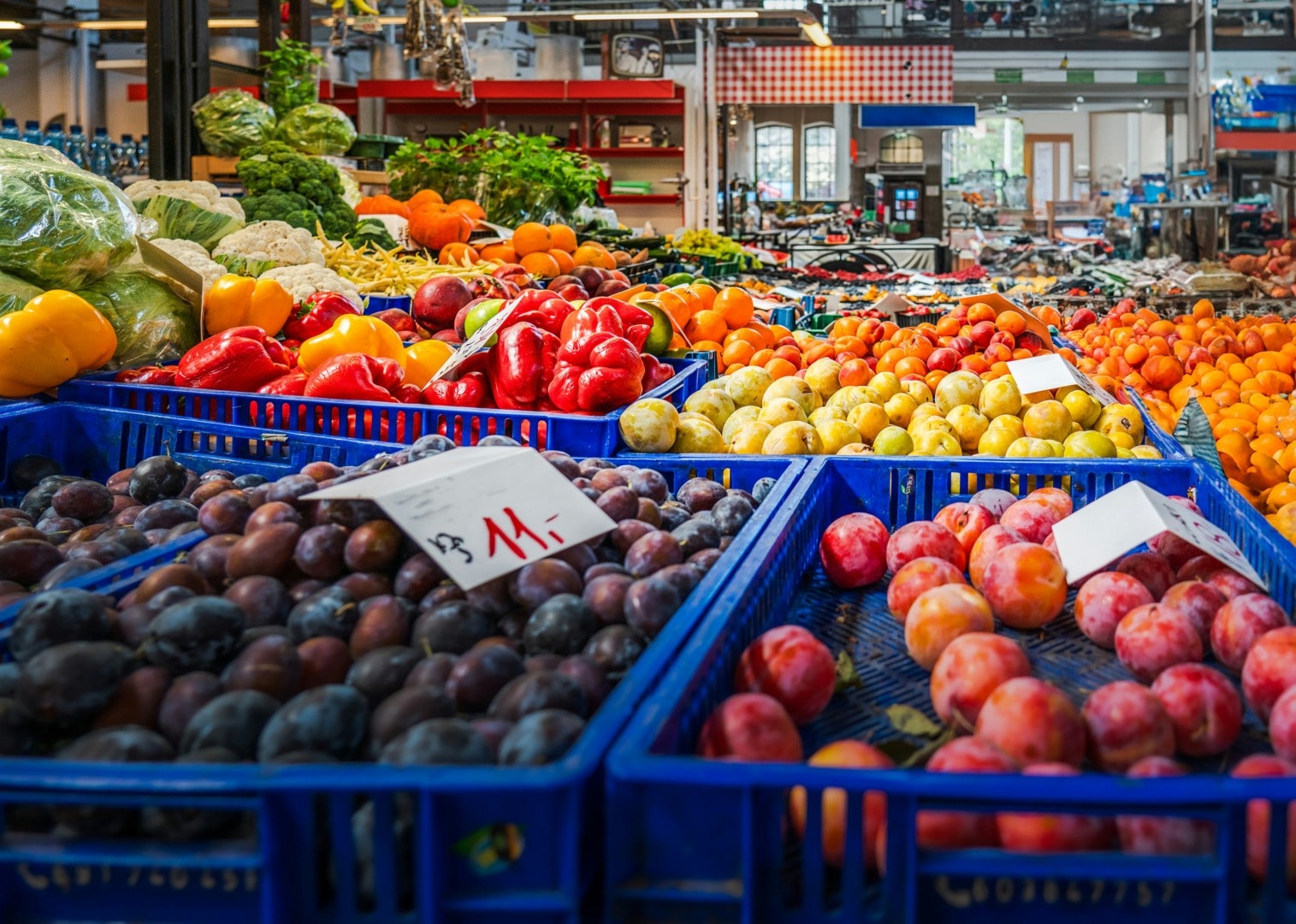
Editor’s Note: The opinions expressed here by the authors are their own, not those of Impakter.com — Cover Photo Credit: Dan Gold

Tags: ESG RegulationsESG toolFood Sustainability
Previous Post

The ESG Solution to Gen Z’s Sustainability Tug-of-War

Next Post

Collaborative Efforts Key to EU’s Sustainable Food Future

Related Posts

ESG News regarding Microsoft’s wind power deal with Iberdrola in Spain, OECD and EPO findings on the quantum sector’s maturation, SBTi’s pilot of a net-zero standard for power companies, and the European Commission’s proposed expansion of the Carbon Border Adjustment Mechanism.
Business

Microsoft Signs 150 MW Wind Power Agreements in Spain With Iberdrola 

Today’s ESG Updates Microsoft Signs 150 MW Wind Power Deal With Iberdrola: The agreement will supply clean energy for AI...

byLuis Guillermo Valdivia Chavez
December 17, 2025
ExxonMobil steps up 2030 transformation plan
Business

ExxonMobil Steps Up Its 2030 Transformation Plan

Today’s ESG Updates: ExxonMobil Steps Up its 2030 Transformation Plan: Aims to sharply boost profits and cash flow by 2030...

byAriq Haidar
December 11, 2025
ESG News regarding U.S. court overturning Trump wind freeze, EU approving a 90% emissions cut target, OECD warning about SME artificial intelligence gaps, and the EU Commission supporting Poland’s first nuclear plant.
Business

Court Blocks Trump Wind Energy Ban, Reopening U.S. Clean Energy Development

Today’s ESG Updates Federal Court Blocks Trump Wind Freeze: 8A U.S. judge vacated the order blocking wind project approvals, reopening...

byLuis Guillermo Valdivia Chavez
December 10, 2025
ESG news regarding Deforestation Mandate Being Pushed; EUs Acceleration on Hydrogen and Net Zero Revolution; AT&T Will End All DEI; UK Watchdog Blocks Nike and Lacoste Ads Over Green Claims.
Business

U-Turn in Europe: Deforestation Mandate Pushed Back Again

Today’s ESG Updates EU Lawmakers Agree to Delay Deforestation Rules: The EU has delayed and simplified its Deforestation Regulation until...

byEge Can Alparslan
December 5, 2025
Regulatory update on the EFRAG ESRS
Business

European Financial Reporting Advisory Group Releases Simplified Reporting Standards Draft

This Week’s Regulatory Updates: EFRAG releases simplified European sustainability reporting standards: EFRAG claims it will increase competitiveness and reduce the...

byAriq Haidar
December 5, 2025
ESG News regarding Flooding in Indonesia; Glencore promises copper production boost; Trump proposes slashing fuel efficiency standards, and Vulcan Energy receives $2.57bn of funding for lithium project
Business

Indonesians Blame Deforestation for Recent Floodings

Today’s ESG Updates: More than 700 Lives Lost in Recent Indonesian Floods: A combination of mass deforestation and heavy rainfall...

byAriq Haidar
December 4, 2025
ESG News regarding the GHG Protocol and ISO harmonisation effort, new SBTi pathways for the chemical sector, the EU’s permanent ban on Russian gas, and the OECD warning of rising economic risks
Business

GHG Protocol and ISO Plan to Align Carbon Accounting Standards

Today’s ESG Updates ISO and GHG Protocol Begin Standards Harmonization: Both organisations begin technical work to align global GHG accounting...

byLuis Guillermo Valdivia Chavez
December 3, 2025
EU Redefines ESG Rules, Expanding Eligibility to Controversial Weapon Producers
Business

EU Redefines ESG Rules, Expanding Eligibility to Controversial Weapon Producers

This Week's Regulatory Updates EU Expands ESG Eligibility to Defence Firms: A rule change allows defence companies producing previously “controversial”...

byLuis Guillermo Valdivia Chavez
November 28, 2025
Next Post
ollaborative efforts in the EU food system for sustainability in the food industry and low-emission production.

Collaborative Efforts Key to EU’s Sustainable Food Future

Recent News

ESG News regarding Microsoft’s wind power deal with Iberdrola in Spain, OECD and EPO findings on the quantum sector’s maturation, SBTi’s pilot of a net-zero standard for power companies, and the European Commission’s proposed expansion of the Carbon Border Adjustment Mechanism.

Microsoft Signs 150 MW Wind Power Agreements in Spain With Iberdrola 

December 17, 2025
Australia Social Media Age Ban

What Australia’s Social Media Age Ban Really Means

December 17, 2025
women and extreme heat

Women and Extreme Heat: Simple Adaptations Make a Big Difference

December 17, 2025
  • ESG News
  • Sustainable Finance
  • Business

© 2025 Impakter.com owned by Klimado GmbH

No Result
View All Result
  • Environment
    • Biodiversity
    • Climate Change
    • Circular Economy
    • Energy
  • FINANCE
    • ESG News
    • Sustainable Finance
    • Business
  • TECH
    • Start-up
    • AI & Machine Learning
    • Green Tech
  • Industry News
    • Entertainment
    • Food and Agriculture
    • Health
    • Politics & Foreign Affairs
    • Philanthropy
    • Science
    • Sport
  • Editorial Series
    • SDGs Series
    • Shape Your Future
    • Sustainable Cities
      • Copenhagen
      • San Francisco
      • Seattle
      • Sydney
  • About us
    • Company
    • Team
    • Global Leaders
    • Partners
    • Write for Impakter
    • Contact Us
    • Privacy Policy

© 2025 Impakter.com owned by Klimado GmbH