Most scientific reports on climate look at changes that have occurred since the pre-industrial era, or since record-keeping began. But even looking back at the past decade, it’s clear that our world today is very different from the world of 2010. Analyzing data on greenhouse gas (GHGs) concentrations, temperature rise, sea level rise and more reveal troubling trends.

But first, the good news:
There were some important bright spots for climate over the past 10 years. At the start of the decade, projections by the International Energy Agency (IEA) suggested that world’s emissions trajectory put it on course for a catastrophic 6˚C of warming by the end of the century, significantly higher than the 1.5-2 degrees C (2.7-3.6 degrees F) scientists recommend staying under to avoid the worst climate impacts. This year’s IEA report projects warming of 2.9-3.4˚C with current policies, a testament to the very different emissions trajectory the world forged this past decade.
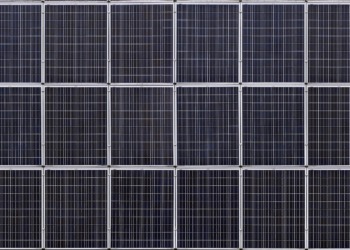
The price of solar PV dropped 81% since 2009. By 2017, the majority of new power-generating capacity added worldwide came from renewables.
The growth of renewables also far exceeded expectations. The price of solar PV dropped 81% since 2009. By 2017, the majority of new power-generating capacity added worldwide came from renewables.
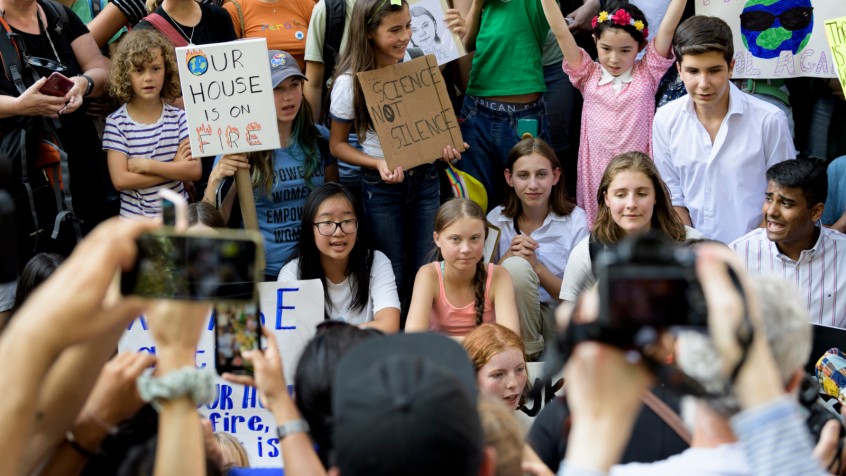
And the recent groundswell of citizen action is unprecedented, with millions around the world taking to the streets, engaging in climate action and demanding greater action from decision-makers.

While these examples and others show remarkable progress, overall our climate system is making it clear that we are not acting quickly enough. Here are several notable trends we can see just over the past decade:
1) Carbon Dioxide Emissions From Fossil Fuels Grew 10%
The Global Carbon Project reported earlier this month that global carbon dioxide emissions from fossil fuels and cement are on track to climb to a record high in 2019. While global emissions growth plateaued between 2014 and 2016, it was short-lived: Emissions from fossil fuels grew 1.5% in 2017, 2.1% in 2018 and are projected to grow another 0.6% in 2019.
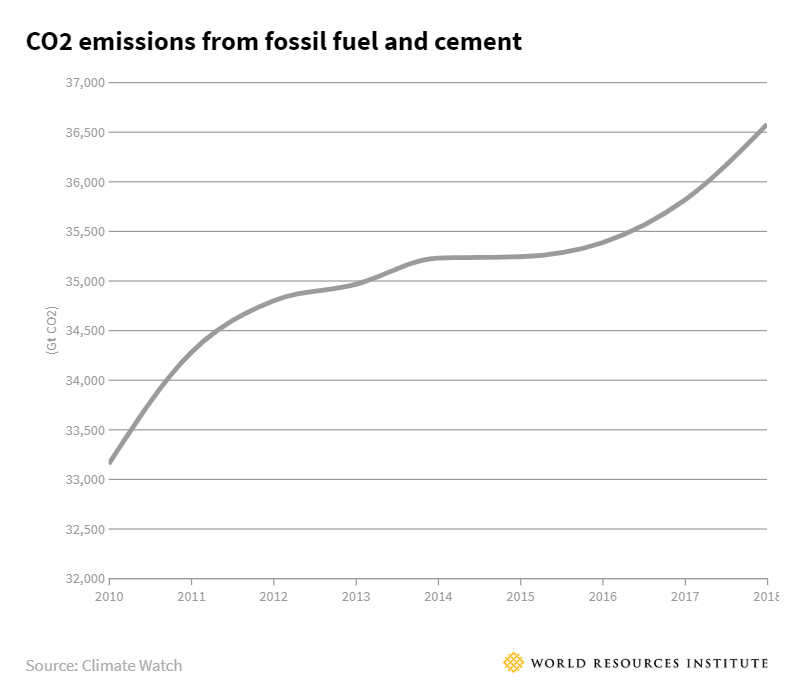
The latest climate science suggests that our best chance of limiting warming to 1.5-2 degrees C will require emissions to peak no later than 2020 and drop to net-zero by mid-century. A critical question is whether we’ll see signs next year of emissions peaking and declining afterwards.
A decade’s worth of UNEP Emissions Gap Reports document the growing gap between where emissions are headed and where they need to be. Even if countries fully implement their current climate commitments, the research shows we’ll still face an emissions gap in 2030 of 32 GtCO2e (about twice the size of China and India’s combined emissions) for the 1.5 degrees C goal, and 15 GtCO2e for the 2 degrees C goal.
2) Global Average Temperature Increased
In 2010, global average temperature was 0.88˚C (1.6˚F) above pre-industrial levels. Temperature increase in 2019 is shaping up to be about 1.1 degrees C (2˚F) above pre-industrial levels.
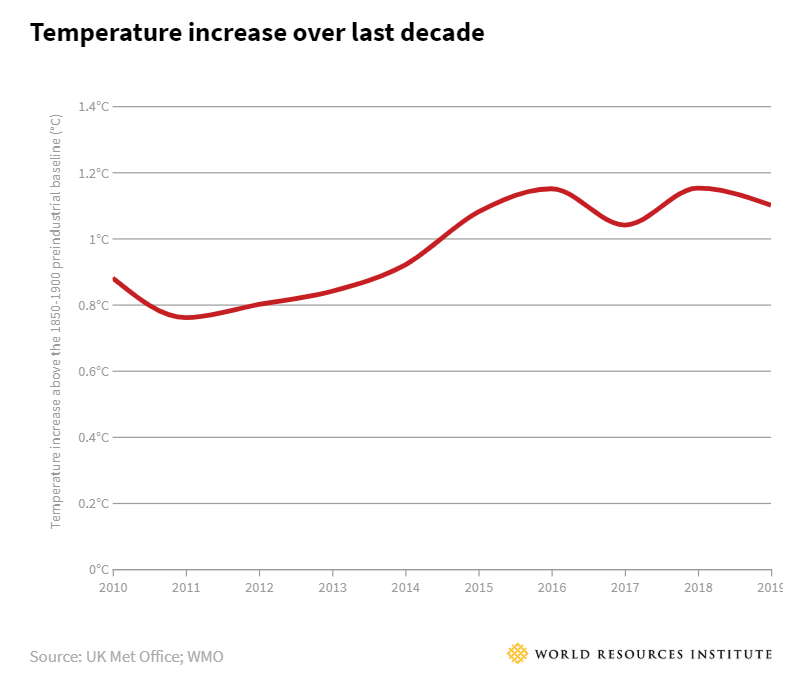
Against this backdrop of climbing temperatures, countries around the world also agreed this past decade to limit warming to well below 2 degrees C, and ideally 1.5 degrees C. A definitive report from the Intergovernmental Panel on Climate Change (IPCC) found that the world will face severe climate impacts even with 1.5 degrees of warming, and the effects get significantly worse with 2 degrees. For example, under 1.5 degrees C of warming, it is very likely that the Arctic will have one sea-ice-free summer every 100 years; at 2 degrees C, the frequency increases to at least one every 10 years.
3) Concentrations of Carbon Dioxide in the Atmosphere Exceeded 400 Parts Per Million (PPM)
Temperatures increase as the concentration of carbon dioxide in the atmosphere rises. Not too long ago, the idea of surpassing 400 parts per million (ppm) of carbon dioxide, a symbolic threshold which Earth has not experienced for millions of years, felt quite far off. In 2010, carbon dioxide concentrations at the Mauna Loa Observatory in Hawaii were 390 ppm on average. By 2018, they were well beyond the 400 ppm threshold, with measurements reaching 408 ppm. (For context, pre-industrial concentrations of carbon dioxide were 280 ppm.)
Between 2000 and 2009, the average growth rate of carbon dioxide concentrations at Mauna Loa was 2 ppm. Between 2010 and 2018, this figure grew to 2.4 ppm/yr. In 2018, the growth rate was 2.9 ppm/yr.
4) Seas Rose More than 1.6 Inches
Global mean sea level rise was roughly 3.3 millimeters (mm) per year (0.13 inch/yr) between 1993 and the present. This trend accelerated significantly this past decade: Between 2010 and 2018, sea level rise grew to about 4.4 mm/yr (0.17 inch/yr), rising almost 2 inches overall in the past decade. In 2018, global mean sea level was the highest in the satellite record.
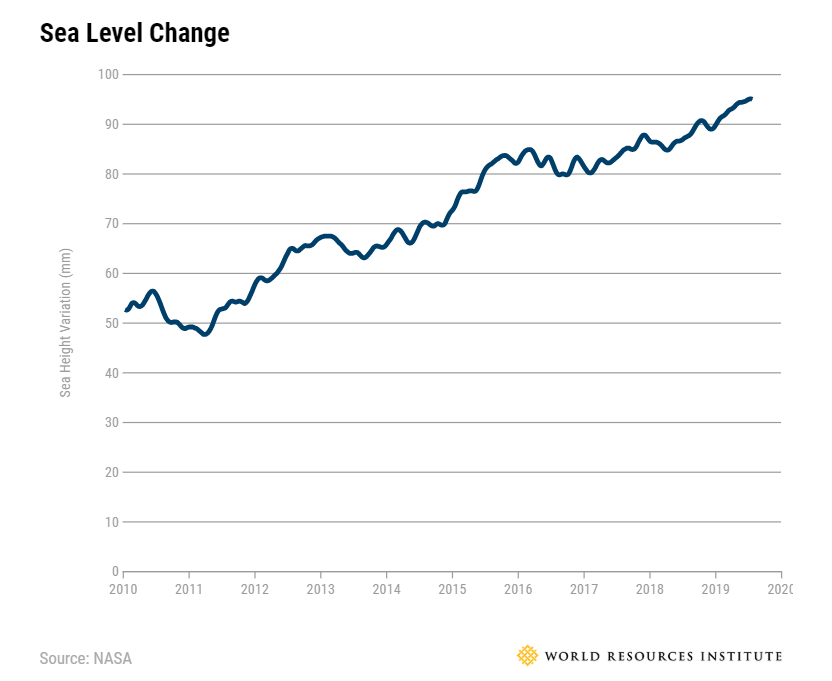
Eight of the world’s 10 largest cities are located in vulnerable coastal areas. Seas rising by even a couple of inches leads to more frequent high-tide flooding, storm surges pushing further inland, and devastating risks to homes, habitat and infrastructure.
5) Ice Reached Record Lows
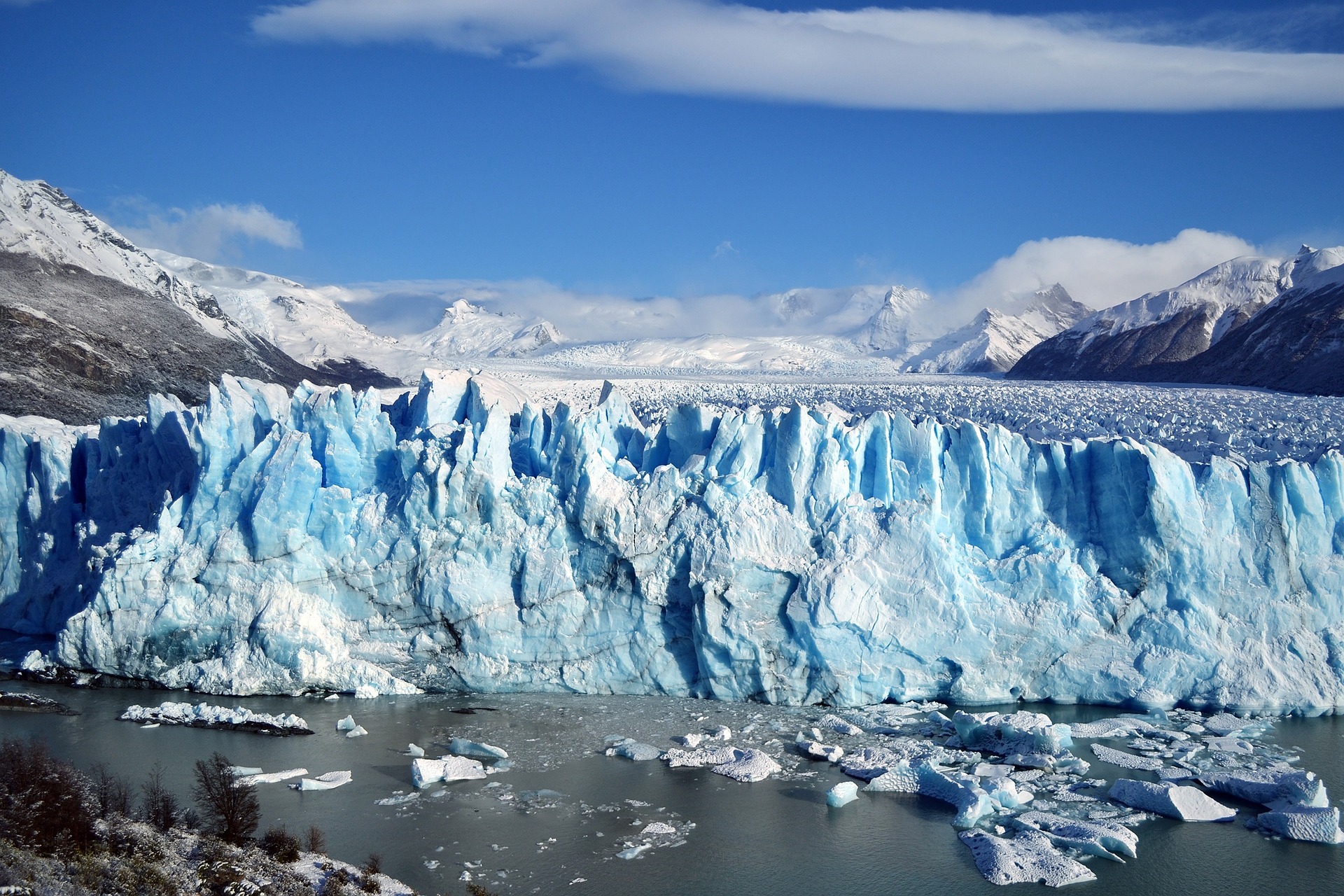
Sea ice extent is smallest in September every year. The rate of September sea ice decline has been 13% per decade relative to the 1981-2010 average. During this past decade, Arctic sea ice minimum reached its lowest level since at least 1979, the year record-keeping began.
Ice sheets in Greenland and Antarctica have also been losing mass, with an acceleration of loss in just the last decade.
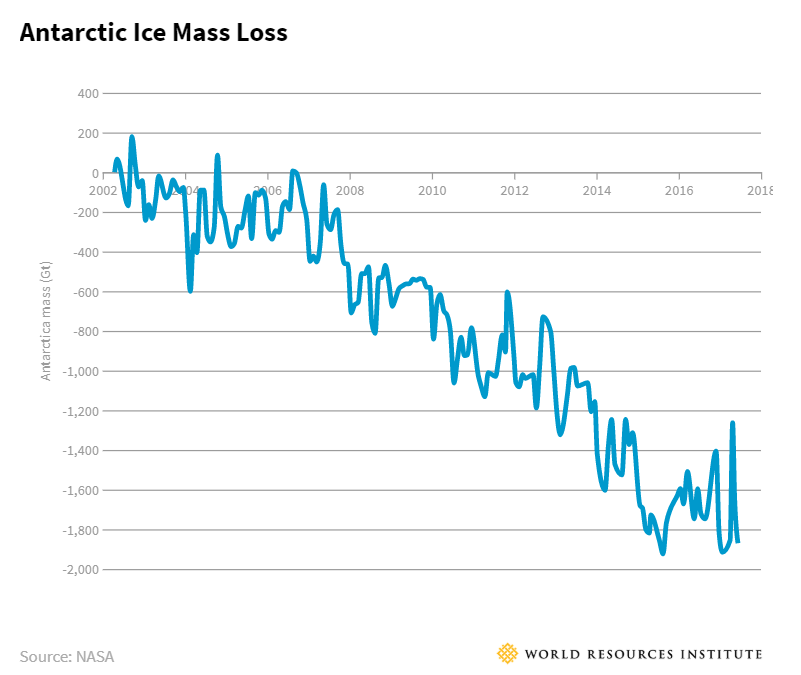
Glaciers around the world are also losing ice, accelerating with each passing decade. Glacier melt grew from 460 milliliters of liquid water in the 1990s to 500 in the 2000s to 850 milliliters in 2010-2018.
Ice loss can lead to rising seas. It can also change the ocean’s surface reflectivity, exposing dark waters that absorb more solar radiation — much like a dark shirt on a hot, sunny day — in turn leading to greater warming and a positive feedback loop.
6) Extreme Weather Became More Frequent and Severe
This past decade has been marked by devastating extreme events, including heat waves on land and in the ocean, record rainfall and flooding, massive fires and heat-charged hurricanes. Communities around the world are already living with the impacts of just 1 degrees C (1.8 degrees F) of warming; our climate will only become deadlier and more devastating with every additional fraction of a degree of temperature rise.
Related Articles: Climate Change in the Arctic | The Warmest Decade
Recent research confirms that extreme weather is getting more frequent and severe. The probability of drought has increased substantially in the Mediterranean region due to human-caused emissions. Extreme heat waves are increasing with further warming. And there is significant evidence that human-induced warming has resulted in the increased frequency, intensity and/or amount of heavy precipitation events. In 2017, Hurricanes Harvey, Irma, Jose and Maria all reached unprecedented rapid intensification, with Irma setting a record for sustained winds of 185 miles/hr. Harvey and Maria had record-setting rainfall, with warmer water temperatures fueling extreme precipitation.
At the same time, the science of attribution, looking at how much climate change increased the odds of any one particular event occurring, has advanced remarkably over this past decade. Important assessments include those from the National Academies and the Bureau of the American Meteorological Society, which published eight reports explaining how climate change may have affected extreme events from 2011 to 2018. Among many other examples, the reports found that climate change increased the odds of intense heat waves in northeast Asia in 2018 and in southern Europe in 2017, exceptional precipitation in Mid-Atlantic states in 2018, and an East African drought in 2017, which contributed to food insecurity. In addition, several international research programs came together to develop the World Weather Attribution project to analyze the role of climate change in extreme events.
Will 2020 Be the Decade for Action on Climate Change?
If we were to document the change in these climate indicators from the pre-industrial era, the trends would of course be even more stark. But even in a decade’s time, Earth has transformed.
Let’s hope that in 2030, we will look back and call the past 10 years a decade of climate action.
It’s time for policy to change at a speed that is commensurate with the rate of changing planetary vital signs. Let’s hope that in 2030, we will look back and call the past 10 years a decade of climate action.
About the author: Kelly Levin is a senior associate with WRI’s global climate program.