Over the past few years, scientists have started finding ancient viruses frozen in the Arctic permafrost. But the question is, should we thaw them, revive them (although technically, they are not alive), and try to conduct further research on their biological significance in the lab?
The secrets they hold about the past, as well as the possible benefits understanding their biology could bring to the future, is invaluable, for curiosity’s sake, but also scientific progress.
What shouldn’t be ignored however, is that these entities are still relatively unquantified infectious agents, and could possibly quickly get out of hand. By delving too deep into the frozen past, we possibly risk reintroducing viruses into the present global population with no easy way of containing them.
The safe answer is that we should leave them alone in their frosty resting place. The world knows all too well what happens when virology is underestimated.
But in reality, with global temperatures rising due to climate change, we may no longer have the luxury of choice in the matter. Melting Arctic and Antarctic ice is exposing a spectrum of ancient microorganisms to the 21st century, and it’s possible they could be hostile in nature.
The most recent discovery of this kind came from a group of microbiologists and permafrost experts who recovered 13 “zombie viruses” from the ancient permafrost in Siberia. These viruses – which are still infectious – are estimated to have been frozen there for almost 50,000 years.
Siberian “Zombie viruses”
No, this is not a dream or the plot of a sci-fi movie, it is actually a legitimate field of scientific research.
But as we’ve established, viruses are not alive, instead they are essentially just inert strings of genetic material. They are only activated when they come into contact with a living breathing host. Once triggered, viruses are able to hijack the host’s cellular genetic machinery and energy sources to rapidly make copies of themselves and cause havoc, a.k.a. infection.
Most of the time, once outside of a host, viruses are unable to persist for a very long time in the environment. But some specific species possess a more robust disposition and chemical stability that allows their viability to be preserved even after extremely long periods of time on ice.
This is why the 13 prehistoric viruses – part of the pandoravirus, cedratvirus, megavirus, pacmanvirus, and pithovirus families – were able to survive for so long unscathed in the Siberian permafrost.
Does that mean these viruses are still infectious? Yes. Could they cause an outbreak in humans? No, they only infect amoeba.
Then why should we be worried? Is there an arctic virus spillover risk?
Though the “zombie virus” species identified are not expected to be able to infect humans or animals, the group warns that the viability of these infectious agents, after spending so many years frozen deep within the ice, could still pose a risk to public health.
Not because they themselves could cause infection in humans, but because there is no way of telling what other species of “zombie viruses” or other dangerous bacteria could also begin to surface as the ice melts.
Bacterial infections are traditionally somewhat easier to treat than viruses, due to the abundance of antibiotics available. The group of scientists say revived prehistoric bacteria may be able to be controlled using antibiotics, but they also mention that “bacteria carrying antibiotic-resistance genes appear to be surprisingly prevalent in permafrost.”
This landmark discovery could serve as a warning to the world that in the midst of the climate crisis, it’s not just the future that we should be worried about, but also the past, because it too might come back to bite us.
What did the world look like 50,000 years ago?
According to the scientists’ estimation of the viruses’ age, they would have been frozen in ancient Siberia since the end of the geological epoch known as the “Pleistocene” or “Last Glacial Maximum.”
More commonly, we know this period of time as “The Ice Age.”
Technically, this period in Earth’s geological history is still occuring today, but at present we are within a warmer “interglacial” period of time where the climate is milder and the landscape more inhabitable.
But 50,000 years ago, glaciers covered more of the earth’s surface area, meaning many animal populations were confined to lower-altitude forests and woodlands. Archaeologically speaking, it was in this period of time that prehistoric human populations developed early tools as part of the “Paleolithic” era.
We know this period as “The Stone Age.”
During this time, the earth cooled dramatically and was subjected to repeated rounds of glacial freezing, forcing many species to extinction. The bodies of these dead animals, early humans and other organisms would have been frozen permanently into the ice as fossils. Similarly, even the tiniest bacterial and viral organisms that were present in the environment or within living hosts, would have also been preserved in the permafrost.
Fast forward a few millennia, and we see that the inaugural tools our ancestors designed and built in the glacial ice age paved the first steps towards rapid global industrialisation that’s now melting our glacial ice in the digital age.
Protecting the environment protects humans from the past
You could say the climate crisis has now transitioned into a new phase, a phase where curbing emissions and making eco-friendly choices is vital, but not the holistic answer.
As recent reports reveal, the climate change-induced melting of the Arctic, as well as Earth’s other ice formations, may no longer be entirely within our control. That’s because the melting process of these landscapes has in some cases possibly been pushed past a critical “tipping point,” resulting in a self-perpetuating loop of endless thawing.
As more of the ice melts, less sunlight is reflected by its white landmass, leading to a spiraling cascade of more warming and melting. Due to this effect, the Arctic has previously been shown to be warming at four times the rate of the rest of the planet.
As this happens, organic matter and microbes that were once frozen in the ice get exposed to water and begin to decay, releasing more CO2 and further amplifying global warming. The end result is accelerated thawing of the permafrost.
Not only does the reexposure of these once-frozen organisms to the elements contribute to gas release and climate change, but it also exposes life on earth to them.
Related Articles: Could the Rate at Which Glaciers Are Melting Cause the Next Pandemic? | The Bottom of the Arctic Is Blooming | The Next Virus “Hotspot”, the Arctic: Why a One Health Response is Needed | Earth ‘Likely’ to Exceed Dangerous Climate ‘Tipping Points’
Though exposure to emerging microorganisms is the main concern of the scientists who discovered the 13 frozen Siberian viruses, they suggest they are not concerned about these specific viruses causing an arctic virus spillover.
The group states that the evolutionary distance between humans and the amoeba host these viruses are able to infect is so vast, that isolation, culturing and experimentation should pose very little biosecurity risk in terms of transmission.
But what they do stress is a concern worth highlighting, is that just because these viruses don’t pose a threat to society, there have been other discoveries from deep within the ice that show human-infecting viruses could still exist there.
A polar pandemic?
In 2012, scientists revived the smallpox virus from a 300-year old Siberian mummy in the same permafrost. Smallpox has been eradicated from the human population since 1980, but as global warming causes old victims of the disease to resurface from their frozen graves, scientists worry that reemergence of the virus, as well as other deadly species, could strike again.
Similarly, a few years earlier, anthrax spores from infected animal burial grounds were also released from melting permafrost in Siberia, killing one person, hospitalizing many others, and decimating local reindeer populations.
Although along with these findings there have been growing murmurs in the epidemiology, virology, and environmental communities about the possible threat of further pandemics originating from the polar permafrost, there is still an lack of reported scientific investigations being published.
The current literature on resurgence of ancient frozen microorganisms could therefore be under-representative of the true threat to society they pose, as these outbreaks could be occurring in remote regions that go unreported.
Scientists also warn human exposure to “zombie” microorganisms could be even further amplified as the planet warms, because milder Arctic conditions may promote migration to the area.
As the world still reels from the fallout of the Covid-19 pandemic, it seems the Arctic and Antarctic regions could possibly emerge as the next big unprecedented virus hotspot.
In light of this, it seems that two of the world’s biggest present-day crises – pandemics and climate change – could be more intricately interwoven than first thought, making the risk of an arctic virus spillover a live possibility.
What’s more, given that the majority of infectious resurfacings have occurred in Siberia, the current multilateral geopolitical tension with Russia could make further research, cooperation and containment very challenging.
— —
Correction: This article has been amended since publication to remove a Tweet that was deleted, and to add a quote regarding bacterial antibiotic resistance for further clarity.
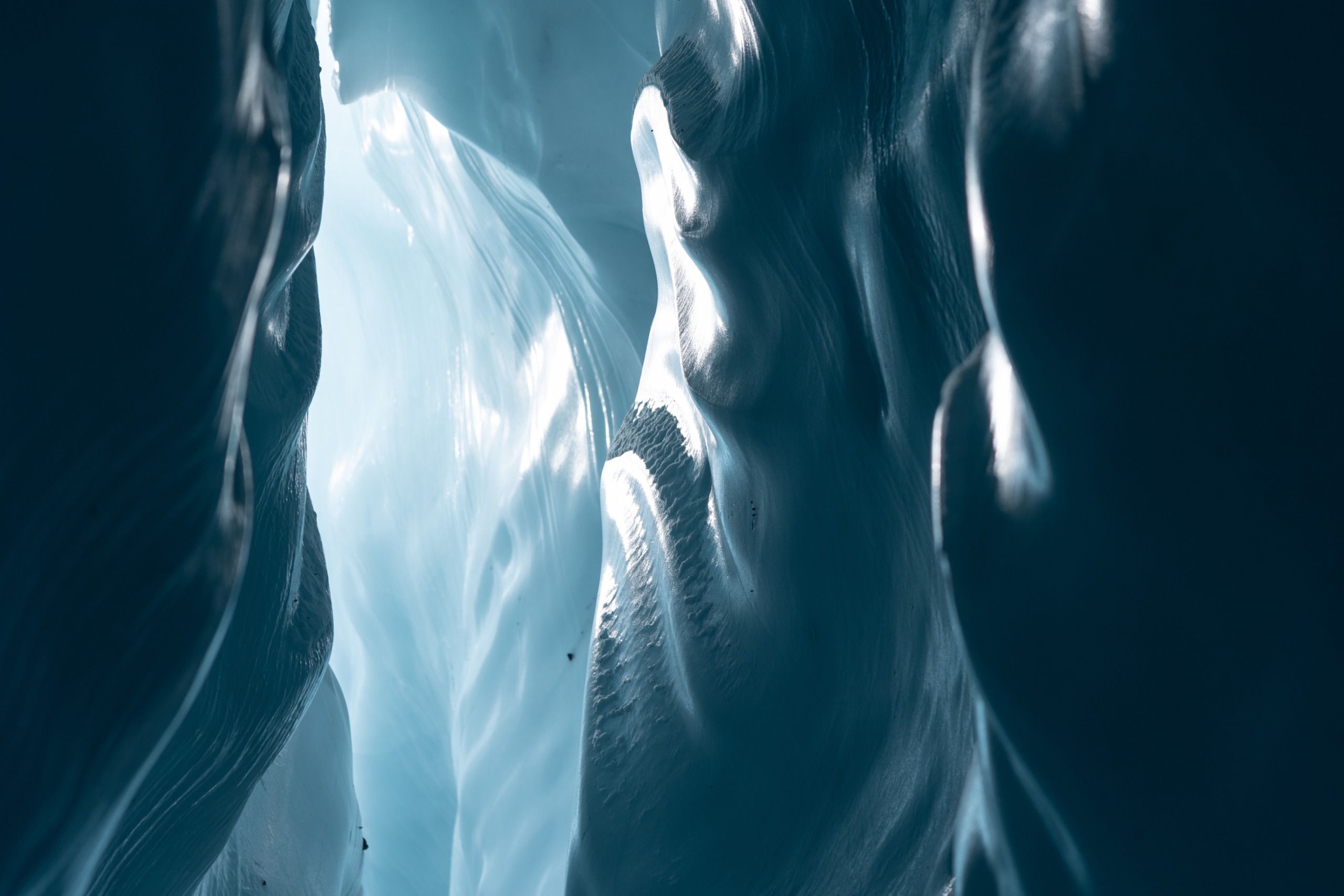
Editor’s Note: The opinions expressed here by the authors are their own, not those of Impakter.com — In the Featured Photo: Inside a glacier. Featured Photo Credit: Eric Kilby/Flickr