When a case in 2018 led by six Portuguese youth became the first climate-related lawsuit filed by the European court of human rights in Strasbourg, France, a somewhat ground-breaking precedent was set.
Although this was one of the biggest climate cases going up against 33 European countries, it was one of many contributing to the global phenomenon of climate litigation that has embodied the once novel perspective – the right to a healthy environment. A movement largely led by the youth, mobilised after having been frustrated with the lack of conducive efforts taken to combat such pressing matters.
The lawsuit followed Portugal recording its hottest summer in the past 90 years, alongside devastating wildfires in 2017 that resulted in the deaths of 120 people. With states in question having until Feb. 23, 2021, to respond, let us examine the degree to which we can truly marvel at the effectiveness of this particular mode of political participation from the youth.

Young activists have undoubtedly achieved a surprising level of success in taking their governments to court. Though this trend reflects a growing political appetite amongst a generation that has historically been far more apathetic, favouring verdicts haven’t always translated to action proportionally.
For example, the lawsuit filed in 2013 by children in the Netherlands against their government for failing to abide by a set of EU climate-related targets led to court orders in December 2019 that included a 25% reduction of carbon emissions by the end of the following year.
https://twitter.com/euronewsreport/status/1306247973475618818?s=20
Despite being perceived as a significant landmark in the history of climate activism, these targets have since looked increasingly slim. By 2019, emissions were only down by 15%, with researchers projecting a further reduction to 19% by the end of 2020, which falls short of the 25% target.
Although some measures were enacted in this case, reflecting some level of progression, critics have since argued it to be misguided to view climate litigation as the only hope to combat global warming, not because alternative routes are in abundance, but rather due to its limited productivity.
The reality is that it remains extremely difficult to use the law against those who administer it.
This was the case in 2018 when 25 young Colombians won a lawsuit against their government for licensing mass deforestation – argued to violate their rights alongside the rainforests.
Yet, court orders to reduce deforestation to a net-zero by 2020, alongside promises made by Colombian president Ivan Duque to prioritise the Amazon, have prompted more publicity than activity. The plaintiff’s lawyer Cesar Rodrigues-Garavito has since called upon people to do more to ensure the enforcement of court orders, ‘’Since the will of governments is not enough.’’
The reality is that it remains extremely difficult to use the law against those who administer it. According to David Boyd, a law professor at the University of British Columbia, many states with the constitutional right to a healthy environment – like Colombia– are developing nations with newer constitutions that struggle to provide its citizens with basic services, rendering the enforcement of ordered targets ever more so allusive.
In efforts to protect themselves, governments have also gone as far as manipulating their constitutions in a way that absolves them from such charges.
Though it bears a constitutional right to a healthy environment, Noway, for example, had dismissed a lawsuit led by Nordic youth to obstruct the government from providing licenses for oil and gas exploration in the Barents sea. Despite agreeing with the importance of this right, judges rejected the case on the basis that such licensing cannot violate Norway’s right to a healthy environment “because the oil will be exported.”

In states with more institutionally robust governments, measures of judicial review are in place to ensure that governments are held accountable. Independent bodies like the Good Law Project in the UK that work to hold MPs accountable and judicial impeachment in the U.S. that grants congress the autonomy to remove or punish state officials are both examples of measures within advanced countries that uphold the law to all citizens. Such mechanisms are either absent or futile in developing countries, making it relatively easier for some states to ignore their climate commitments than others.
These measures, though, have not come to benefit the 2015 Juliana vs United States case. The US is one of 38 UN members to lack the constitutional right to a healthy environment. This youth-led case had argued against the necessity of a specific constitutional reference to the environment, following that the promotion of fossil fuel industries created a “dangerous destabilising climate system’’ that threatens the constitutional right to life, liberty, and property.
Related Articles: The Dilemma of Corporate Social Activism | Youth, a Not-So-Secret Formula for Peace and Sustainable Development
The case was yet dismissed after a three-judge panel had expressed their concern with judge Andrew Hurwitz informing the young plaintiffs that “you’re arguing for us to break new ground.’’
These obstacles of climate litigation highlight the grounding issue of voting power. Most of these cases have been led by children below the legal age to vote in their respective countries who have most to fear climate change and lack alternative routes to invoke change on a governmental level.
People are taking to the courts because governments are falling short and when you have nowhere else to go, you go to court.
— Michael Burger, director and CEO of the Sabin Centre for climate change law at Columbia University Law School.
Although the increased political interest amongst the youth has been a positive step towards raising awareness and urgency, litigation has been used more as a final resort. If the legal voting age was more lenient, however, the youth could influence the political landscape of a given state by helping to elect candidates more heedful to the dangers of climate change.
The mass-hysteria from many media outlets regarding successful lawsuits may also be fruitless. Commercialising a growing appetite for youth-led litigations runs the potential danger of steering our attention away from the lack of activity that follows. Headlines of legal victories may aggravate an exaggerated sense of progression amongst the masses who may become accustomed to seeing climate litigations flourish, further relaxing them from the need of applying additional pressure on governments. Extensive coverage may also help establish a notion that the youth are most effective in confronting climate issues, turning the attention away from the very inept governance that compels those who are yet to finish their education to intervene.
A child’s involvement is a clear indication of government failure. Children should not have to spend their adolescent years in court, such issues should be dealt with by those in positions of power before even arriving at the attention of children. Governments are those who should be combating climate change to not only protect the younger generations in the future, but to protect them today from responsibilities beyond their capacity.
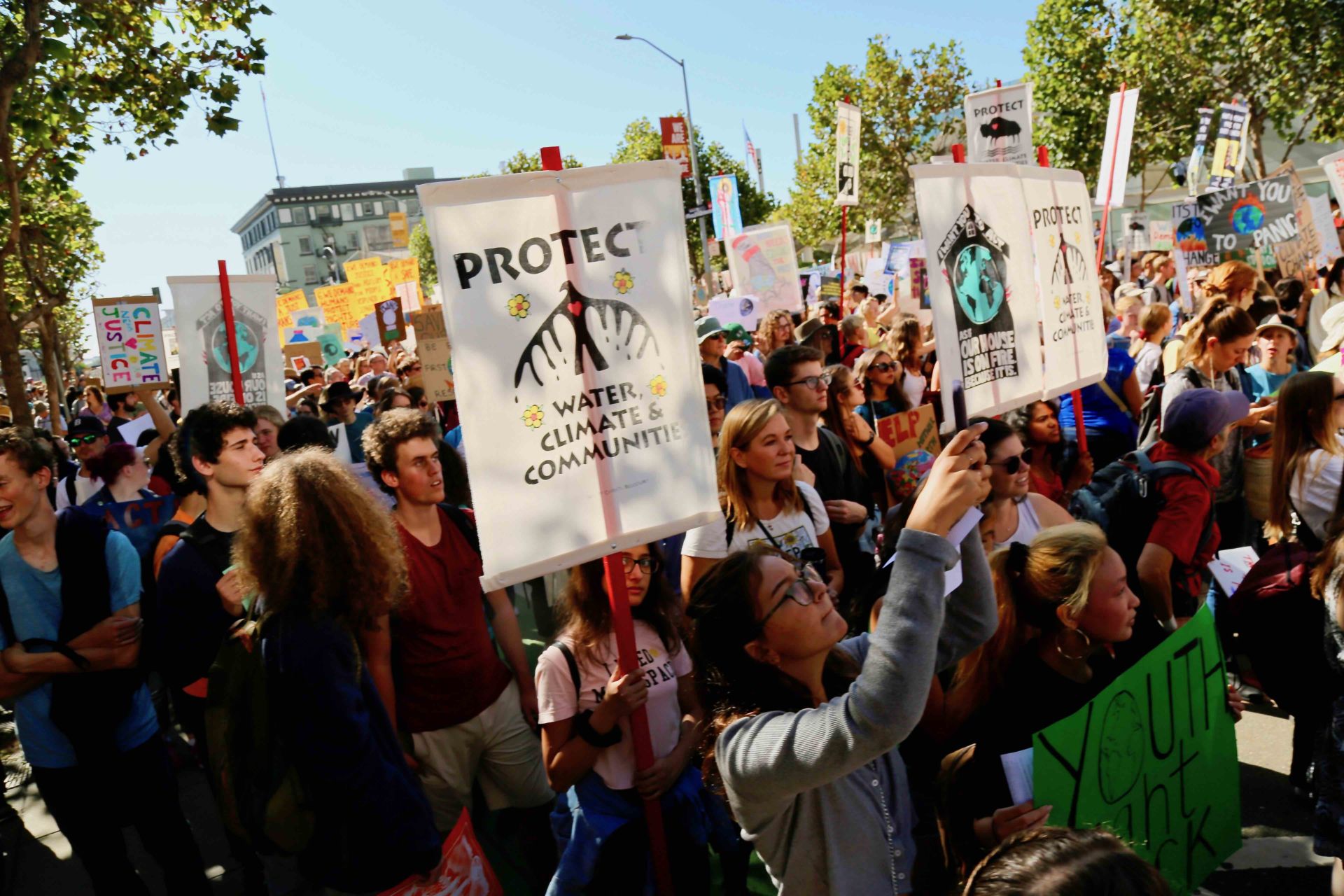
Editor’s Note: The opinions expressed here by Impakter.com columnists are their own, not those of Impakter.com. —In the Featured Photo: Tens of thousands of young people joined the global Climate Strike and marched down the streets of San Francisco to demand action on climate change, California, United States. Featured Photo credit: Wikimedia Common