Every year, you hear the same sound byte: “Wow, this was the craziest year ever!”
2022 really did feel like the most unpredictable year yet, but history predicts that 2023 will be even more troubled, chaotic, and genuinely unhinged.
So, after what was undoubtedly an exceptionally turbulent year, let’s take a moment to review the steps that were taken in 2022 towards a sustainable future.
The UN’s Plastic Pollution Resolution
In March, the United Nations Environment Assembly (UNEA) passed the resolution, “End Plastic Pollution.”
This resolution allowed member nations of the assembly to undertake negotiations in pursuit of an internationally legal binding instrument by 2024 to end plastic pollution.
Great #ClimateAction news:
At the @UNEP Environment Assembly #UNEA5, governments agreed on a historic resolution to #BeatPlasticPollution.
This is the most important environmental deal since the #ParisAgreement. https://t.co/s0SYVsdu5j
— United Nations (@UN) March 2, 2022
Forever Chemicals Become Forever No More
In August, researchers from Northwestern University in the United States discovered a way to break down 10 types of “forever chemicals.” It has long been thought that these harmful per- and polyfluoroalkyl substances (PFAS) require a great deal of energy to break down, but scientists have found a way to break them down using simple, low-energy, and inexpensive methods.
Now that these chemicals are “forever” no more, the question remains: who will go to the ends of the earth to destroy the chemicals that are now lurking in every corner?
Patagonia Founder Gives Away Company to Trusts
In September, the billionaire founder of outdoor apparel brand Patagonia gave away his company to two trusts, which were established to use Patagonia’s profits going forward to safeguard the environment.
This was the first time that something like this had been done, and sets a landmark precedent for ethical and environmentally friendly business going forward.
Hey, friends, we just gave our company to planet Earth. OK, it’s more nuanced than that, but we’re closed today to celebrate this new plan to save our one and only home. We’ll be back online tomorrow.https://t.co/fvRFDgOzVZ
— Patagonia (@patagonia) September 14, 2022
Carbon-Neutral Concrete
In October, two material science PhD students from Imperial College London received an internationally recognised prize for architectural achievement for their scalable, carbon-negative cement, which is made through a process they’ve named “Seratech.”
Now that the world’s fourth-largest source of carbon emissions has been tamed, we can tackle coal, oil, and gas.
A One-Size-Fits-All Charging Port Within the EU
Also in October, the EU formally adopted the common charger directive, which will require Apple and other tech companies to adopt USB-C as a universal charging standard within Europe by 2024.
This law is the first of its kind in the world and is meant to streamline the number of different cables and chargers on the market with which consumers have to contend. It’s also meant to reduce waste by allowing consumers to mix and match cables and devices across brands, rather than requiring a new cable for every new device purchased.
Apple, expectedly, fought this legislation saying:
“Strict regulation mandating just one type of connector stifles innovation rather than encouraging it, which in turn will harm consumers in Europe and around the world.”
Consumers will have to wait until 2024 or later to decide if this legislation is actually harmful, but the transition is already beginning.
The EU Legislates the Transition to EV
October was a long month for sustainability milestones, and it finished with EU lawmakers agreeing to ban the sale of new combustion engine vehicles by 2035. The ban will force car makers to reduce the emissions of new cars by 55% before 2030 and 100% by 2035.
This policy is a step in the right direction towards decarbonising Europe’s transport systems. However, the road to achieving these targets is not yet clear, as Germany warns that this pressure on its large automotive industry will cause the market to crash. Hopefully in 2023, Europe will make some headway regarding the many valid concerns for how this policy can practically come into effect.
Greta Thunberg Sues Sweden
In November, Greta Thunberg added her voice to a growing trend that uses judicial action to inspire governmental action on the climate crisis. She and more than 600 other young climate activists sued the Swedish government for failing to take adequate measures to stop climate change.
There is a precedent for courts ruling in favour of the plaintiffs in cases like these, as happened in the Netherlands in 2019 and France in 2021. Whilst Greta and her co-activists await a court date, Greta is still busy developing alternatives to burning emissions. Recently, she’s begun burning climate deniers on social media instead.
yes, please do enlighten me. email me at smalldickenergy@getalife.com https://t.co/V8geeVvEvg
— Greta Thunberg (@GretaThunberg) December 28, 2022
Progress from COP27:
The 27th session of the Conference of the Parties (COP27) to the UNFCCC took place in November in Sharm El-Sheikh, Egypt. COP27 was controversial before it started, thanks both to Greta Thunberg announcing her choice not to attend and rumours that two UK PMs asked King Charles, who has a long history of environmental activism, also not to go.
The key outcome from the summit was a historic decision to establish and operationalise a loss and damage fund paid for by select developed countries. So far Denmark, Belgium, Germany and Scotland, plus the EU have made relatively small but symbolic funding commitments to the vulnerable countries who have been affected the most by climate change, whilst contributing to it the least.
The Loss and Damage agenda saw historical transformation at #COP27, by establishing new funding arrangements including a long-awaited response fund. This milestone agreement strengthens the work towards delivering equitable climate justice.#TogetherForImplementation pic.twitter.com/AYwgbQtaJV
— COP27 (@COP27P) December 26, 2022
COP27 was the first time that the previously controversial topic of loss and damage funding made the official agenda of the summit. Other outcomes include reaffirmed commitment from member parties to limit global temperature rise to 1.5 degrees Celsius above pre-industrial levels and the launch of the Sharm El Sheikh Adaptation Agenda to promote transformative adaptation implementation
France Bans Short-Haul Flights
In December, France was officially given the go-ahead by the European Commission to ban three of its shortest domestic flights. Because takeoff and landing are the most carbon-intensive part of air travel, the carbon footprint per passenger per kilometre is much higher on shorter flights than long-haul flights.
The ban comes with caveats, the largest of which is the fact that it does not apply to private jets. Since private jets contribute disproportionately to the aviation industry’s emissions, they must be included within this legislation for the ban to be truly impactful.
Strides for Biodiversity at COP15
The UN Biodiversity Conference (COP15) was held over the course of December in Montreal, Canada.
The fundamental aim of the conference is to establish a new Global Biodiversity Framework to replace the Aichi Biodiversity Targets which expired in 2020. Since then, nations have been unable to come together and agree on a new framework, and negotiations for a new deal ahead of COP15 were unproductive.
Nonetheless, the end of the conference heralded the new 30 x 30 agreement, which saw roughly 190 countries commit to protecting 30% of the world’s land and sea and securing a “nature-positive” earth by 2030.
Increasingly Notorious Climate Protests
Whether you love or hate their tactics, climate protestors discovered new ways this year of capturing society’s attention and directing it to their cause.
In April, activists from Just Stop Oil blocked so much oil infrastructure – mainly oil terminals – in the UK that one in three gas stations in Southern England were forced to close. Whilst this generated outrage in the UK, it did not garner much international attention, so the protestors upped the ante.
A worldwide wave of even more divisive protests took place over the autumn. Just Stop Oil and other groups, including Extinction Rebellion, Germany’s Letzte Generation, and Italy’s Ultima Generazione, spray painted the windows of Harrods in London, dumped milk out onto the floors of supermarkets, vandalised artwork across Europe, and blocked roadways.
These protests weren’t meant to be popular, and in that, they definitely achieved their goal. Whether these protests achieve any of their other professed goals remains to be seen.
A Record-Setting Year for Renewable Energy
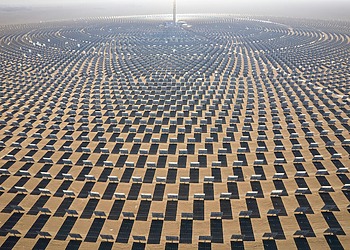
In 2022, multiple records were set for renewable energy use across Europe. The Russo-Ukraine war’s effect on the price of non-renewables helped to disrupt Europe’s reliance on oil and gas and force the continent to seek other sources of energy.
Total capacity of solar-powered energy in the EU increased a whopping 25% this year.
To top it off, scientists in Germany set a world record for solar-cell efficiency in December. Researchers at the solar-cell technology institute Helmholtz-Zentrum Berlin have developed a tandem solar cell that can convert 32.5% of incident solar radiation into electrical energy. The previous record of 31.3% was set in Switzerland this summer.
#WorldRecord back at HZB – Perovskite/Silicon Tandem Solar Cells achieves 32.5 percent efficiency. Many congratulations to the teams of @AlbrechtLab and #PVcomB. "This is a really big leap forward that we didn't foresee a few months ago. […]" says Steve: https://t.co/cwATsybWnA https://t.co/EfiJ9JviKb
— Helmholtz-Zentrum Berlin (@HZBde) December 19, 2022
Here’s hoping that the renewable energy movement both in Europe and worldwide has only sunshine ahead of it.
So, how does Europe stand heading into 2023?
From reports that human development has now reversed two years in a row to predictions that an incoming El Niño will tip the world past the crucial 1.5°C threshold, there’s plenty of bad news on both horizons. And from Putin’s war in Ukraine, to the ongoing mass extinction crisis, the biggest issues of the day will have consequences that span generations.
As is always the case, 2022 leaves behind more questions than answers. Some of these questions may be answered in 2023, and some will remain unanswered for the foreseeable future.
Nonetheless, one question is answerable: 2023 will undoubtedly see humanity change, regress, and progress in ways we never expected.
Editor’s Note: The opinions expressed here by the authors are their own, not those of Impakter.com — In the Featured Photo: A sunset on the Isle of Skye in Scotland, UK. Featured Photo Credit: Massimiliano Morosinotto.