A recent study from WWF estimates the economic cost of nature’s decline over the next 30 years, revealing the countries whose economies would suffer the most if urgent action is not taken to address the global environmental crisis.

Using cutting-edge economic and environmental modeling, WWF’s “Global Futures” study calculated the anticipated economic impacts of nature’s decline on the world’s economies, trade and industry, illustrating the positive correlation between economic and environmental prosperity.
To estimate economic impact, “Global Futures” considered the relationship of ecosystem services to economic outcomes such as GDP, trade, production, and commodity prices.
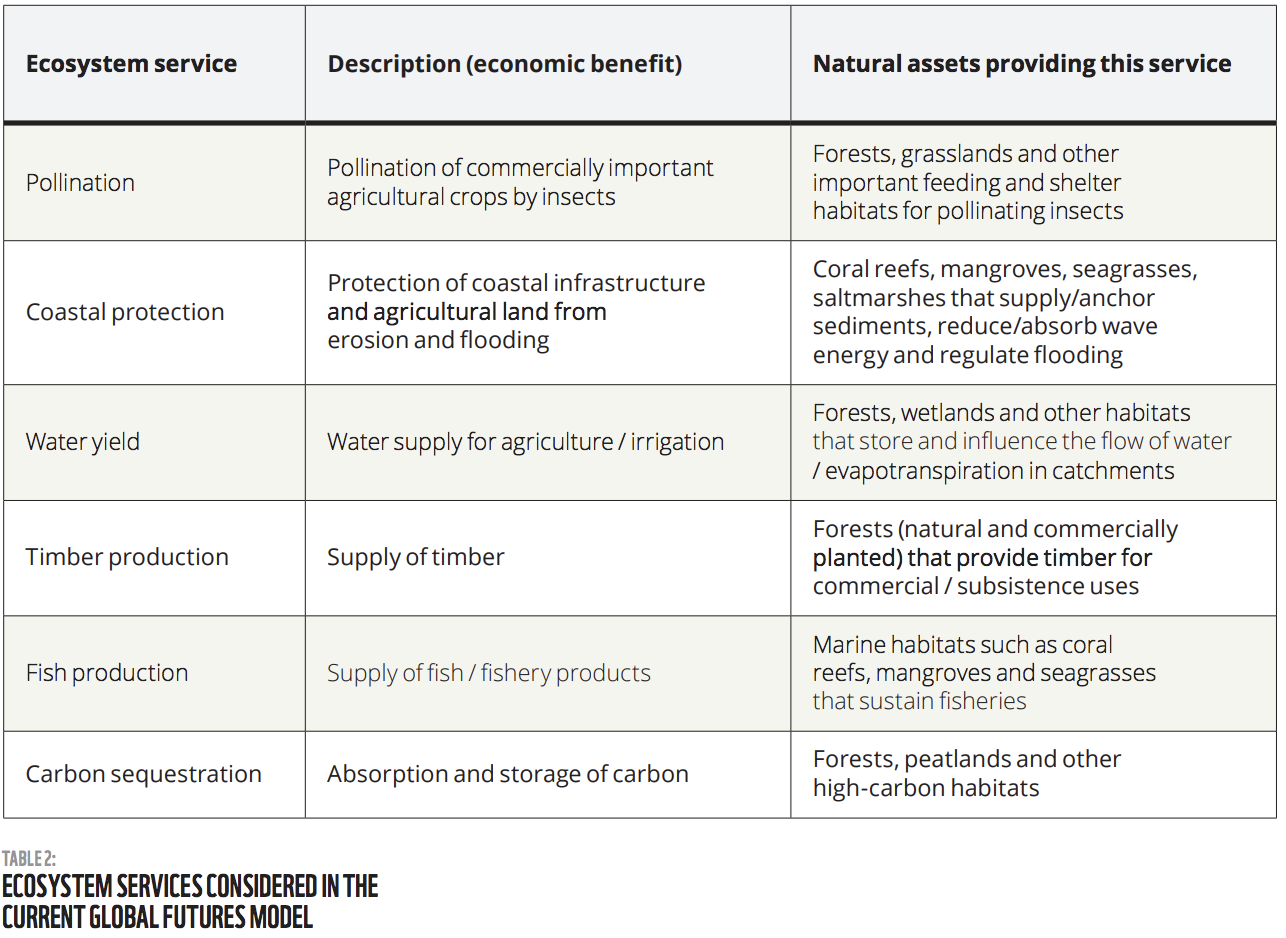
Ecosystem services are the benefits that natural resources provide to people such as food, water and fisheries, pollination of crops, protection of coasts from flooding and erosion, tourism and recreation and carbon storage.
WWF conducted this landmark study in collaboration with the Global Trade Analysis Project at Purdue University, and the Natural Capital Project, co-founded by the University of Minnesota.

Economic Implications of Environmental Degradation
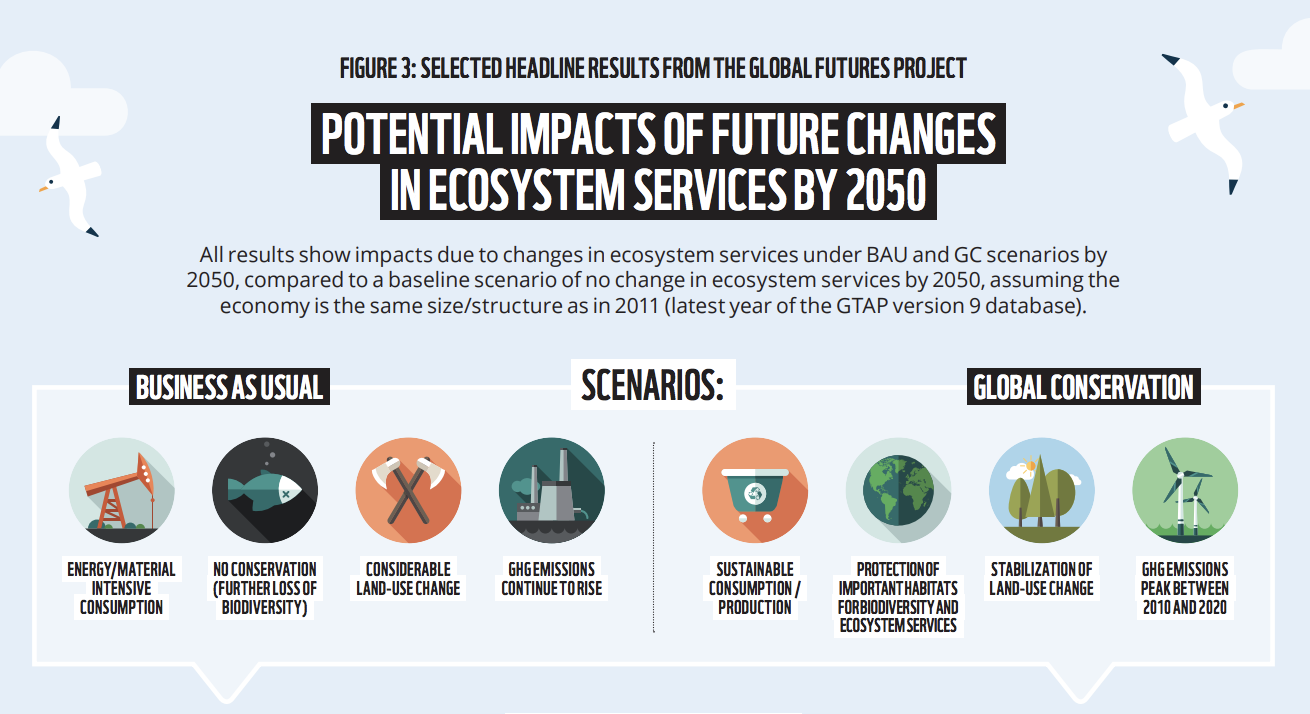
The study considered trends in fossil-fuel usage, market competition, global population, and land-use efficiency to predict how three different scenarios could impact economies around the globe, both at a country level and on a global scale. These scenarios include:
- Business-as-Usual — in which ecosystem services continue diminishing at the current rate
- Sustainable Pathway — in which the world adopts a more sustainable development pathway and safeguards areas that are important for biodiversity and ecosystem services
- Global Conservation — in which the world implements an ambitious yet plausible transformational environmental policy agenda
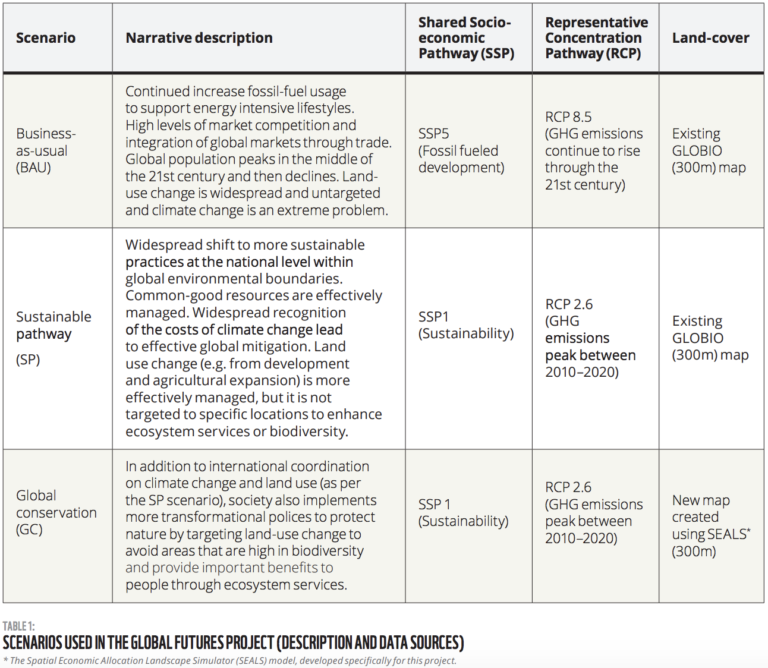
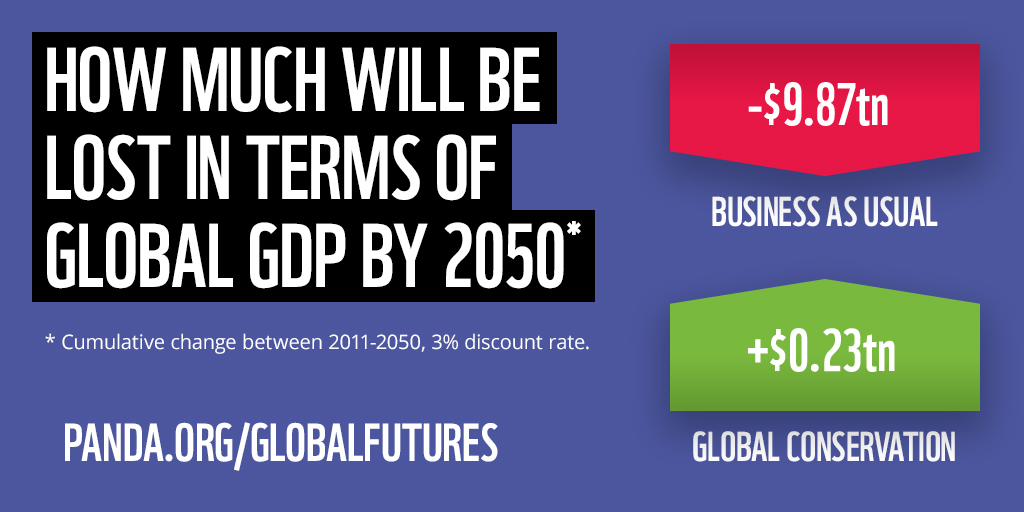
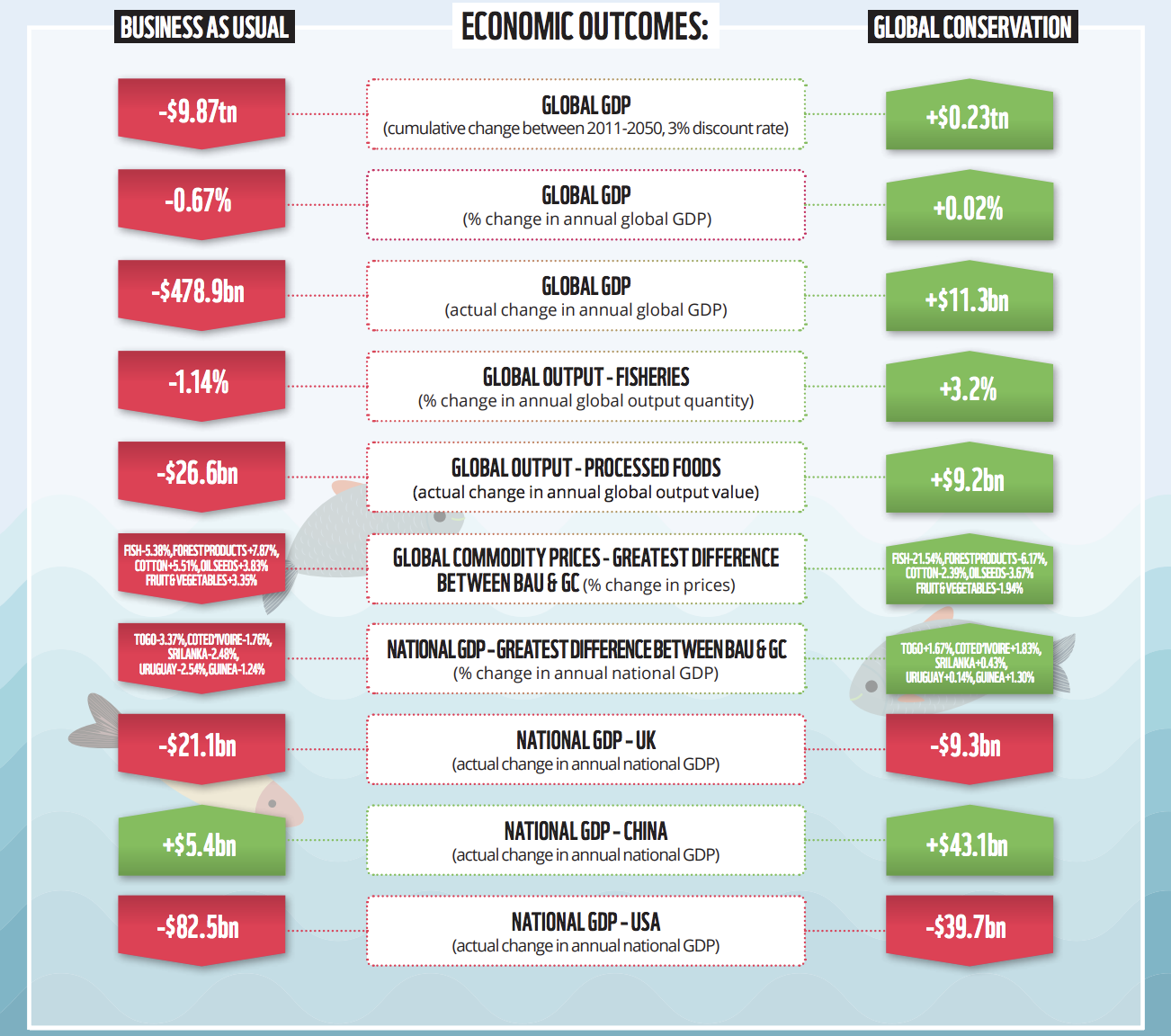
By modeling and comparing the three scenarios, Global Futures concluded that the business-as-usual scenario would significantly damage the global economy, estimating global GDP losses of more than 0.67% per year compared to GDP in a baseline scenario, equivalent to $9.87 trillion over the next 30 years. The economy which the report predicts would be worst affected in a business-as-usual scenario in terms of annual GDP losses in absolute terms was that of the United States, with approximately $83 billion lost per year by 2050 if ecosystem services continue to diminish.
Other developed nations whose economies are expected to lose staggering amounts include Japan and the U.K., with annual losses estimated at $80 billion and $21 billion respectively. Loss predictions in these developed countries are largely based on expected damage to their coastal infrastructure and agricultural land caused by increased flooding and soil erosion.
According to the study, the business-as-usual scenario would lead to global price hikes for key commodities such as timber (+8%), cotton (+6%), oil seeds (+4%) and fruit and vegetables (+3%) by 2050. These price hikes are expected to have devastating effects on trade, food price, and production across the world, harming both rich and poor nations.
In addition to bruising the global economy, the study revealed that the impacts of changes to ecosystem services would affect different parts of the world disproportionately. Western and Eastern Africa, Central Asia, and parts of South America will be hit particularly hard as a result of the changes in prices, trade and production. While leading economies like the U.S., Japan, Australia and the U.K. will inevitably suffer great losses, it is the vulnerable low- and middle-income countries that will pay the greatest price if ecosystems continue declining.
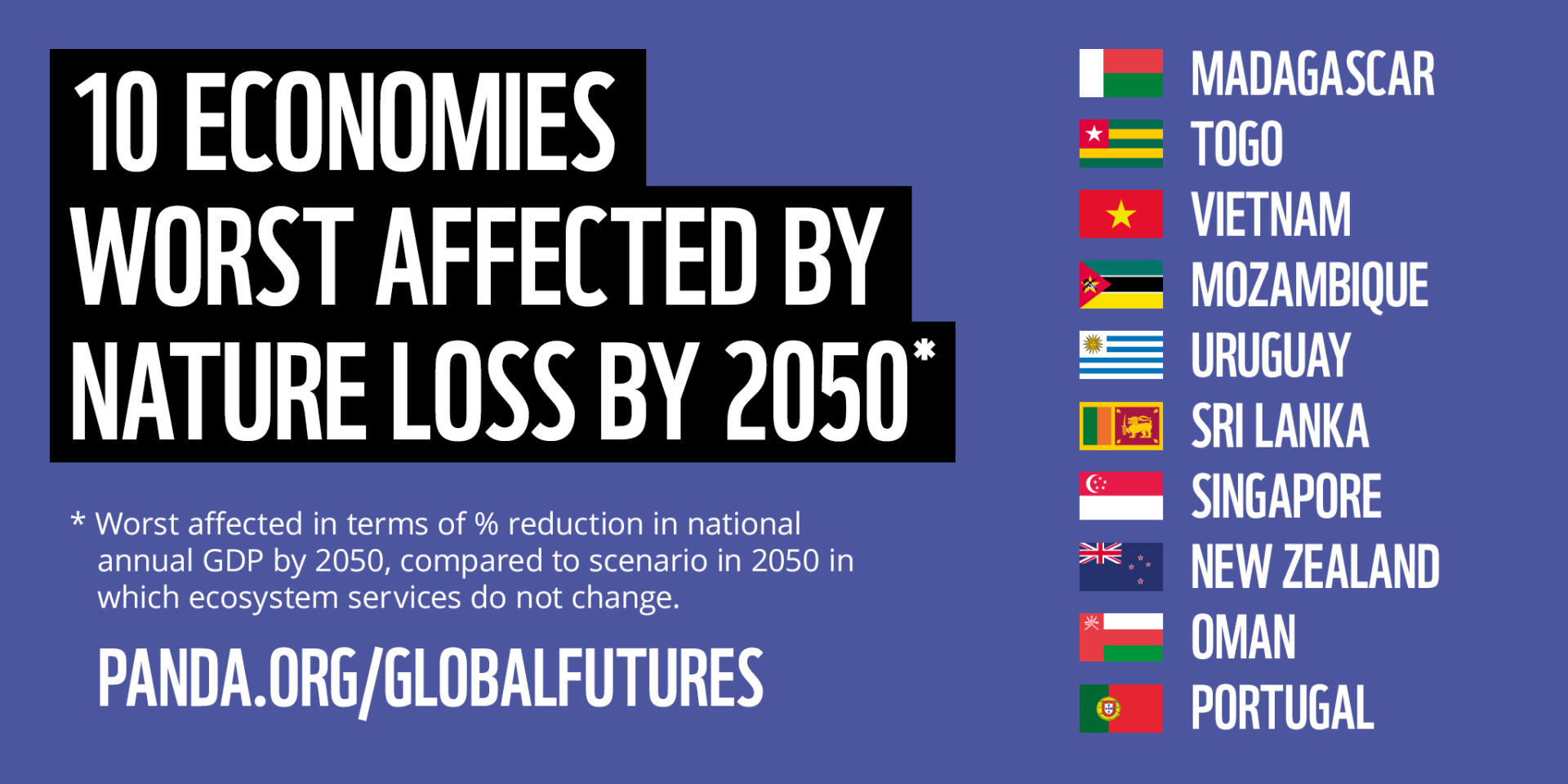
The top 10 countries predicted to lose the most as a percentage of their national annual GDP by 2050 due to ecosystem degradation will be Madagascar, Togo, Vietnam, Mozambique, Uruguay, Sri Lanka, Singapore, New Zealand, Oman, and Portugal.
The Global Futures study predicts annual global losses by 2050 of:
- $327 billion from damaged protections from flooding, storm surges and erosion due to changes in vegetation along coastlines and sea-level rises
- $128 billion from loss of carbon storage which protects against climate change
- $15 billion from lost habitats for bees and other pollinating insects
- $19 billion from reduced water availability for agriculture
- $7.5 billion from lost forests and forest ecosystem services
If the world takes action to avoid the business-as-usual scenario, on the other hand, and if targeted environmental changes defined in the Global Conservation scenario are implemented, the study foresees global GDP rising by 0.02% (US$11 billion) per year.
WWF says that in order to preserve and protect our natural ecosystems, governments must recognize the cost of nature loss and begin implementing ambitious policies at an international level. By shifting to more sustainable public practices and individual lifestyles, better managing natural resources and land-usage, and reducing poverty, nations across the world will reap the economic advantages posed by the global conservation scenario.
Related Articles: Innovators Creating Sustainable Coastal Solutions ¦ Biodiversity Talks: Kickstarting a Paris-style Nature Agreement?
“The aim is to really stimulate a debate and planning that allows these sectors to be sustainable, to be thriving economically and be profitable, but also to be sustainable. Because ultimately, we can’t squeeze the planet more than we are today. We’ve got to find ways to produce with less impact on the planet. In fact, produce more, but with less impact on the planet.” explained Marco Lambertini, Director General of WWF International, in an interview with Impakter.
WWF points to the critical decisions world leaders are scheduled to take in the year ahead as an unmissable opportunity to halt and reverse nature loss, in support of climate action and the sustainable development goals. With an agreement on a new global biodiversity framework, a global oceans treaty, action on climate change and a renewed commitment in the Sustainable Development Goals set to be negotiated, the world has the chance to secure a New Deal for Nature and People that safeguards people and planet.
WWF Encourages Countries to Set Ambitious Goals
On Feb. 24, 2020, over 1,000 delegates from more than 140 countries began negotiations at the headquarters of the United Nations Food and Agriculture Organization in Rome on the “zero draft” of a landmark post-2020 global biodiversity framework and targets for nature to 2030.
The initial zero draft was based on extensive consultations, advice from governments, scientists, indigenous peoples, youth, NGOs and others.
What’s needed is ambition.
— Guido Broekhoven, Head of Policy Research and Development at WWF International
Stakeholders from around the world gathered to negotiate and discuss how ambitious they intend to be in addressing ecological degradation and contributing to the targets. According to Guido Broekhoven, Head of Policy Research and Development at WWF International, “What’s needed is ambition.”
“There are still so many ideas being put on the table,” Broekhoven explained. “We are in the process now of looking at that document and broadening it and seeing where parties are happy or not so happy, and then moving forward.”
WWF is urging countries to sign up to the goals presented in the Convention on Biological Diversity’s zero draft, which are closely related to the UN’s Sustainable Development Goals (SDGs). However, the zero draft pushes for even more ambitious targets for 2030, including a net increase in the area and integrity of natural habitats, and at a minimum zero human induced loss of species.
In order to address the drivers of biodiversity loss, including climate change, WWF further urges parties to adopt a goal or outcome to reduce the negative footprint of production and consumption by 50% by 2030.
Broekhoven emphasized the importance of co-operating with businesses, governments, and experts to achieve the best outcomes, stating that “WWF is working with governments to put the regulatory framework in place. We are working with businesses that are aware that these changes need to take place to see how we can support them, amplify their voices for the good and promote transparency. And we are supporting research into innovating new ways to promote biodiversity.”
“We need to really recognize the value of nature for the economy and that needs to be documented in actual accounting systems,” said Broekhoven. “The other thing is, we need to build financial transparency on the risks of business investments which ignore biodiversity and nature, and make rules and regulations accordingly.”
WWF’s powerful study on the economic implications of a diminishing ecosystem will serve as a roadmap to citizens, businesses, and governments to guide us toward a favorable future. Whether or not its warnings will be heeded will depend on the earnest commitment of all stakeholders to adopting sustainable practices and developing policies which restore and preserve our environment. Can we, as a society, stand together in solidarity and drive forward these vital changes; or rather, can we afford not to?
We depend on nature much more than nature depends on us.
— Marco Lambertini, Director-General of WWF
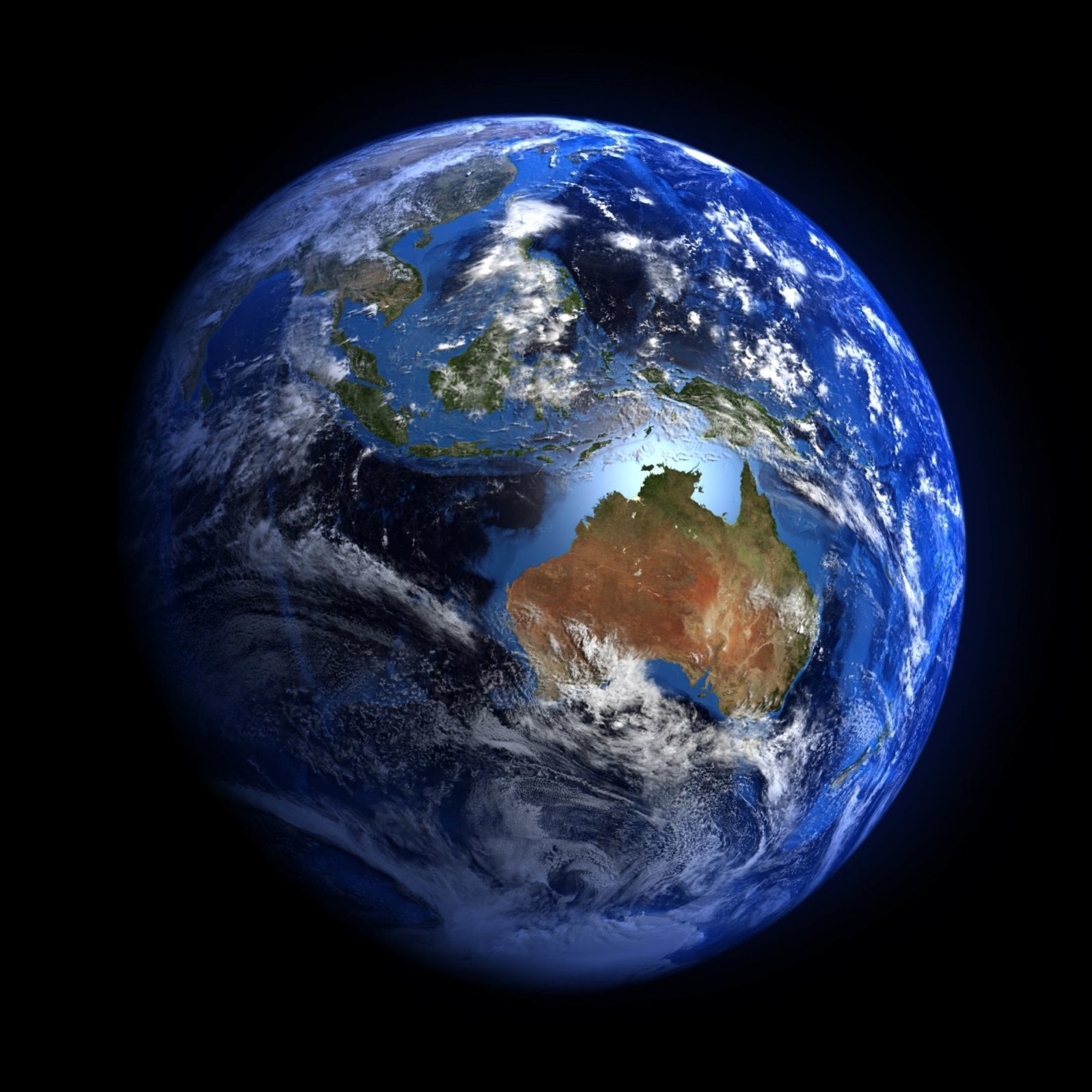
Editor’s Note: The opinions expressed here by Impakter.com columnists are their own, not those of Impakter.com — In the Featured Photo: The Earth from space showing Australia and Indonesia. Extremely detailed image including elements furnished by NASA — Featured Photo Credit: © WWF